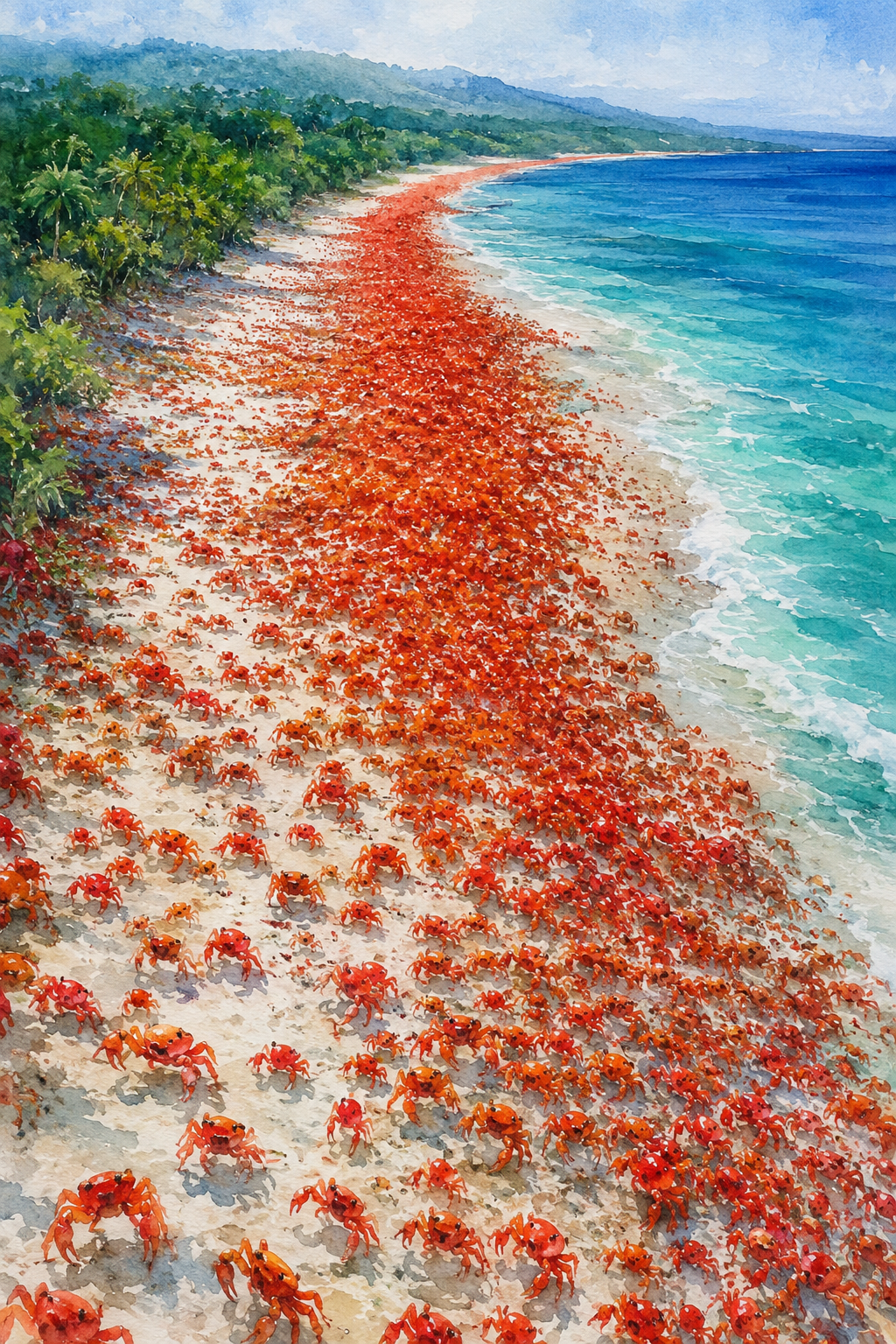
The Crimson March of Life
Critique
1. Introduction This watercolor painting captures the spectacular migration of countless red crabs covering a tropical beach. The artwork portrays the dynamic energy of wildlife within a coastal landscape. The striking color contrast and meticulous details deliver a strong visual impact. 2. Description On the upper left, a lush green jungle serves as the origin of the massive crab migration. The sandy shore is densely packed with crabs, forming a red band toward the distance. To the right, a clear turquoise ocean with white waves laps the coast. In the background, hills rise under a pale sky. 3. Analysis The color palette relies on the contrast of primary colors: red crabs, green forest, and blue sea. Soft watercolor washes texture the beach, contrasting with the sharp details of the crabs. The curved coastline creates a natural perspective, guiding the eye and establishing depth. 4. Interpretation and Evaluation The painting symbolizes the raw power and instinctual drives of natural ecosystems. Showing individual organisms forming a collective red wave reflects the grandeur of life. The artist's ability to organize a chaotic subject into a beautiful composition is highly commendable, highlighting nature's design. 5. Conclusion Ultimately, the viewer's surprise at the unusual sight shifts to respect for Earth's lifecycles. This artwork showcases the capacity of watercolor to render both soft backgrounds and complex organic forms. The memorable image of the crimson shore remains a symbol of ecological vitality.
Same Subcategory
 A Moment of Small Delights
Similar Artworks
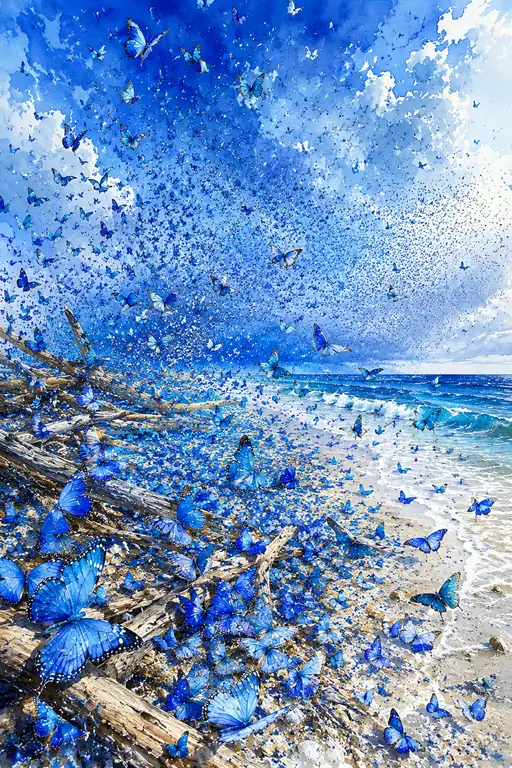 The Sapphire Spiral of Rebirth
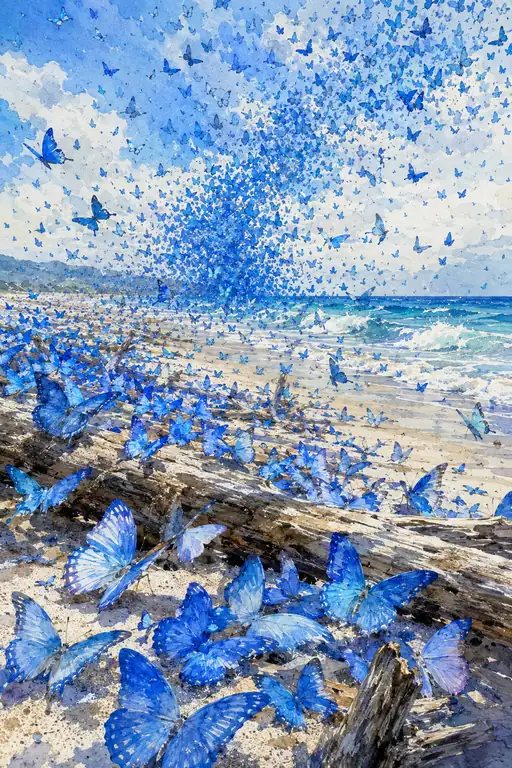 Whispers of the Cobalt Wind
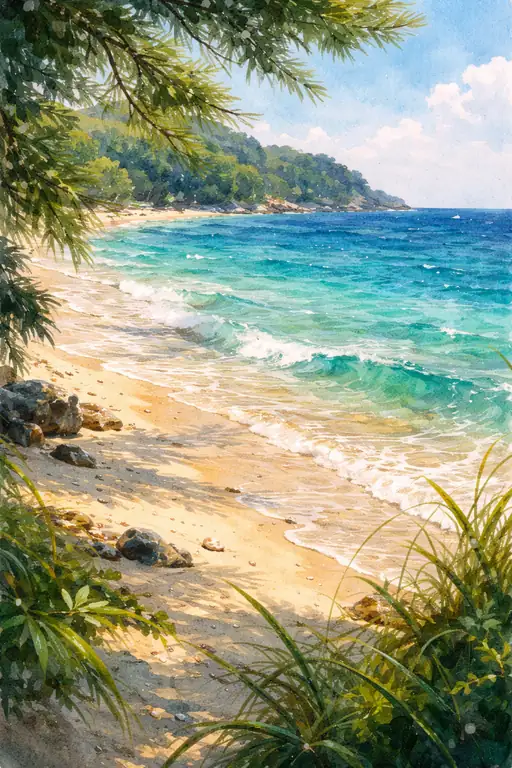 Tropical Azure and Summer Sands
 Sentinels of the Eternal Tide
 The Sentinel of the Turquoise Lagoon
 Journey Toward the Azure Light
 Eternal Breath of the Sapphire Bay
 Whispers of the Turquoise Tide
 The Gathering Storm: Summer's Impasto Sky
 Whispers of the Golden Shore