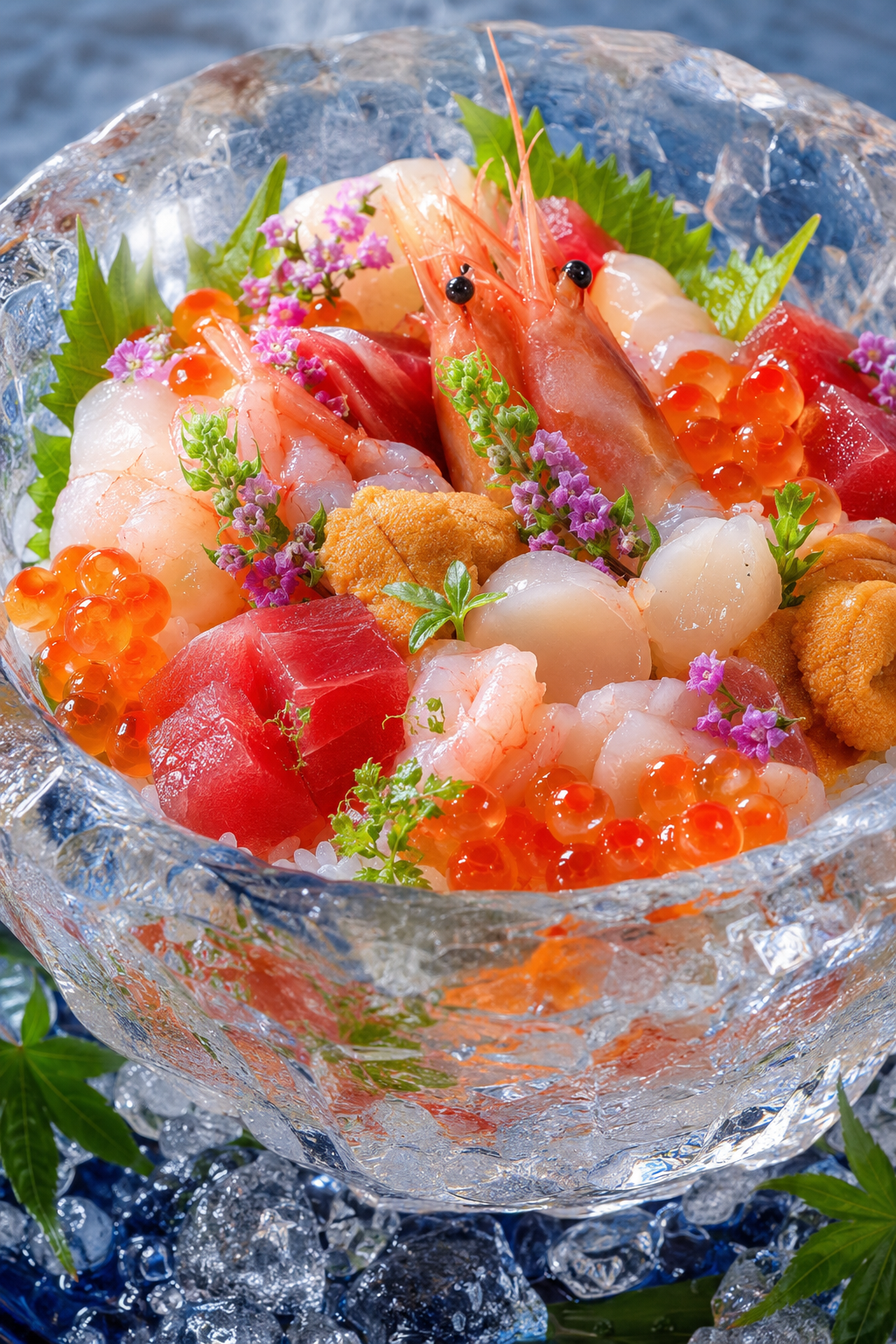
Ocean Vitality Frozen in Time
Critique
1. Introduction This luxurious still life painting captures an opulent Japanese seafood dish: a raw seafood bowl (kaisendon) served in a large glass bowl packed with ice. Depicting a colorful array of fresh fish and shellfish, the artwork highlights the natural textures of the seafood, conveying a strong sense of culinary luxury and summer coolness. 2. Description The large crystal bowl contains crushed ice, shiso leaves, and a generous assortment of seafood: two whole sweet shrimps with heads, glistening salmon roe, golden sea urchin, cubed red tuna, and plump white scallops. Delicate purple shiso flowers are scattered as a garnish. Condensation mist covers the glass bowl, which is set against green maple leaves. 3. Analysis The color composition features a striking contrast between the warm reds of the tuna and salmon roe, the yellow of the sea urchin, and the cool greens of the shiso leaves and maple. The artist displays incredible skill in rendering the distinct textures of the glossy shrimp shells, the gelatinous salmon roe, and the soft scallops. Sharp highlights on the roe pearls emphasize their freshness. 4. Interpretation and Evaluation The painting celebrates the abundance of the sea and the Japanese culinary tradition of preserving freshness through presentation. The whole shrimps and glowing roe symbolize life and vitality, while the crushed ice represents a luxury of temperature. This visual feast appeals directly to the viewer's taste, touch, and sight, evoking a sense of appreciation for high-end seasonal dining. 5. Conclusion In conclusion, this still life is a masterfully executed celebration of fresh Japanese seafood. Through its brilliant color contrasts, detailed rendering of aquatic textures, and cooling atmosphere, the painting captures the peak of summer gastronomy. It stands as a powerful and beautiful image that satisfies the viewer's craving for both culinary and visual elegance.
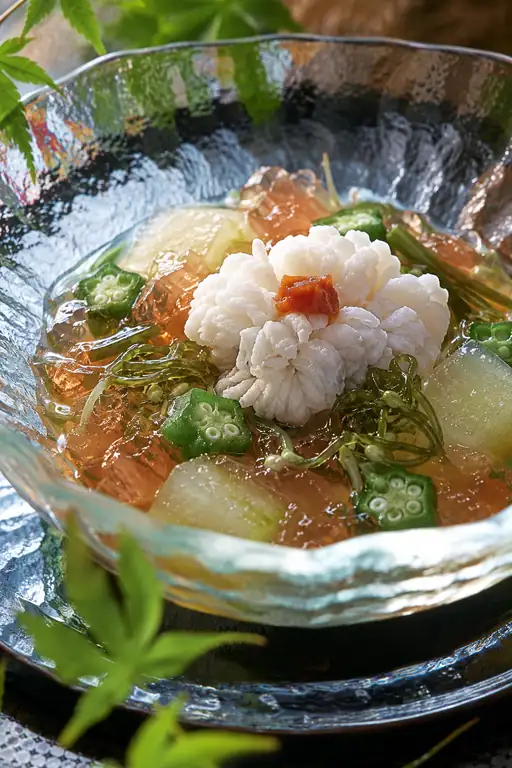 White Blossom in a Cool Stream
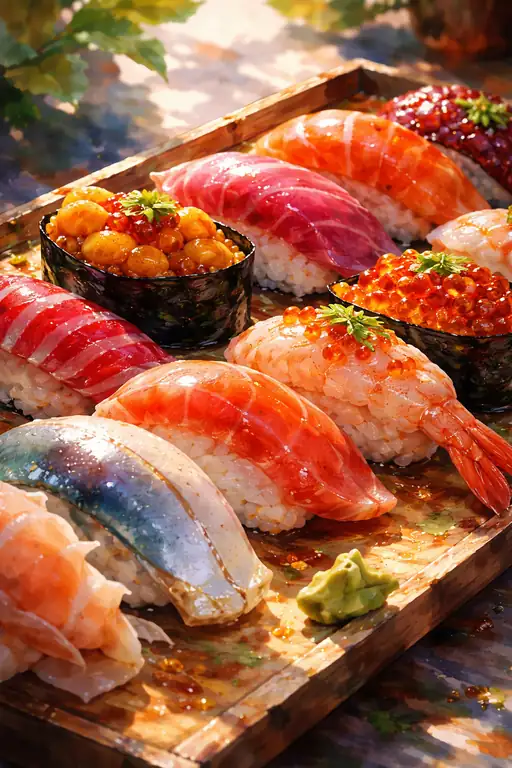 Symphony of the Sea
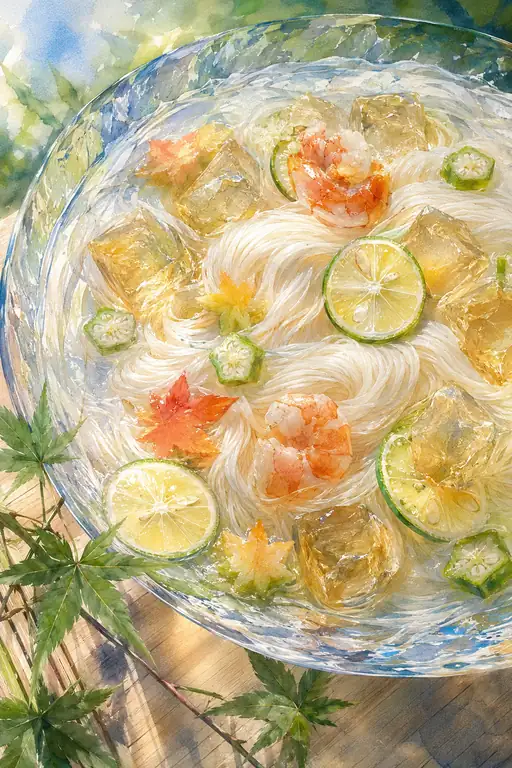 Flowing River of Chilled Summer Days
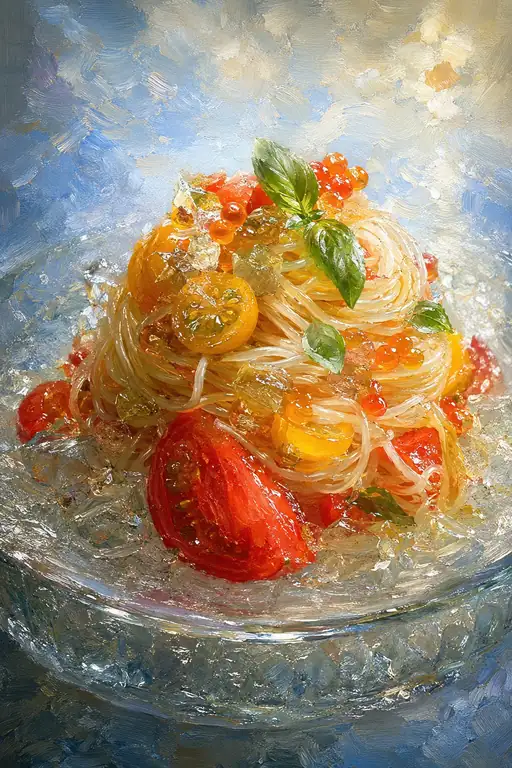 Sunlight Tangled in Crimson Strings
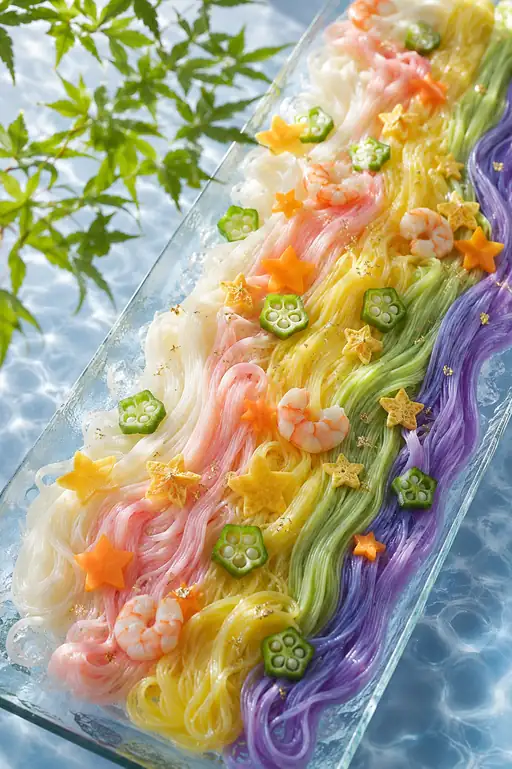 Weaving Threads of the Milky Way
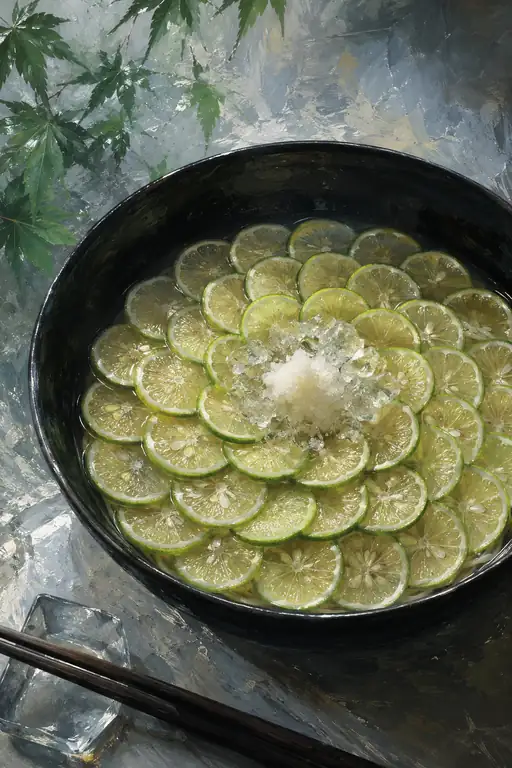 Chilled Green Ripples in a Dark Bowl
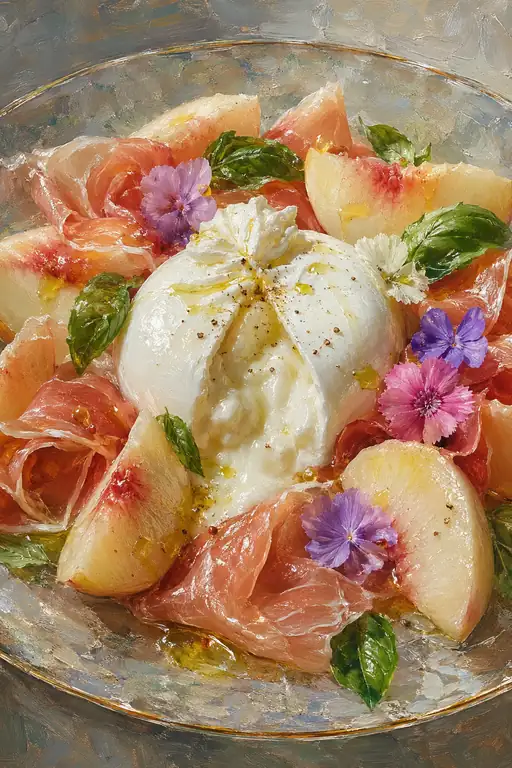 The Velvet Heart of Summer
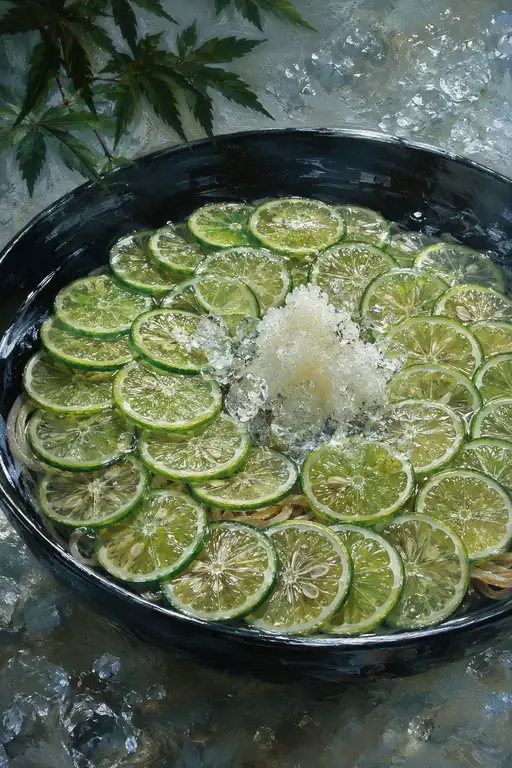 A Breath of Summer Breeze
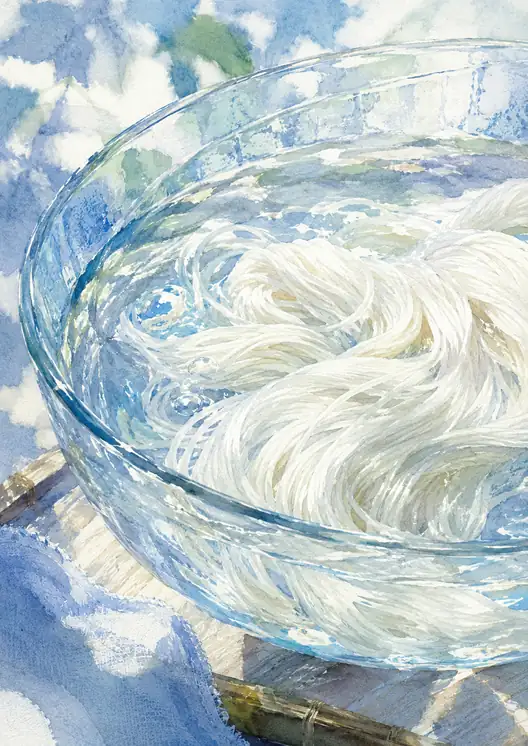 Summer's Clarity
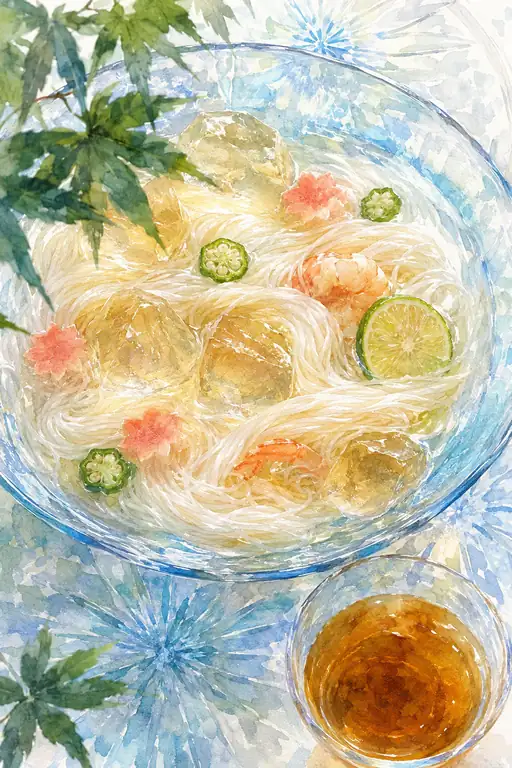 Green Maple, Summer in a Bowl