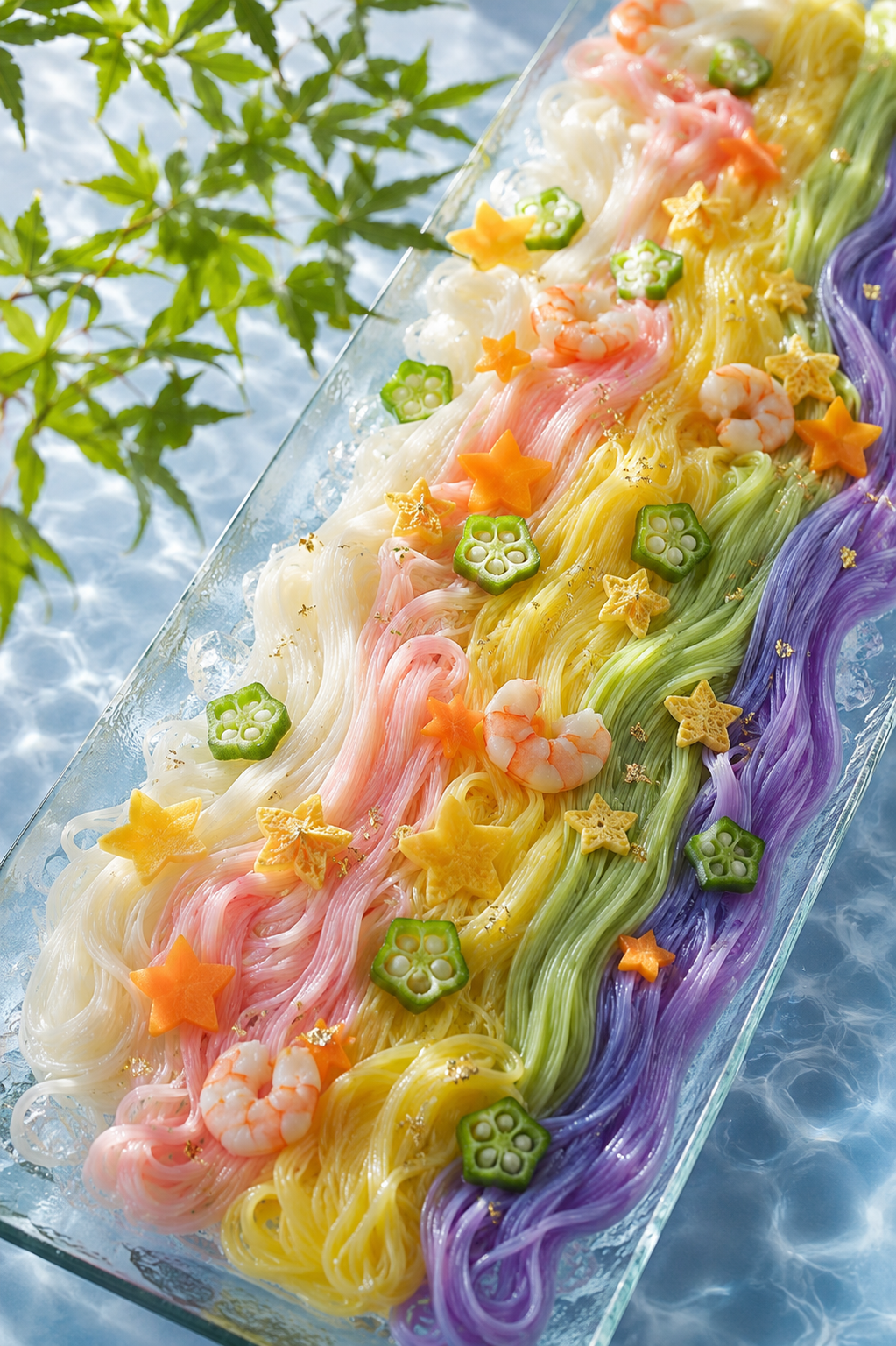
Weaving Threads of the Milky Way
Critique
1. Introduction This vibrant still life painting portrays a traditional Japanese seasonal dish: "Tanabata Five-Colored Somen Noodles," styled to represent the Milky Way. Celebrating the summer Star Festival, the artwork features colorful noodles and star-shaped ingredients, creating a highly poetic and visually striking scene that merges cultural myth with culinary art. 2. Description On a long glass platter, somen noodles in five colors—white, pink, yellow, green, and purple—are arranged in flowing, wave-like stripes. The noodles are decorated with star-shaped sliced okra, star-cut carrots, star-shaped yellow omelet pieces, and pink boiled shrimps. Glinting gold leaf is scattered across the dish like cosmic dust, surrounded by crushed ice and green maple leaves. 3. Analysis The color composition is a lively rainbow of pastel and warm tones, balanced by the cool blue water reflections of the glass plate and table. The artist uses precise, delicate lines to depict the flowing strands of the noodles, giving a sense of fluid movement. Highlights on the gold leaf and the wet surface of the ice create a sparkling effect, simulating a starry night sky. 4. Interpretation and Evaluation The painting honors the Japanese custom of "mitate" (visual metaphor), using food to tell the romantic story of Tanabata. Somen noodles symbolize the weaving threads of the celestial lovers, and the vegetable stars bring the distant universe onto a domestic plate. The cold ice and gold leaf evoke the refreshing chill and magic of a summer evening, encouraging a sense of wonder and quiet joy. 5. Conclusion In conclusion, this still life is a masterfully executed celebration of Japanese summer folklore and cuisine. The dynamic flow of colors and the delicate textures of ice and noodles demonstrate the artist's refined technique. The painting remains a visually comforting and poetic work that brings the magical spirit of a starry summer night directly to the viewer.
Same Subcategory
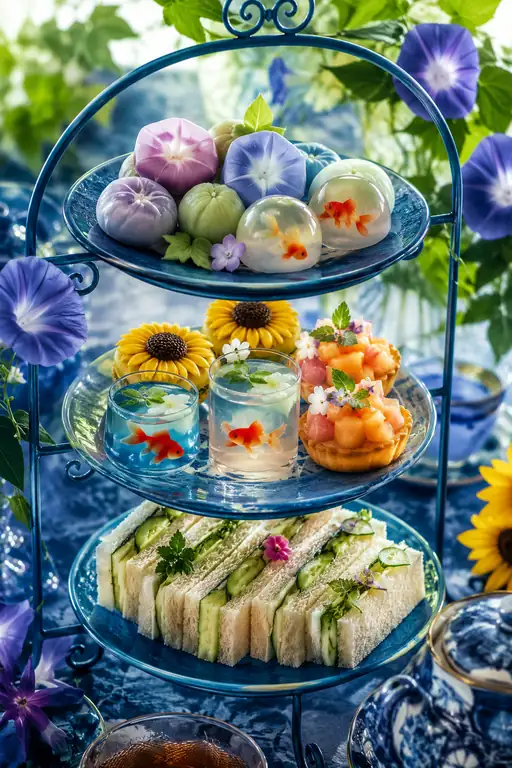 Summer Whispers on a Three-Tier Stand
Similar Artworks
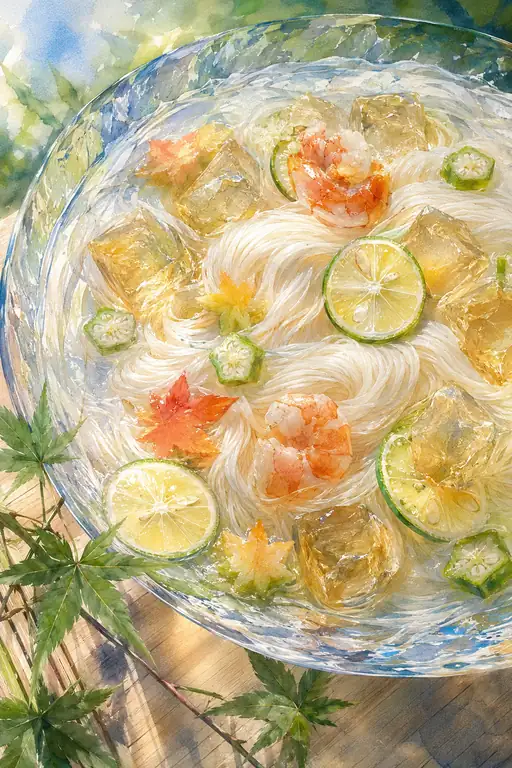 Flowing River of Chilled Summer Days
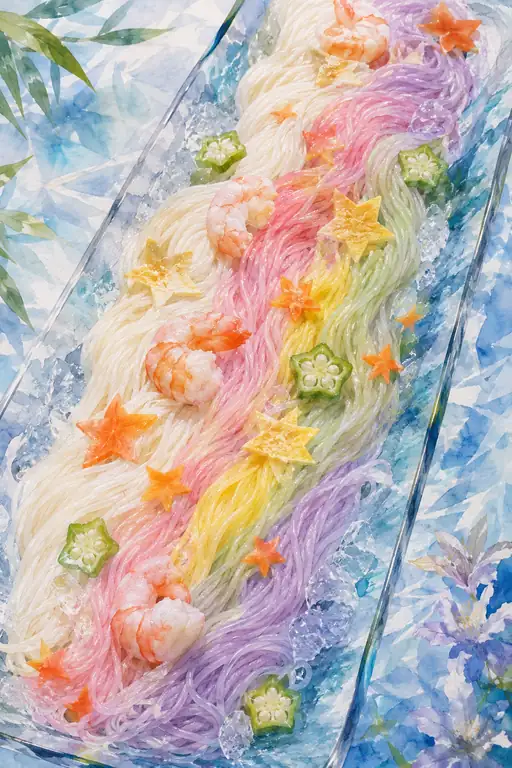 A Taste of the Tanabata Milky Way
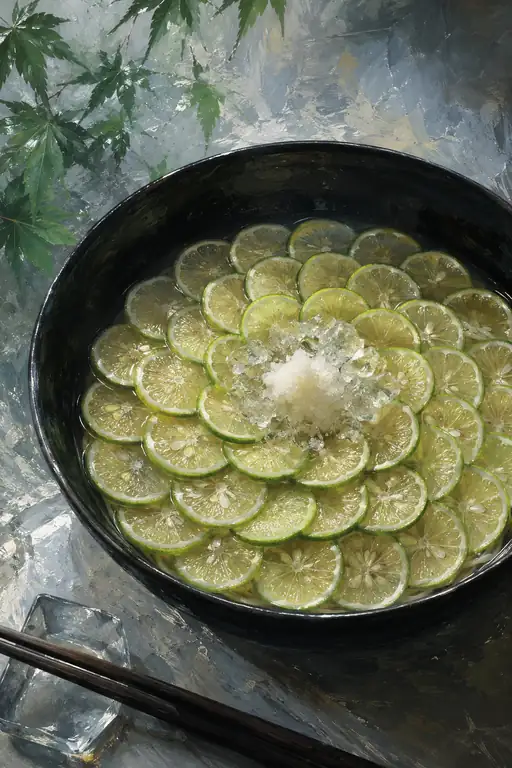 Chilled Green Ripples in a Dark Bowl
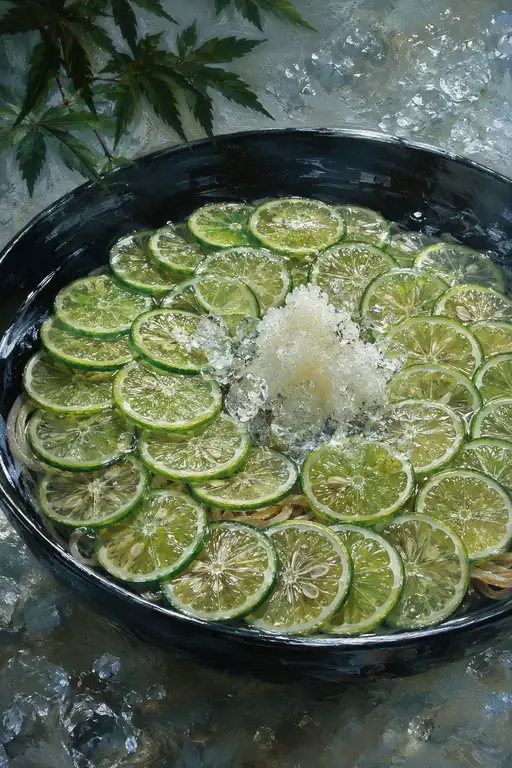 A Breath of Summer Breeze
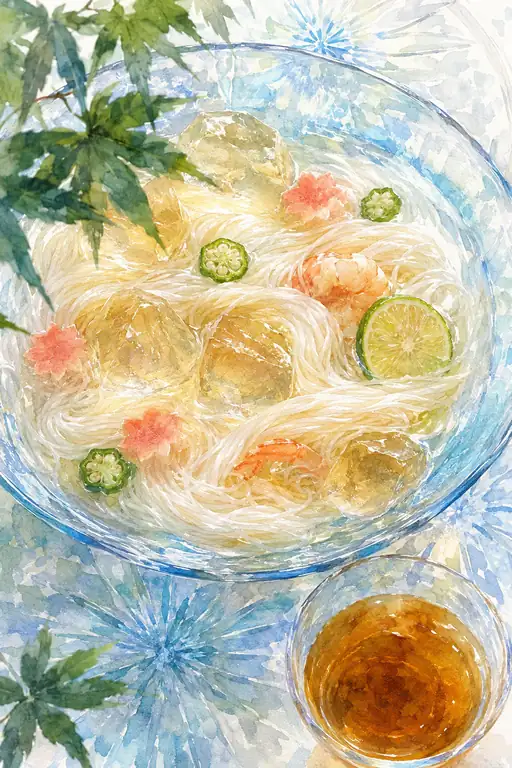 Green Maple, Summer in a Bowl
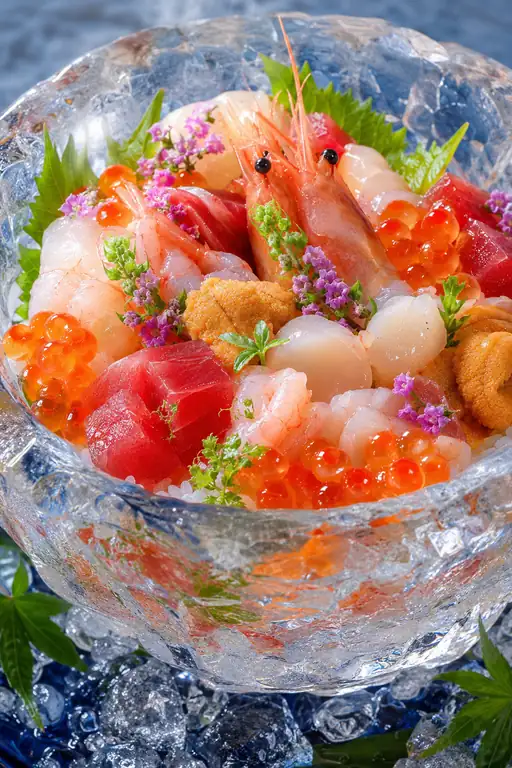 Ocean Vitality Frozen in Time
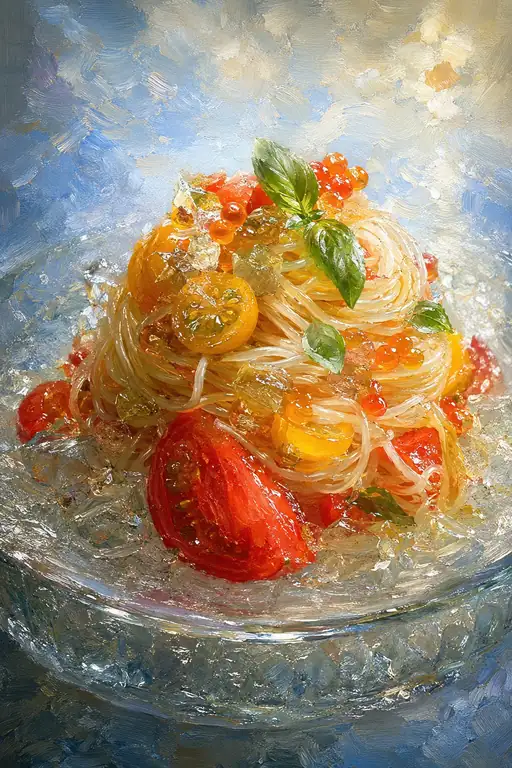 Sunlight Tangled in Crimson Strings
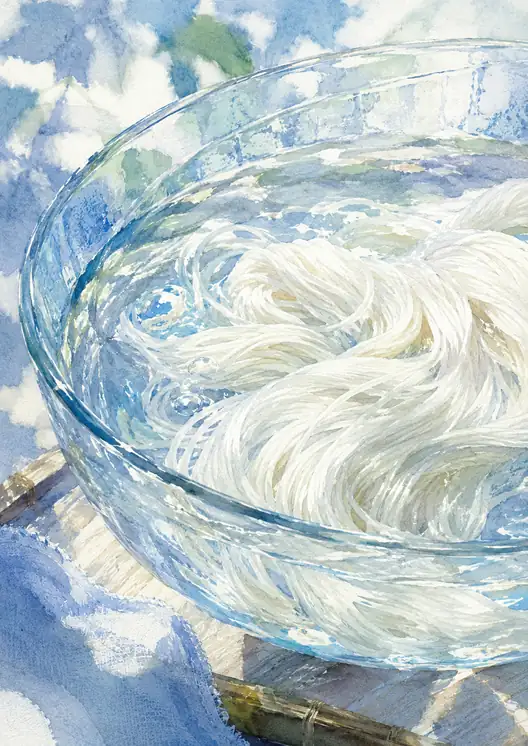 Summer's Clarity
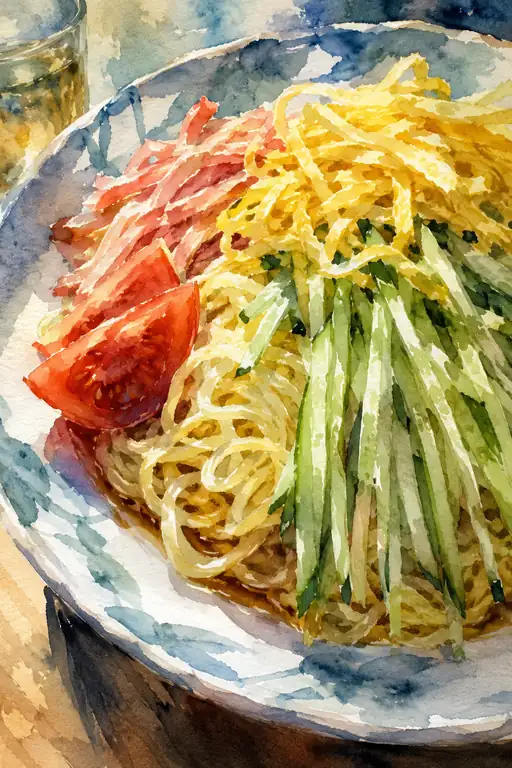 A Little Summer on a Blue Plate
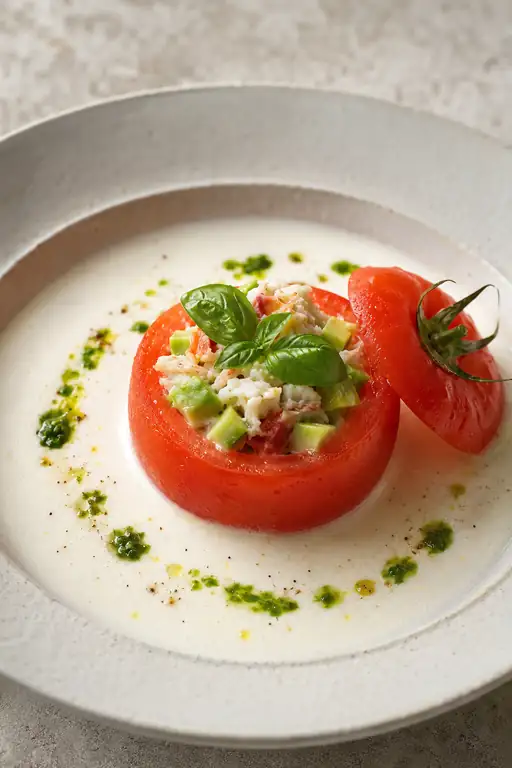 Crimson Sanctuary on a Creamy Sea