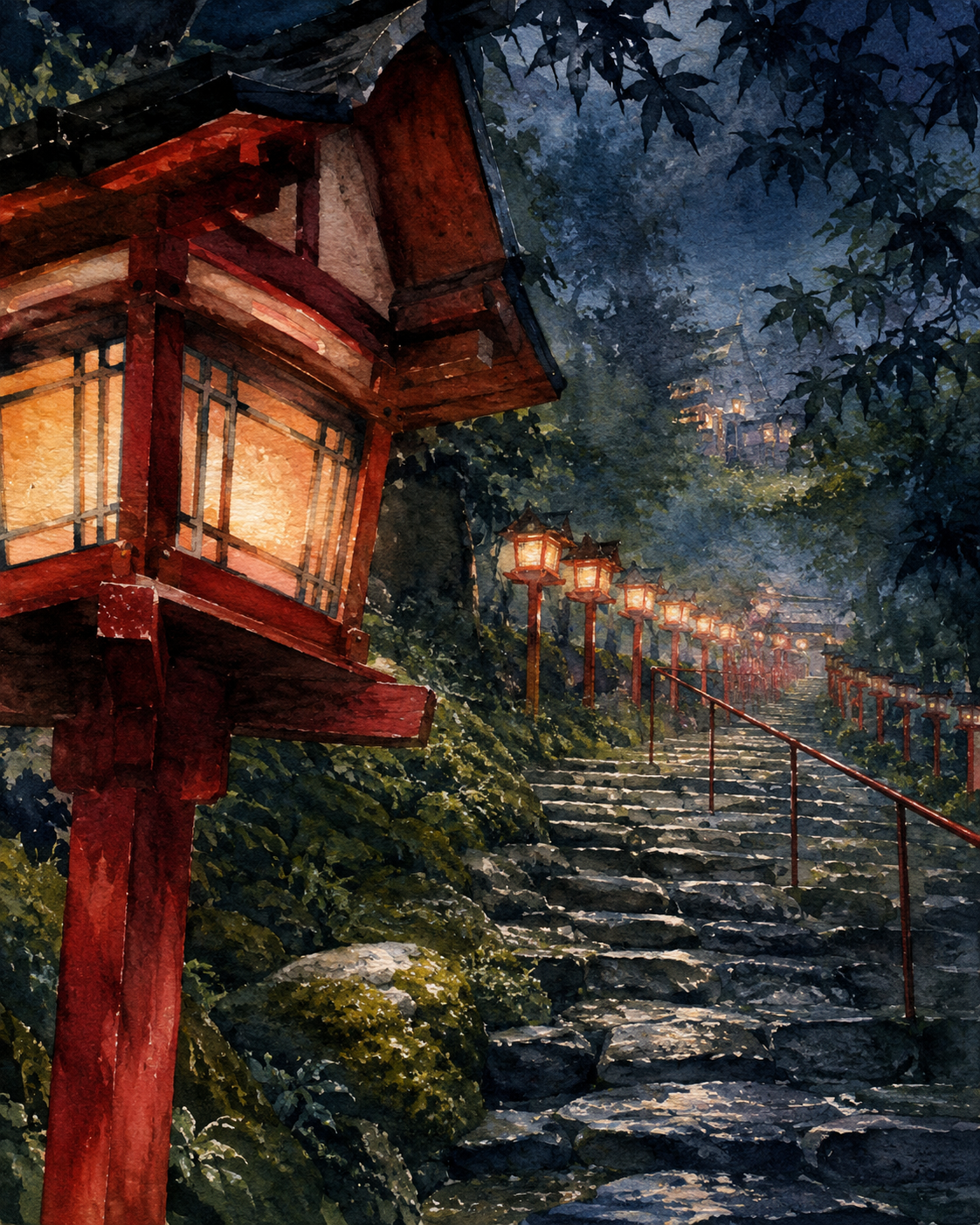
Ascending the Vermilion Silence
Critique
1. Introduction This watercolor painting beautifully depicts a quiet stone staircase leading to a sacred shrine at night. A large vermilion lantern positioned in the left foreground creates a highly atmospheric and mysterious space. This essay will examine the visual organization and the expressive qualities of this deeply poetic night landscape. 2. Description On the left, a grand red wooden lantern dominates the view, glowing with a warm yellow light. In the center, worn stone steps curve gently upward, accompanied by a red handrail on the right. Along the stairs, a row of smaller vermilion lanterns recedes into the dark forest under the silhouette of maple leaves. 3. Analysis The composition achieves a strong sense of depth by contrasting the massive foreground lantern with the curving staircase. The diagonal line of the handrail and the lantern row guides the viewer's eyes toward the distant structure. The wet-on-wet watercolor technique captures the misty air and the soft texture of moss-covered rocks. 4. Interpretation and Evaluation The painting masterfully combines the solemnity of a spiritual path with the comforting presence of light. The glowing lanterns shining through the dark forest can be interpreted as gentle guides offering peace to visitors. With calculated composition and delicate color harmony, the artist captures a rich narrative quality that goes beyond simple representation. 5. Conclusion This artwork is a successful representation of traditional Japanese mood, showing a refined control of light and shadow. The viewer is first captivated by the detailed foreground lantern before following the stairs to appreciate the silent forest. Ultimately, the piece achieves excellent visual harmony, leaving a lasting impression of quiet reverence on the viewer.
Same Subcategory
 Ascending the Rainbow of Faith
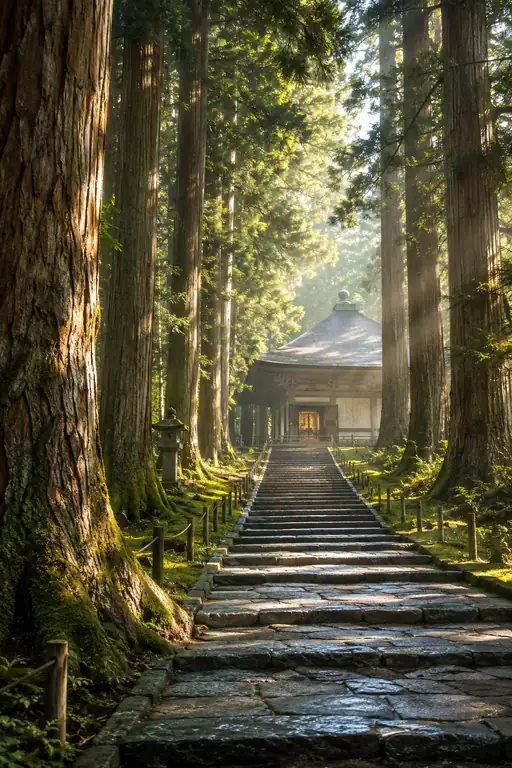 Pathway to the Sacred Silence
Similar Artworks
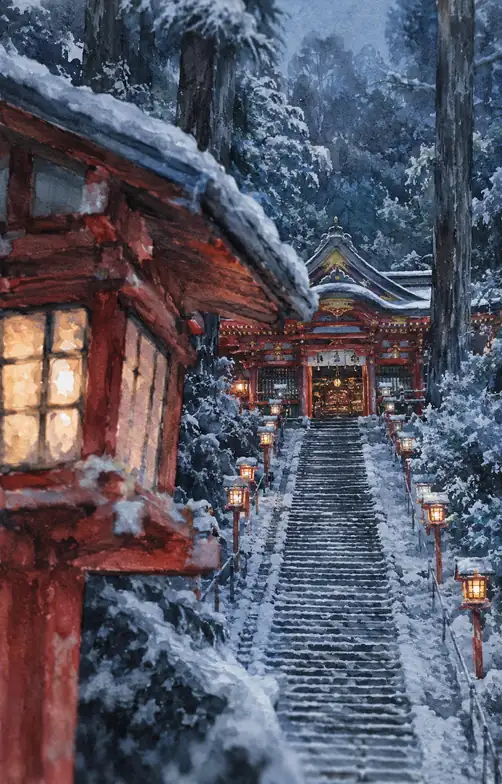 Winter Lanterns Lead Me Home
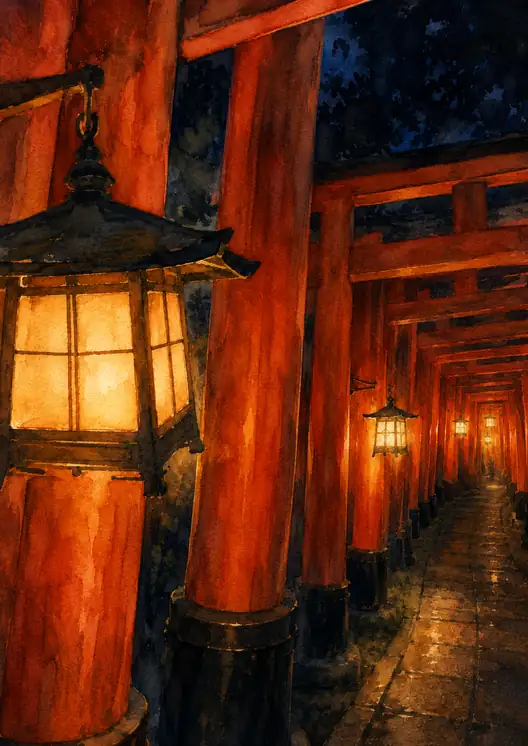 Infinite Vermilion Passage into the Sacred Night
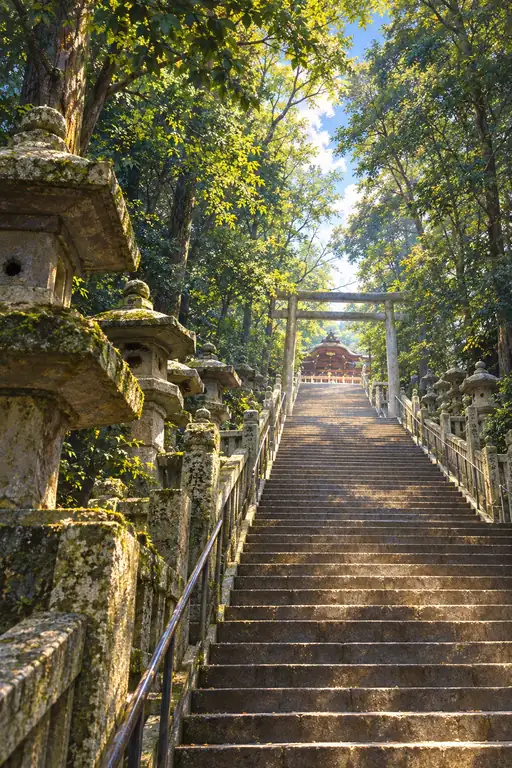 Whispering Lanterns of the Cedar Stair
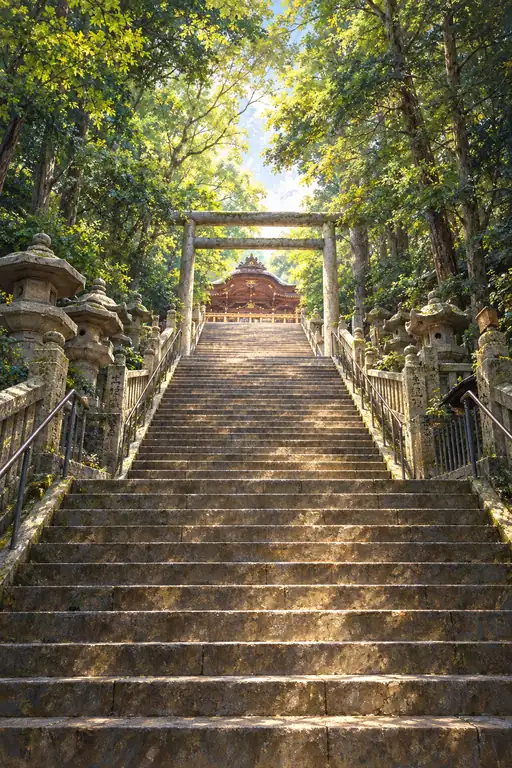 Stairway to the Mountain Shrine
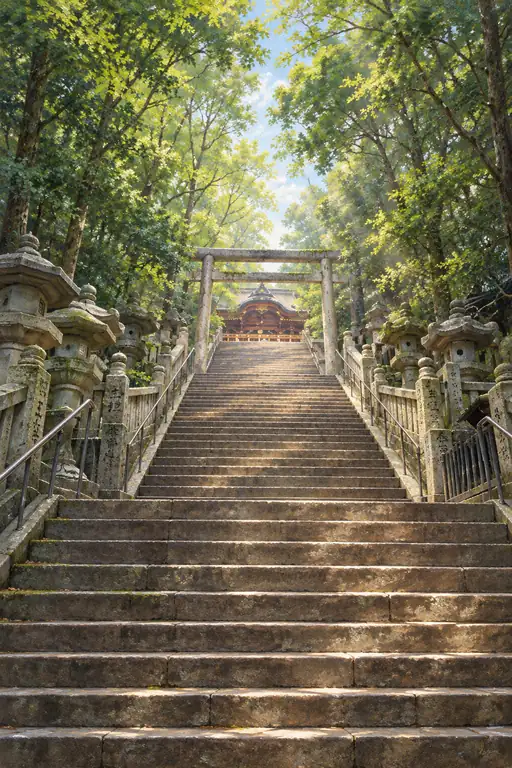 Gateway of Sunlit Devotion
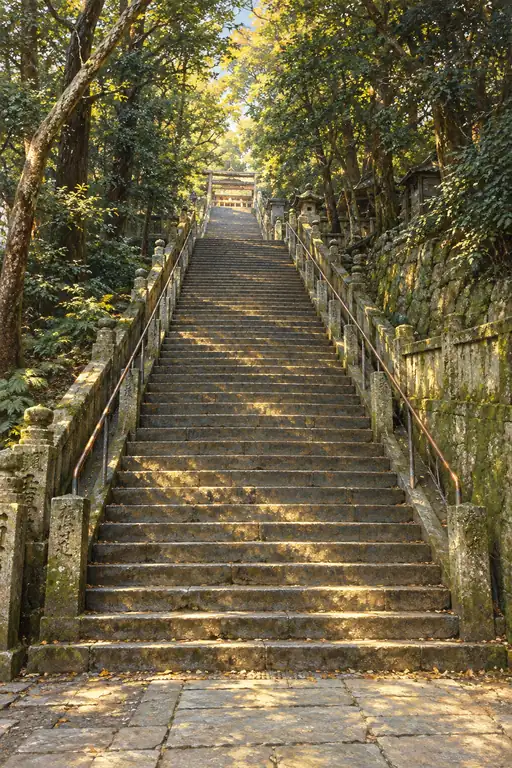 Ascent Through Ancient Sunbeams
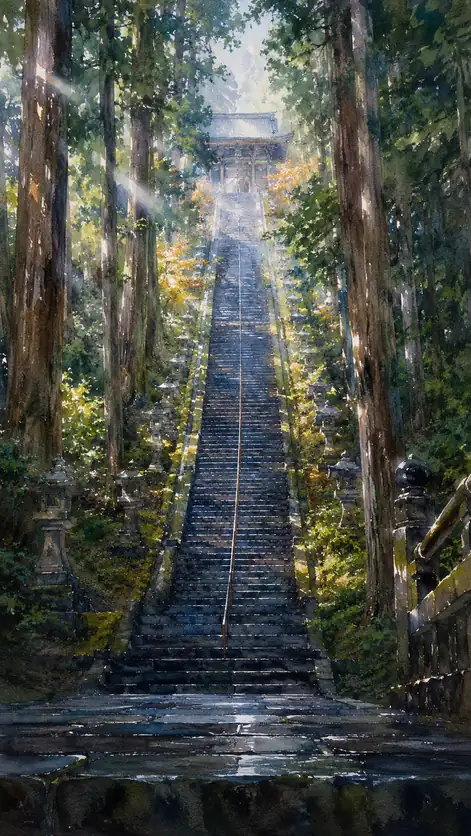 The Stairway between Two Silences
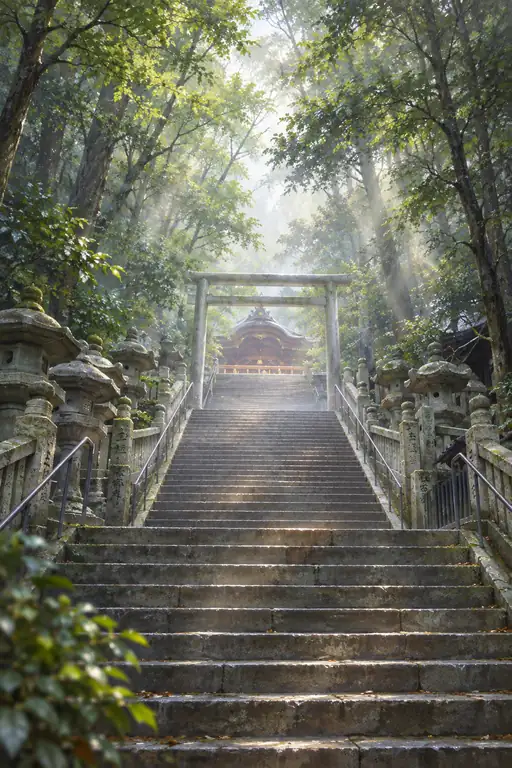 Beams of Light upon the Ancient Stair
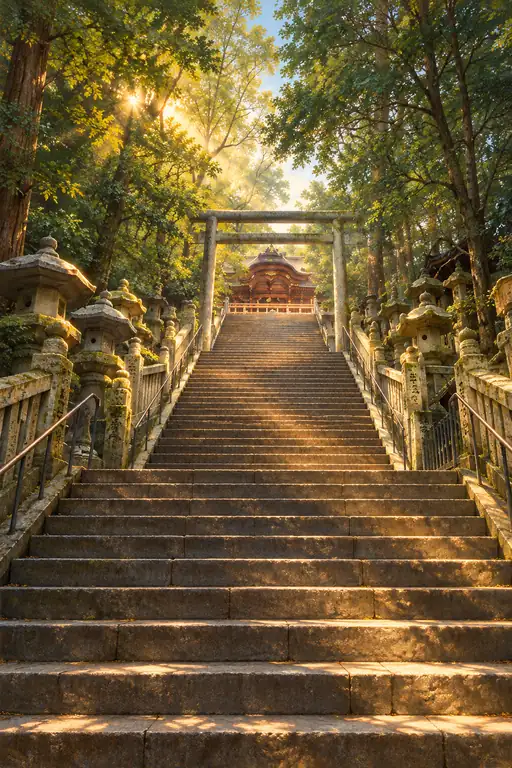 Dawn Piercing the Sacred Canopy
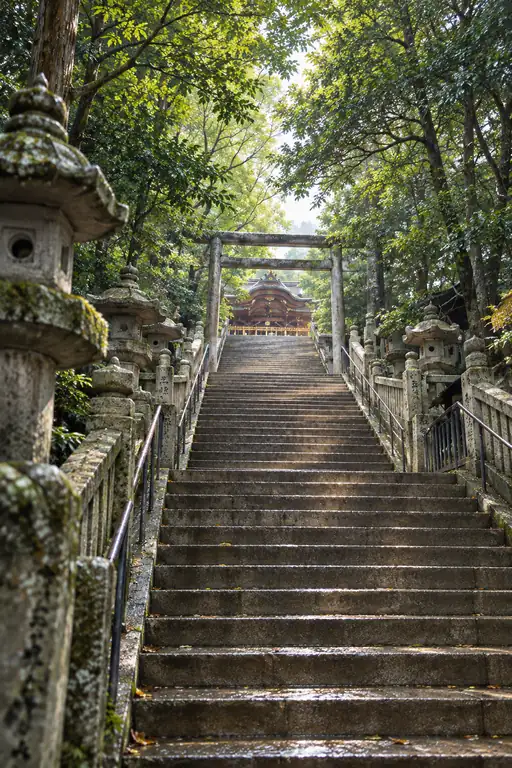 Dew-Kissed Steps to the Shrine