
The Wind That Makes the Evening Ring
Critique
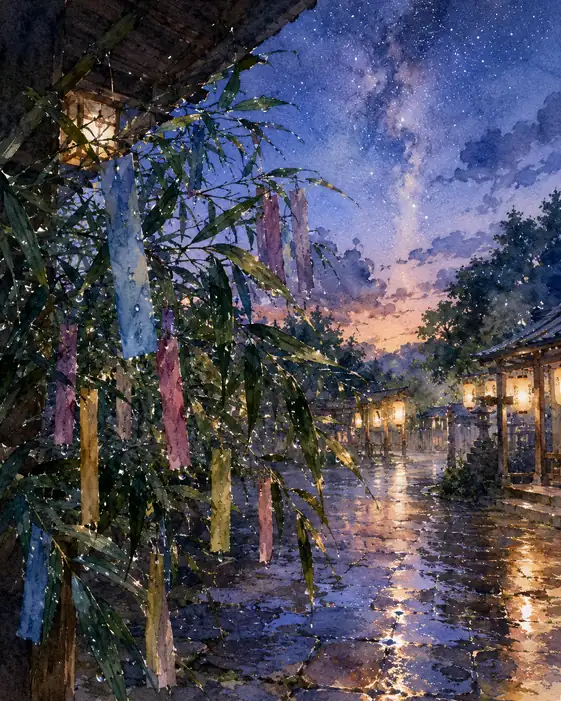
1. Introduction This vertical watercolor painting portrays traditional glass wind chimes hanging under the eaves of a house during the Star Festival. Capturing three chimes swaying gently in the breeze, the scene evokes a cool, sensory atmosphere during a quiet summer sunset, rendered through translucent watercolor washes and soft light gradients. 2. Description In the composition, the largest glass chime in the foreground is decorated with gold patterns, its violet paper strip fluttering softly. Two more chimes recede diagonally into the left background. The right side features a wooden roof decorated with tassel cords, set against sunset clouds glowing orange and yellow. 3. Analysis The artwork achieves a strong sense of depth by aligning the wind chimes along a diagonal path, guiding the eye into the background. The color palette relies on a contrast between the cool indigos of the foliage and chimes and the warm, intense golden light of the horizon. 4. Interpretation and Evaluation The painting connects the summer tradition of wind chimes with the quiet expectation of the Tanabata reunion, treating the swaying paper strips as messengers of human prayers. The evaluation praises the artist's outstanding ability to render transparent glass textures, complex light reflections, and atmospheric distance. 5. Conclusion A close viewing shifts the focus from the detailed glass spheres to the delicate textures of the paper strips and the soft lighting of the distant home. Ultimately, this work is a polished artistic achievement, translating traditional Japanese summer aesthetics into a visually spectacular landscape through a highly sensitive handle of watercolor.
Same Subcategory
Similar Artworks
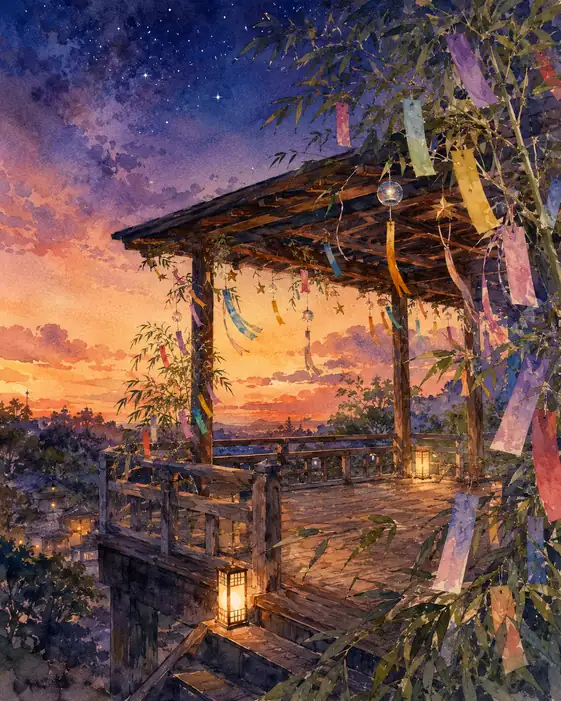 Where Sunset Meets the Starry Night
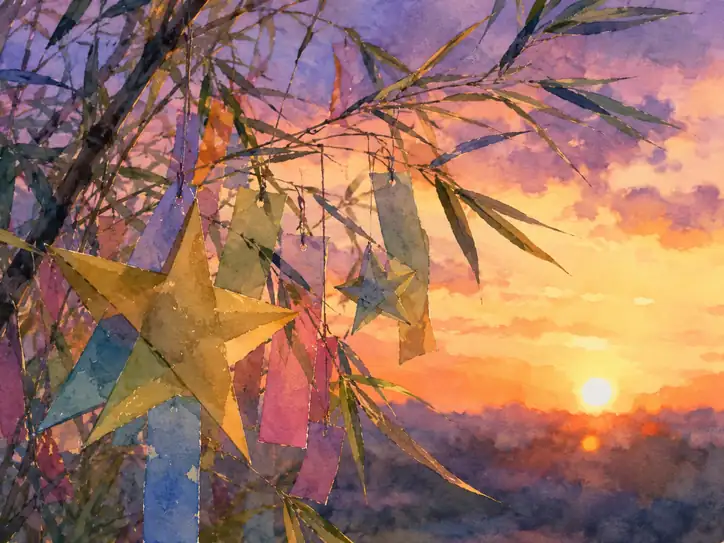 Wishes Glowing in the Twilight
 Waiting Under the Crimson Shelter
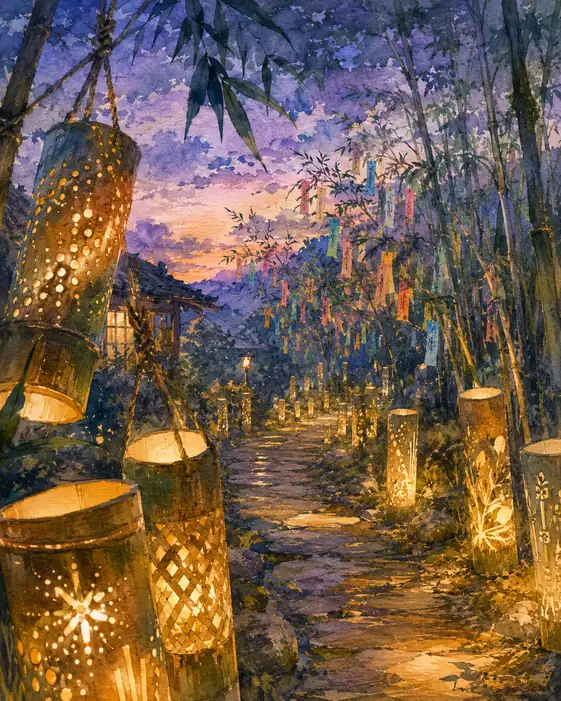 Path of Golden Warmth
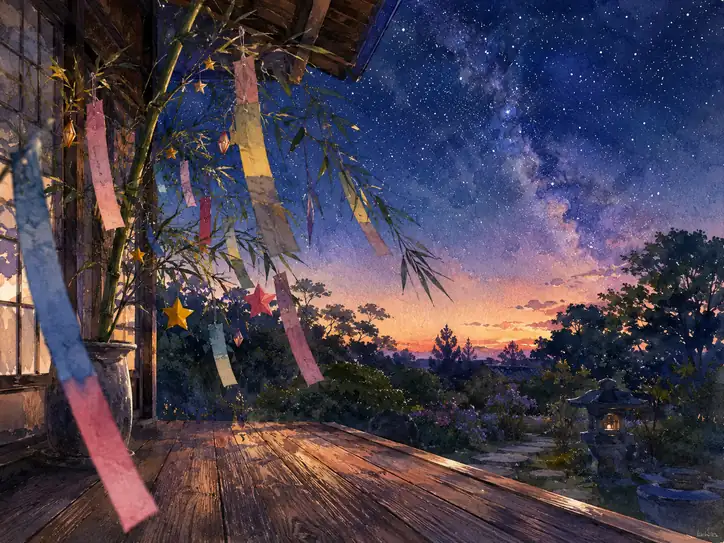 The Milky Way from My Sanctuary
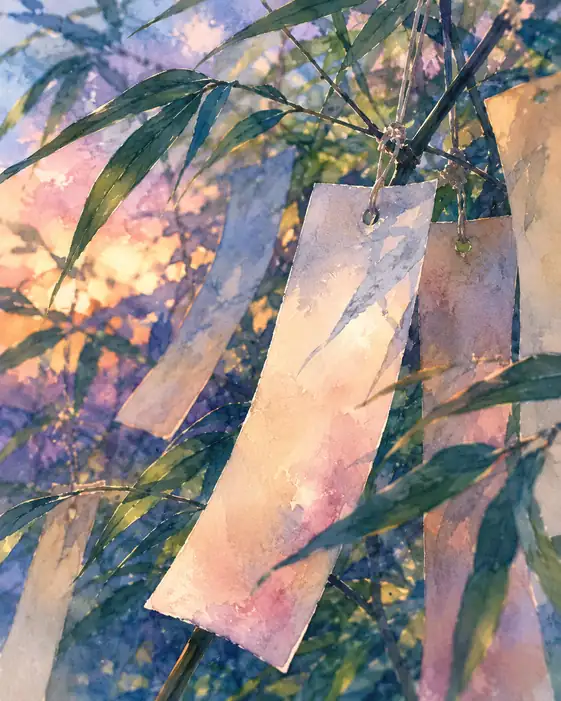 Warmth Filtering Through My Thoughts
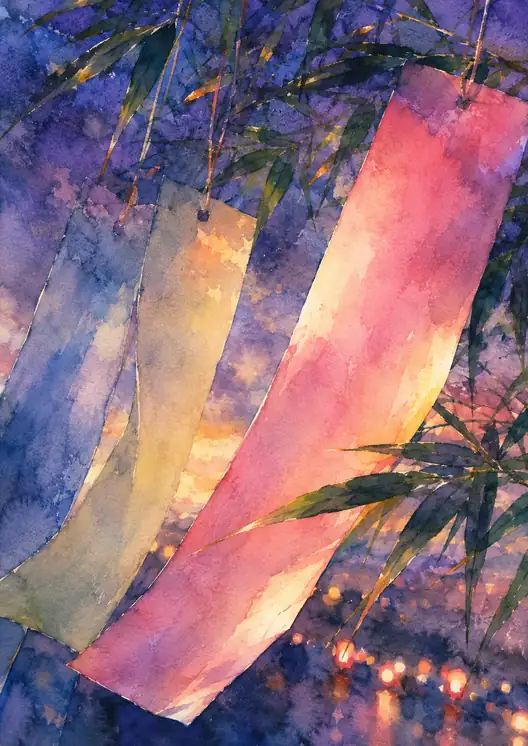 Silent Whisper to the Midnight Sky
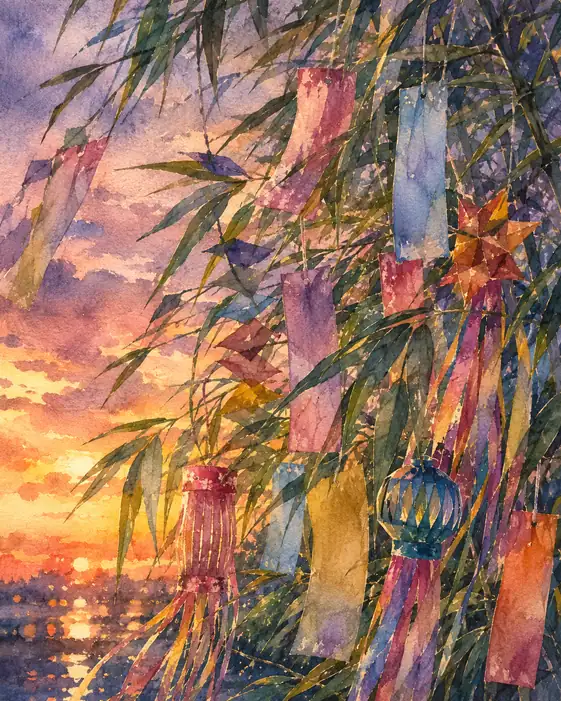 Where Twilight Embraces My Hopes
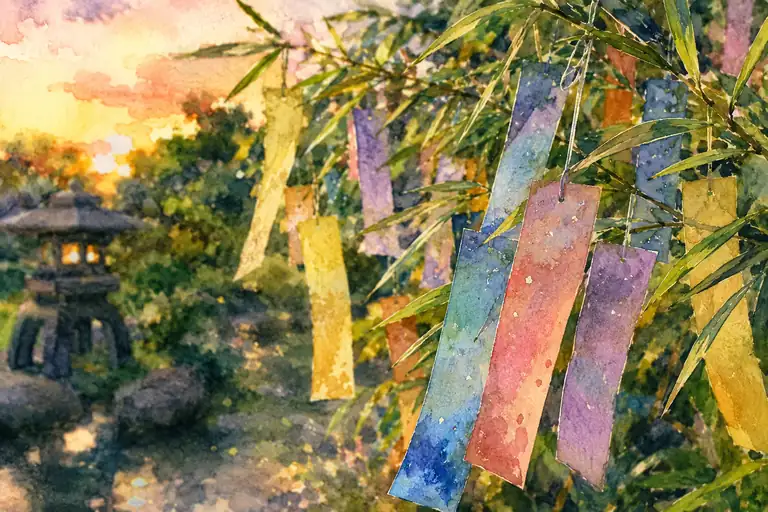 Whispering Leaves, Glowing Stone
 Starlight After the Rain