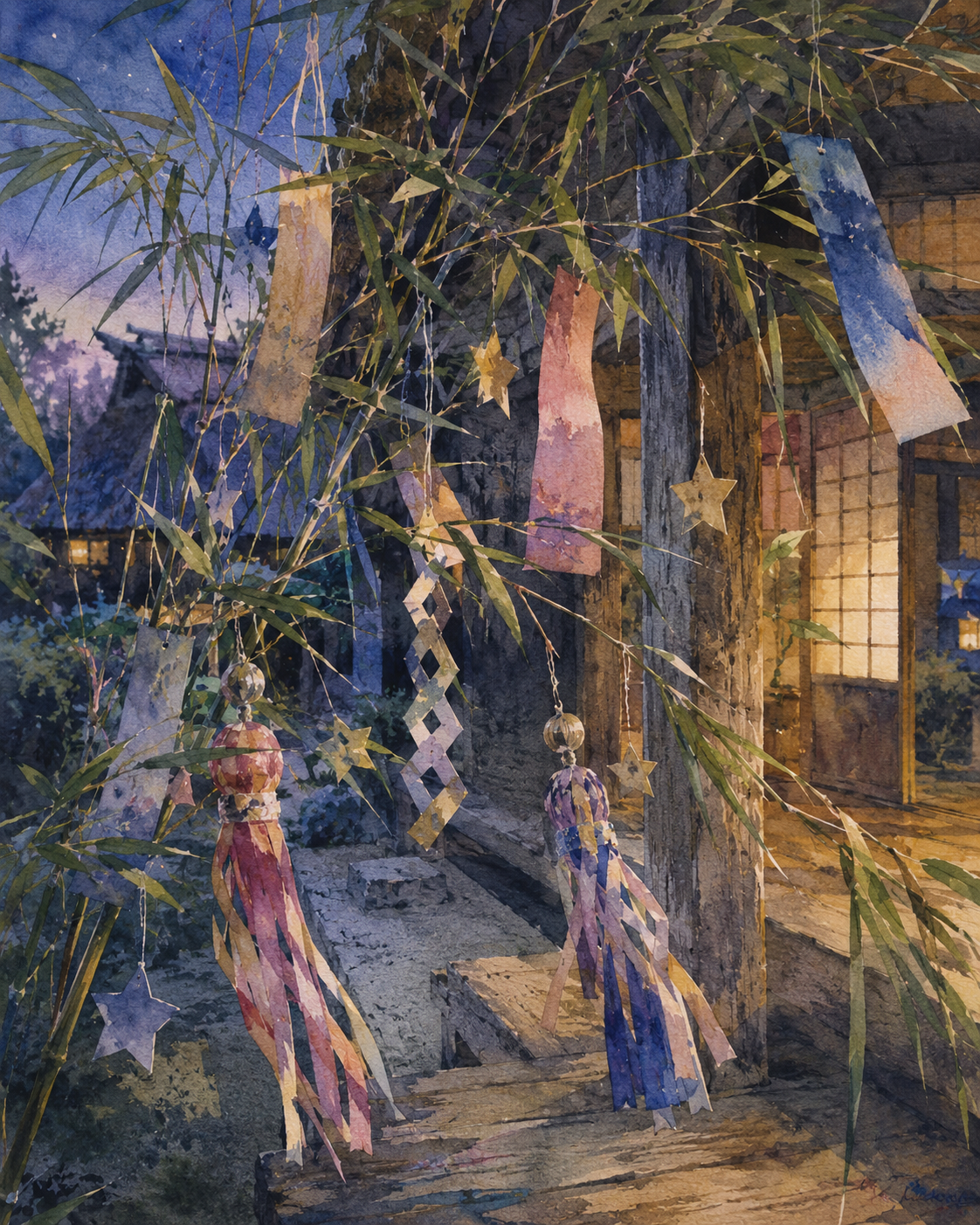
Under the Eaves of Memory
Critique
1. Introduction This vertical watercolor painting portrays a quiet Tanabata night at a traditional Japanese folk house. The left features a bamboo branch adorned with handmade paper ornaments, casting gentle silhouettes against a weathered wooden porch and sliding shoji doors that glow with a warm, inviting light from the interior. 2. Description In the composition, paper strips in muted pink and blue hang alongside star decorations and round paper streamers from the bamboo. A thick, textured wooden column stands on the right, and the amber light from the shoji screen illuminates the floorboards. The deep indigo night sky is visible in the background. 3. Analysis The strength of the artwork lies in the visual balance between the vertical grid of the rustic house and the organic shapes of the bamboo. The color palette relies on a harmonious contrast between the warm golden light of the interior and the cool, dark tones of the night sky and foliage. Layered washes capture the aged wood grain. 4. Interpretation and Evaluation The painting evokes a strong sense of nostalgia, capturing the humble wishes of residents directed to Orihime and Hikoboshi from their domestic space. The glowing interior suggests family warmth amid the cool evening. The evaluation points to the artist's superb rendering of worn textures and sensitive control of light. 5. Conclusion A close viewing shifts the viewer's focus from the glowing window to the rich, weathered textures of the ancient pillar and deck. Ultimately, this work is a polished artistic achievement, translating the timeless peace of rural Japan and cultural traditions into a deeply moving landscape through a highly sensitive handle of watercolor.
Same Subcategory
 Harvest and Shadow in the Pueblo
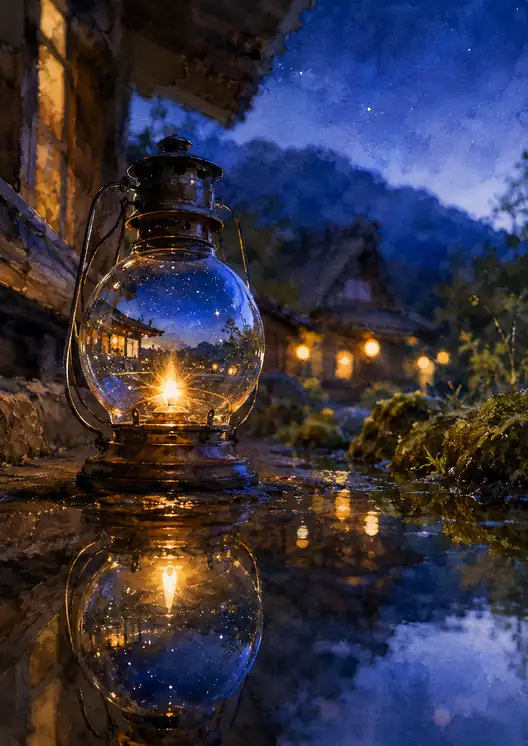 Echoes of Starlight on the Water
Similar Artworks
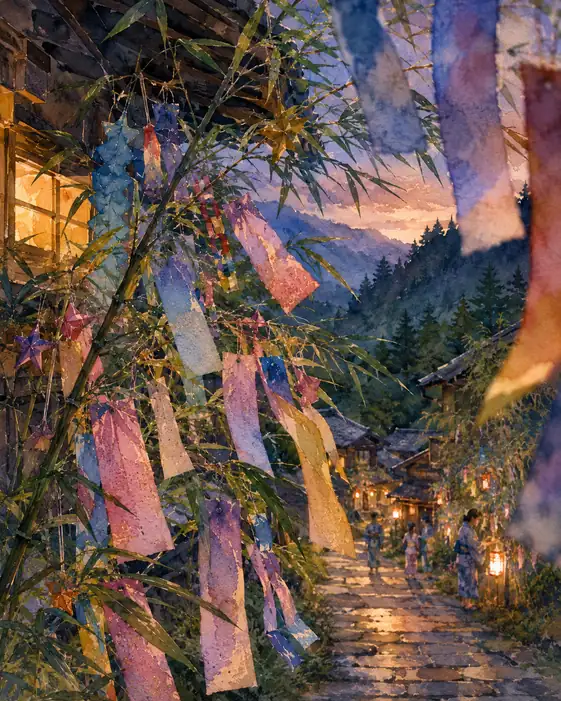 Wishes Echoing in the Valley
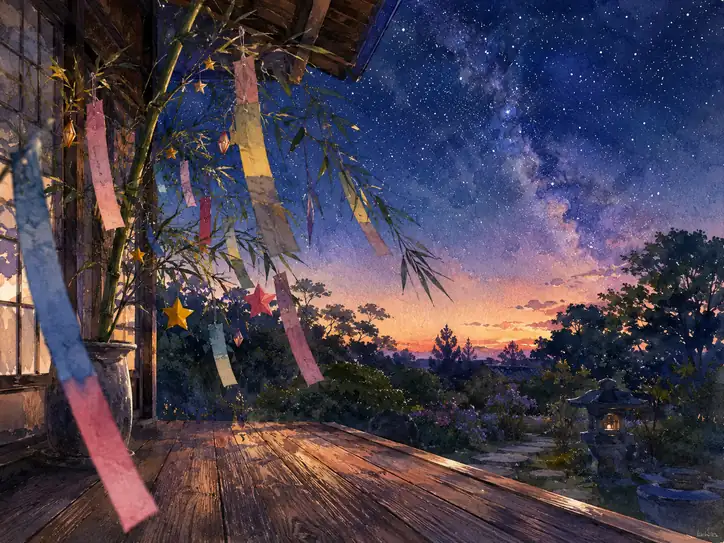 The Milky Way from My Sanctuary
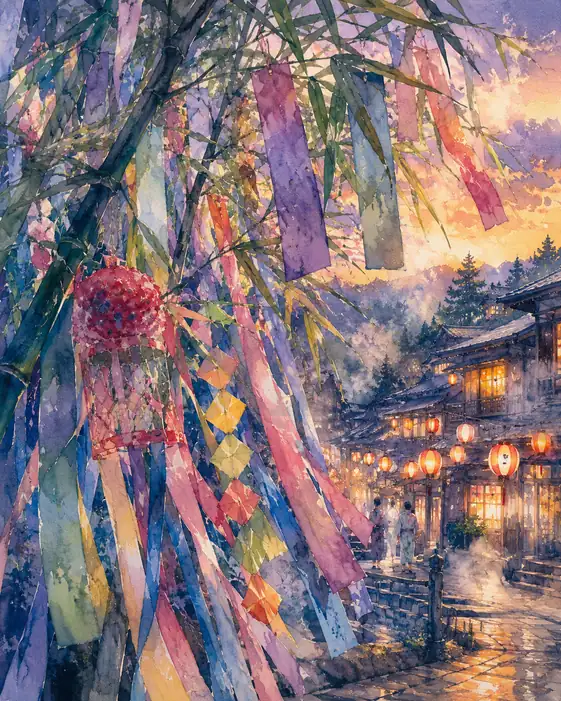 Warm Lights and Whispering Steam
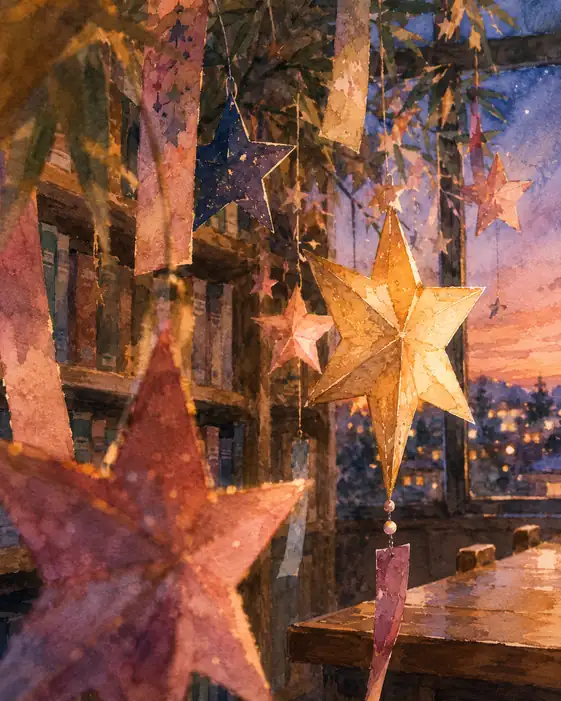 Library of Whispering Stars
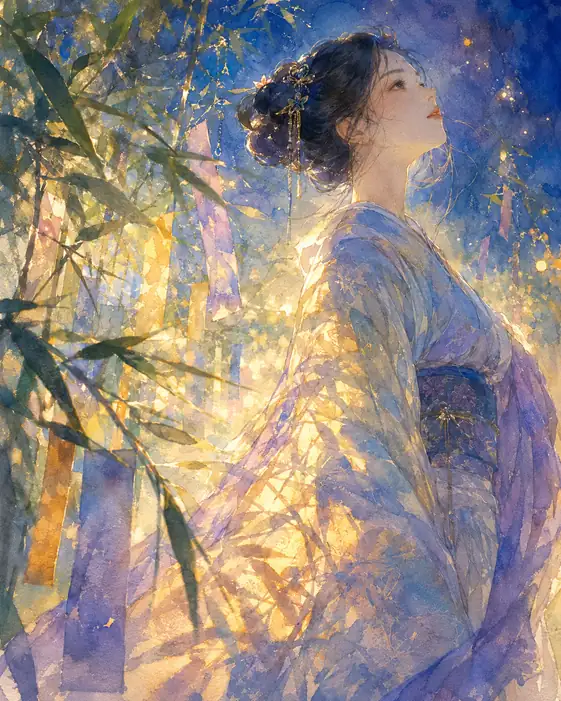 Golden Threads of Destiny
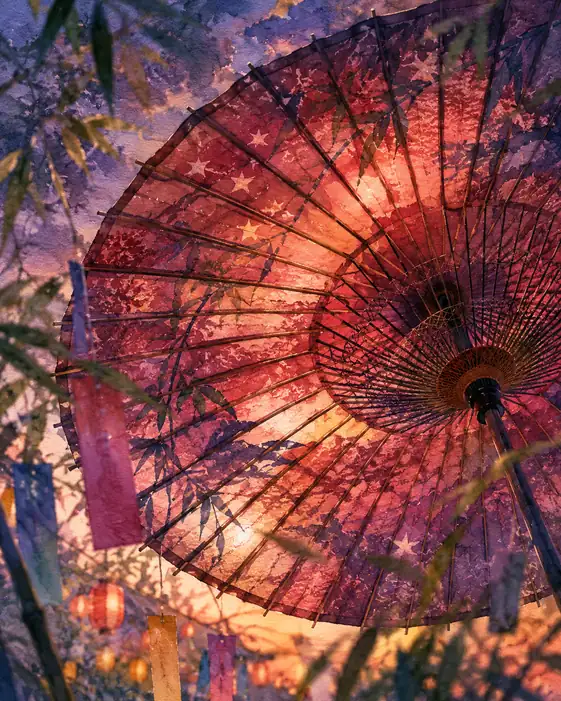 Waiting Under the Crimson Shelter
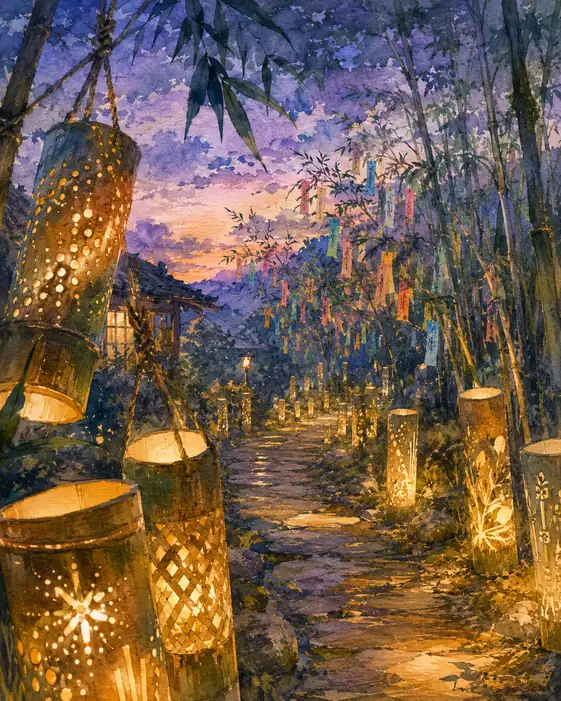 Path of Golden Warmth
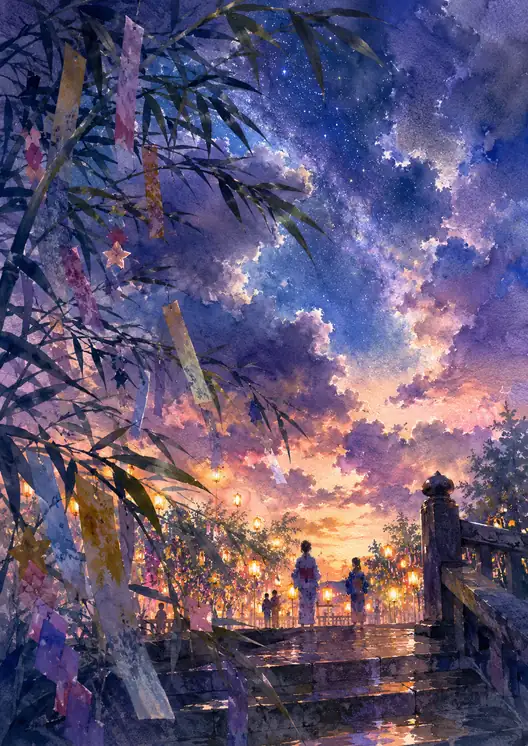 Looking Up at Our Starry Promise
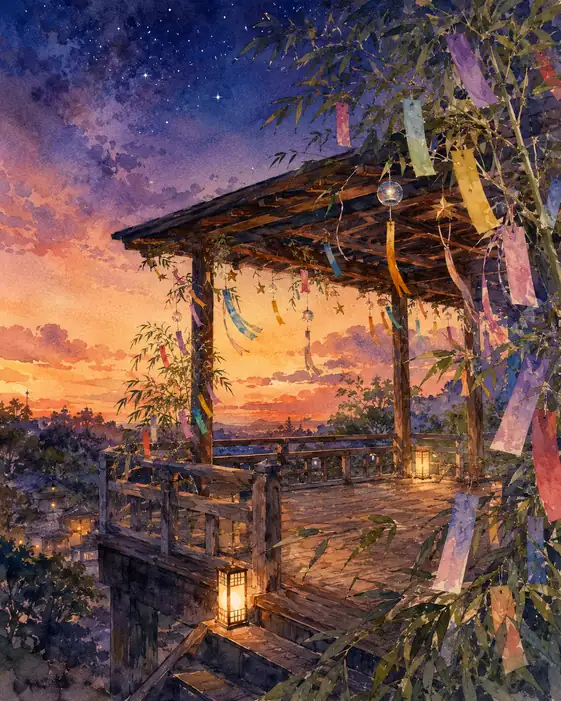 Where Sunset Meets the Starry Night
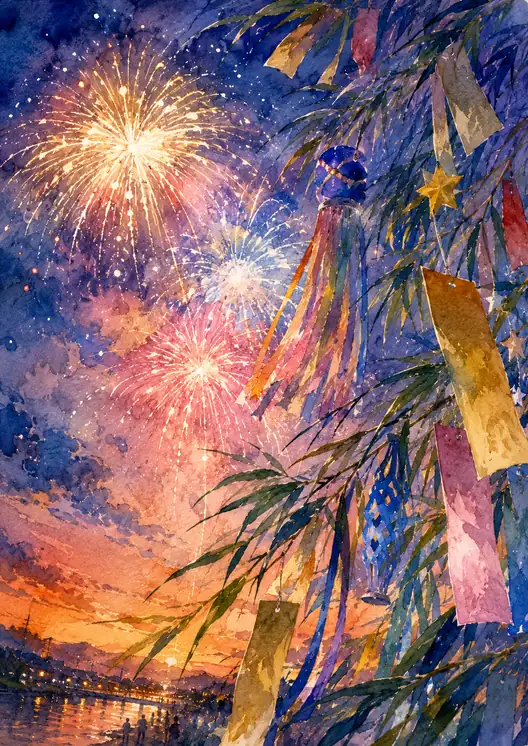 Transient Sparks, Eternal Vows