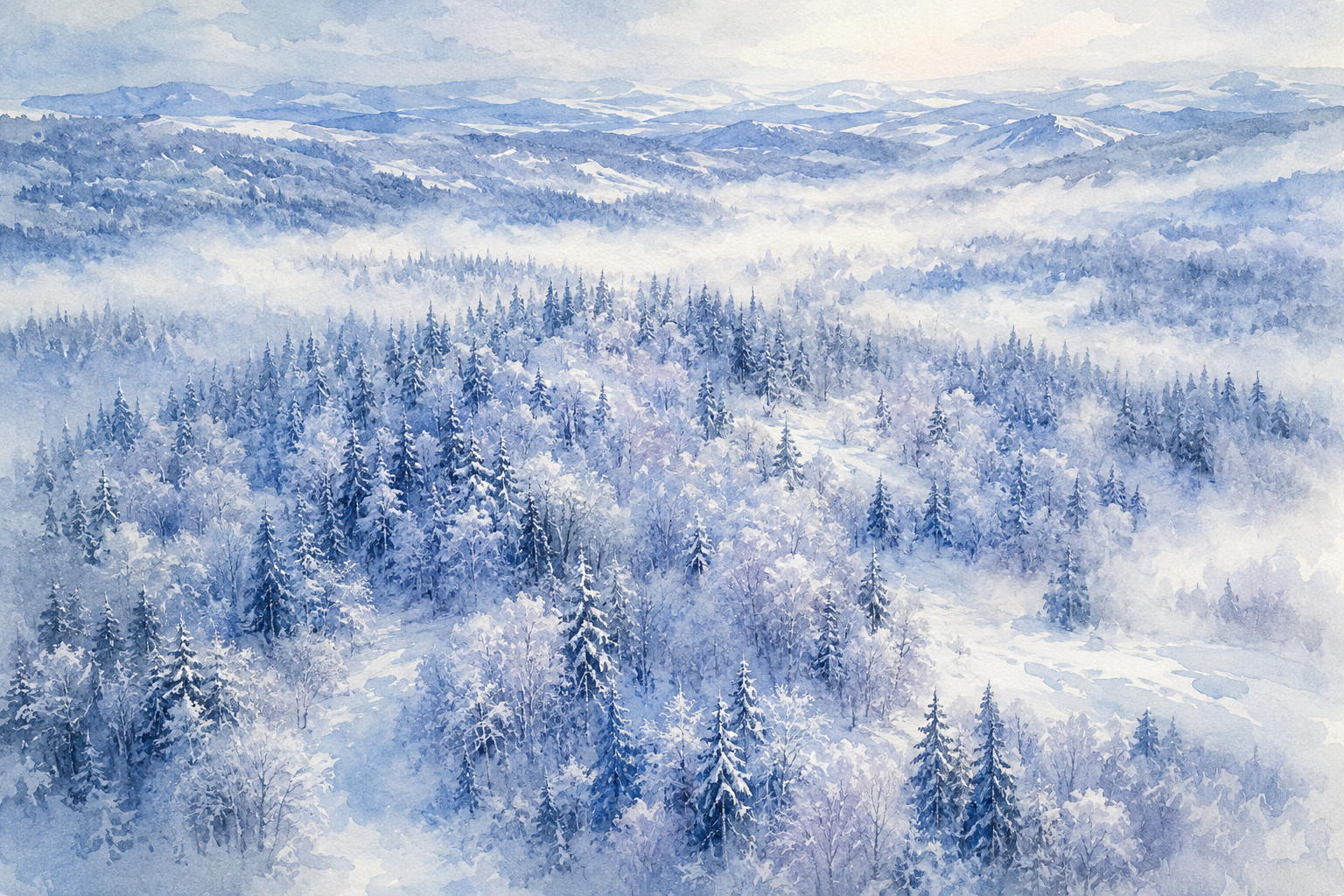
Sacred Silence of the Frozen Forest
Critique
1. Introduction This landscape painting captures the deep silence of winter in a vast coniferous forest covered in fresh snow beneath rolling mountains. The pale mist and cold air drifting through trees convey a sense of calm. From an educational perspective, it is a fine example of using watercolor gradients to achieve atmospheric perspective. 2. Description In the foreground, a dense forest of snow-covered firs and pines is rendered with delicate precision. A soft white fog flows through the valleys and gaps between the trees, partially blanketing the dark trunks. In the background, layered mountain ridges unfold in successive gradients of pale blue and gray. 3. Analysis The composition relies on the layered arrangement of trees and distant ridges to create a sense of depth and scale. The brushwork employs watercolor washes and soft edges, contrasting the gentle texture of snow with the sharp profiles of conifers. The color scheme is limited to cool blues, whites, and grays. 4. Interpretation and Evaluation This work can be interpreted as a study of the quietude and purity of the winter wilderness. The heavy snow and dense mist suggest a process of natural purification, creating a calm, almost sacred atmosphere. The painting is highly evaluated for using a restricted palette to suggest the thickness of the frozen air. 5. Conclusion While the initial impression is one of a cold and isolated forest, closer looking reveals the subtle values of white and the depth of space. This quiet harmony of cool colors leaves a lasting feeling of peace. Ultimately, the painting successfully combines rigorous structure with a poetic appreciation for the winter season.
Same Subcategory
 Golden Crowns of the Silent Forest
Similar Artworks
 Breath of Life on the Emerald Peaks
 A Prayer Whispered to the Frozen Dawn
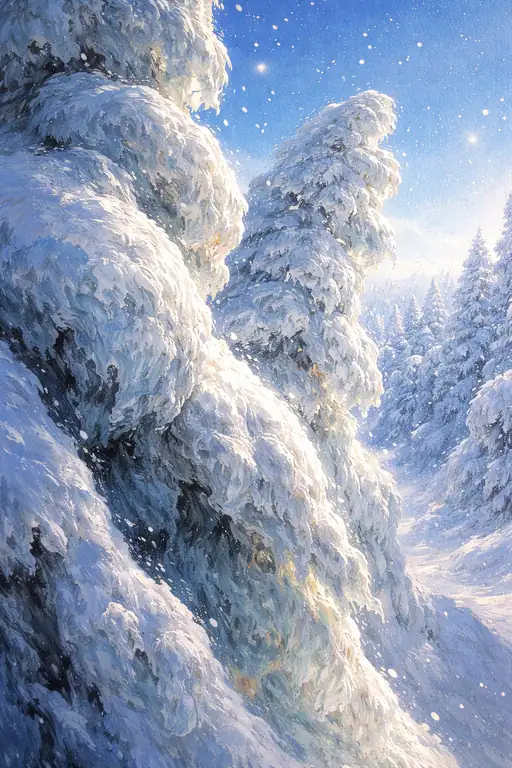 Silent Guardians of the Frost
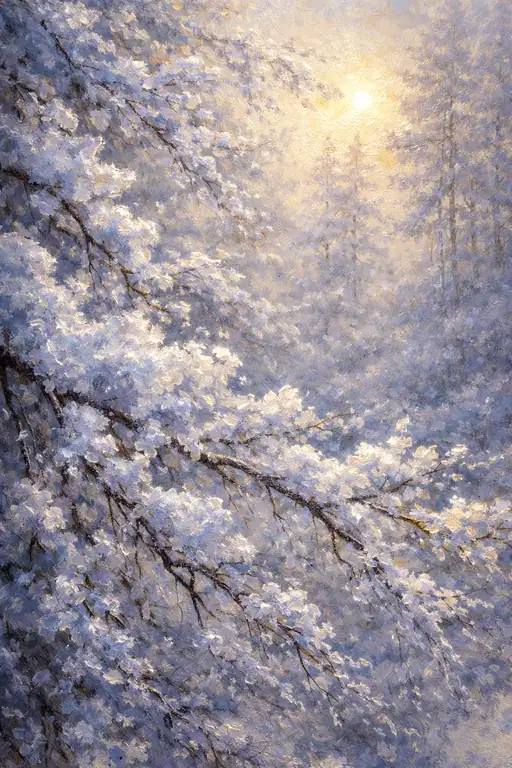 Golden Glow in the Frosty Woods
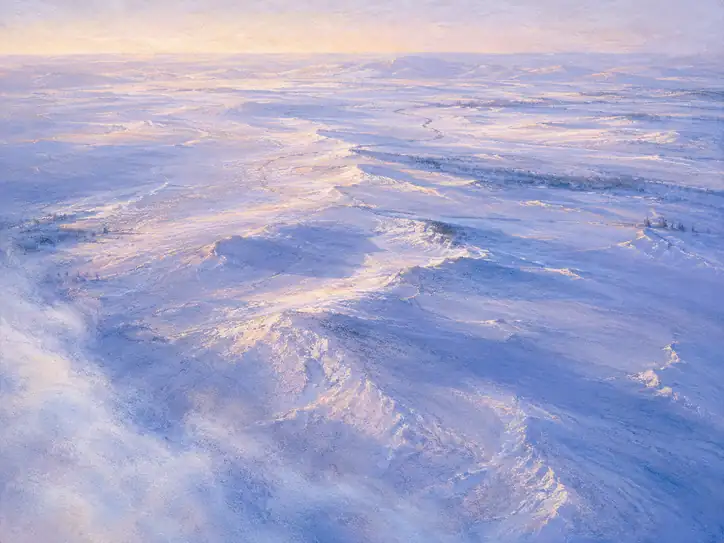 Where the Frozen Light Awakens
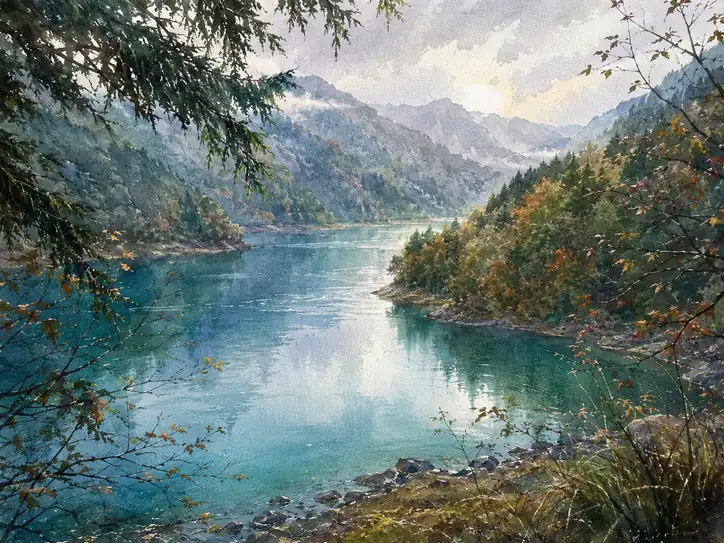 Echoes of Tranquility: The Sapphire Haven
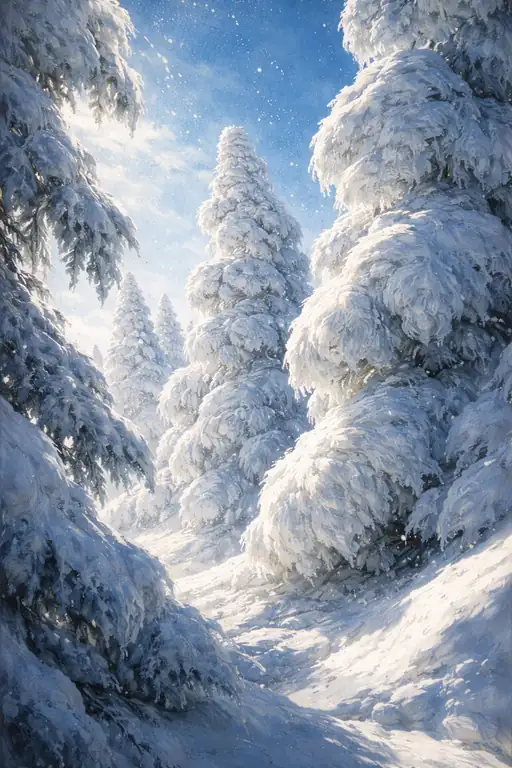 The Radiant Silence of the Silver Forest
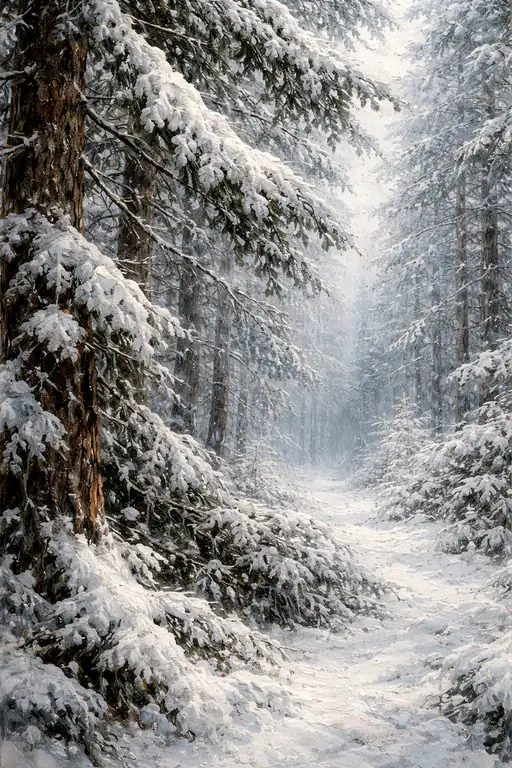 Path Through the Winter Woods
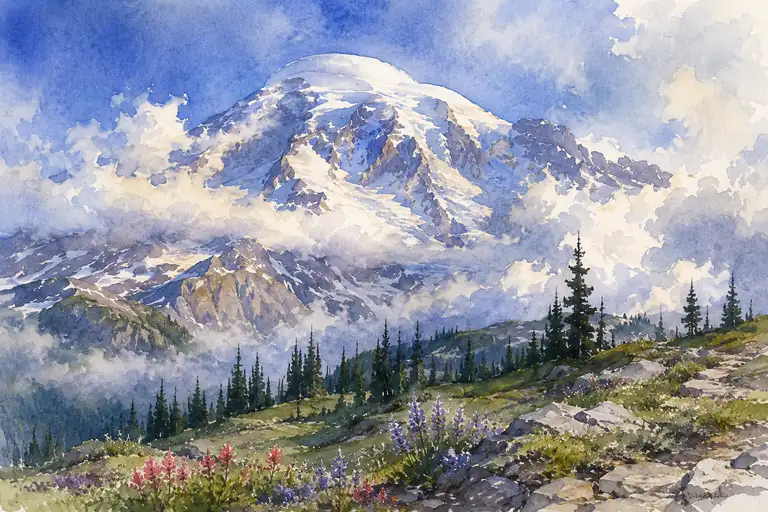 Where Flowers Gaze at Eternity
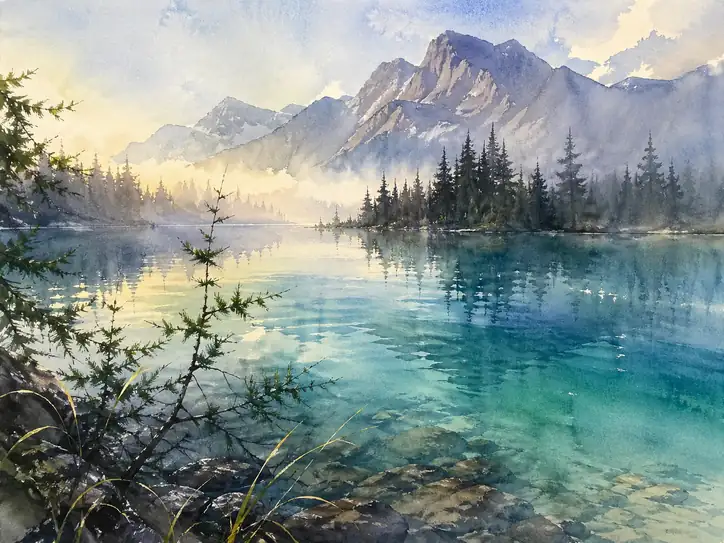 Crystal Morning in the Silent Valley