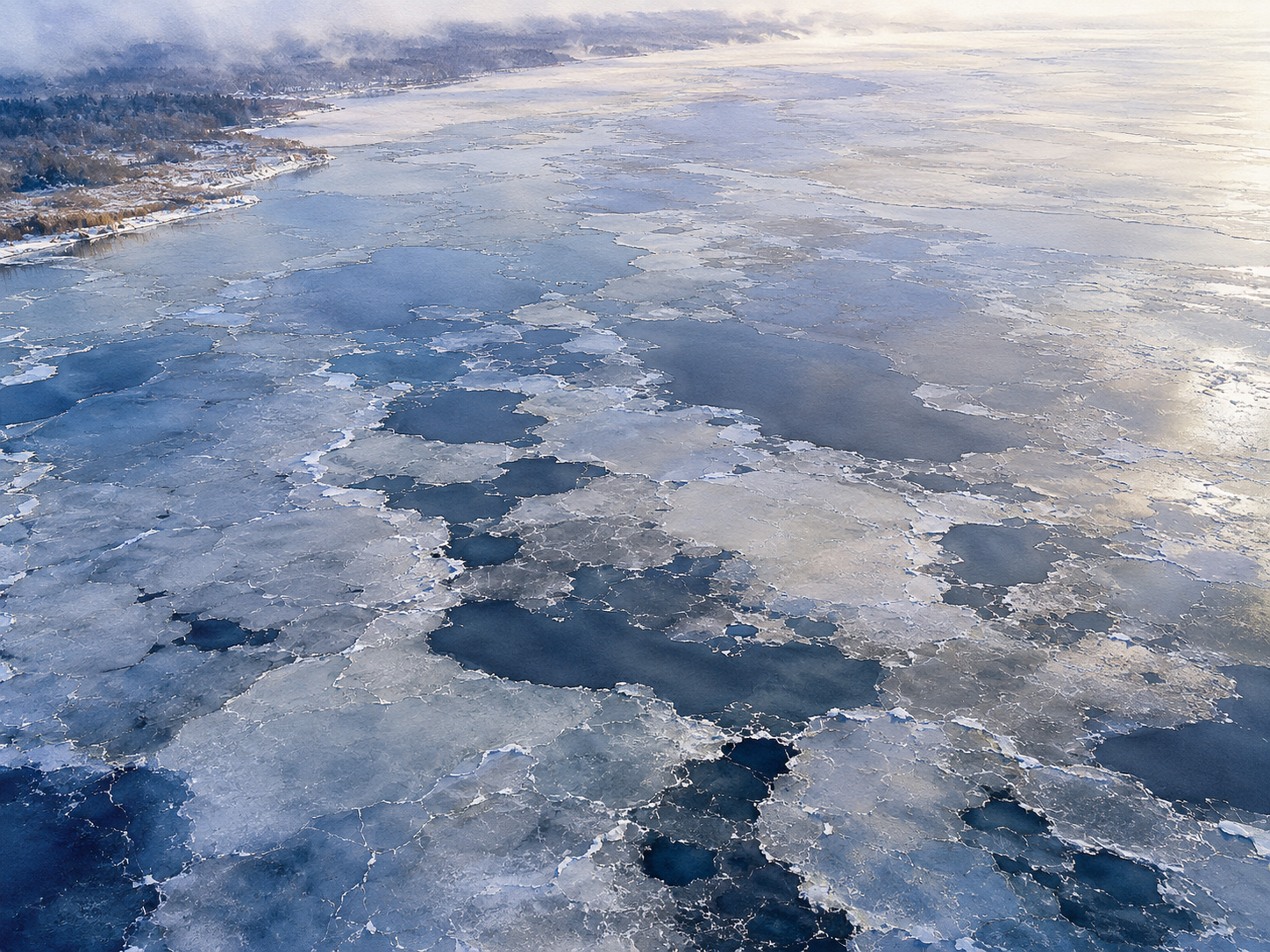
Whispers of the Frozen Light
Critique
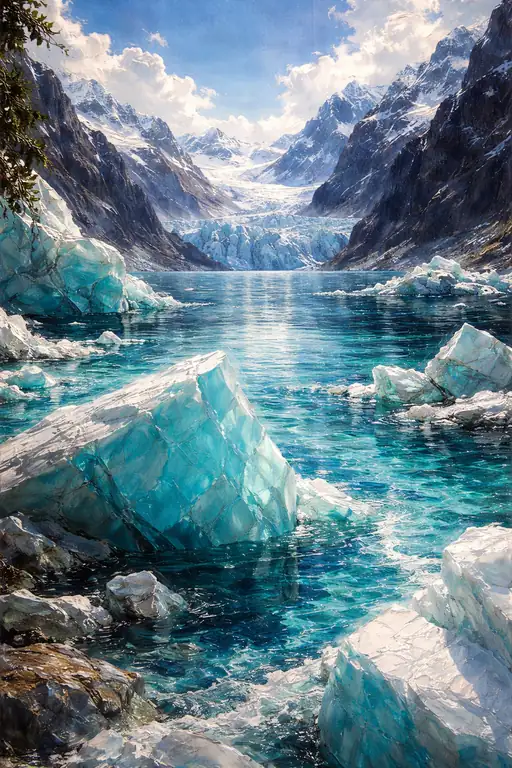
1. Introduction This landscape painting depicts a vast frozen water surface and a shoreline in winter. The expansive sheets of ice and the cold atmospheric light convey a profound sense of silence. From an educational perspective, it serves as a strong example of capturing a severe environment through realistic techniques. 2. Description Numerous irregular plates of ice cover the entire water surface, extending to the horizon. In the upper left background, a thin layer of snow dusts the coastline with a few simple cottages. From the upper right, cool sunlight filters down diagonally, illuminating the ice edges. Low-hanging mist hovers near the horizon, softly obscuring distant mountains. 3. Analysis The composition relies on a diagonal structure from the upper left to the lower right, giving the scene boundless depth. The brushwork is highly detailed, carefully rendering the cracks in the ice and water clarity. The color palette is dominated by cool blues and whites, while golden highlights of sunlight introduce contrast. 4. Interpretation and Evaluation This work can be interpreted as a study of tranquility and the quiet force within extreme conditions. By placing the small signs of human life far in the background, the painting contrasts human scale with the grandeur of nature. The piece is highly evaluated for its technical precision in rendering textures and light. 5. Conclusion While the initial impression is one of a barren and frozen world, closer observation reveals a rich variation of colors brought by the light. This technique of integrating light within a still landscape leaves a lasting, peaceful impression. Ultimately, the painting successfully harmonizes disciplined descriptive skill with a poetic portrayal of winter.
Same Subcategory
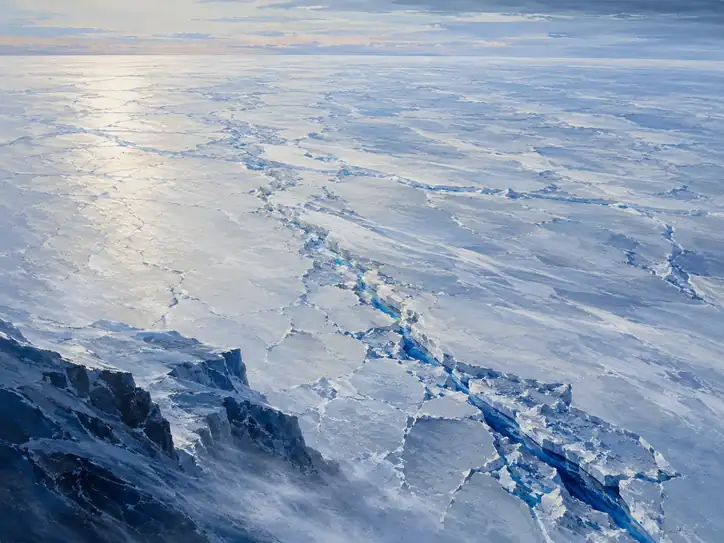 The Blue Veins of the Silent Sea
Similar Artworks
 Golden Rim of the Frozen Silence
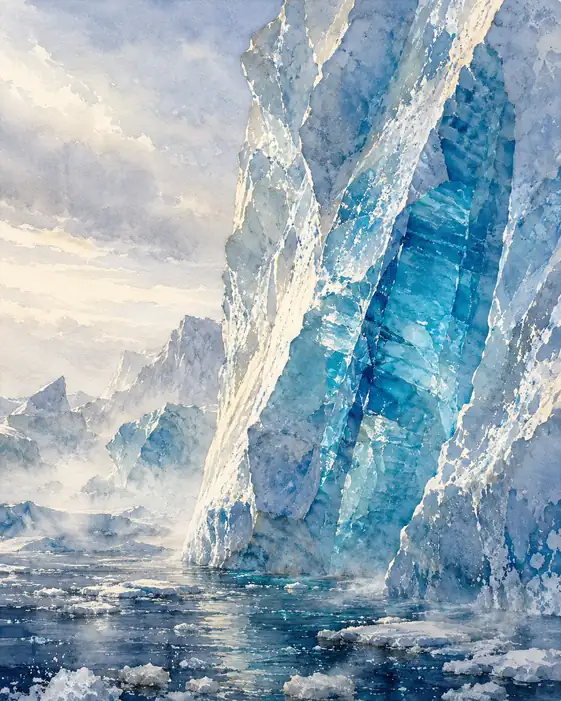 The Blue Silence of the Glacier
 The Moment the Frozen Silence Cracks
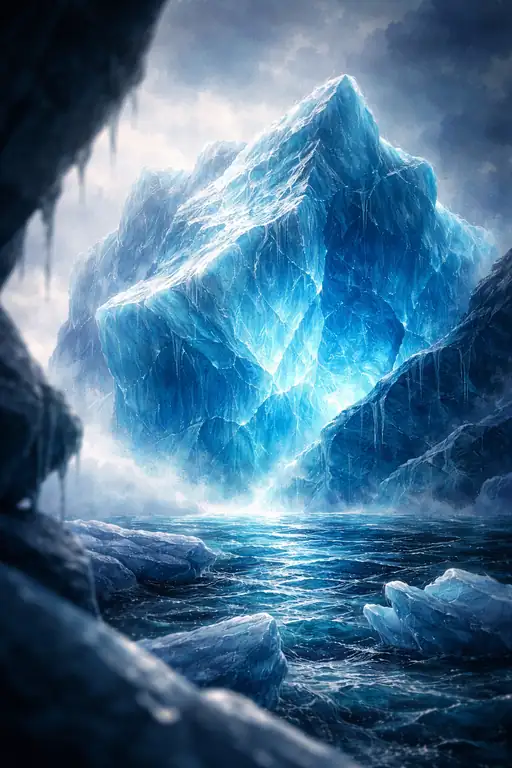 Whispers of the Frozen Citadel
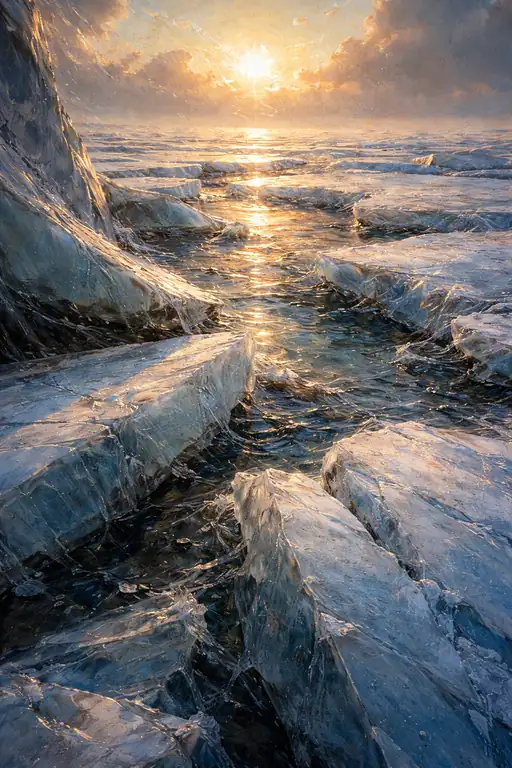 Eternal Radiance in the Heart of Ice
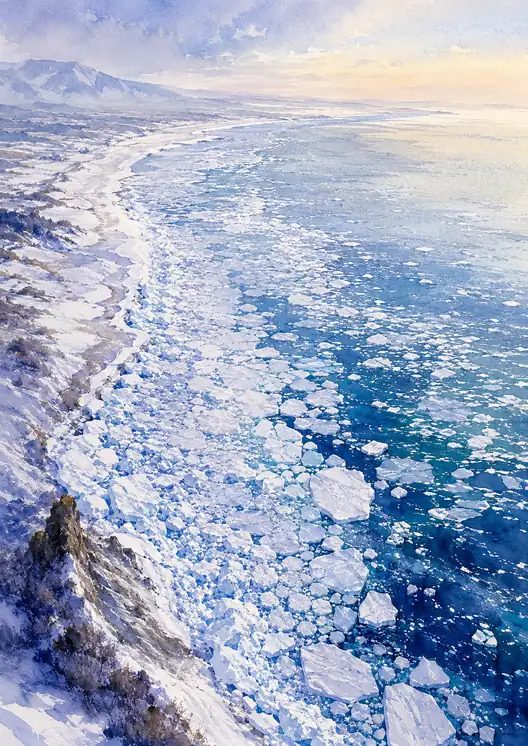 Warm Light on the Frozen Tides
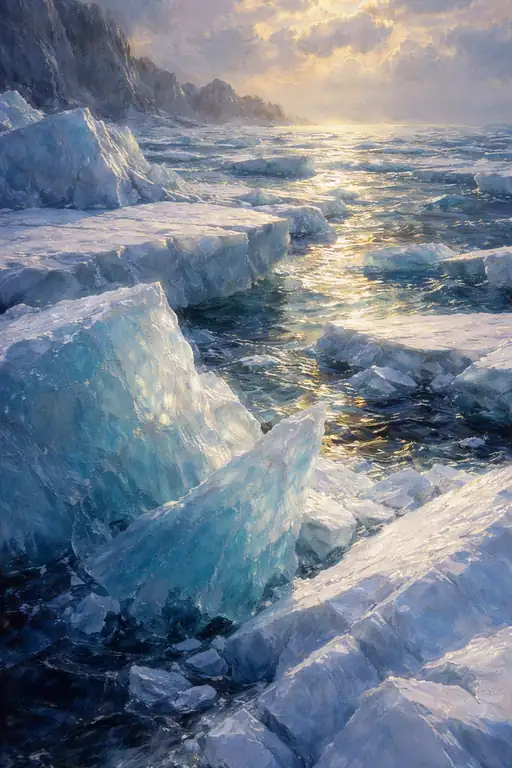 The Last Light of the Polar Kingdom
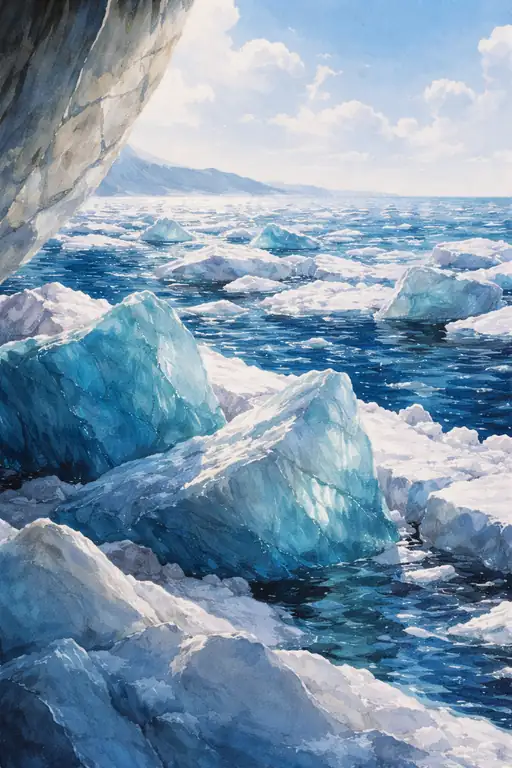 Silence of the Sleeping Glaciers
 The Solitude of Frozen Wonders
 Whispers of the Frozen Blue