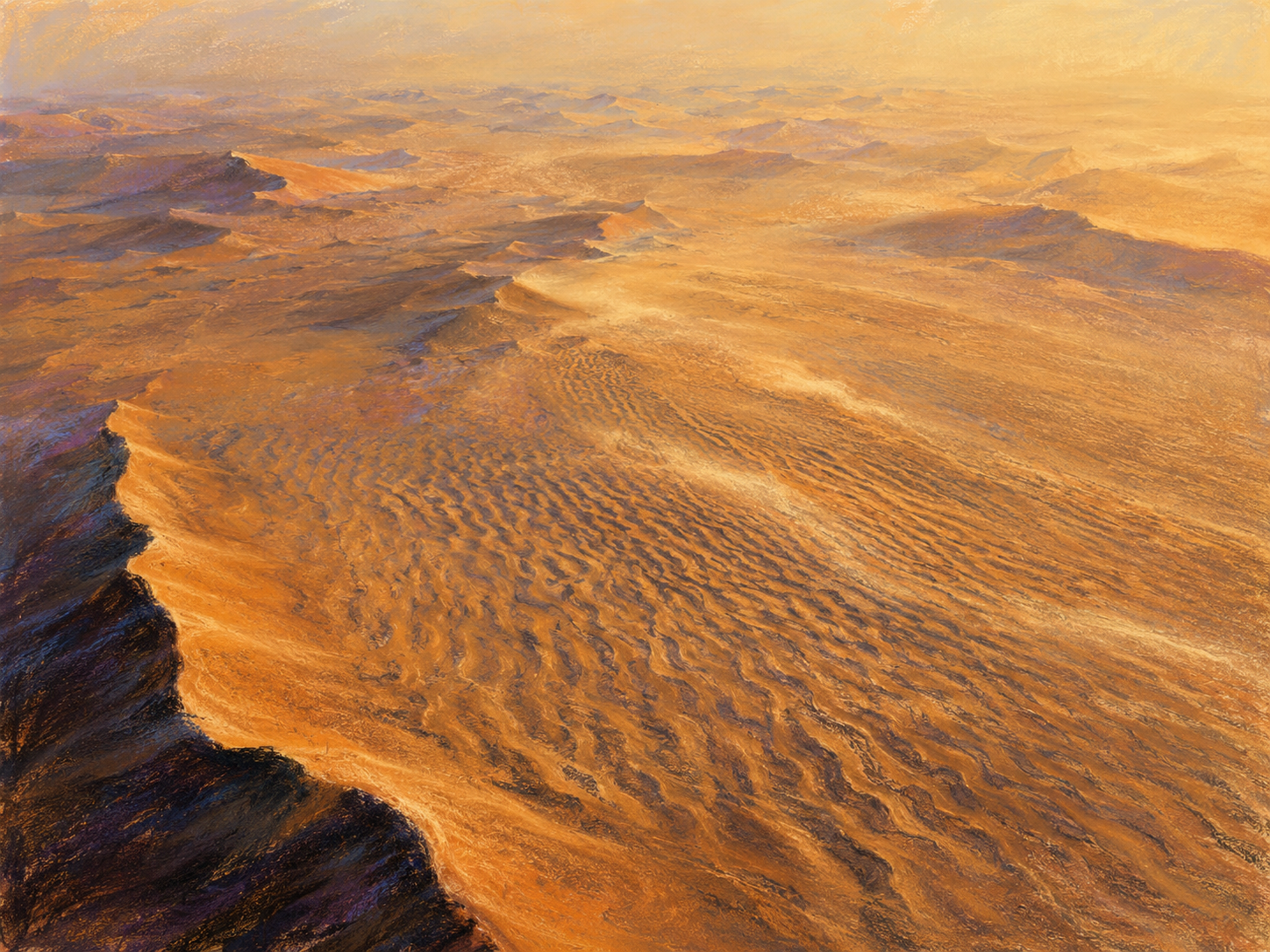
Ripples of Eternal Time
Critique
1. Introduction This landscape painting depicts a vast desert featuring delicate ripples on the sand and a golden light filling the sky, captured from an elevated viewpoint. The accumulation of minute patterns shaped by nature combined with the dramatic light makes the viewer feel the quiet power of the earth. This critique analyzes the visual elements and composition to discuss its atmosphere and aesthetic value. 2. Description A steep dune ridge casting a deep purple shadow occupies the bottom-left corner of the canvas. Extending from the ridge toward the center, fine wave-like ripples carved by the wind spread across the ground. In the upper-right, a warm, golden light pours from the sky, softly hazy as if the air contains fine desert dust. 3. Analysis The color palette establishes a sharp tonal contrast between the dark purple shadow on the left and the warm orange and ochre tones dominating the landscape. Gritty, pastel-like textures tactilely represent the uneven surface of the ripples and the dry quality of the sand. The diagonal ridge line and flowing patterns of the ripples guide the eye toward the horizon. 4. Interpretation and Evaluation The artwork goes beyond depicting a monotonous desert by integrating wind-carved ripples and luminous air to represent the eternal passage of time. The extreme value contrast creates dramatic tension, while the orderly repetition of ripples provides visual harmony. The artist's capability to render atmospheric haze and rough textures simultaneously deserves high evaluation. 5. Conclusion At first glance, the viewer is drawn to the contrast of the dark shadow and the orange sand, but soon the eye wanders across the ripples toward the light, experiencing the desert's silence. The ripples, recording the memory of wind and light, symbolize the timeless harmony of nature. The work successfully captures the fleeting atmosphere, presenting a highly accomplished landscape.
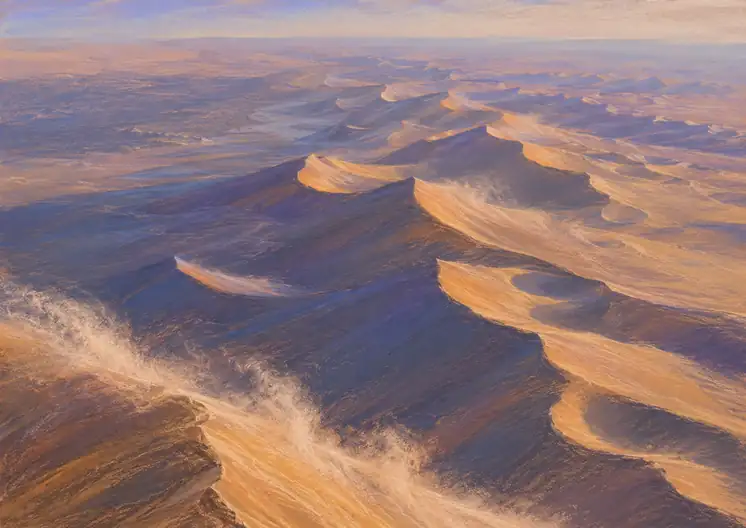 Where the Wind Carves the Earth
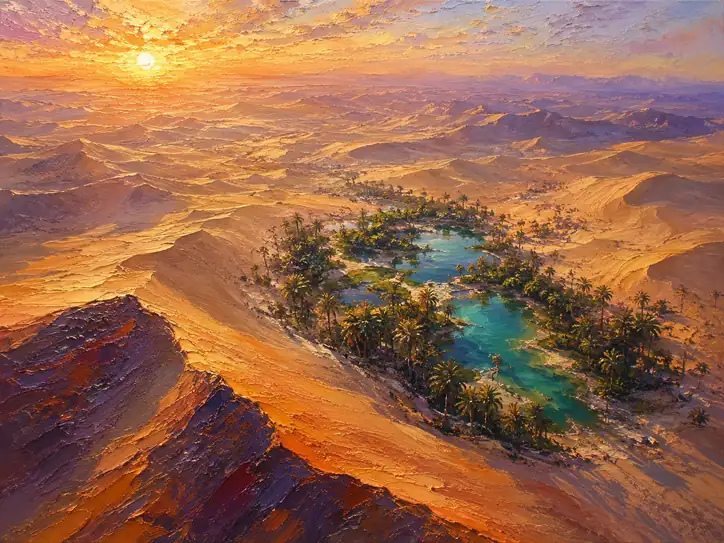 Emerald Sanctuary
 Where the Wind Dances on Golden Slopes
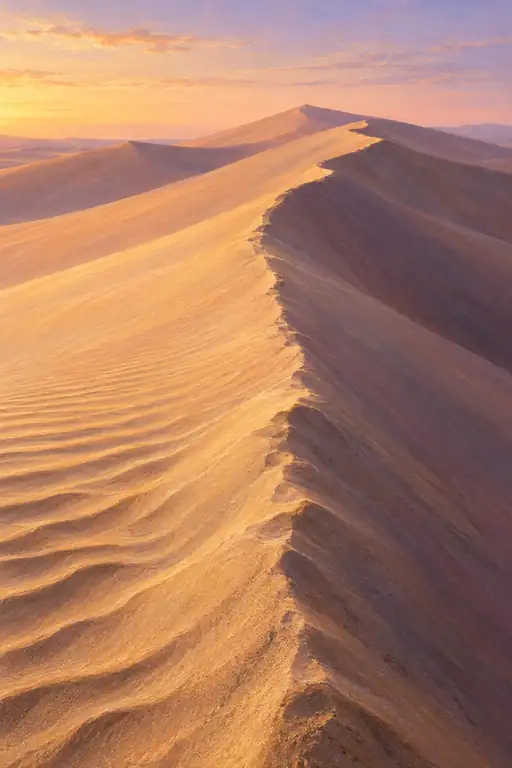 Where the Wind Traces Silence
 The Ridge between Light and Shadow
 Divided by Light
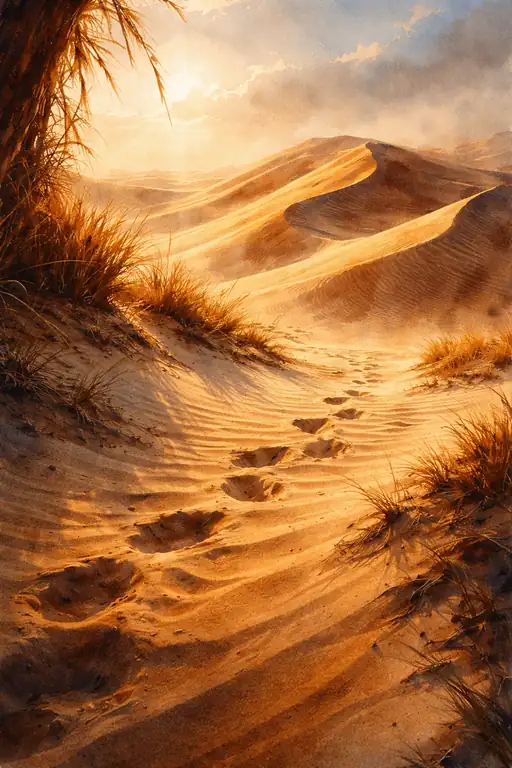 Footsteps in the Golden Sand
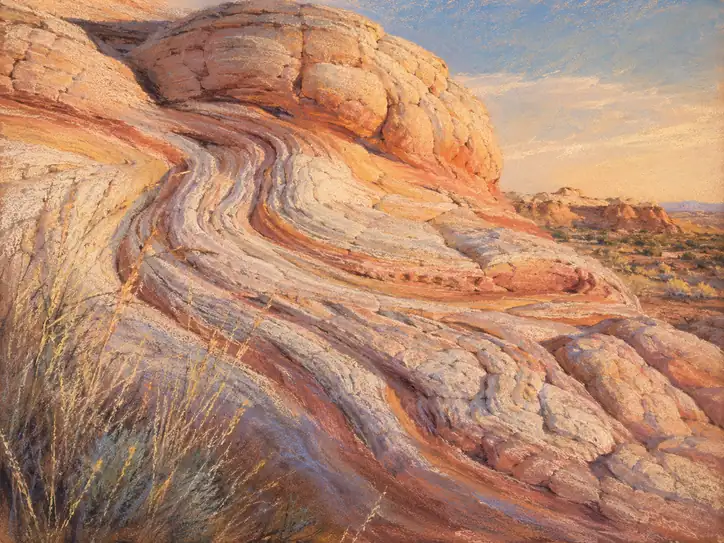 Echoes of the Sandstone Ocean
 Divided by Light and Shadow
 The Divide of Golden Silence
 Sculpture of the Golden Wind