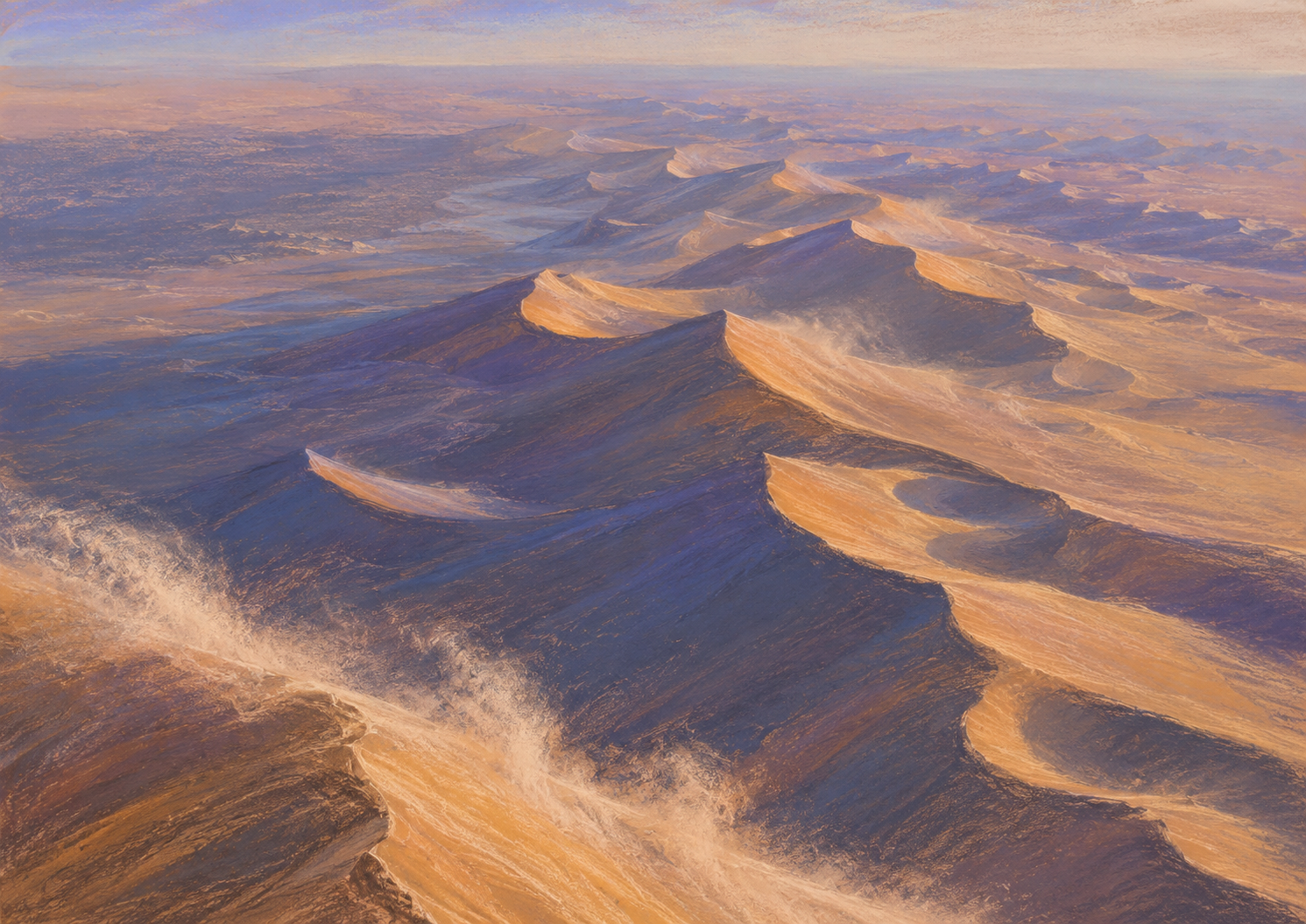
Where the Wind Carves the Earth
Critique
1. Introduction This landscape painting depicts a vast series of desert sand dunes under a strong wind, captured from an elevated perspective. The dynamic topography shaped by harsh elements and the contrast of colors under low sunlight leave a powerful impression of desolate beauty. This critique analyzes the visual elements and composition to discuss its atmosphere and aesthetic value. 2. Description Numerous undulating ridges of sand stretch from the bottom-left toward the upper-middle distance in a layered composition. Fine sand blown from the crests is rendered as pale, misty plumes catching the light. One side of the dunes glows in warm ochre and orange, while the opposite slopes are covered in deep blue and purple shadows. 3. Analysis The color palette utilizes a striking complementary contrast between the warm yellows of the illuminated sand and the cool violet-blues of the shaded slopes. Textured, pastel-like brushstrokes successfully convey the dry, gritty quality of the desert and the movement of the wind. The zigzagging pattern of the ridges leads the viewer's eye into the deep space. 4. Interpretation and Evaluation The artwork goes beyond merely depicting a desert scene; it visualizes invisible elements like wind and light to express the primal energy of nature. The stark contrast of light and shadow emphasizes the sculptural volume of the dunes, while the blowing sand adds a sense of transient movement. The handling of dry texture and light is highly evaluated. 5. Conclusion Initially, the viewer is struck by the sharp contrast of light and the dynamic shapes of the sand, but soon senses the silence and the sound of the wind. This fleeting interaction of earth, air, and sunbeams symbolizes the continuous transformation of the landscape. The work brilliantly captures the atmosphere of the desert, presenting a highly accomplished landscape.
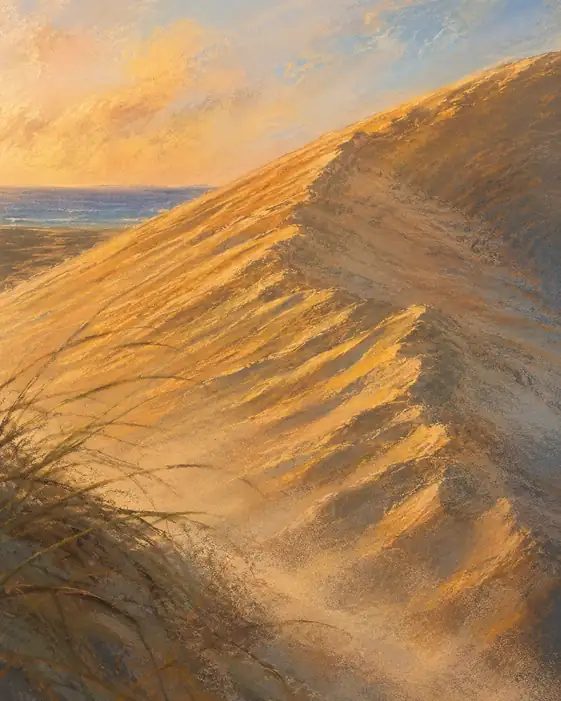 Where the Golden Wind Sleeps
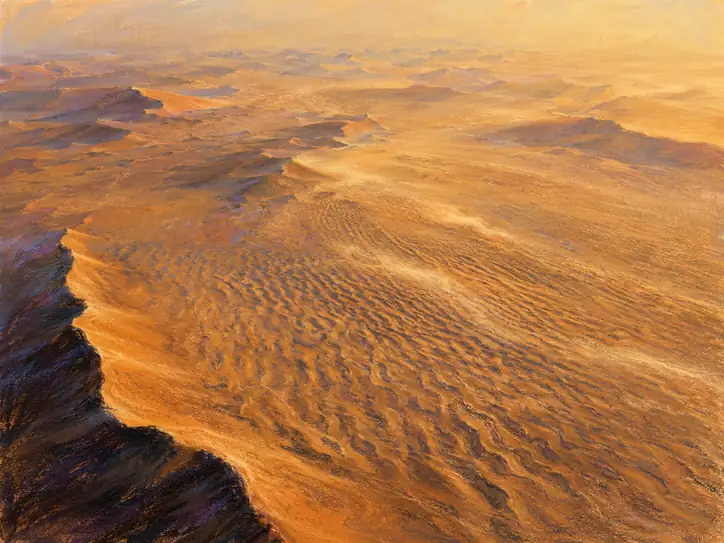 Ripples of Eternal Time
 Sculpture of the Golden Wind
 Divided by Light and Shadow
 The Ridge between Light and Shadow
 Divided by Light
 Where the Wind Dances on Golden Slopes
 The Divide of Golden Silence
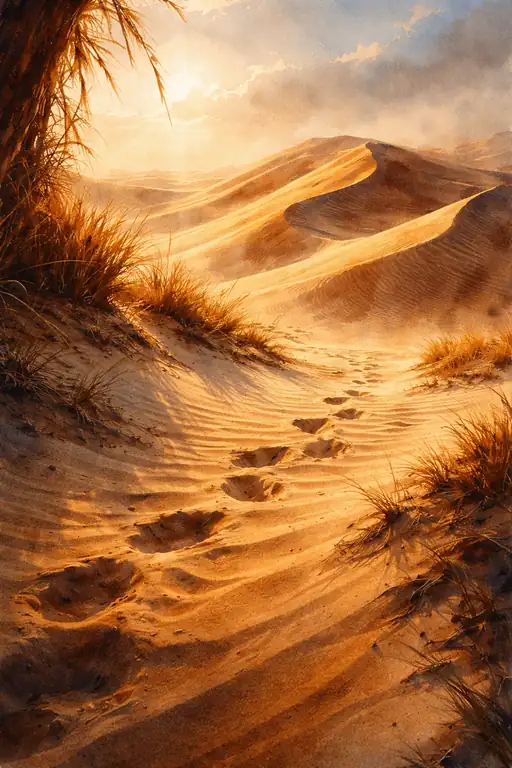 Footsteps in the Golden Sand
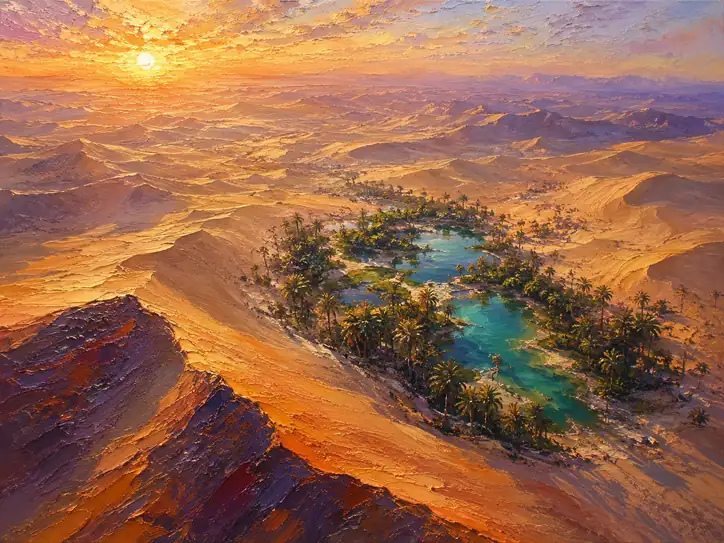 Emerald Sanctuary
 Twilight Whispers on White Dunes