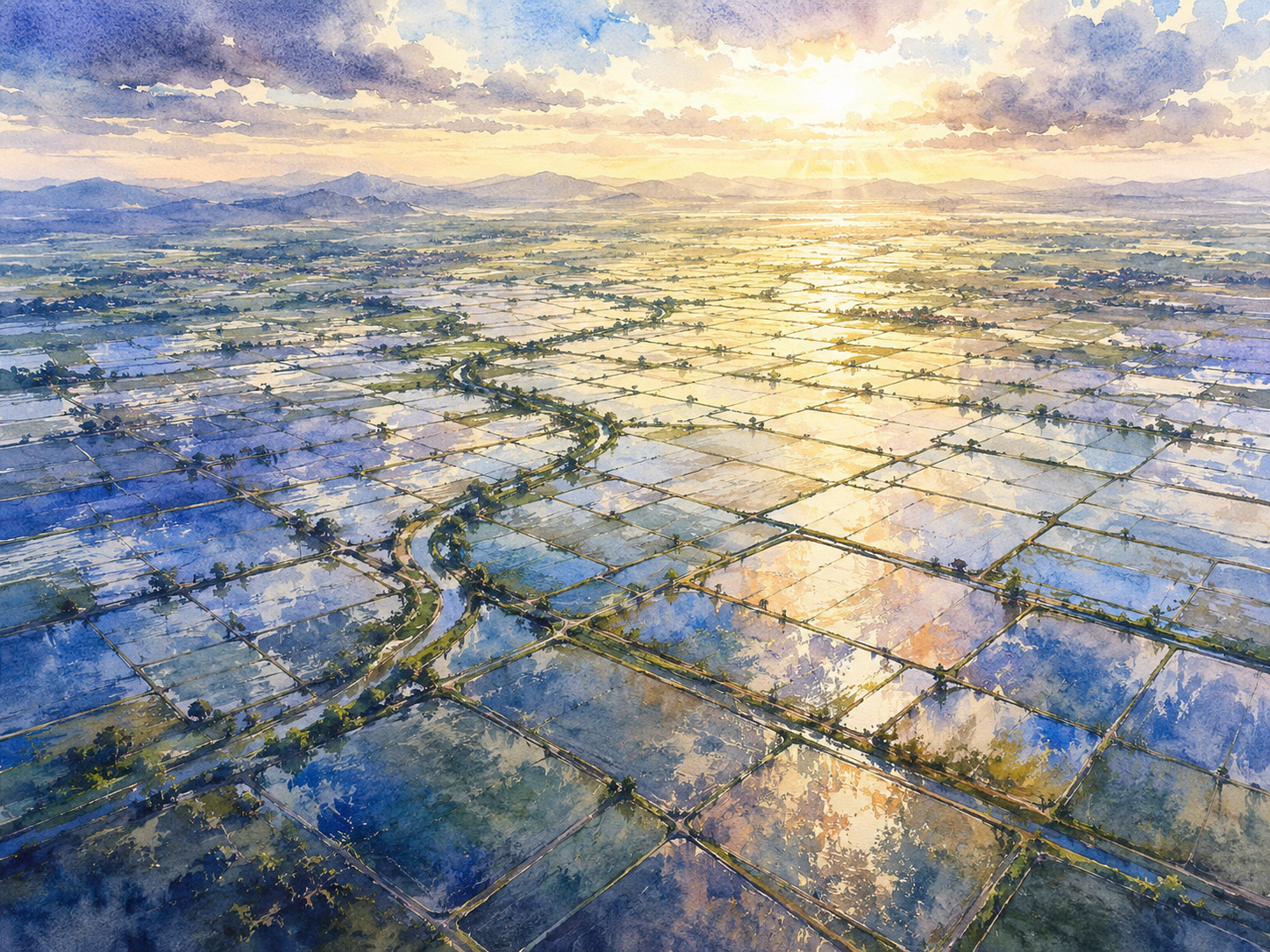
The Quiet Mirror of the Earth
Critique
1. Introduction This landscape painting offers an overhead perspective of a vast, flooded paddy field. The countless agricultural plots extending to the horizon create a unique geometric pattern. The sunlight reflecting off the water surfaces depicts a silent yet grand natural scene. 2. Description Orderly arranged rice fields stretch from the foreground to the mountains in the far background. Reflecting the sky, the water changes color from deep blue in the front to shimmering gold in the distance. A single narrow stream curves gently through the straight lines of the fields, adding a natural rhythm to the landscape. 3. Analysis The color palette relies on the contrast between cool blues and warm yellows, creating a harmonious and vibrant impression. The high-angle view emphasizes the immense scale and depth of the valley. Delicate watercolor techniques such as washes and gradients effectively capture the humid atmosphere and the soft dispersion of light. 4. Interpretation and Evaluation This work represents a harmonious integration between human cultivation and natural light. The artist demonstrates exceptional descriptive skill in rendering the reflective water and establishing a balanced composition. The coexistence of geometric fields and the winding waterway suggests a quiet coexistence between humanity and nature, evoking a sense of tranquility. 5. Conclusion This painting successfully elevates a common rural landscape into a highly artistic expression through precise composition. While the initial impression is defined by the detailed scenery, deeper observation reveals the spiritual depth of nature. It stands as a accomplished landscape painting that captures the transient beauty of light.
Same Subcategory
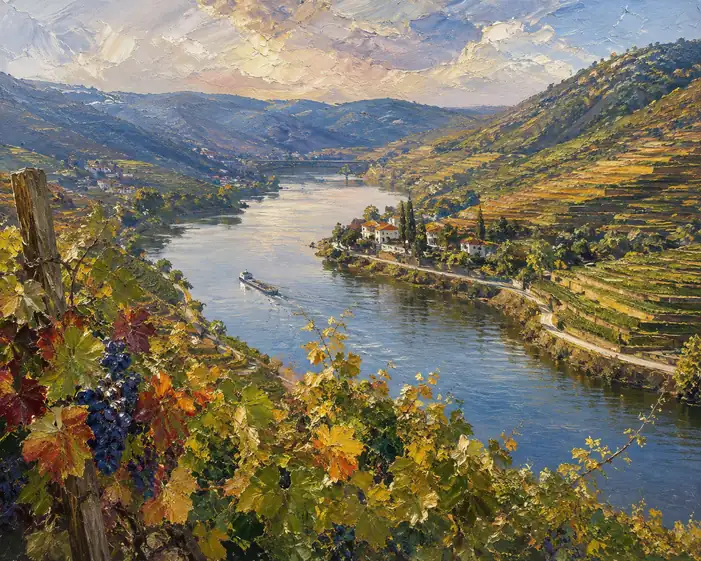 The Golden Slopes of Douro
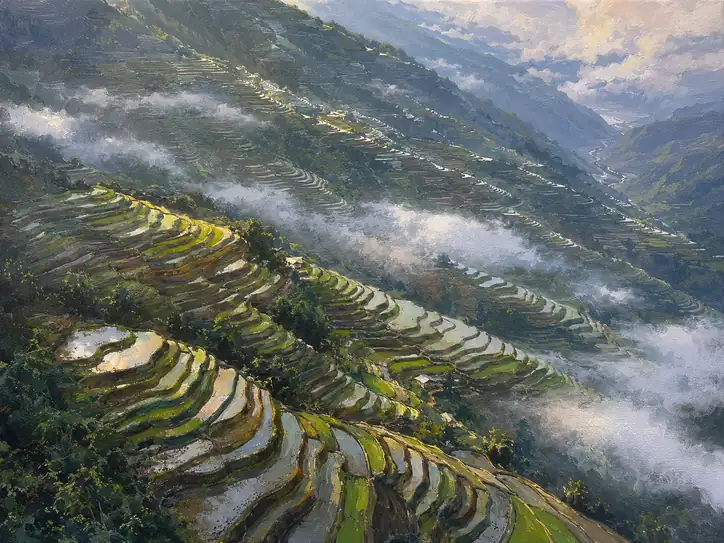 Staircase to the Heavens
Similar Artworks
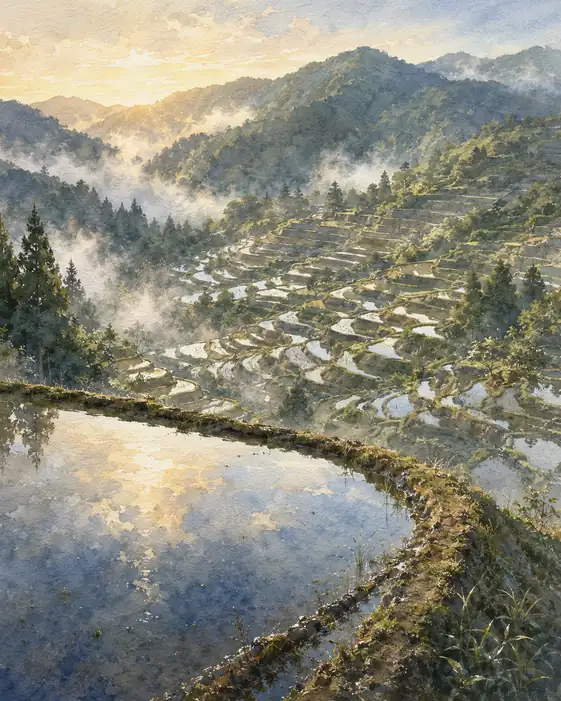 A Thousand Skies Sown on the Mountain
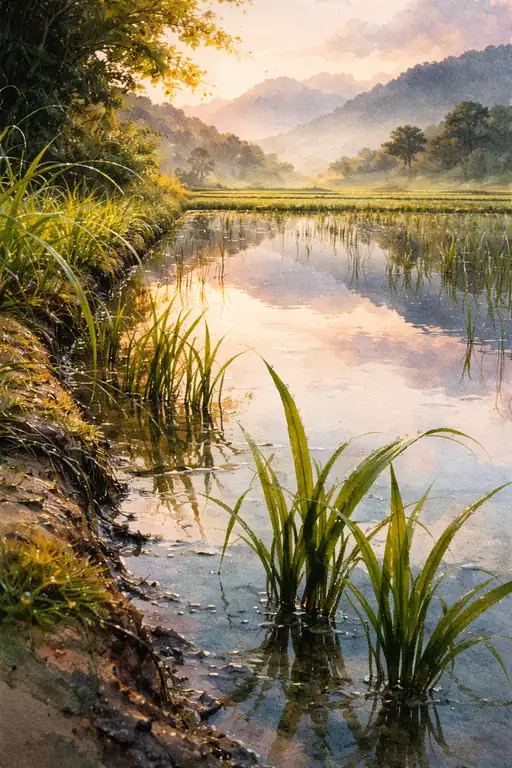 Golden Dawn's Reflection
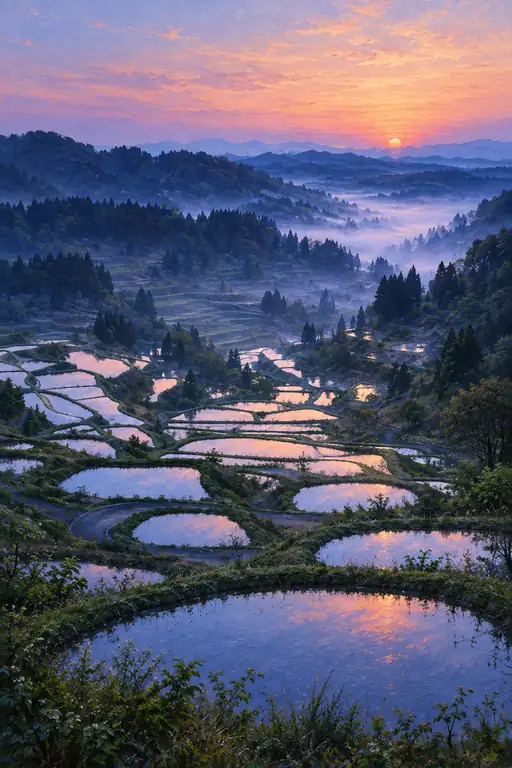 Sunset Glow Over the Valley Terraces
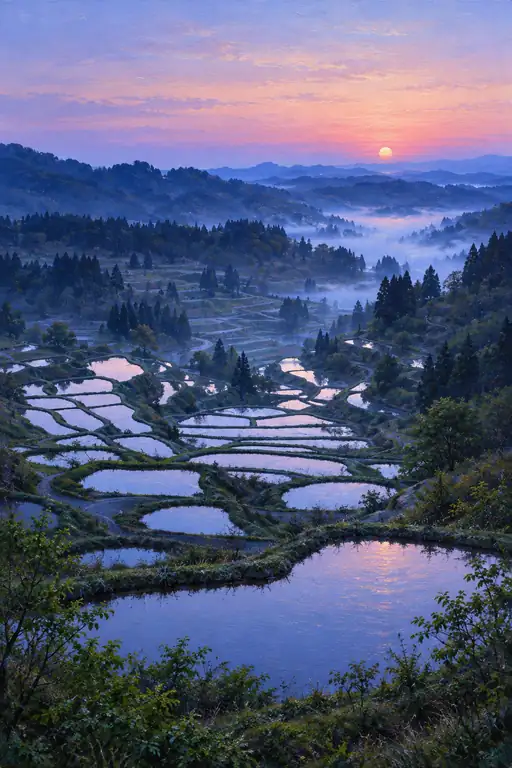 Mirror Terraces in Dawn Mist
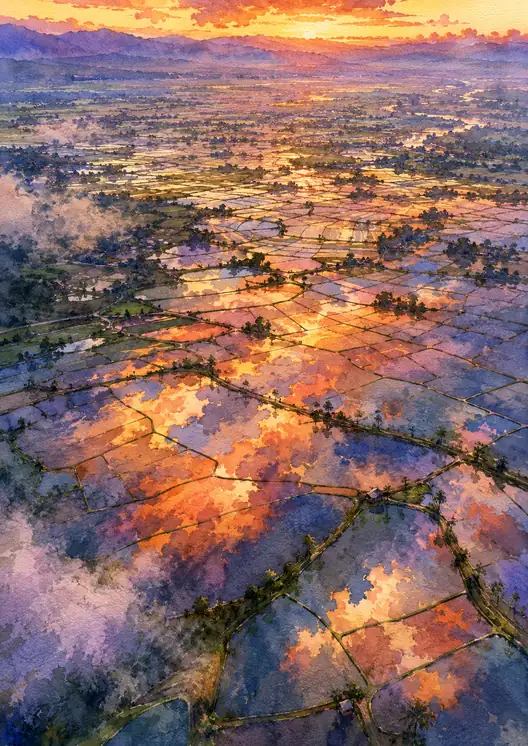 At Every Dusk, the Sky Is Tilled
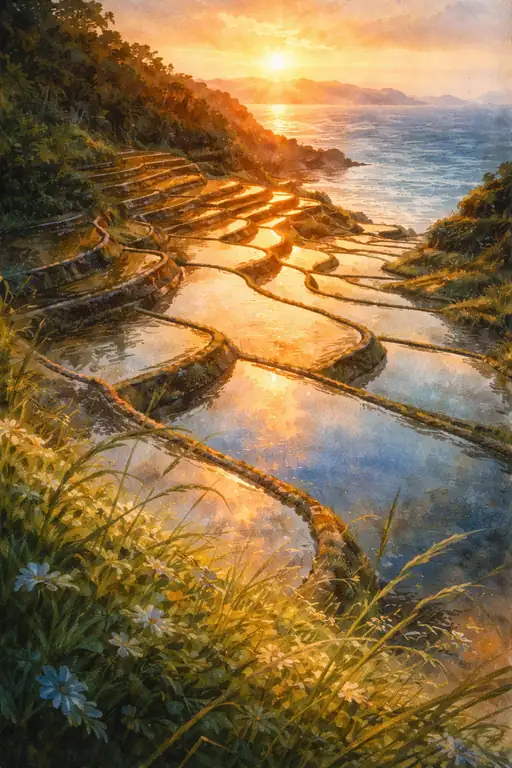 The Golden Mirror of the Hills
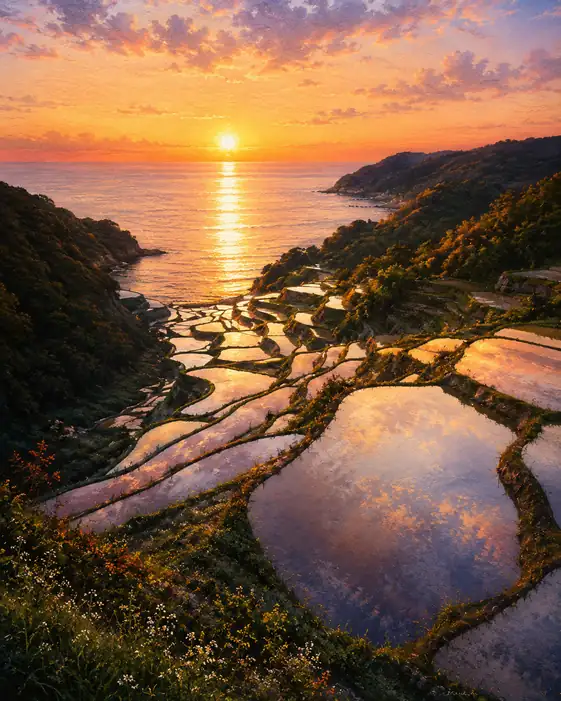 Two Hundred Eighty-Three Skies Asleep in the Cove
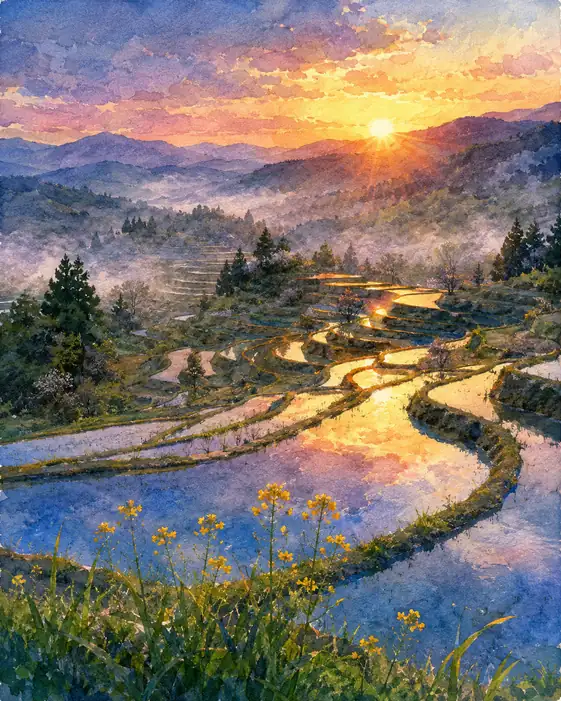 Sunset Flows through the Rice Terraces
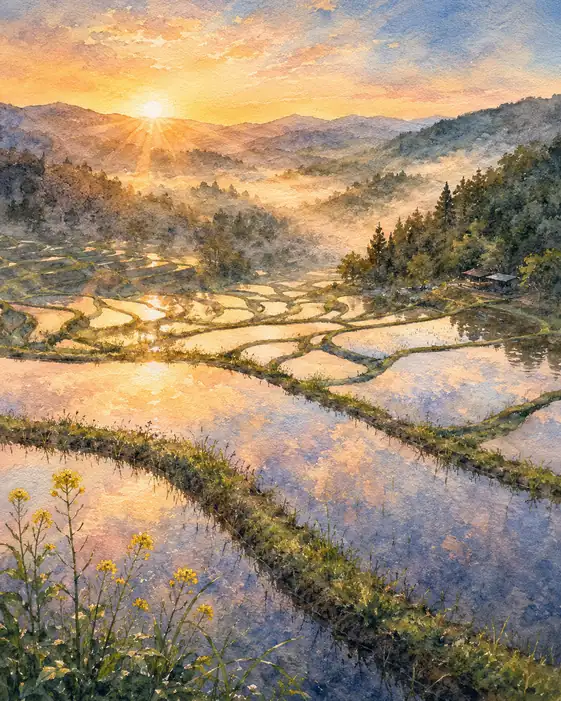 Dawn Sleeps in a Thousand Fields
 Morning Symphony Across the Water Terraces