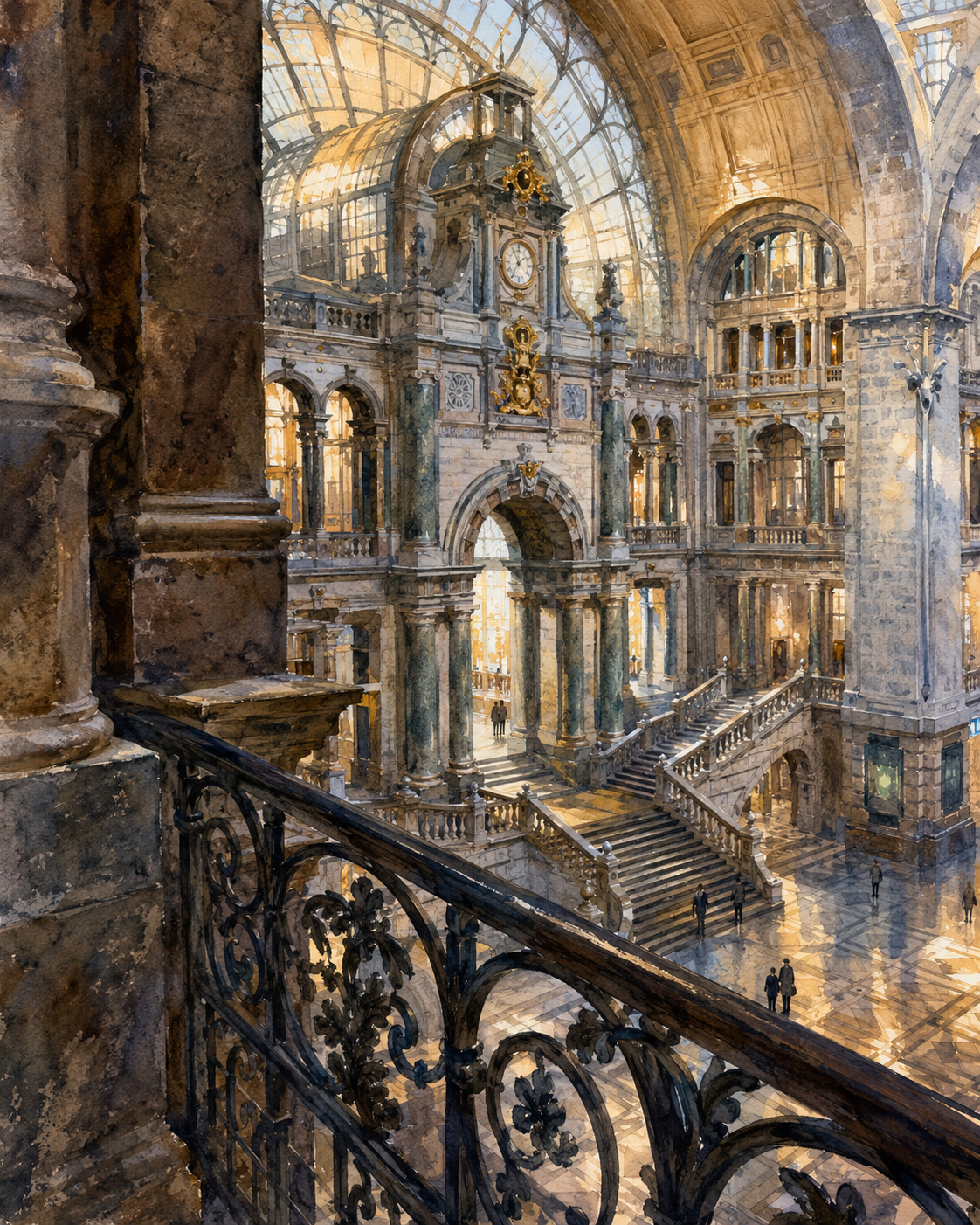
Palace of Shifting Journeys
Critique
1. Introduction The watercolor painting illustrates a grand and luxurious public hall reminiscent of late nineteenth-century eclectic architecture. A detailed wrought-iron railing in the foreground and a vast hall below create a dramatic bird's-eye view. The warm light filtering through the glass dome roof contrasts beautifully with the heavy stone structures. 2. Description In the immediate foreground, a decorative iron railing with scroll patterns borders the balcony. An enormous stone archway stands at the center, adorned with a clock and a golden emblem on top. From this arch, symmetrical grand staircases lead down to the polished, reflective floor of the hall. Several tiny human figures walk below, highlighting the vastness of the space. 3. Analysis The artwork uses an elevated perspective and a diagonal composition to generate deep spatial depth. The curves of the glass dome ceiling contrast with the straight lines of the pillars and stairs, showing structural harmony. Saturated beige and brown tones are balanced by the greenish-gray marble columns. The soft sunlight describes the three-dimensional layout clearly. 4. Interpretation and Evaluation This piece romanticizes modern civic space, turning a functional transit hub into a nostalgic palace of light. The soft touch of watercolors softens the coldness of iron and glass, rendering the massive architecture approachable. The precise perspective drawing and attention to detail from the railing to the ceiling demonstrate the artist's high technical level. 5. Conclusion Viewers are first drawn to the detailed ironwork, but their eyes soon wander into the open, light-filled space of the hall. The work successfully captures the harmony of modern functionality and classical decoration. Ultimately, this painting stands as a superb creation that visualizes the beauty of monumental architecture through the medium of light.
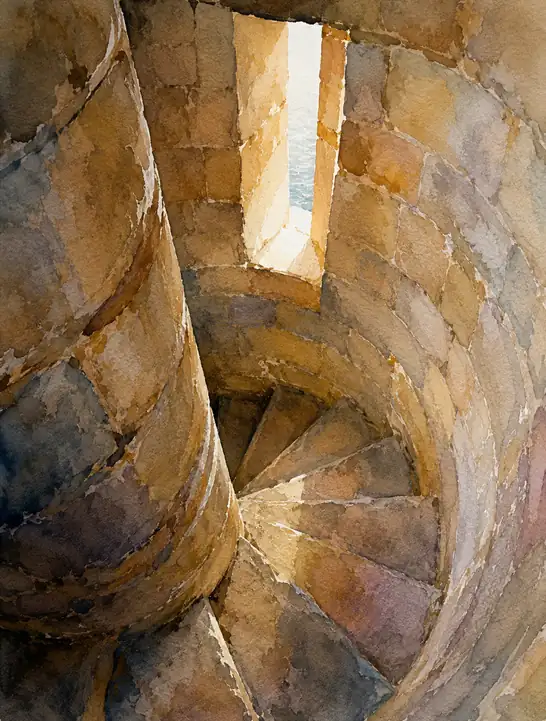 The Winding Journey
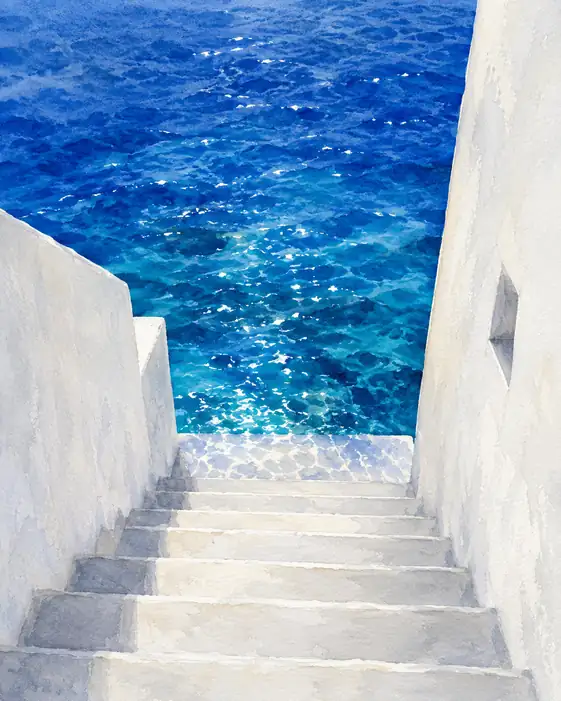 White Steps Descending into Blue
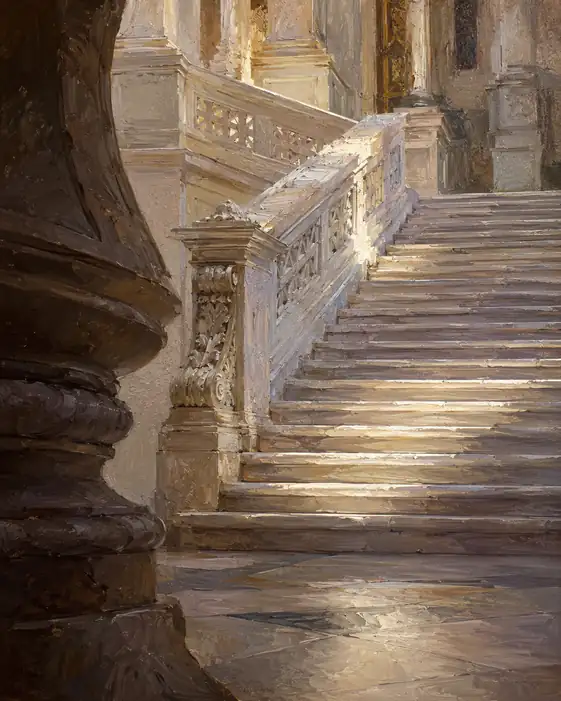 Pilgrimage to the Light
 Spiral Reaching for the Open Sky
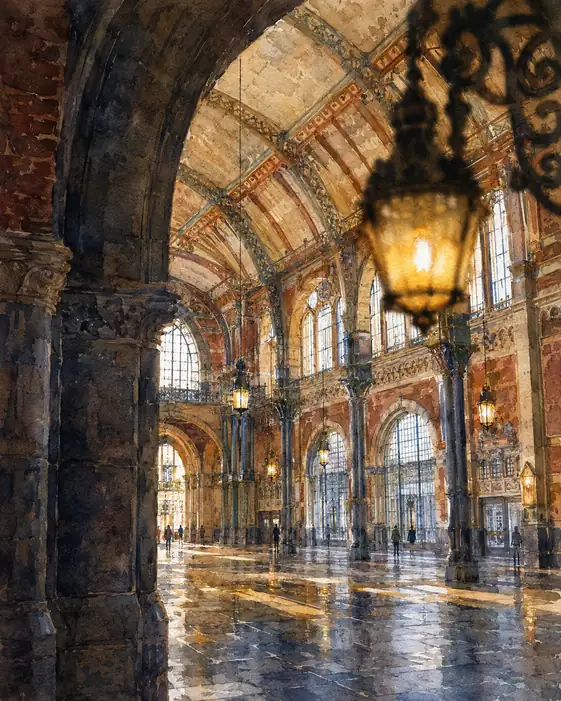 The Cathedral of Departures
 The Marble Spiral of Ambition
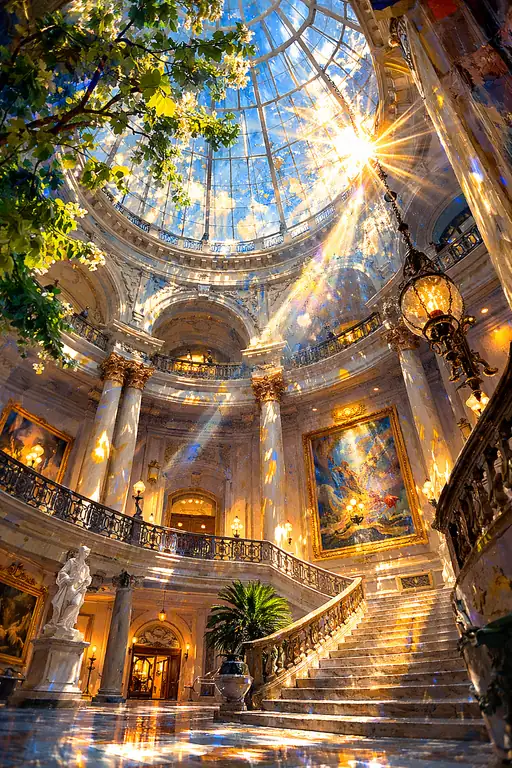 The Radiant Ascent
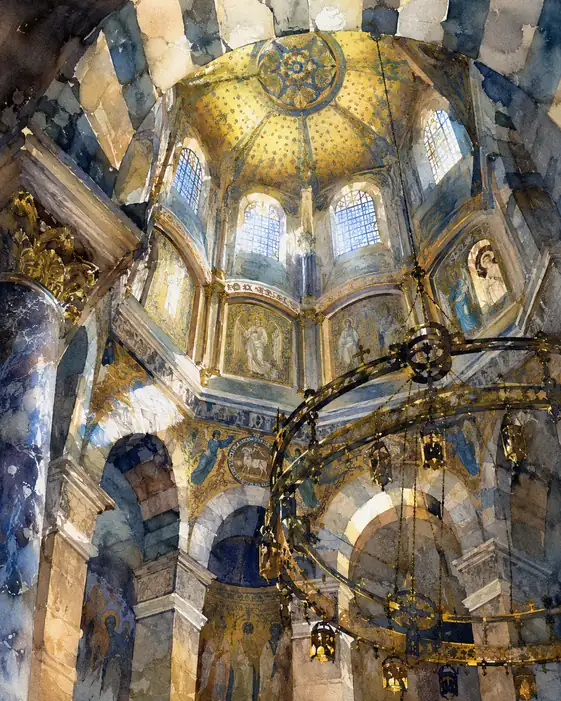 Echoes of the Golden Dome
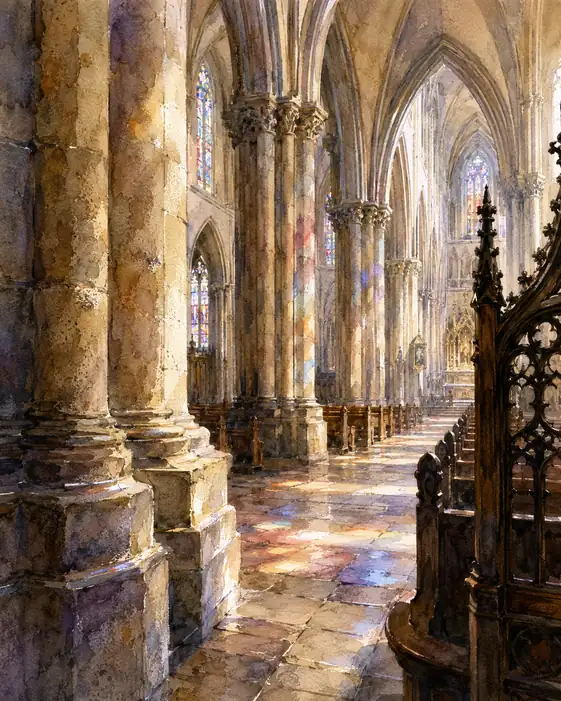 Where Stone Embraces the Light
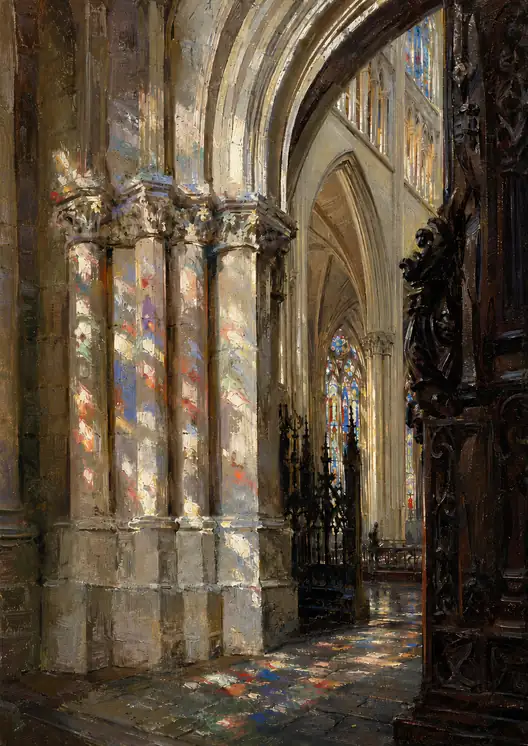 Dance of Light on Cold Stone
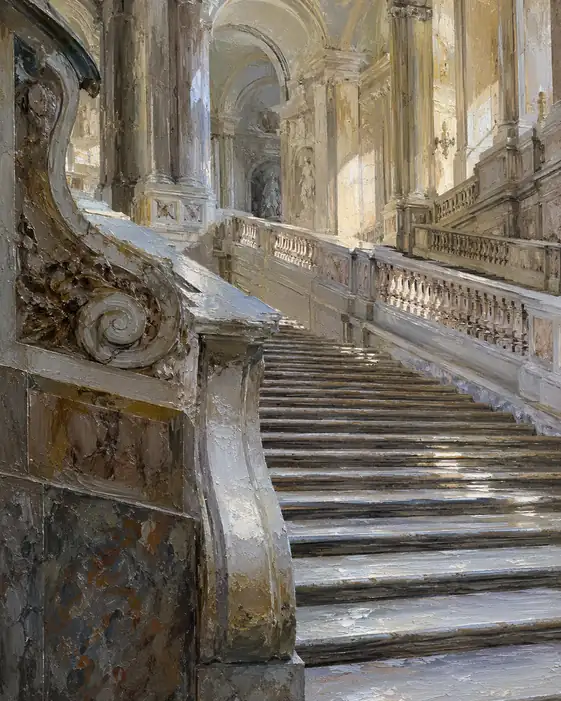 Steps to Forgotten Glory
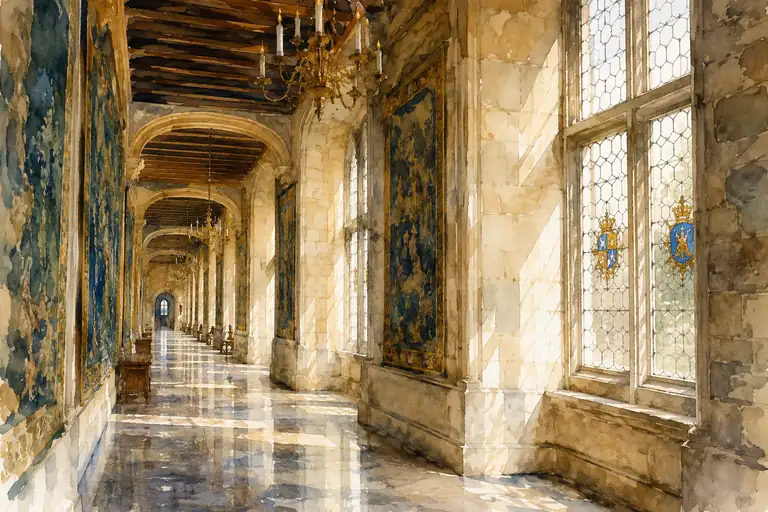 Where the Blue Crest Dreams