Echoes of the Silent Corridor
Critique
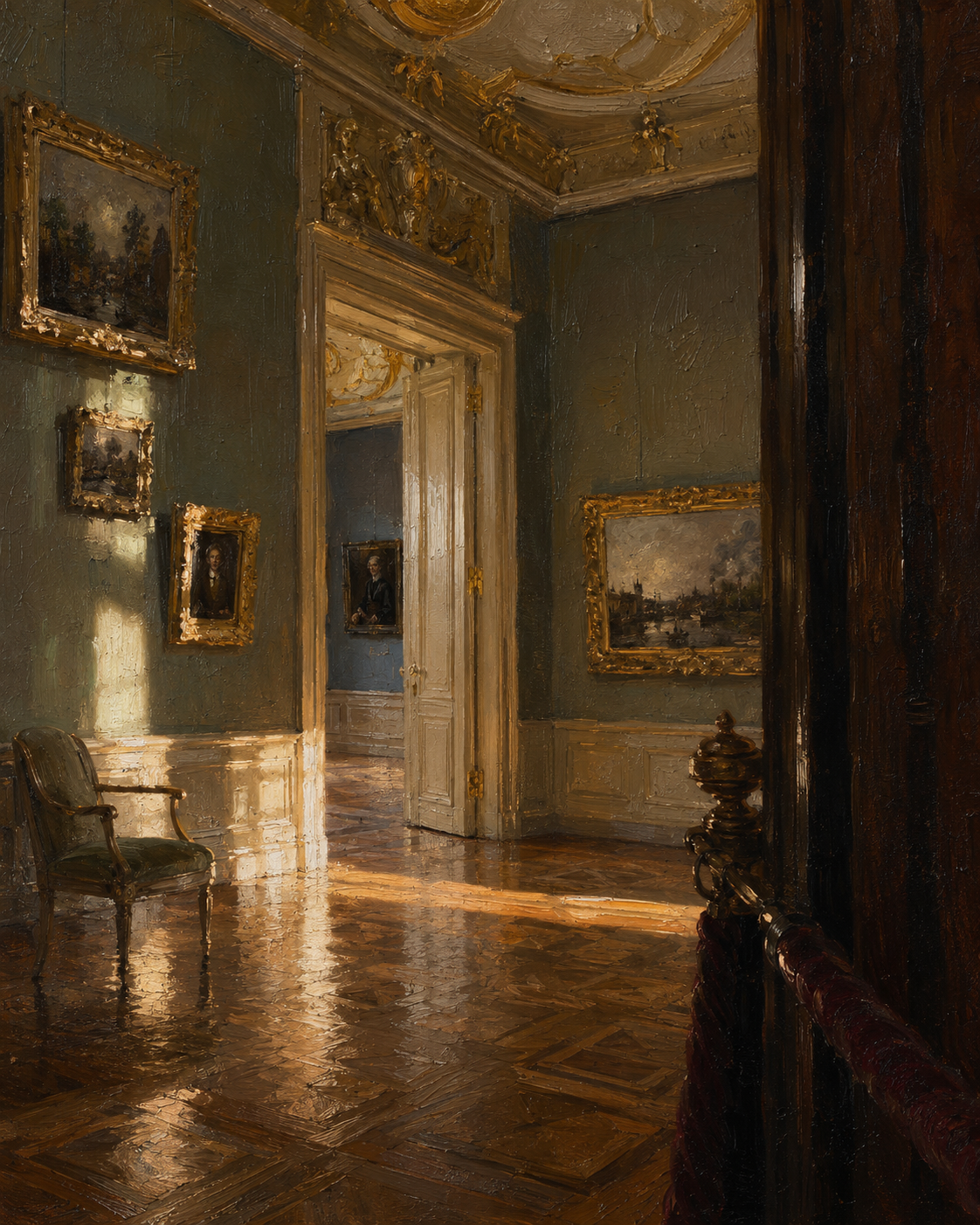
1. Introduction This oil painting depicts the grand interior of a palace or art gallery bathed in warm sunlight. The meticulous impasto technique applied across the canvas gives the silent room a unique sense of weight and texture. It is a highly finished work that immediately invites the viewer into its quiet, classical corridors. 2. Description On the right foreground, a dark wooden pillar frames the view, guiding the eye toward the parquet floor stretching into the background. Gold-framed paintings hang on the soft green walls, reflecting the bright light streaming in from an unseen window. Through the open doorway, a glimpse of another room reveals a portrait hanging on a blue wall. 3. Analysis The composition employs linear perspective to create a deep sense of spatial recession and structural order. Thick brushstrokes capture the reflections on the polished wooden floor, emphasizing its glossy texture and the play of light. The contrast between the muted green walls and the golden frames accentuates the room's historical elegance. 4. Interpretation and Evaluation The sunlight flowing through the window suggests the passage of time, breathing quiet life into the uninhabited hall. By depicting paintings within a painting, the work reflects on the nature of art and visual representation itself. The combination of classical subject matter and expressive brushwork achieves a modern yet timeless painterly realism. 5. Conclusion While the work initially appears to be a standard interior view, the subtle interplay of light and shadow gradually reveals its atmospheric depth. This piece succeeds in capturing the transient beauty of light through rich oil textures. Ultimately, the painting stands as a masterfully balanced study of space, silence, and artistic tradition.
Same Subcategory
Similar Artworks
 The Quiet Blessing in Gilded Silence
 Golden Echoes of Palace Grandeur
 The Silent Ballroom of Lost Splendor
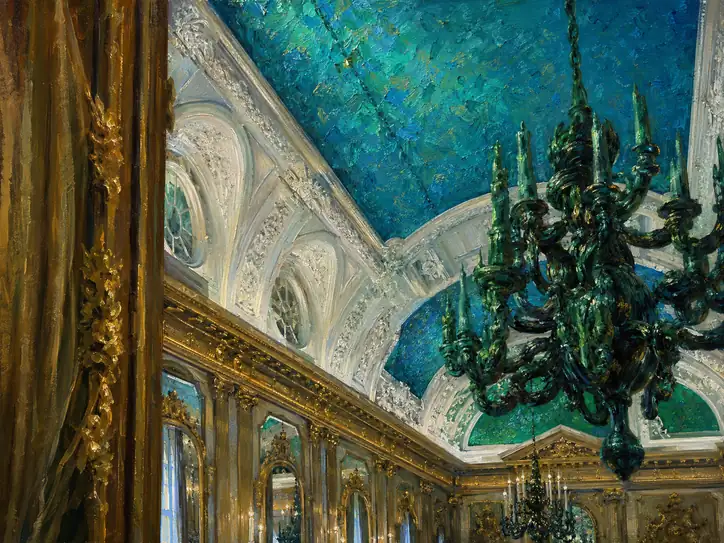 Infinity Enclosed in Gold
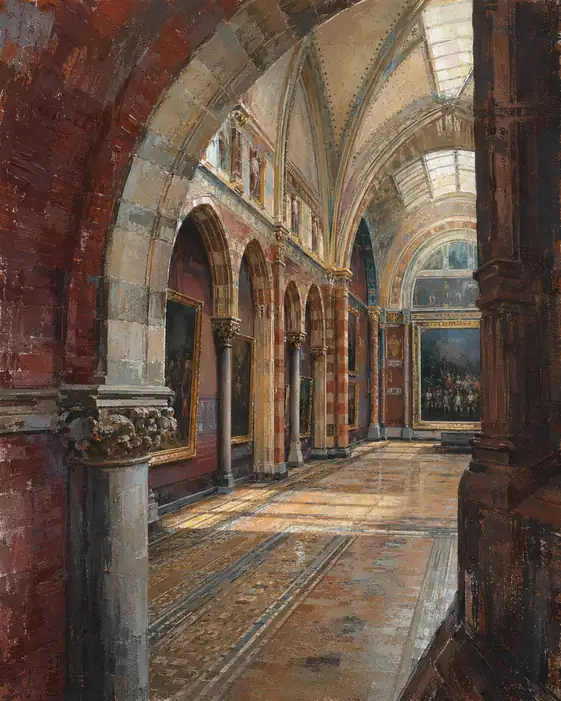 Guardians of Silent Memories
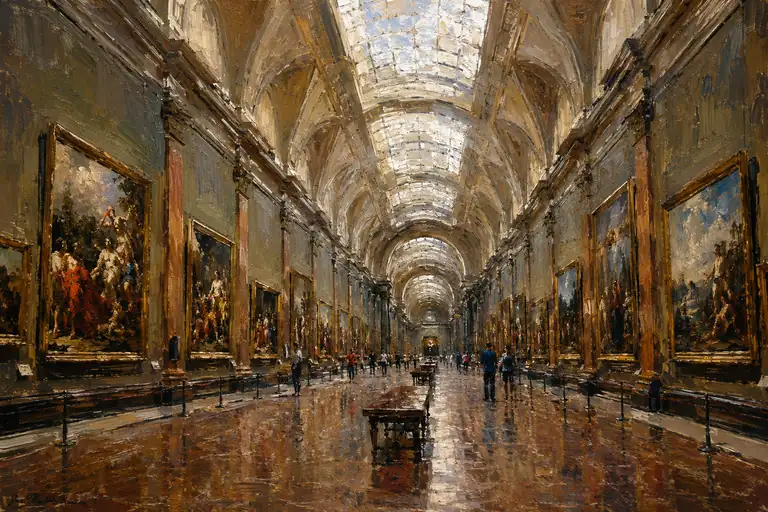 The Whispering Gallery of History
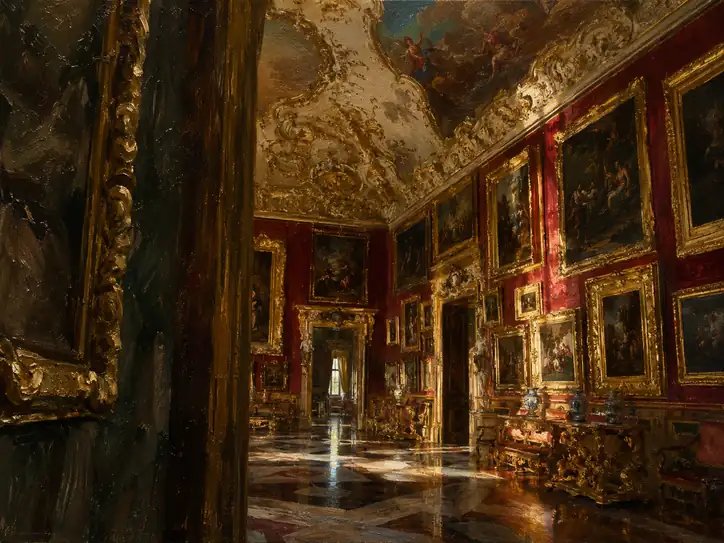 The Crimson Gallery of Time
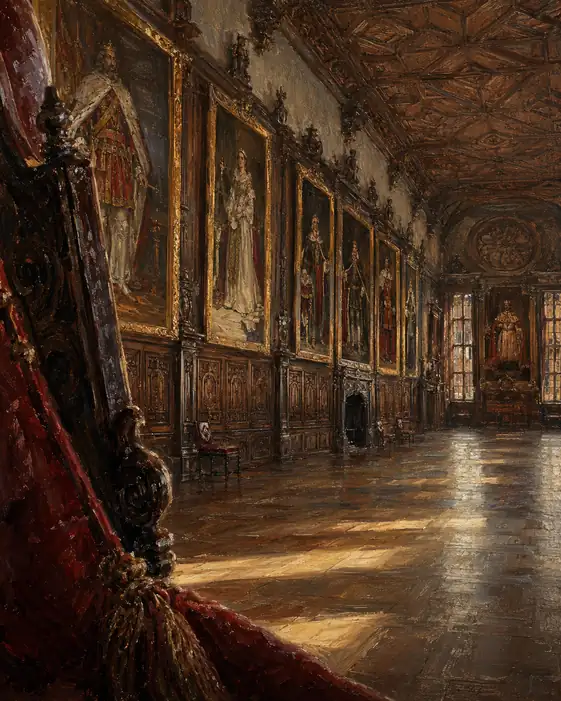 Residual Shadows of Glory
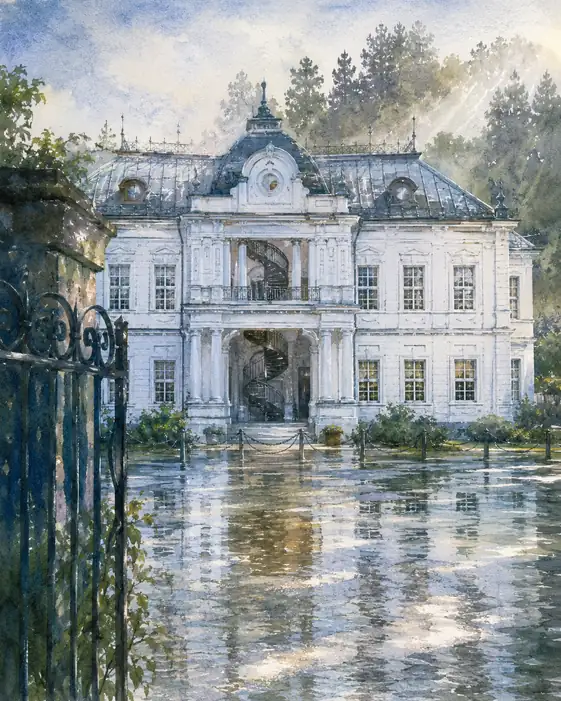 Rain Remembers the White House
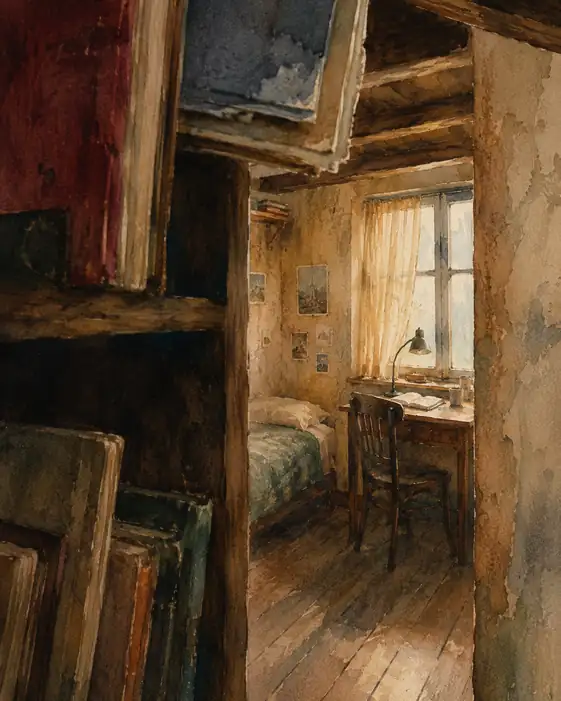 Morning Light on My Quiet Days