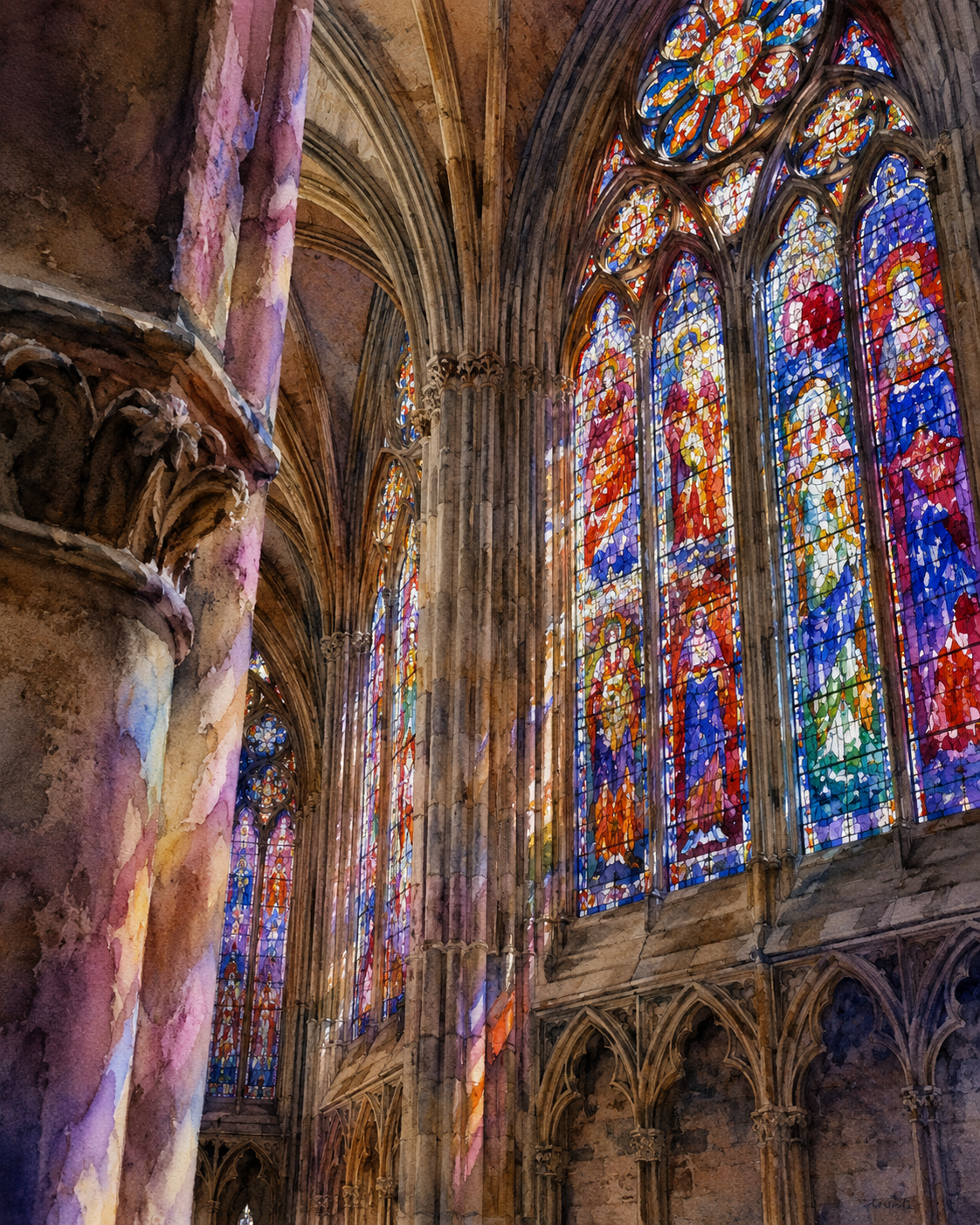
Stained in Grace
Critique
1. Introduction This painting captures the luminous interior of a gothic cathedral, centered on the dramatic interplay of filtered light. Colorful rays passing through stained-glass windows transform the heavy stone structure into an ethereal space. This critique explores how the rich coloration and geometric composition evoke a sense of spiritual transcendence. 2. Description On the right, a massive stained-glass window dominates the wall, filled with vivid blue, red, and orange panels depicting figures. To the left, a robust stone pillar captures the multicolored reflections, showing soft washes of purple and yellow. In the background, smaller lancet windows and delicate gothic arches establish the architectural framework. 3. Analysis The color palette contrasts the primary hues of the glass with the complex, blended gradients projected onto the stone surfaces. The transparency of the watercolor medium allows these light reflections to appear fluid and dynamic against the static stone. Furthermore, the vertical orientation of the windows reinforces the soaring proportions of the sanctuary. 4. Interpretation and Evaluation The reflection of colored light is presented not merely as illumination, but as a tangible representation of sacred presence. By contrasting the rigid architectural lines with organic flows of color, the work successfully portrays the sensory experience of the space. This balanced rendering of form and atmospheric light highlights a masterful command of the medium. 5. Conclusion Initially, the brilliant stained glass commands attention, yet the quiet reflections on the pillars ultimately leave a deeper impression. The harmony between meticulous architectural structure and expressive coloring creates a unified, solemn atmosphere. In sum, the painting stands as a powerful testament to the beauty of light within sacred architecture.
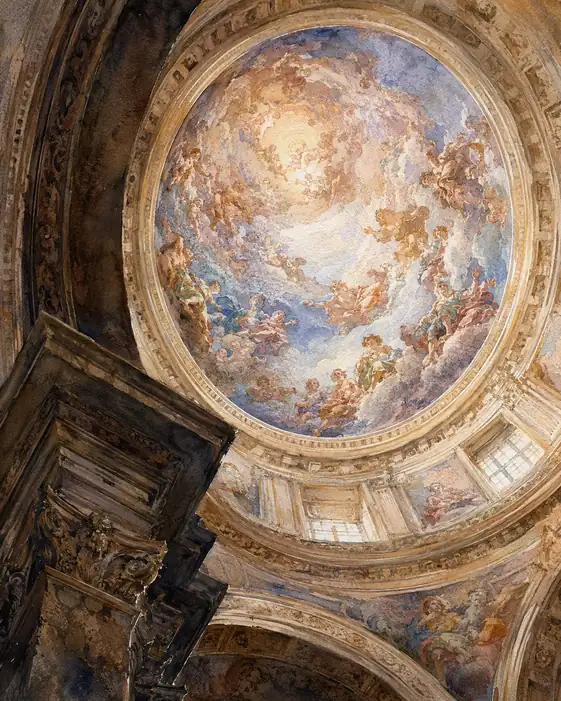 A Glimpse into the Light of Grace
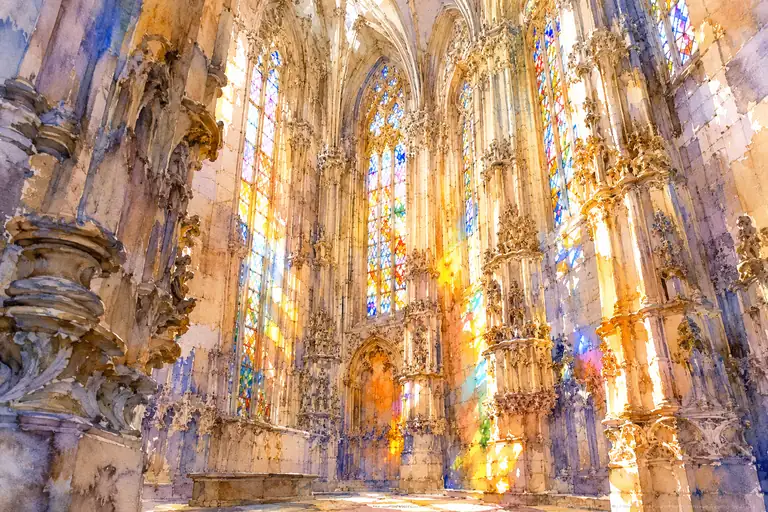 Shower of Heavenly Grace
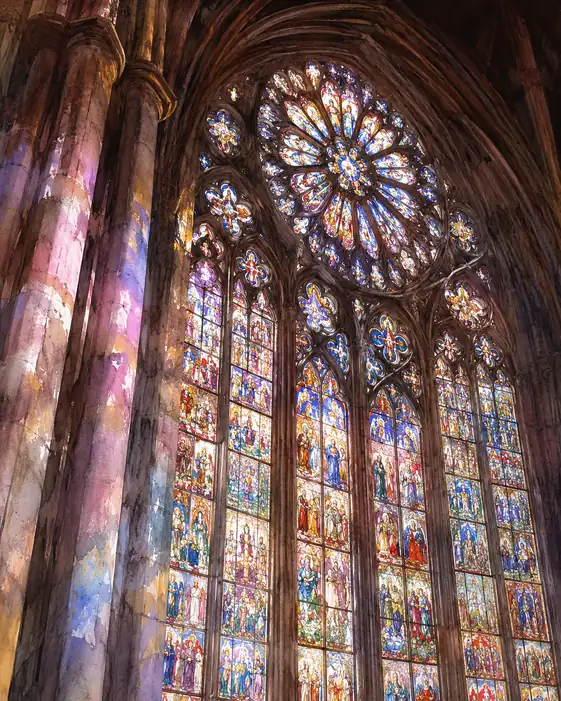 Symphony of Luminous Miracles
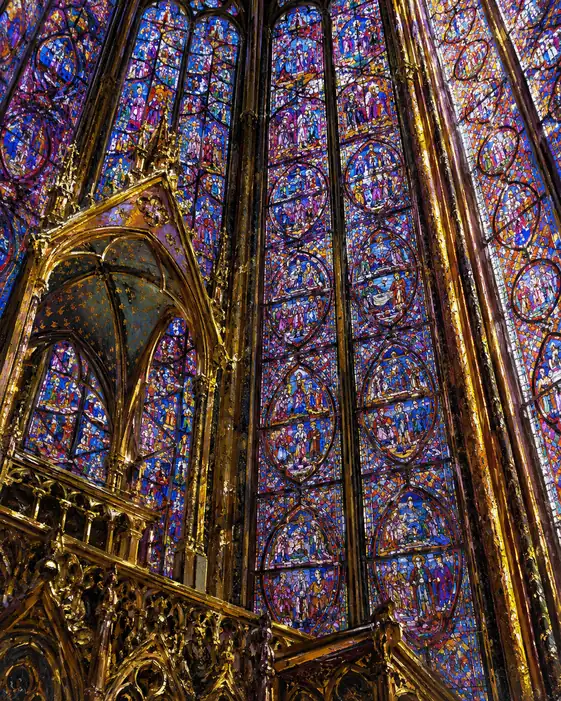 The Prism of Heaven
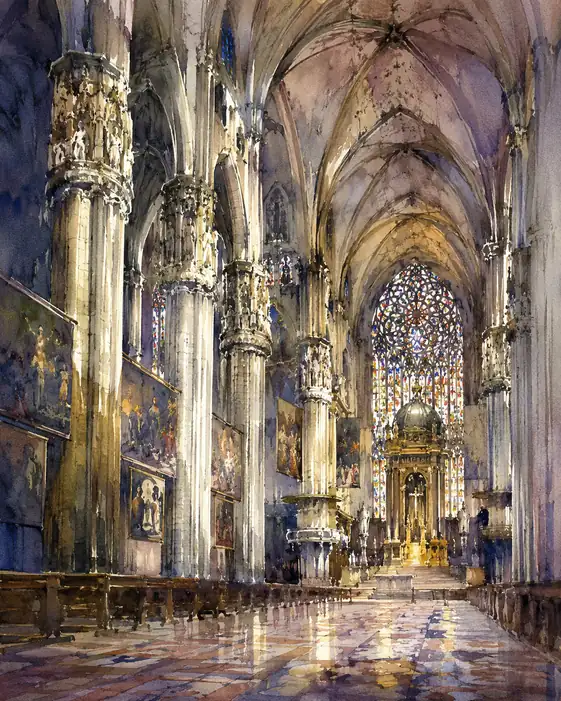 Reflections of Eternal Grace
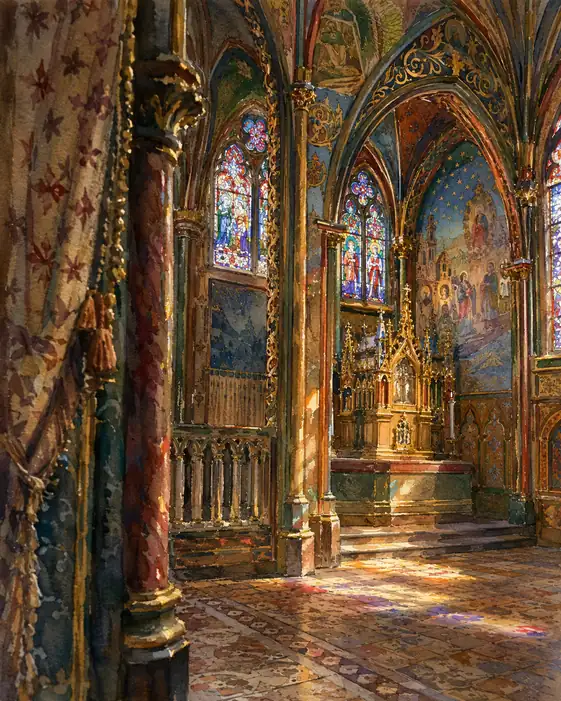 Silent Dance of Light
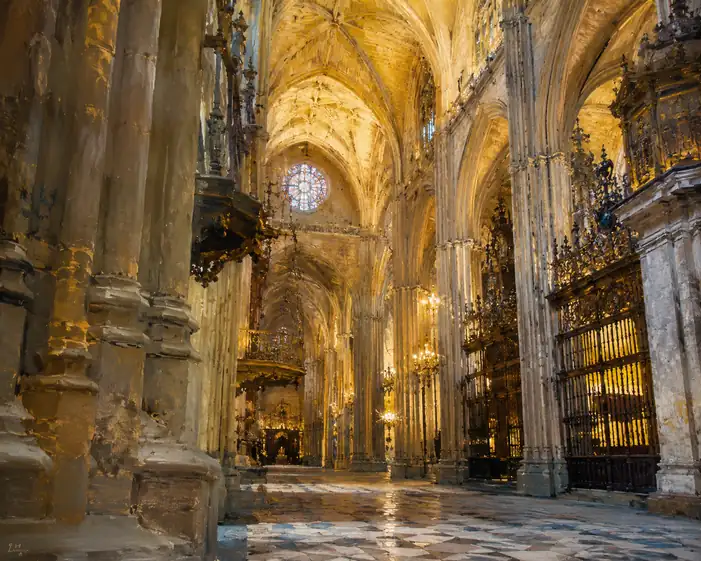 The Golden Hymn of Stone
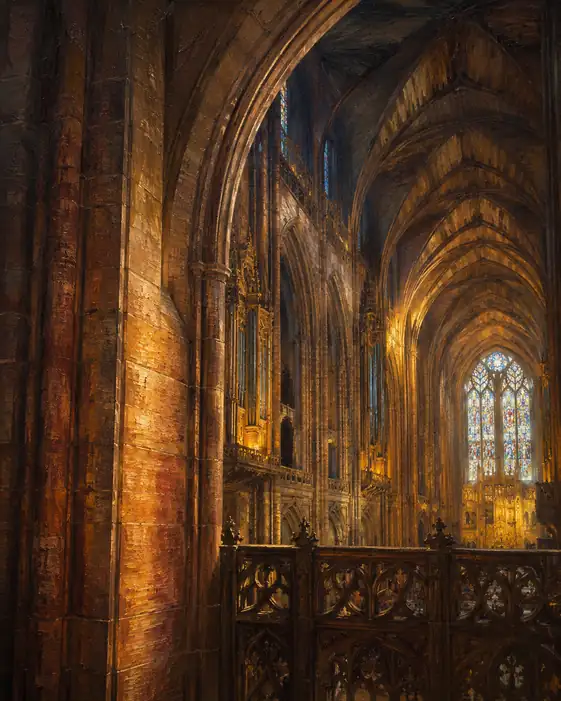 Amber Silence
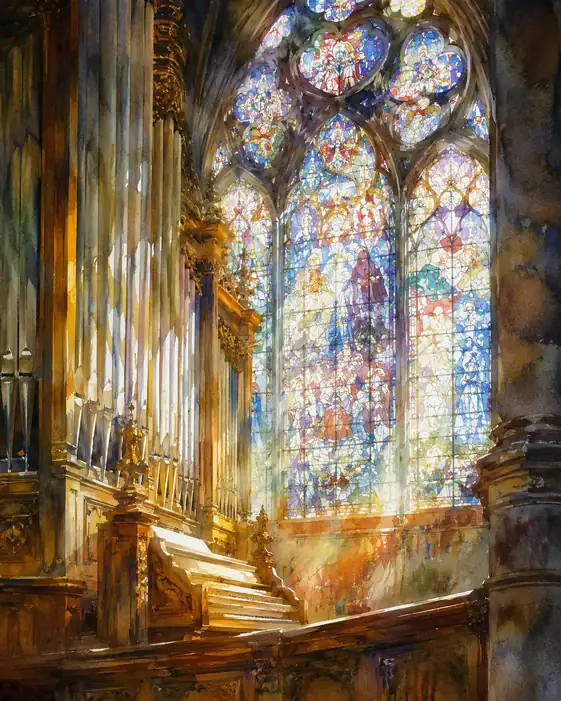 Chromatic Overture in the Sanctuary of Light
 Carpet of Sacred Prisms
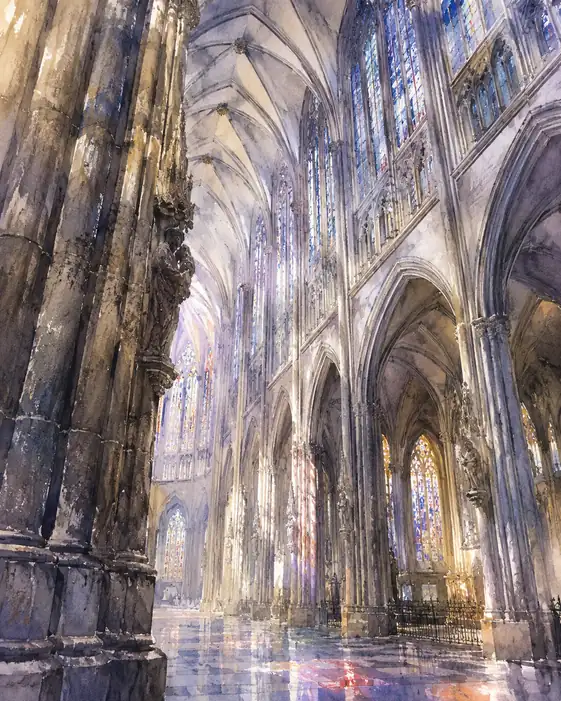 Light's Sanctuary on Cold Stone