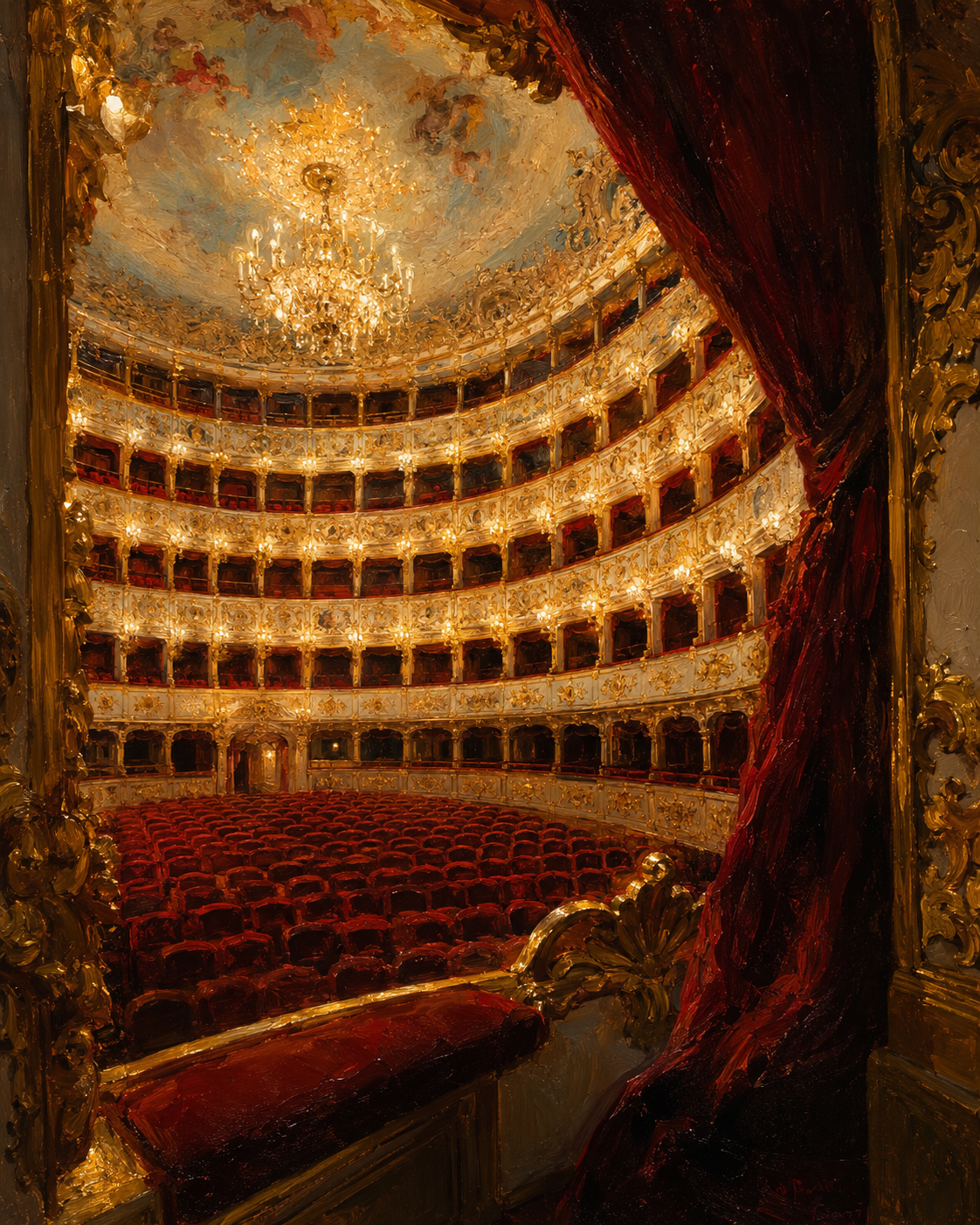
Overture in Crimson and Gold
Critique
1. Introduction This painting portrays the breathtaking interior of a classic opera house viewed from the vantage point of a private box. The composition instantly draws the viewer into a world of cultural refinement and theatrical magic. Through its grand scale and rich textures, the work celebrates the beauty of performance spaces. 2. Description A heavy, deep red velvet curtain dominates the right foreground, partially framing the panoramic view of the theater. The curved balconies, tiered in multiple levels, glow with numerous golden lights that illuminate the seating areas below. A magnificent, glowing chandelier hangs from a domed ceiling adorned with delicate pastel paintings of angelic figures. 3. Analysis The color scheme relies on a powerful contrast between the warm golden light of the balconies and the rich crimson of the seats and curtain. A thick impasto technique is employed, particularly on the curtain and gilded decorations, adding palpable physical texture to the surface. The diagonal line of the curtain creates depth, guiding the eye toward the illuminated stage area. 4. Interpretation and Evaluation This piece evokes a nostalgic and romantic appreciation for the golden age of classical theater and opera. The artist's handling of light is exceptional, capturing the shimmering quality of glass, gold, and fabric with expressive brushstrokes. The spatial depth is masterfully established, placing the viewer directly within the sensory experience of a live performance. 5. Conclusion Initially, the viewer is captivated by the sheer brilliance of the chandelier and the golden balconies. Upon closer inspection, the texture of the paint itself reveals the complex interplay of light and shadow that structures the scene. Ultimately, this painting succeeds as a vivid tribute to the grandeur of historic architectural spaces.
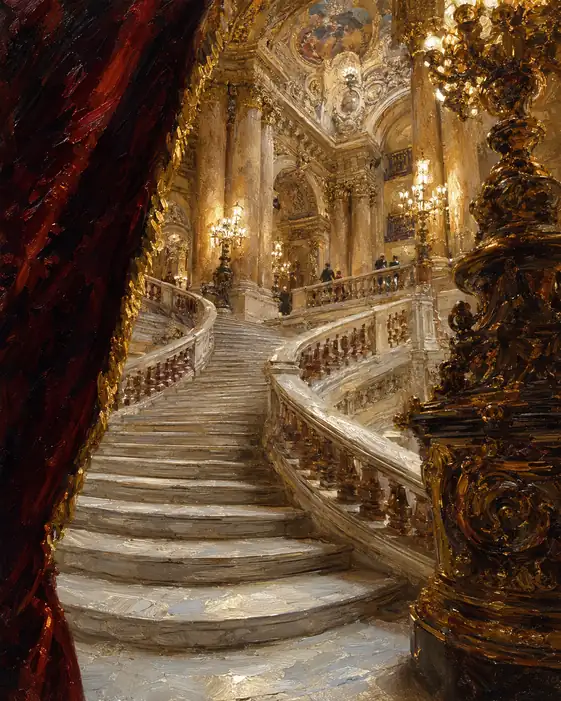 Prelude to the Grand Night
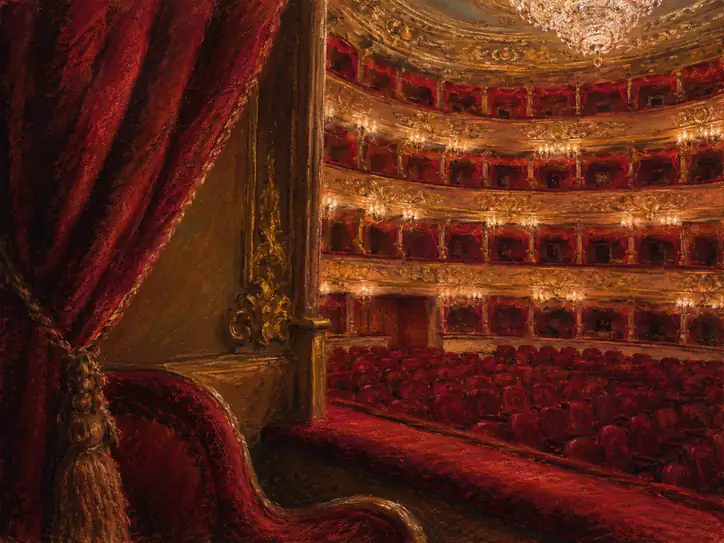 Prelude to the Crimson Drama
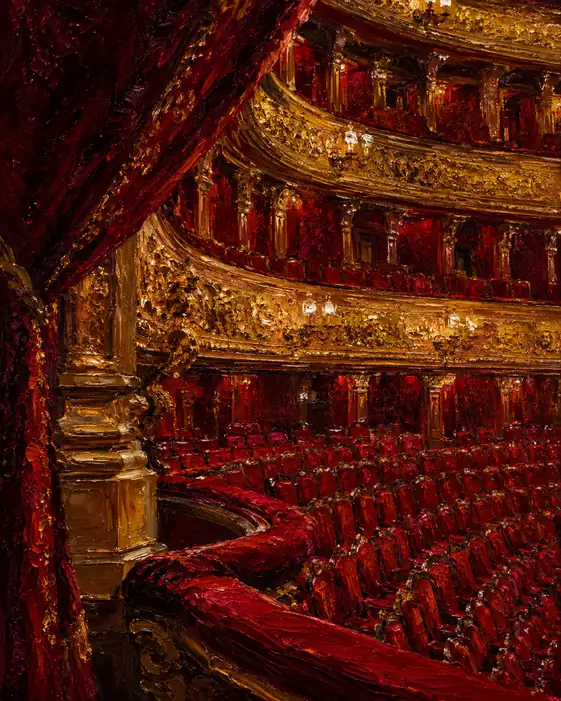 The Breath Before the Song
 Gilded Whispers
 Before the Applause Begins
 Gilded Whispers
 Gilded Symphony of the Silent Hall
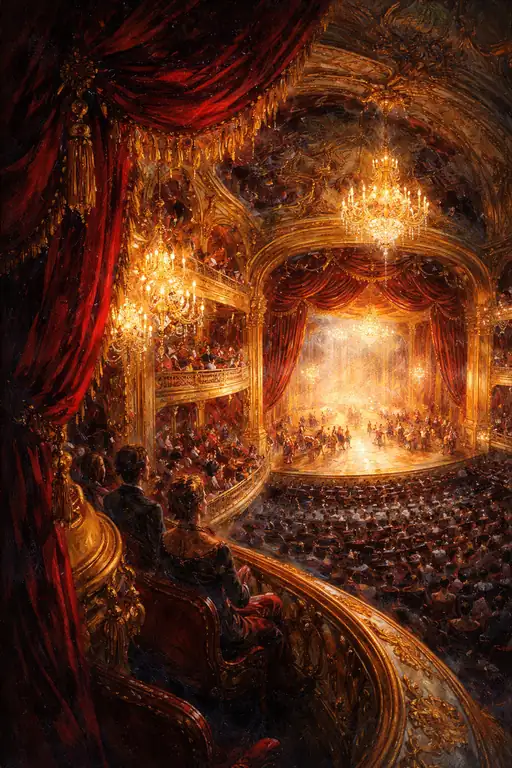 The Golden Resonance: A Night at the Grand Opera
 Stillness Before the Emerald Drape
 The Theater of Gazes
 Before the Applause