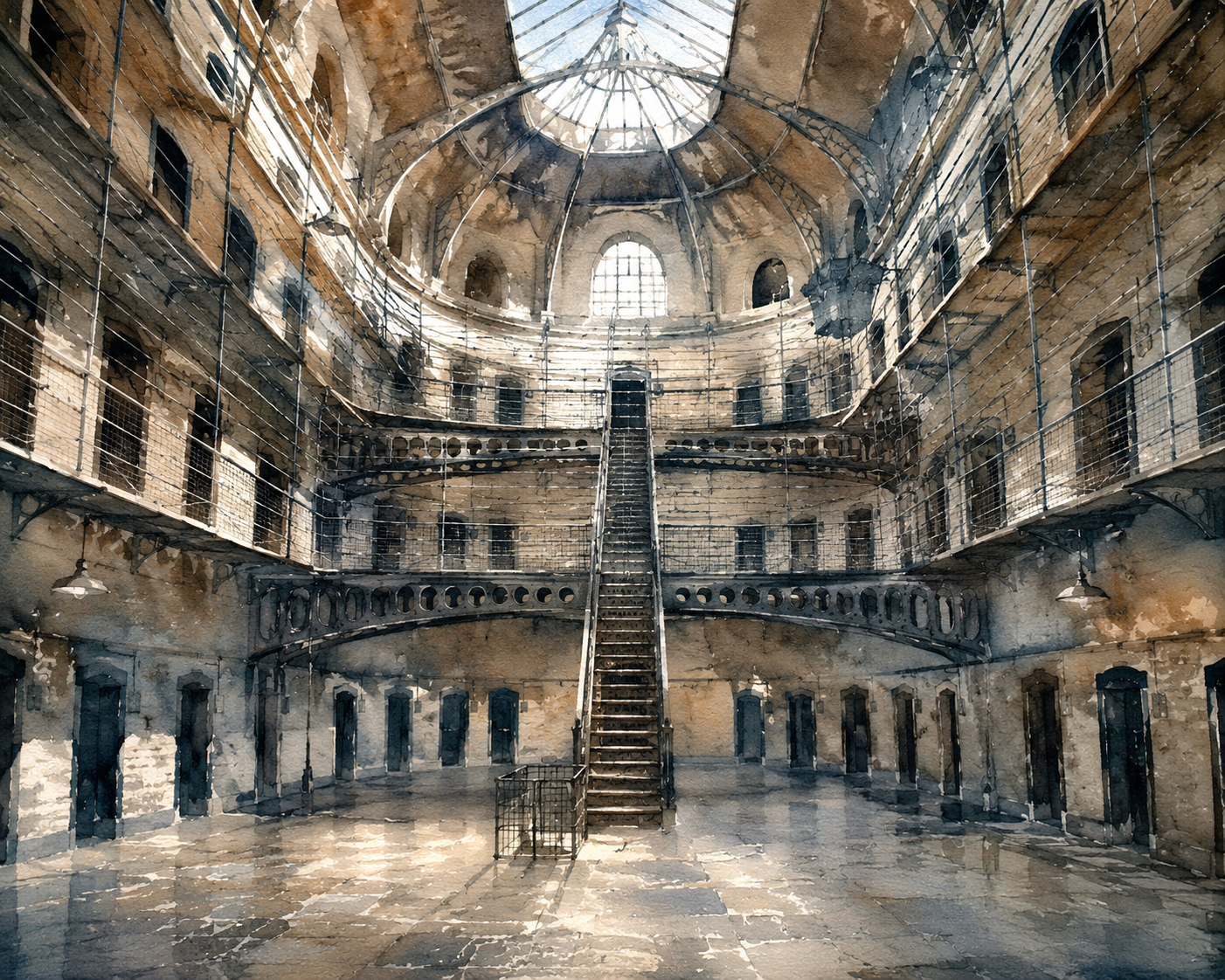
The Cage of Silence
Critique
1. Introduction This watercolor painting depicts the grand interior of a historic circular prison, designed in the panopticon style. The composition highlights the geometric symmetry of the architecture, evoking a solemn and empty atmosphere. The light color washes enhance the feeling of quiet isolation within the walls. 2. Description The scene features multi-layered balconies lined with small cells and iron grids. In the center, a long metal staircase rises vertically toward a massive glass dome ceiling. Sunlight streams through the glass dome and tall windows, casting reflections on the cold stone floor below. 3. Analysis The artist utilizes a subtle palette of muted browns and grays, characteristic of delicate watercolor techniques. The radiating lines of the circular structure create a strong perspective, drawing the eyes upward along the central stairs. The play of light and shadow emphasizes the vast emptiness of the central void. 4. Interpretation and Evaluation This work effectively captures the stark beauty and cold functionalism of historic penitentiary design. The fine linework representing the metal railings contrasts beautifully with the soft, bleeding washes of the stone walls. The painting masterfully balances architectural precision with emotional emptiness. 5. Conclusion Initially, the grand scale of the dome and the complex grid of balconies overwhelm the viewer. However, the complete absence of human presence gradually shifts the mood toward reflection on isolation and captivity. The piece remains a poignant study of architectural power and silent melancholy.
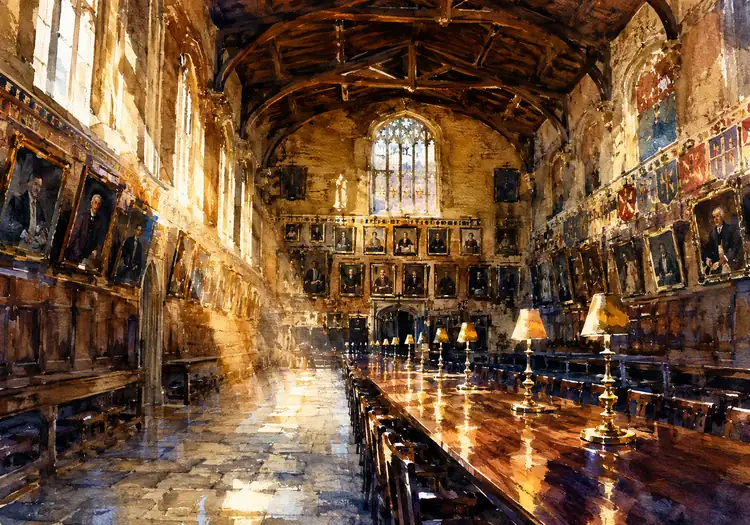 Reflections of a Thousand Afternoons
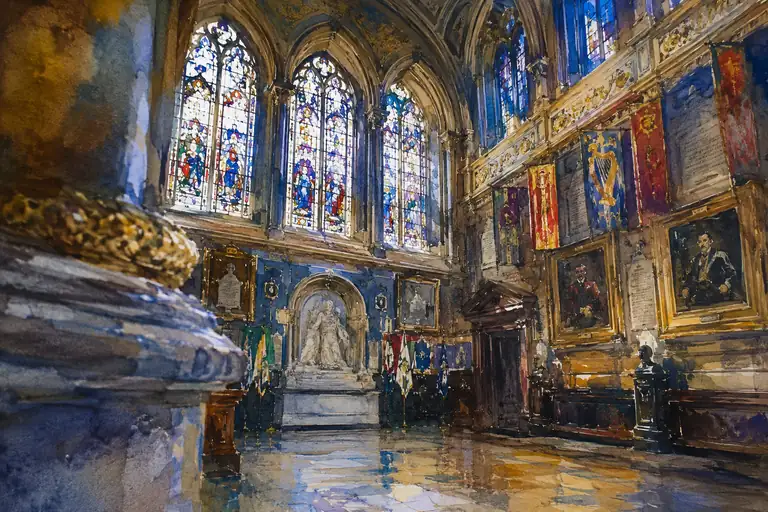 A Poem of Glory Sung in Blue
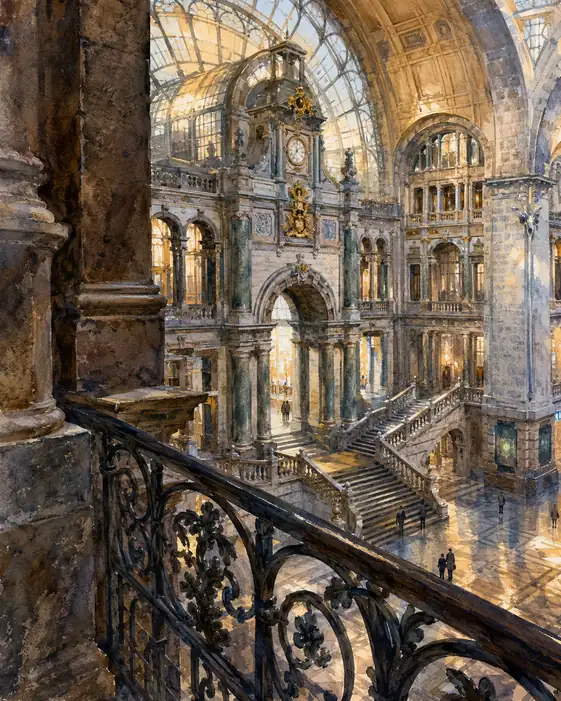 Palace of Shifting Journeys
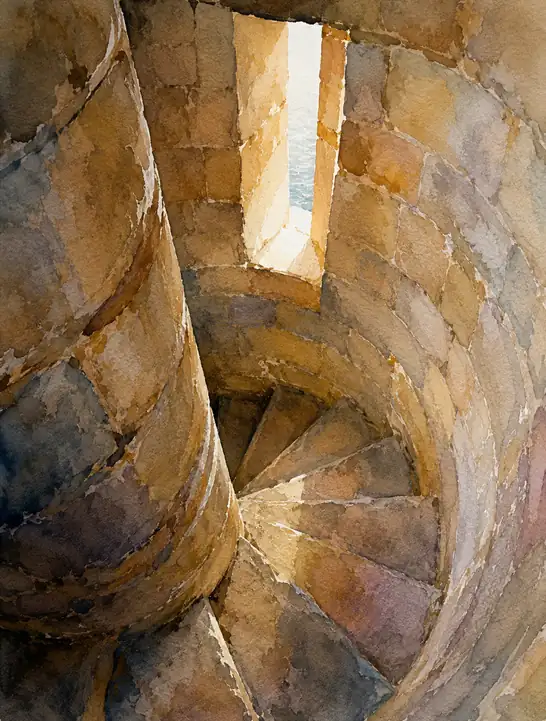 The Winding Journey
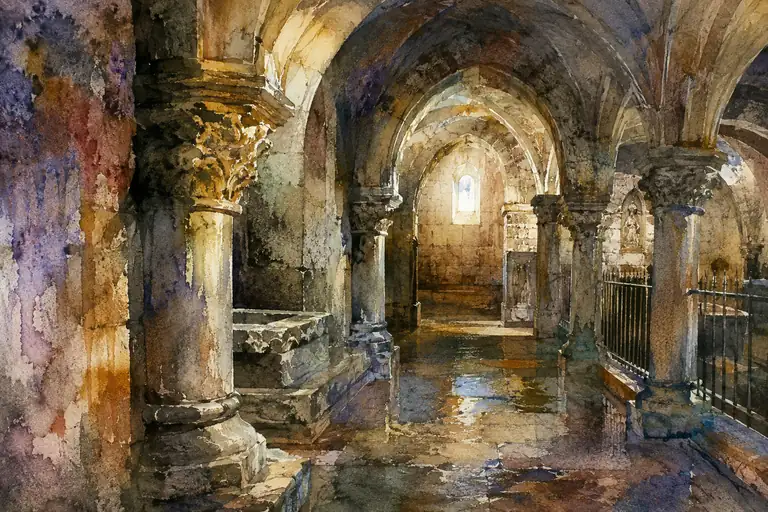 Light of Prayer Bleeding into the Dark
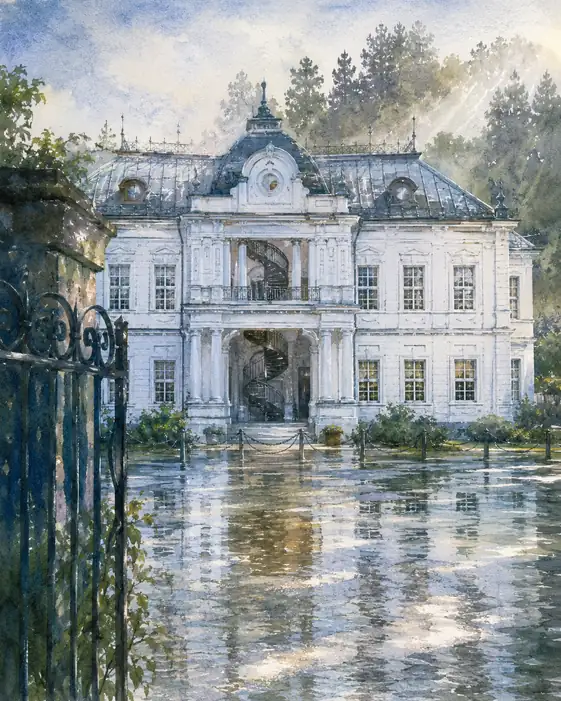 Rain Remembers the White House
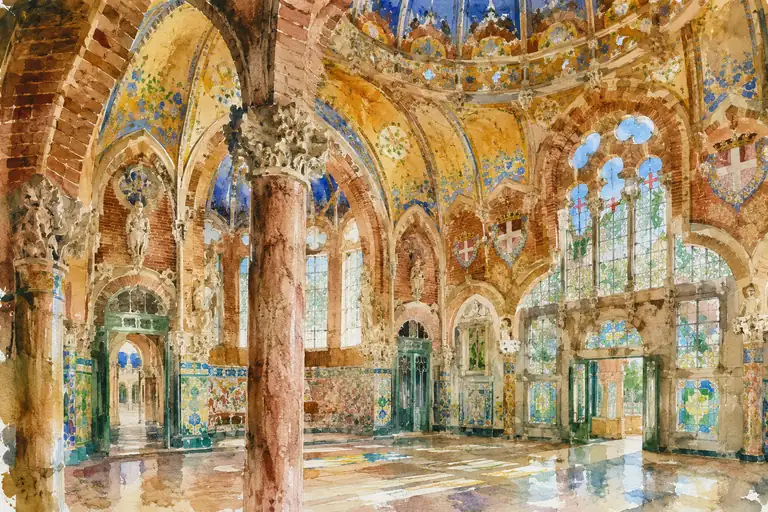 Symphony of Light and Stone
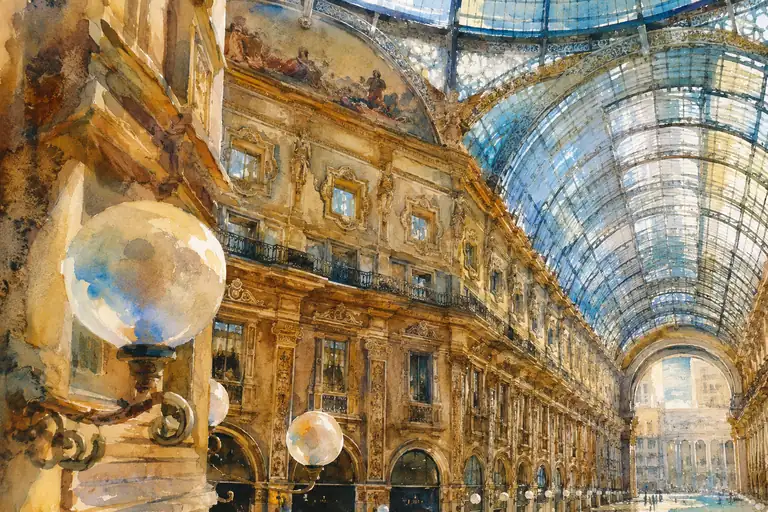 Under the Glass Canopy
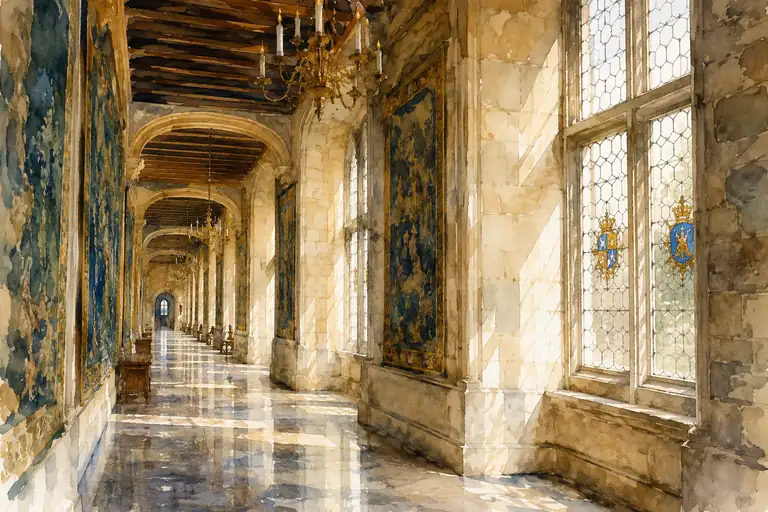 Where the Blue Crest Dreams
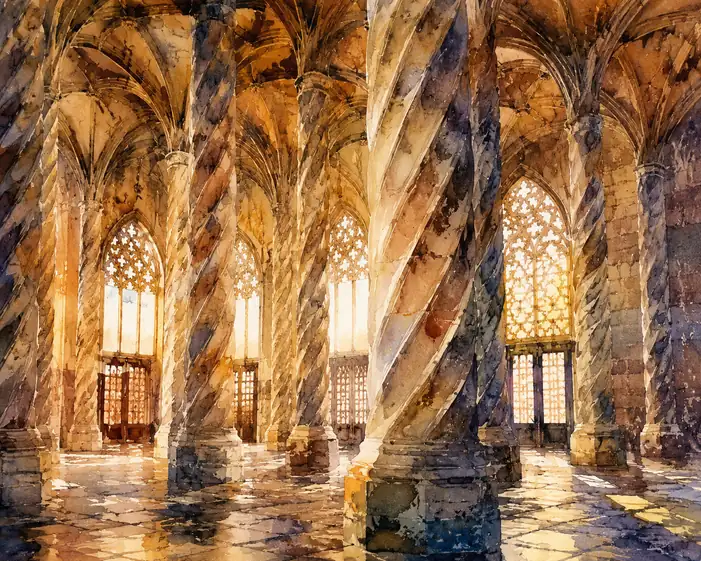 Where Stone Ascends in Spirals