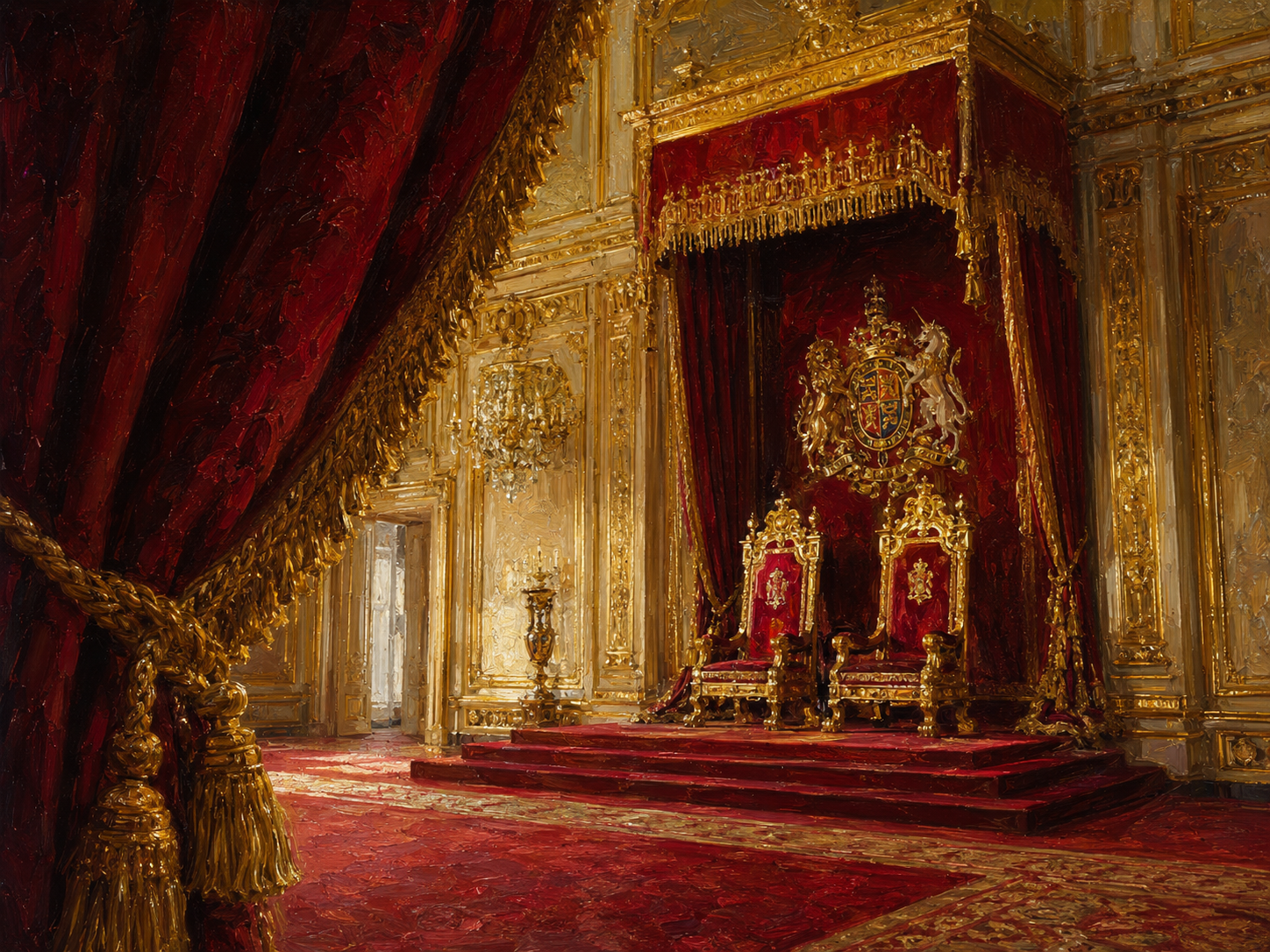
Theater of Royal Majesty
Critique
1. Introduction This oil painting presents the awe-inspiring interior of a royal throne room, dominated by rich crimson and shimmering gold tones. The composition uses a dramatic diagonal arrangement, framed by a heavy velvet curtain in the left foreground. This strategic perspective guides the viewer's eye toward the elevated thrones under a grand canopy. 2. Description In the right middle ground, two highly ornate gold thrones sit upon a red-carpeted platform. Above them hangs a massive crimson canopy draped with gold tassels, backing a detailed heraldic coat of arms displaying a lion and unicorn. The left wall features gold paneling, a large chandelier, and a doorway leading to a brighter adjacent room. A thick red curtain with large gold tassels frames the left edge. 3. Analysis The artist employs dense impasto strokes to give the fabrics and gilded carvings a physical, tactile presence. Light enters primarily from the distant doorway and an unseen source on the right, illuminating the golden walls and creating strong highlights on the curtains. The contrast between the deep red textiles and the bright gold surfaces defines the room's color scheme, while the diagonal lines of the steps draw depth. 4. Interpretation and Evaluation The painting serves as a representation of absolute majesty and political authority. The use of crimson and gold historically symbolizes royalty, and the inclusion of the coat of arms reinforces the theme of heritage. The artist's capability to render the weight of the heavy velvet curtain contrasted with the glint of the gilded thrones showcases a masterful command of texture. 5. Conclusion A close study of the canvas reveals how the initial impact of the dramatic red curtain leads to an appreciation of the complex metallic textures. The work transcends a simple depiction of power by creating a theatrical, atmospheric scene. It stands as a successful exploration of royal grandeur, combining a classical theme with bold, expressive brushwork.
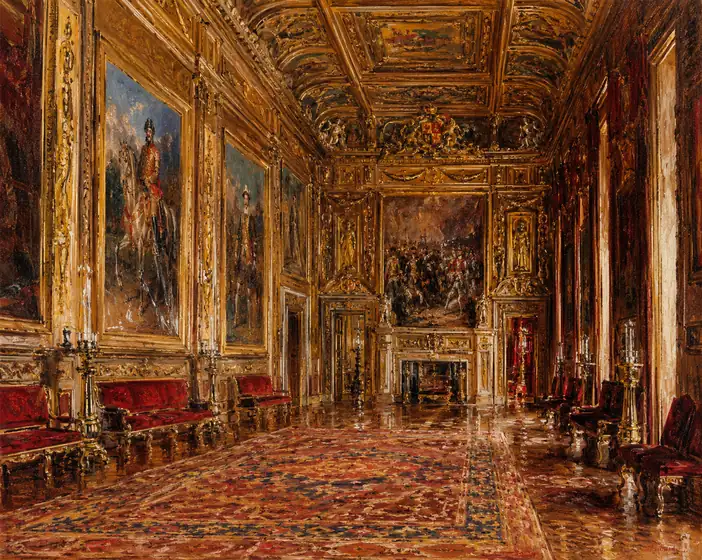 Chamber of Silent Grandeur
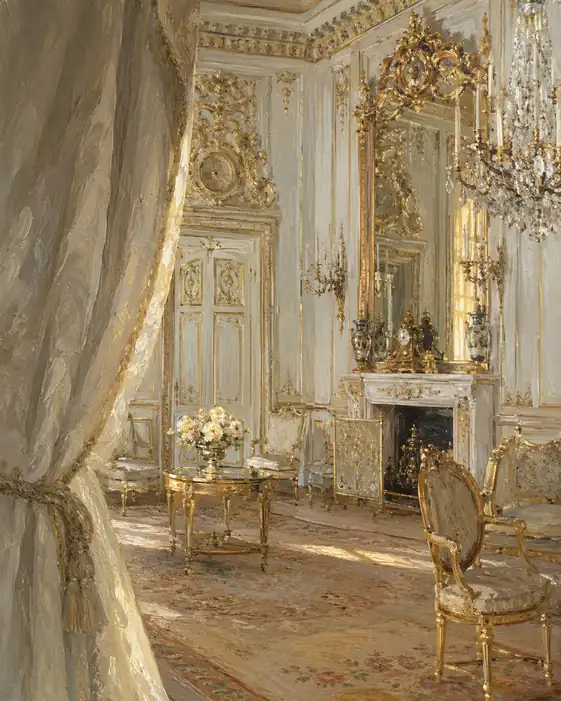 Whispers of a Sunlit Salon
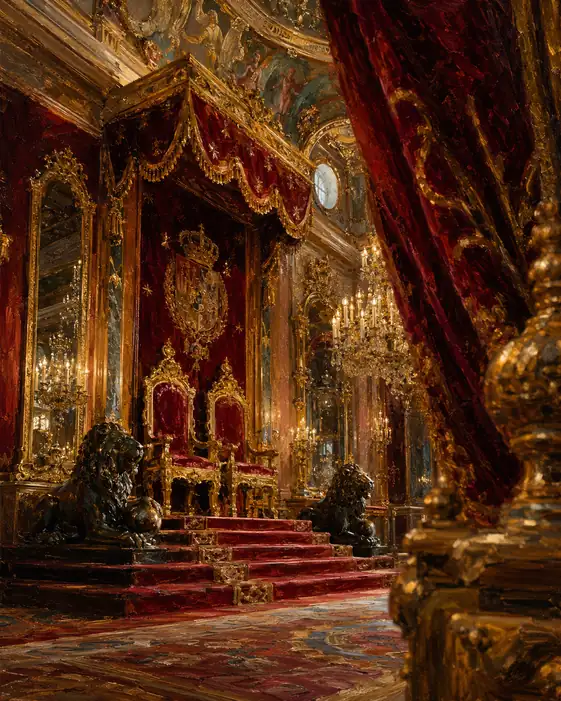 Golden Silence Framed in Crimson
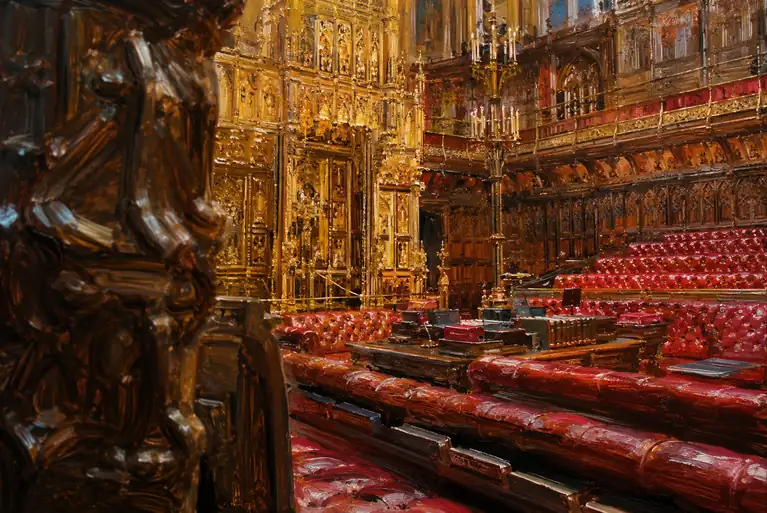 Echoes of Gilded Authority
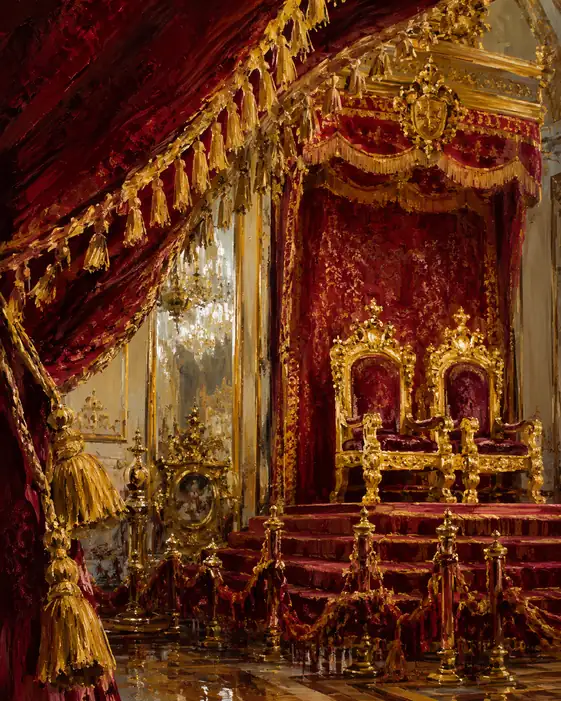 Echoes of the Crimson Dynasty
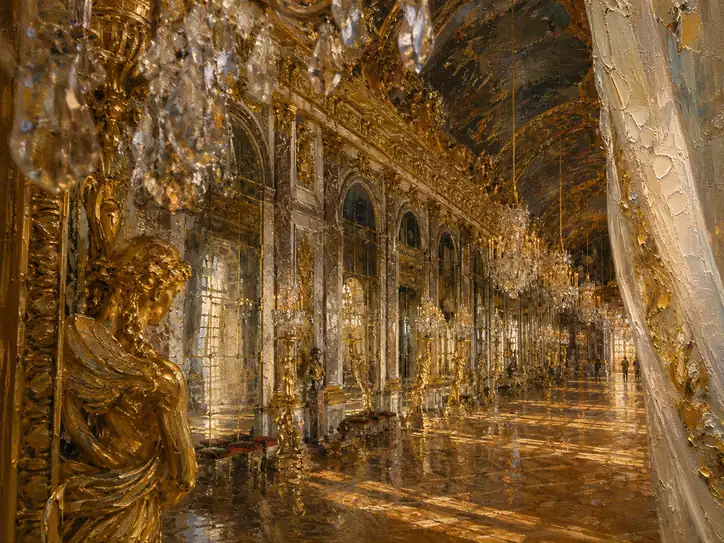 Eternity in the Hall of Mirrors
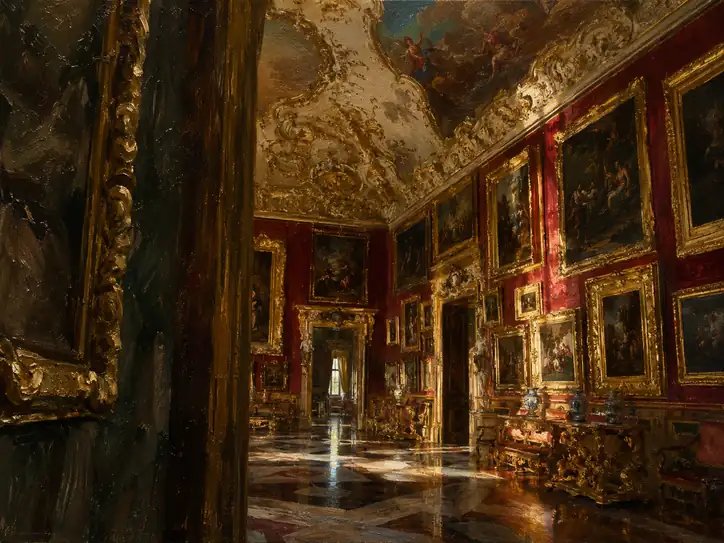 The Crimson Gallery of Time
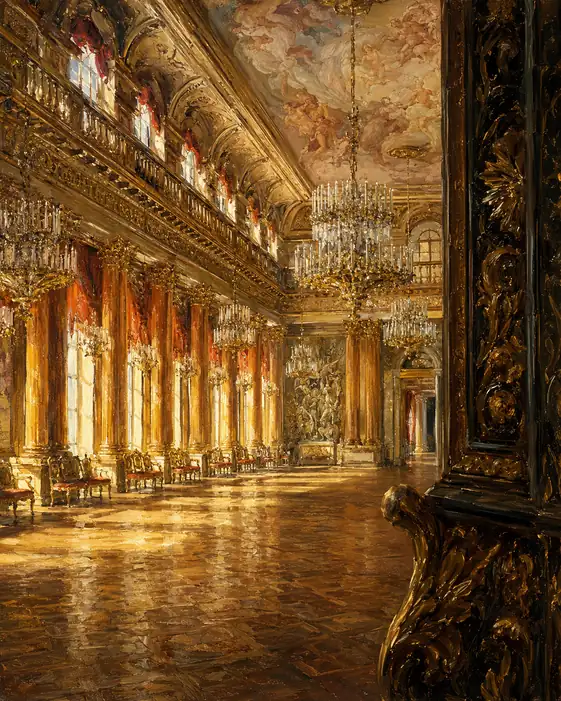 The Waltz of Reflected Light
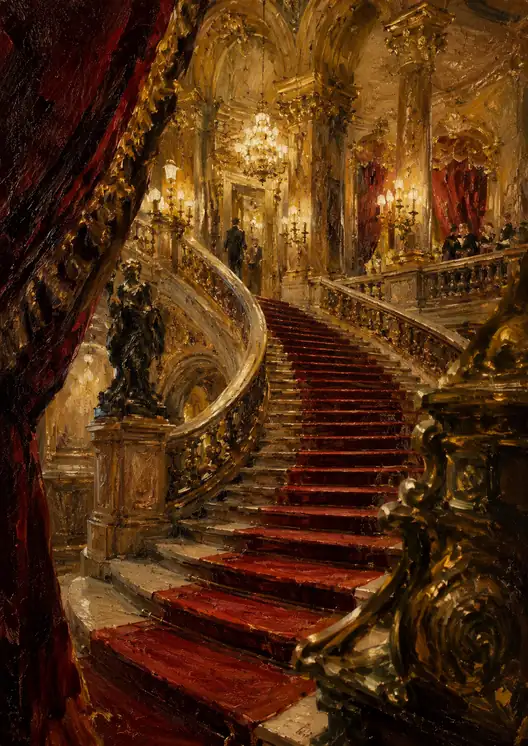 The Grand Ascent
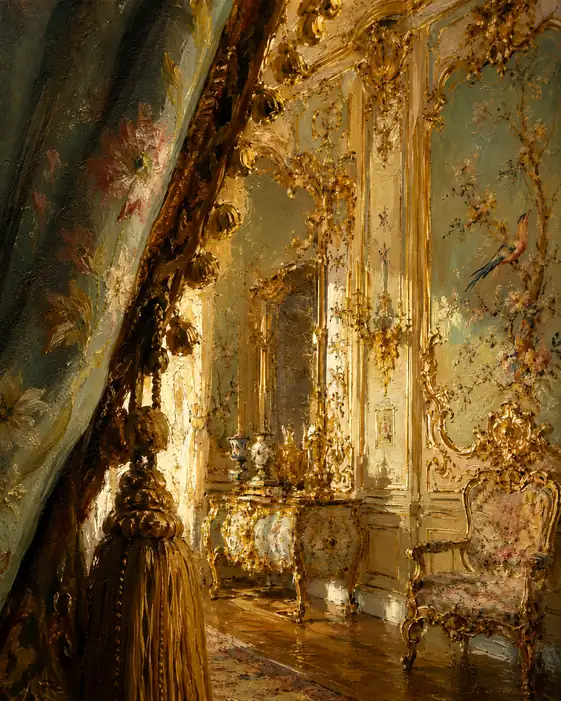 Echoes of Gilded Silence