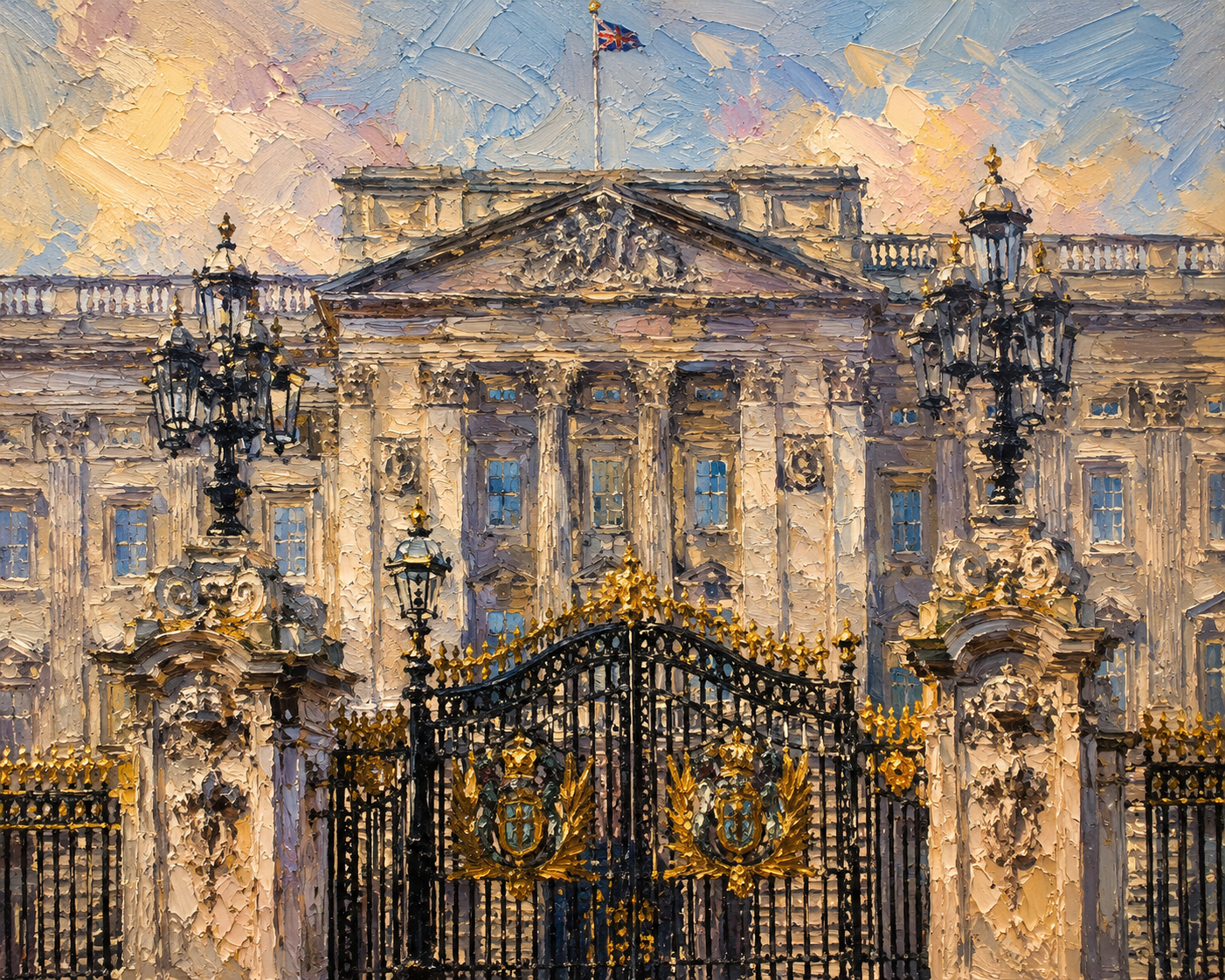
Behind the Closed Golden Crest
Critique
1. Introduction This oil painting depicts the grand neoclassical facade and the ornamental gate of a historic palace. The composition features a central, symmetrical gate and a massive palace behind. An impasto technique gives the canvas a tactile presence and captures dynamic light. 2. Description In the center foreground, a closed black iron gate adorned with detailed golden emblems stands prominently. Two decorated stone pillars flank the gate, each supporting a classical black streetlamp. The palace facade stretches behind, rendered in off-white with rows of windows and columns. A single flag flies atop the roof against a sky filled with thick, energetic strokes of blue, pink, and yellow. 3. Analysis The visual organization relies on a strict bilateral symmetry centered on the iron gate. This balanced structure imparts a sense of permanence and institutional order. Color-wise, the brilliant gold on the gate serves as a primary visual focal point against the neutral stone tones. The impasto application creates a heavy texture that emphasizes the physical materiality of the stone and iron. 4. Interpretation and Evaluation The work communicates heritage and authority through the palace. The closed gate suggests a boundary between the public sphere and the state's private sanctuary. The artist demonstrates strong skill by rendering intricate details within a heavily textured medium. This synthesis of thick paint and structured layout yields a lively image. 5. Conclusion Overall, the painting successfully contrasts structural order with rich textures. The juxtaposition of precise ironwork and expressive sky strokes creates a compelling visual experience. With study, the viewer's interpretation evolves from a standard architectural view to an appreciation of the dialogue between light and paint. This artwork showcases the expressive capabilities of oil paint.
Same Subcategory
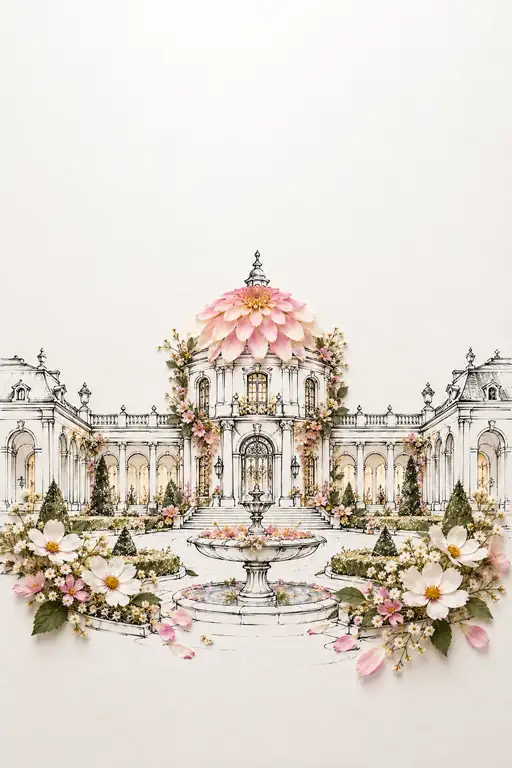 Grandeur Learns to Be Gentle
Similar Artworks
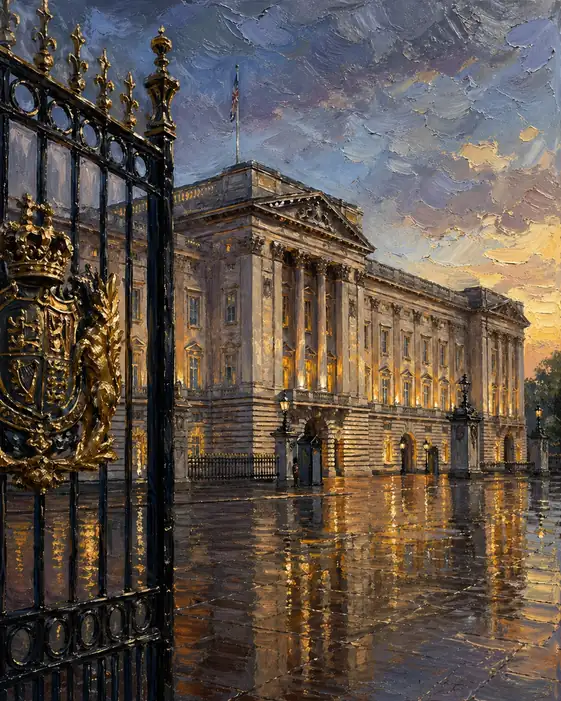 Echoes of the Sovereign's Dusk
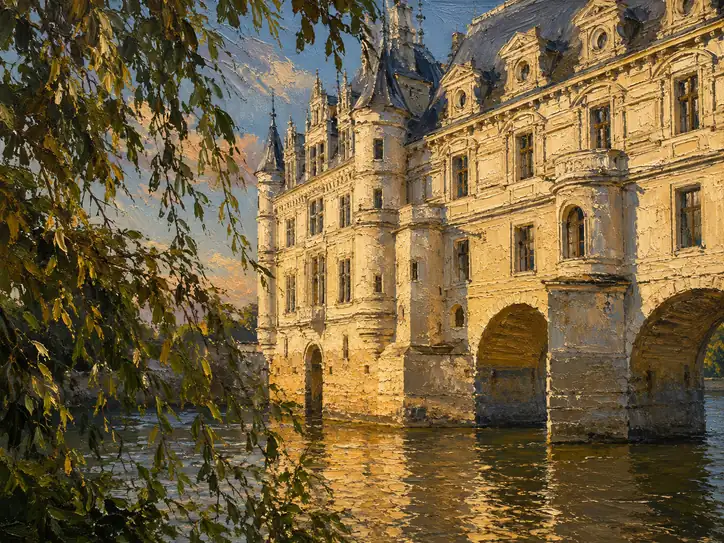 Where Time Whispers on the Water
 Where History Sleeps in Gold
 Dreaming Towers in the Amber Air
 A Silent Witness to the Sunset
 Mirror of the Lost Kingdom
 Symphony of Stone and Sunset
 Visions of the Vanished Empire
 The Last Light of the Citadel
 The Fountain's Summer Song