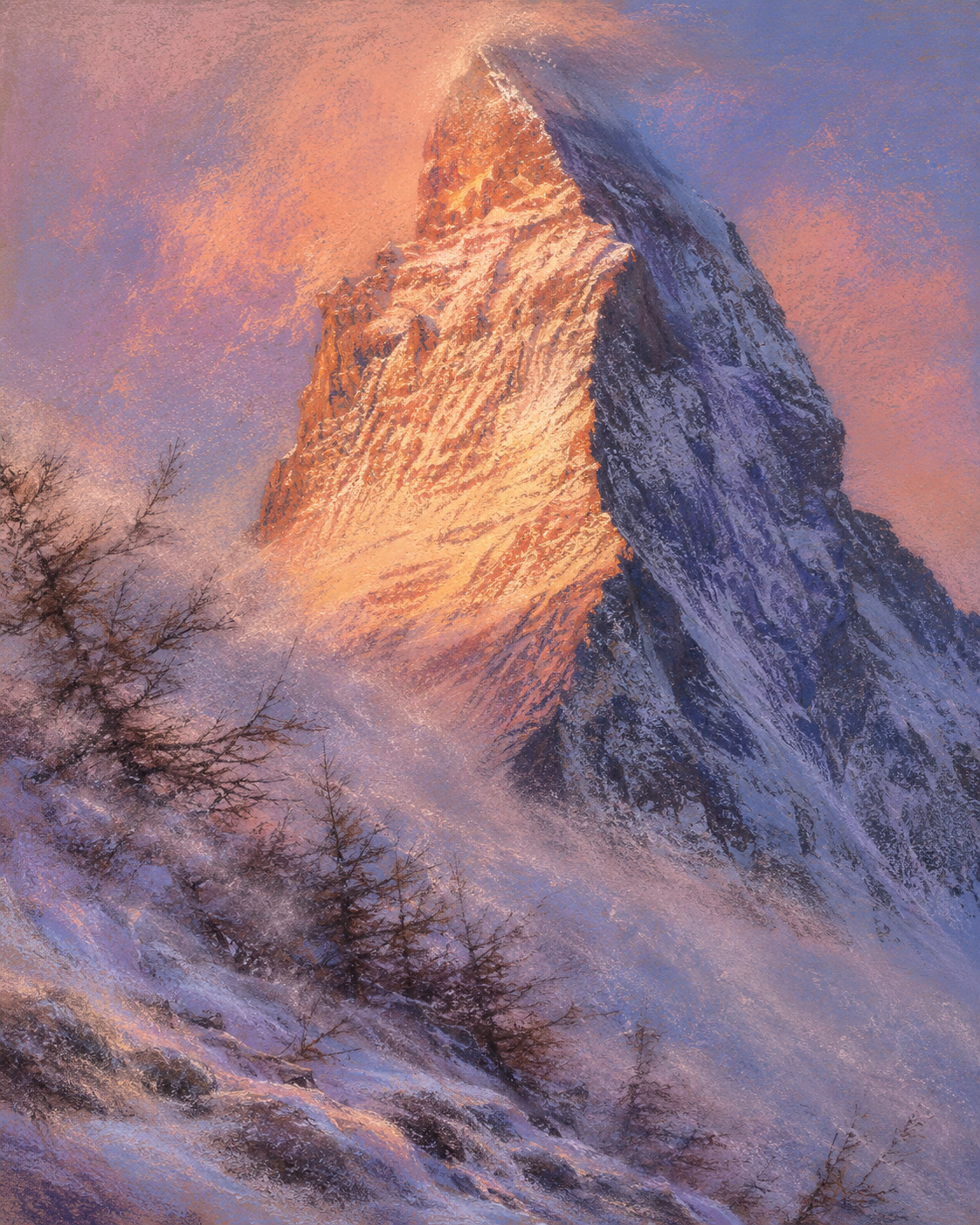
Silent Cry of the Wind-Swept Summit
Critique
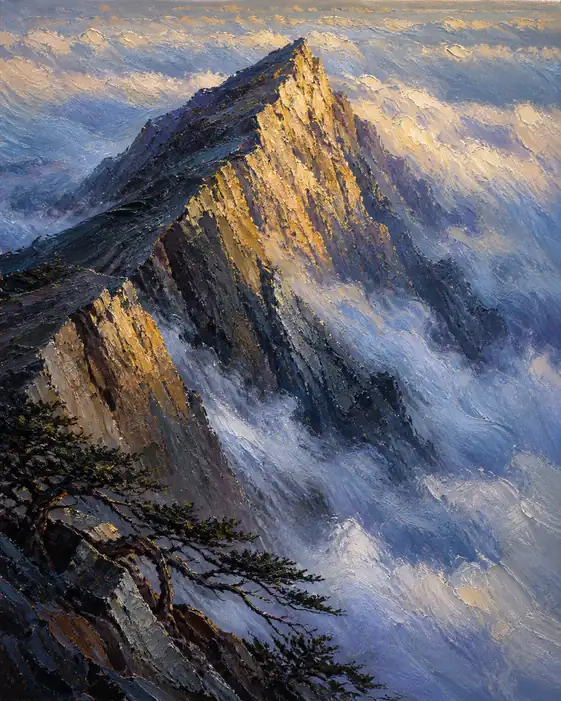
1. Introduction This painting depicts a solitary, sharp alpine peak standing majestic in the soft light of dusk. Although it portrays a freezing winter mountain, the warm sunlight brings a peaceful warmth to the scene. The composition successfully captures the serene tension and sublime beauty inherent in harsh nature. 2. Description The pyramid-like peak in the center glows with a vibrant orange light on its left side. In contrast, the right side remains in deep shadow, showing cold blue-violet snow and rocky textures. In the left foreground, several withered coniferous trees stand on a steep, snow-covered slope. Fine snow drifts near the base, while the sky transitions from soft pink to cool blue. 3. Analysis The diagonal ridge of the mountain divides the canvas, creating a dramatic boundary between light and shadow. The color palette features a striking contrast between the warm orange highlight and the cold blue shadow. A fine, textured pastel-like stroke recreates the dry mountain air and the shimmer of drifting snow. The dark foreground trees and slope enhance the sense of depth, emphasizing the scale of the peak. 4. Interpretation and Evaluation This work expresses a fleeting moment of harmony and the eternal majesty of the rugged mountains. By combining the movement of drifting snow with the solid peak, it infuses the scene with deep spirituality. The light on the harsh rocks adds a poetic quality, transforming the cold peak into a living monument. The strong draftsmanship and balanced colors demonstrate the artist's refined skills and artistic vision. 5. Conclusion Initially, the painting appears to be a traditional landscape depicting a famous alpine landmark. However, closer inspection reveals that the precise temperature of light elevates the work to fine art. It stands as a highly successful masterpiece, offering a sense of quiet awe and lasting tranquility.
Same Subcategory
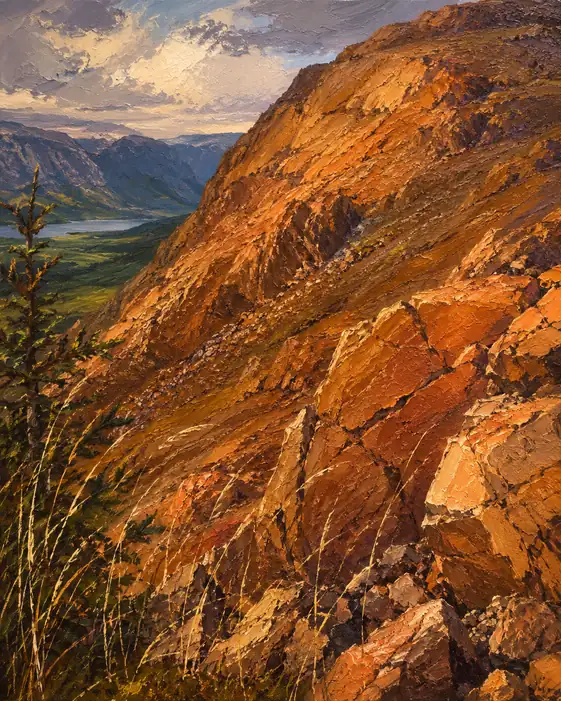 Where the Sun Burns the Stone
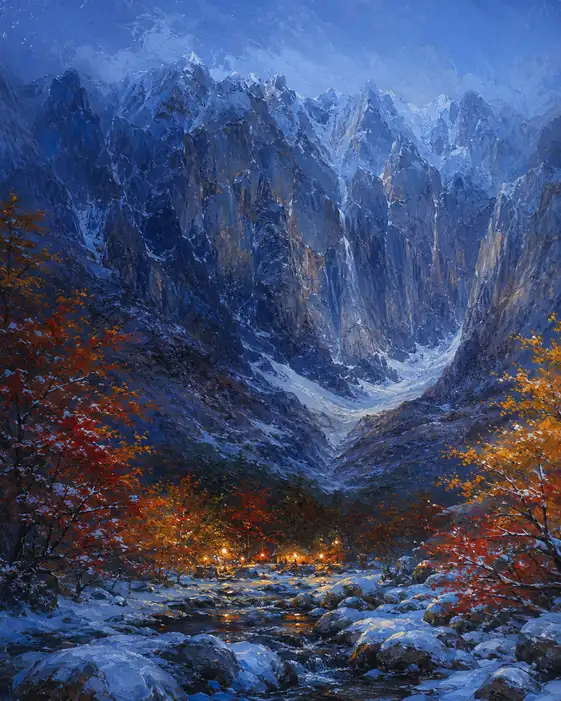 What Glows Beneath the Snow Wall
Similar Artworks
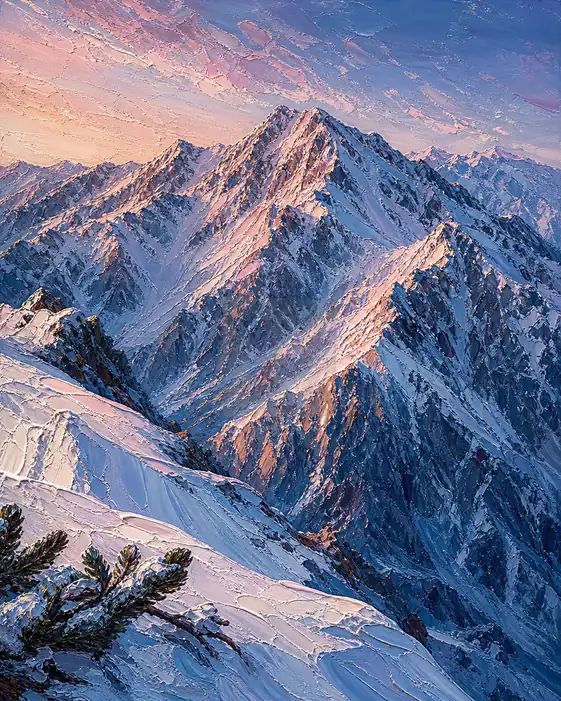 The Chiseled Summit of Rosy Dawn
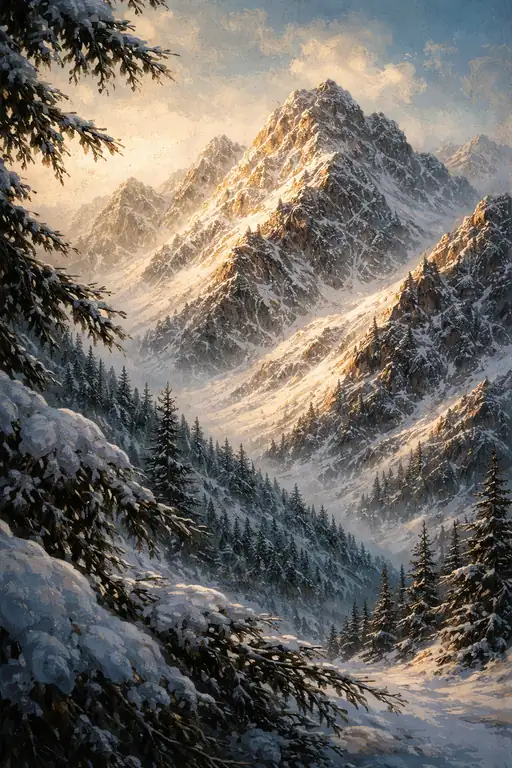 Alpenglow: The Summit's Golden Silence
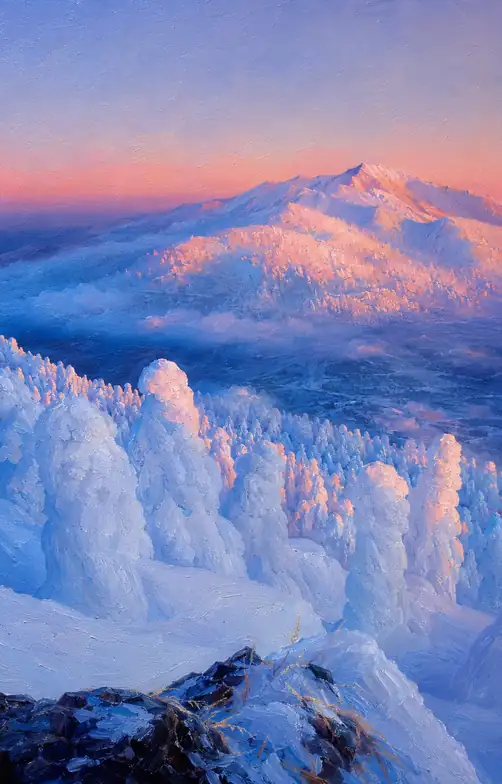 When the Frozen Forest Wears the Dawn
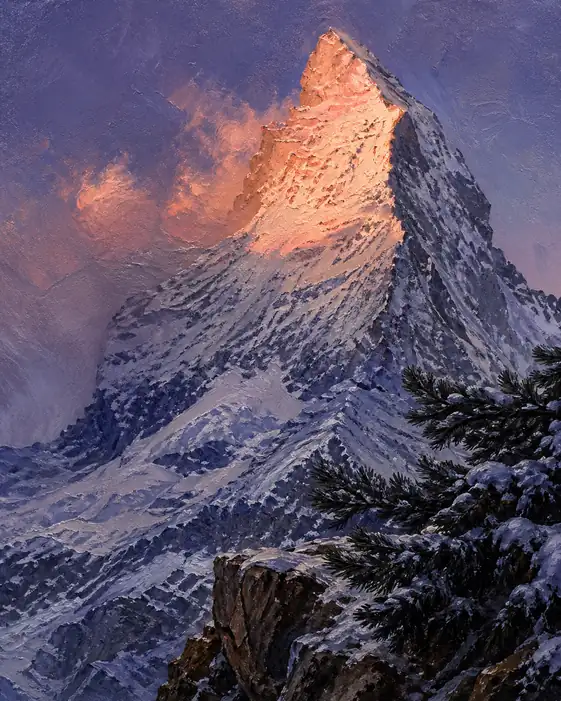 Dawn's Fiery Crown
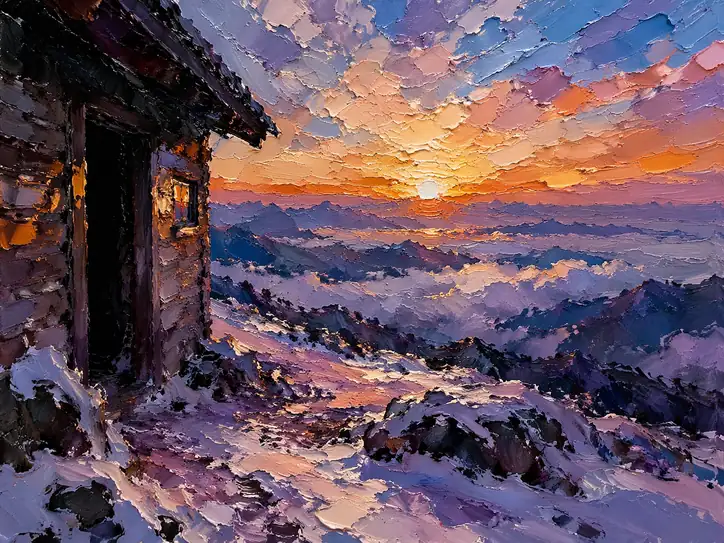 Sanctuary Above the Clouds
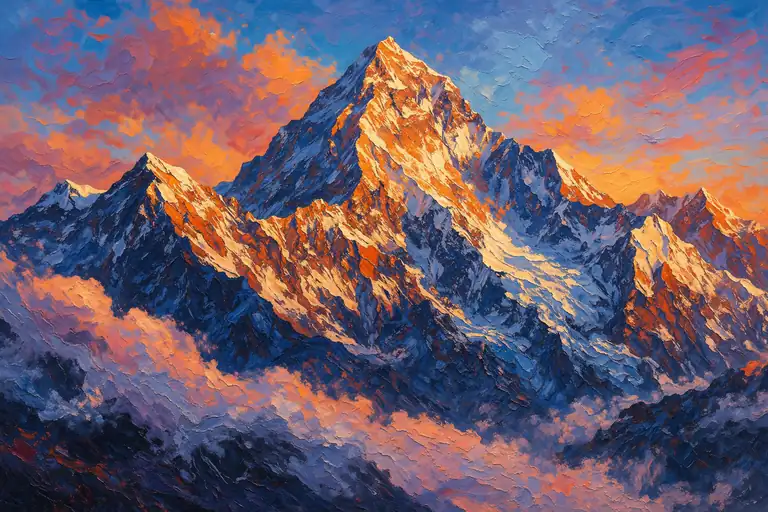 Golden Summit Above the Clouds
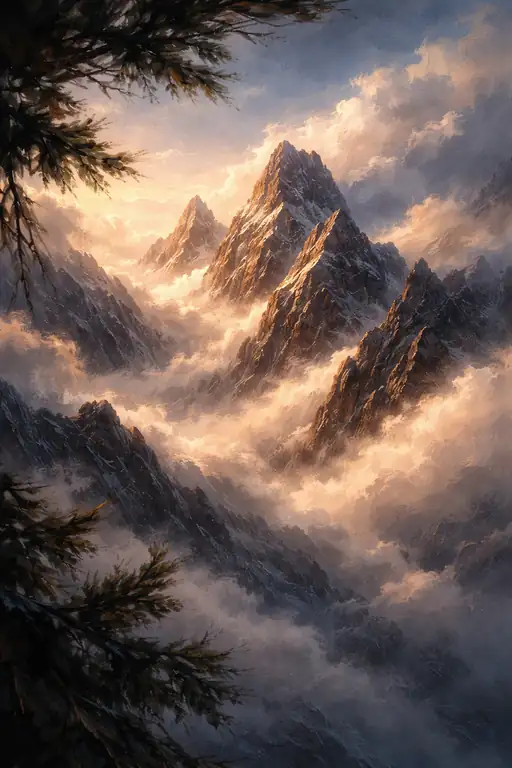 Eternity Above the Mist
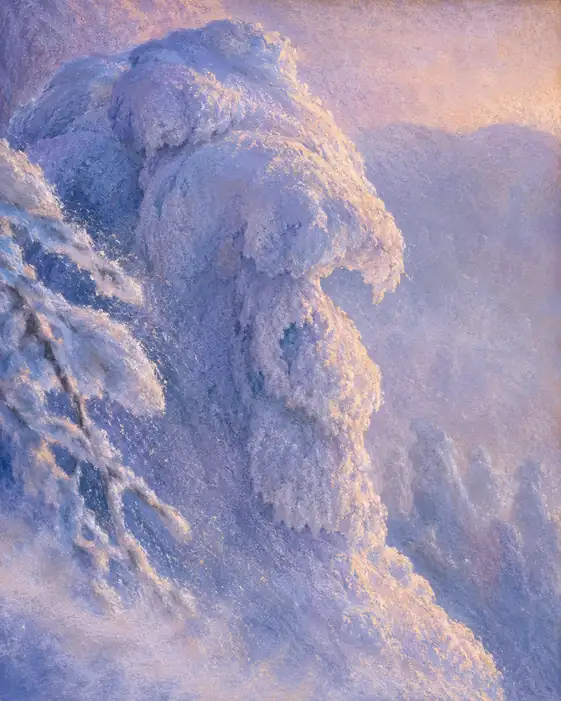 Silent Breath in the Frozen Dusk
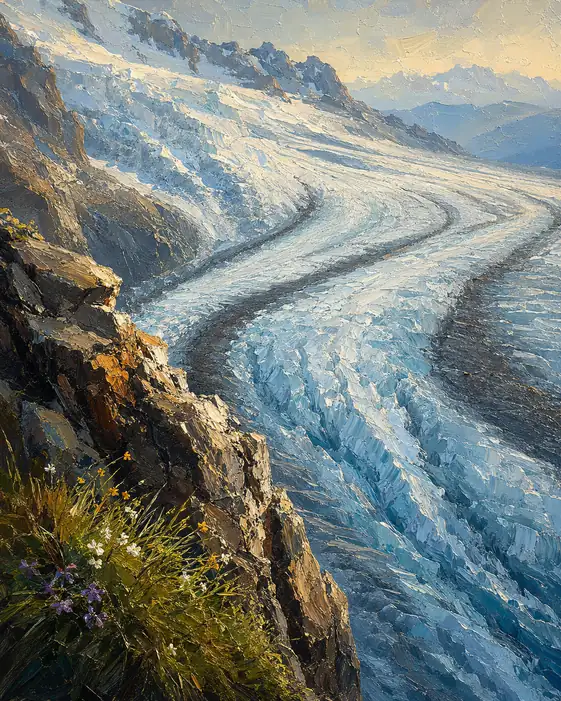 Spring Whispering on the Glacier's Edge
 Sovereign of the Sea of Clouds