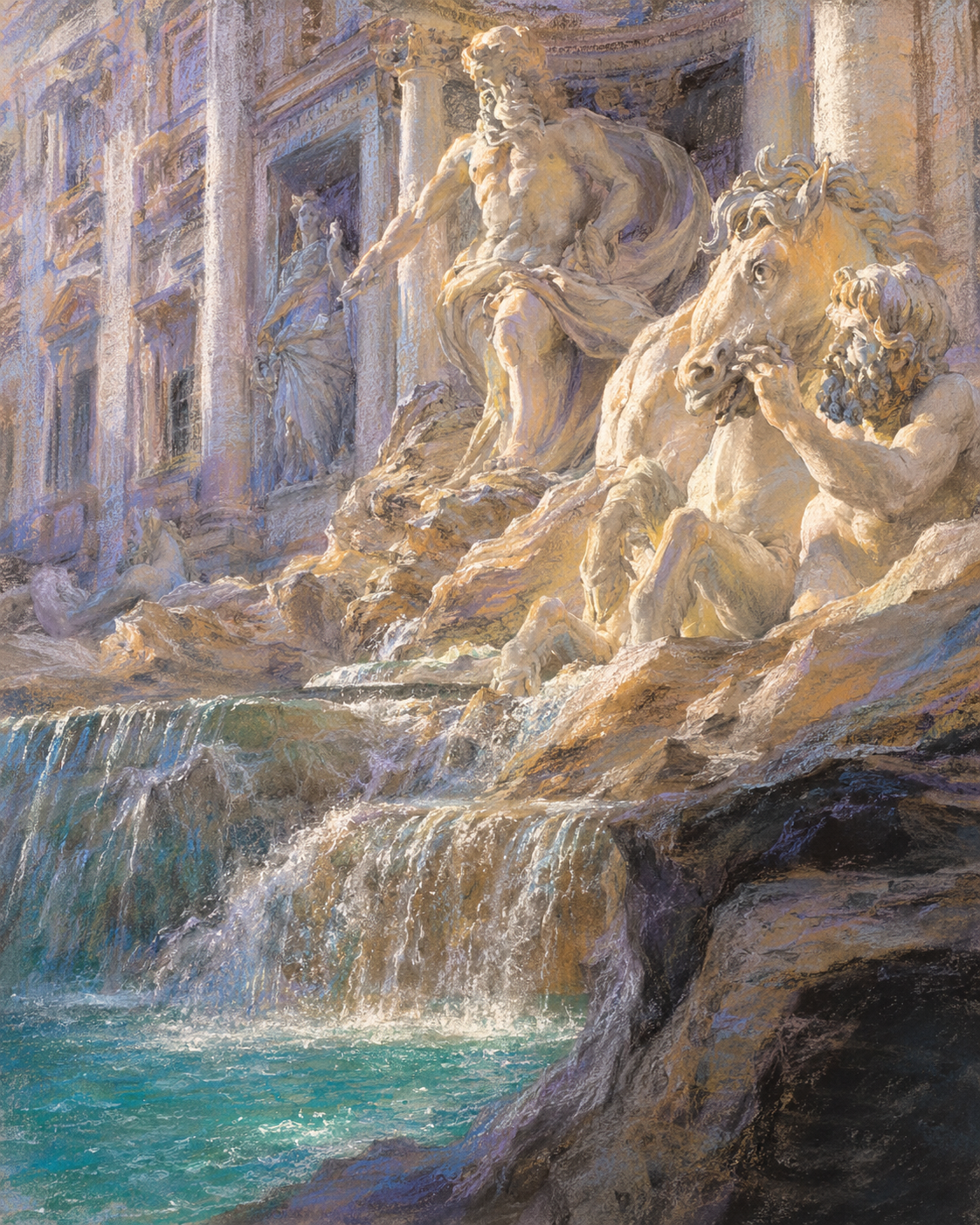
Symphony of the Turquoise Waters
Critique
1. Introduction This dynamic oil painting captures the monumental beauty of Rome's Trevi Fountain, focusing on its iconic baroque sculptures and rushing waters. The composition channels the energy of the cascades and the theatrical drama of classical figures. The scene creates an immersive experience of movement, light, and sound. 2. Description At the center, the commanding statue of Oceanus stands atop a chariot, surrounded by rearing sea horses and Tritons who struggle to guide them. Below these stone figures, torrents of water pour over rough artificial rocks into a large turquoise basin. In the background, the ornate classical facade of the palace provides a structured architectural backdrop. 3. Analysis The artist utilizes energetic, textured brushstrokes to convey the fluid motion of the waterfalls and the solid stone surfaces. The color palette features a luminous contrast between warm whites, ochres, and pale lavenders on the statues, and vibrant turquoise and emerald greens in the pool. Strong light illuminates the scene, casting soft, colorful shadows that enhance the sculptures' depth. 4. Interpretation and Evaluation This work celebrates the union of monumental architecture, sculpture, and the natural force of water. The dramatic gestures of the figures and the churning water represent a classic Baroque themes of movement and emotion. The artist successfully captures the majestic atmosphere of the site, translating stone and liquid into a vivid visual melody. 5. Conclusion While the painting initially strikes the viewer with its brilliant colors, closer inspection reveals a complex balance of form and fluidity. The masterful depiction of water and stone leaves a strong impression of grandeur. Overall, this piece stands as a superb representation of classical grandeur and dynamic movement.
Same Subcategory
 Where Time Folds into Glass
 Symphony of Blue and Gold
Similar Artworks
 Symphony of the Sunlit Cascade
 Liquid Silver: The Eternal Prayer of Trevi
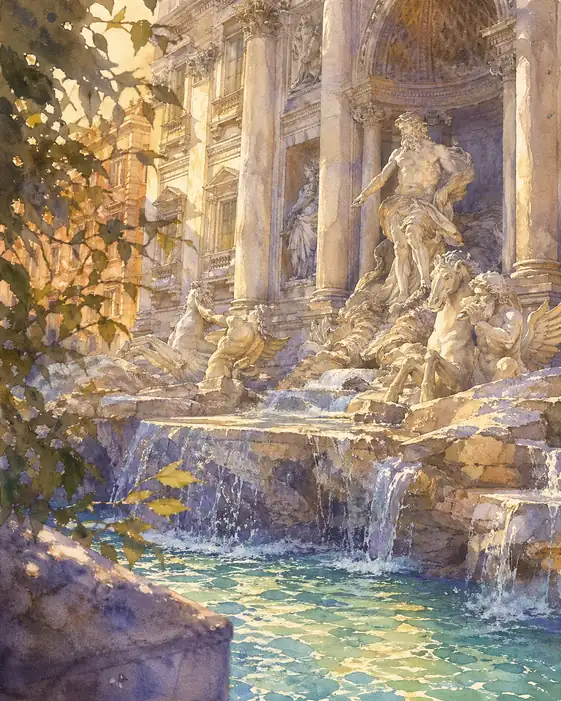 Timeless Waltz of Light and Water
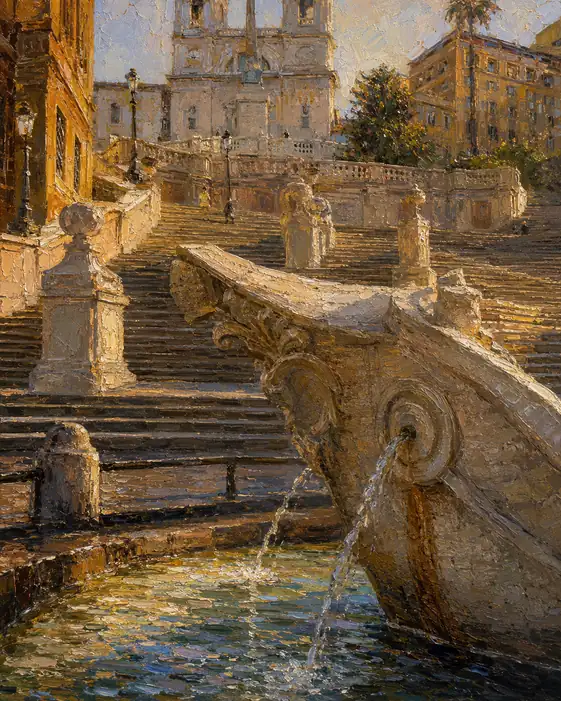 Sunset on the Spanish Steps
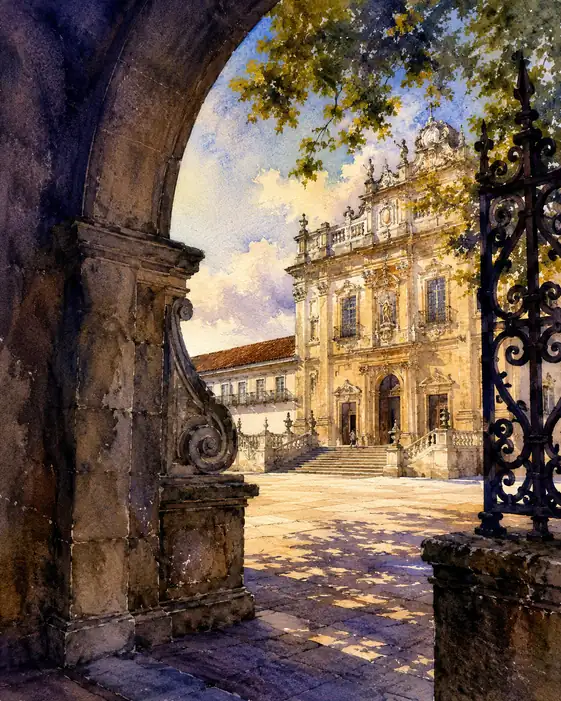 The Arch of Timeless Afternoon
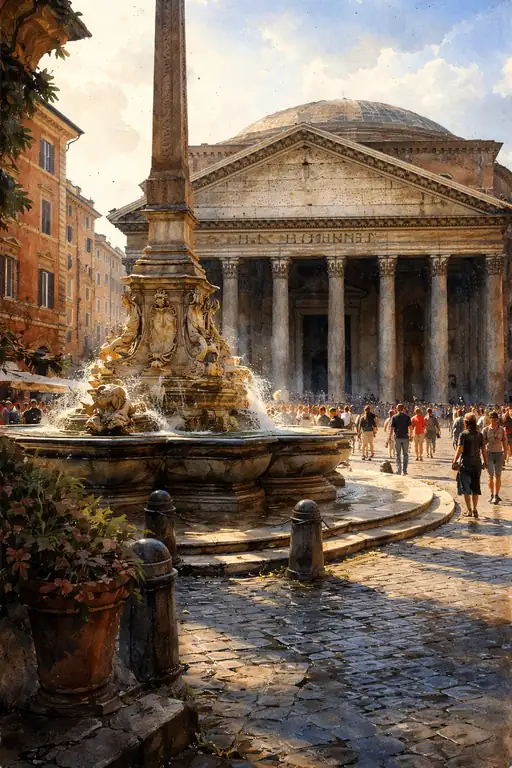 The Eternal Pantheon
 Sunlight Whispering to Stone
 Eternal Glory in the Golden Dusk
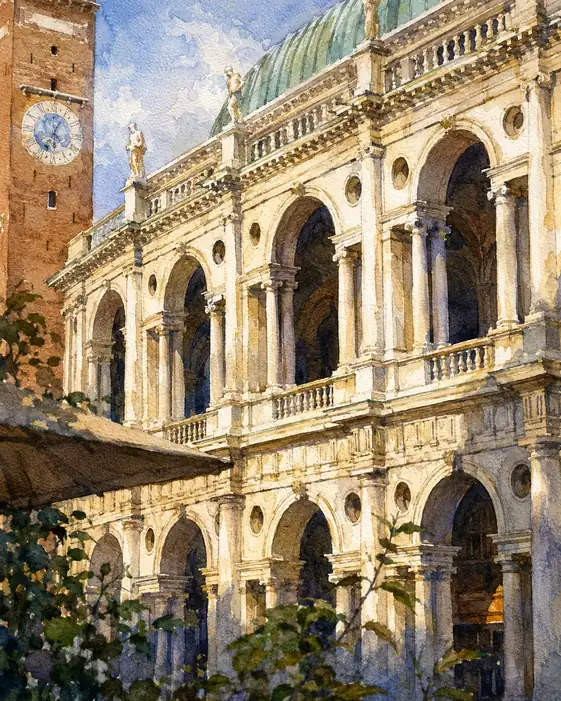 The Golden Hour at Palladio's Loggia
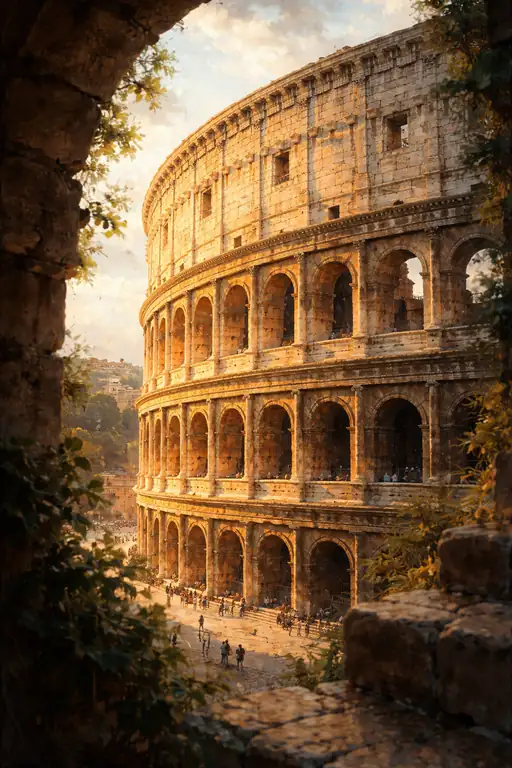 Golden Echoes of Empire