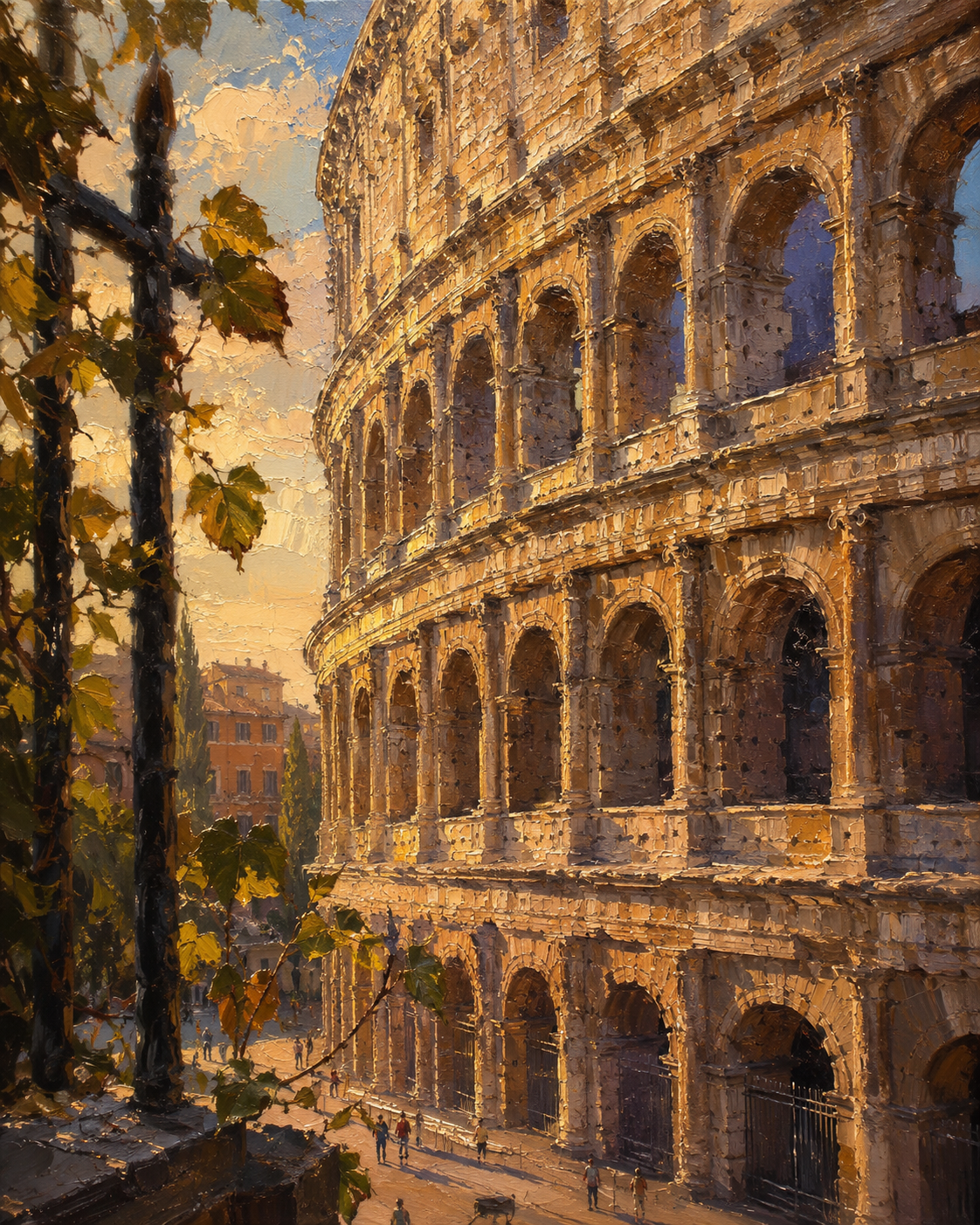
Where History Fades into Dusk
Critique
1. Introduction This dramatic landscape painting captures the monumental ruins of an ancient Roman amphitheater bathed in golden light. In the lower-left foreground, a dark iron fence covered with climbing ivy provides a subtle frame for the view. The warm light of late afternoon emphasizes the majestic arch structure, creating a powerful historical atmosphere. 2. Description The right side of the composition is dominated by the colossal stone arches of the Colosseum, rendered from a dynamic angle. On the left, a heavy iron fence with yellowing autumn leaves stands in the shade. Below the structure, tiny silhouettes of visitors walk across the paved ground under the glowing sky. 3. Analysis The artist uses a vigorous impasto technique, applying thick paint to give the weathered stone walls a tangible texture. This physical texture underscores the solidity and age of the ancient ruins. The color palette centers on a contrast between the sunlit orange walls and the deep blue shadows within the arches. 4. Interpretation and Evaluation The play of light and shadow highlights the passage of time and the grandeur of the classical past. The foreground fence serves as a reminder of the barrier between the viewer's present and the ancient history. With its strong composition and rich textures, the painting evokes a profound sense of awe and nostalgia. 5. Conclusion While the dark fence in the foreground first defines the viewpoint, the brilliant facade of the amphitheater leaves a lasting impression. The enduring stone arches invite contemplation on history and human achievement. This artwork successfully translates the monumental scale and poetic beauty of the Roman ruins onto canvas.
Same Subcategory
 Whispers of the Eternal Stage
 Whispers of the Amphitheatre
Similar Artworks
 The Stone That Remembers the Sun
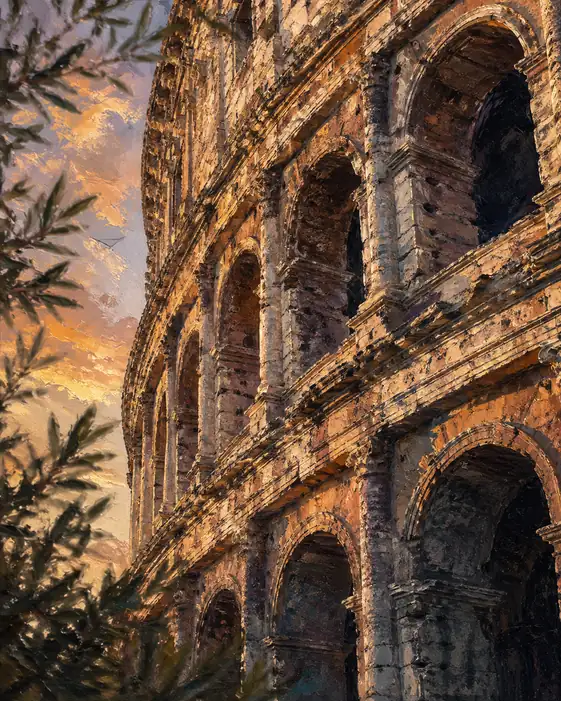 Stone of the Ages, Light of the Moment
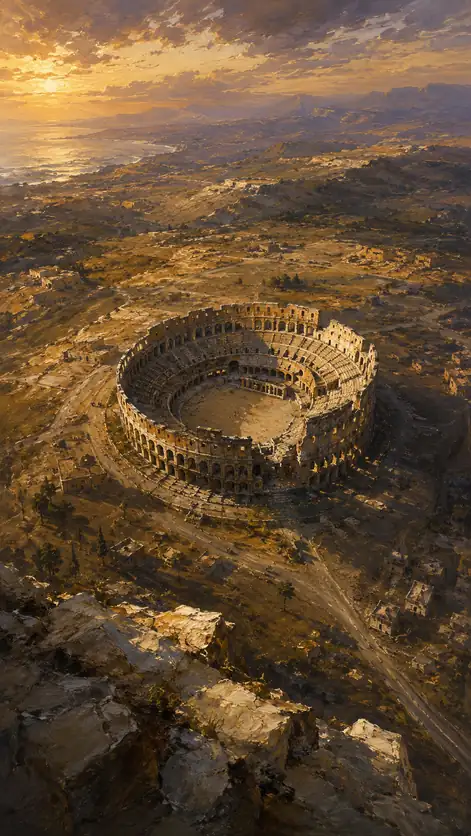 Echoes of a Forgotten Empire
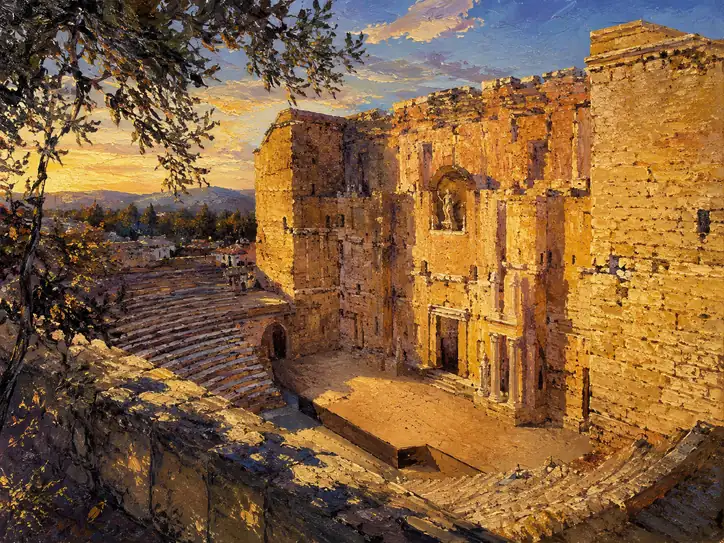 Twilight's Last Ovation
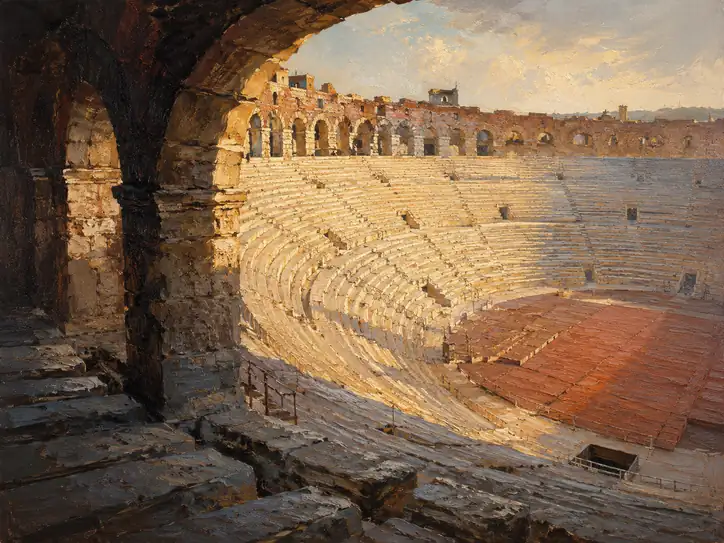 Echoes in the Golden Silence
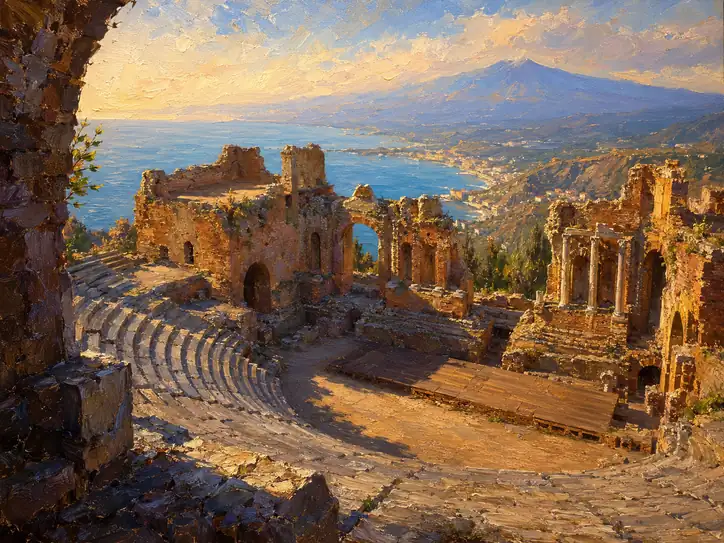 Taormina: The Golden Stage of Antiquity
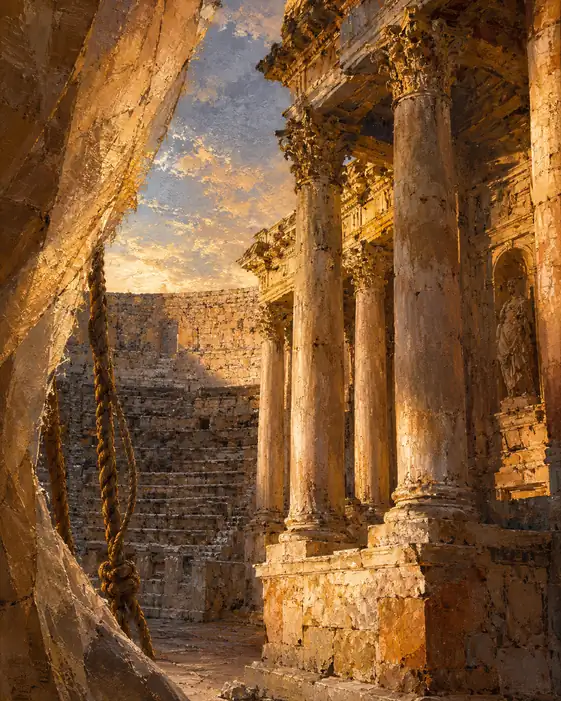 Echoes of the Eternal Theater
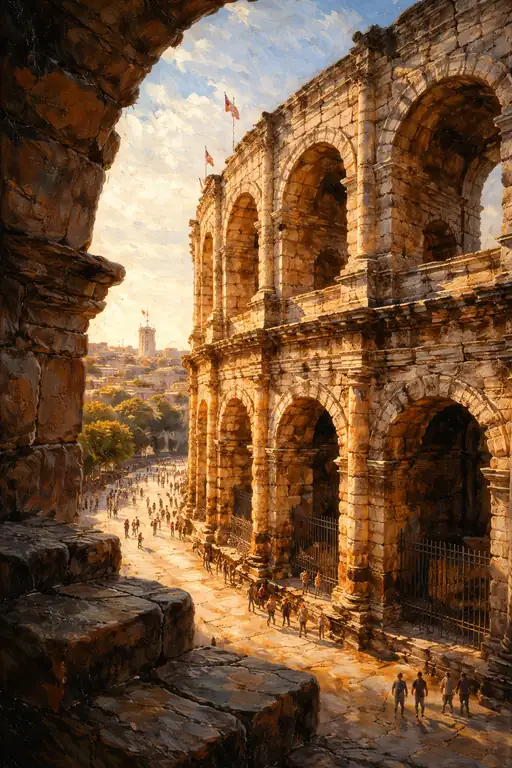 Echoes of Empire at Sunset
 The Lantern That Outlived Empires
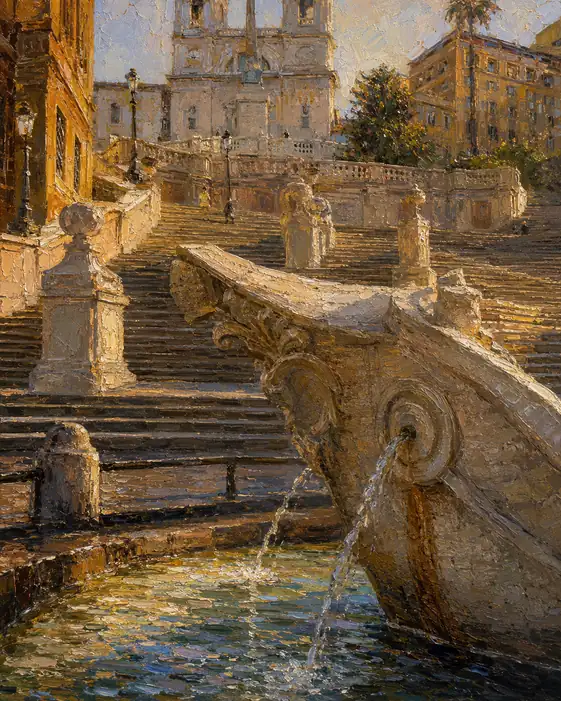 Sunset on the Spanish Steps