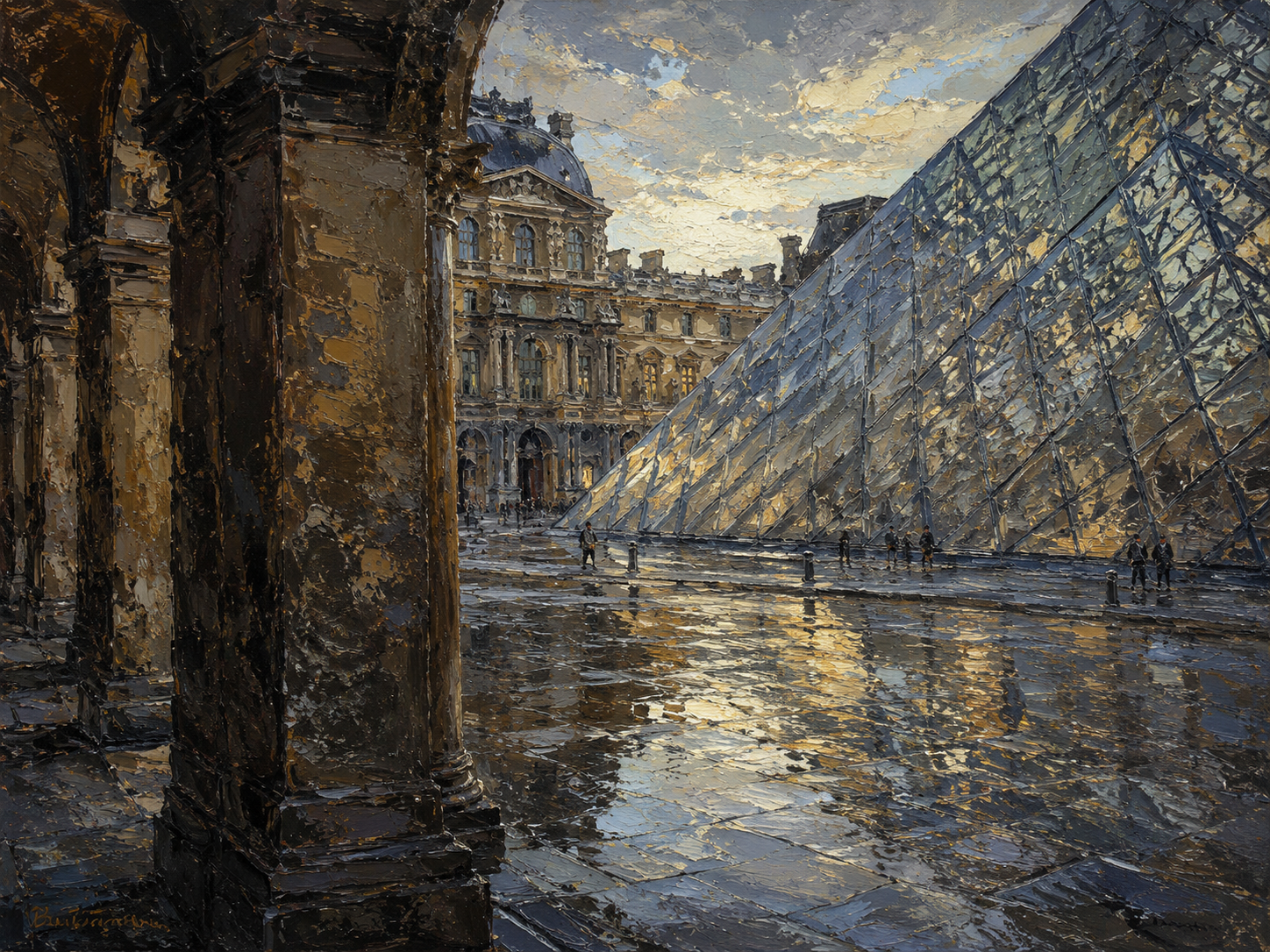
Where Time Folds into Glass
Critique
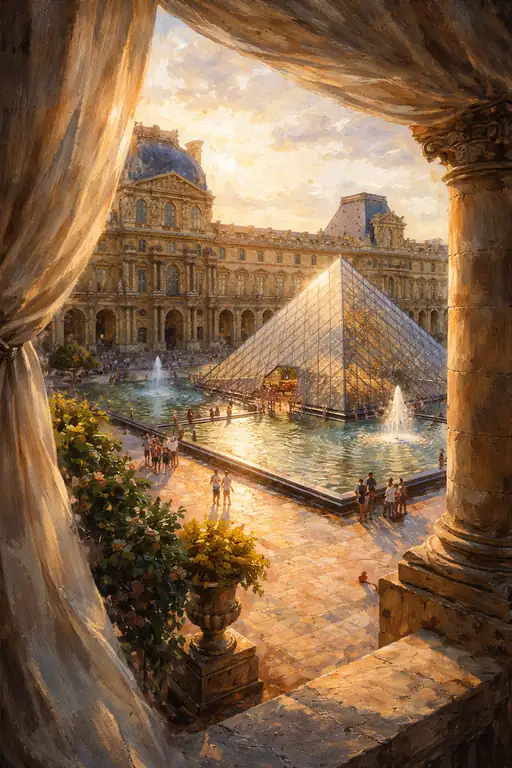
1. Introduction This oil painting depicts a famous museum courtyard where historic palace architecture meets modern design. The serene, post-rain atmosphere is brought to life through a thick, impasto technique and powerful palette knife strokes. The artwork effectively balances heavy architectural forms with dynamic plays of light. 2. Description On the left, a massive stone column of an arcade frames the composition. To the right, a large glass pyramid rises, its facets reflecting the warm glow of the evening sky. In the background, a classical palace building stands under a cloudy sky, with scattered figures walking across the wet plaza. The damp pavement acts as a mirror, reflecting the light of the pyramid and the buildings. 3. Analysis The defining feature of this piece is the textured paint application. The thick layers of paint on the column and wet ground create a physical sense of depth and touch. Compositionally, the vertical column on the left contrasts with the diagonal lines of the glass pyramid, creating stability. The color palette uses muted greys and browns, highlighted by warm yellow reflections. 4. Interpretation and Evaluation The painting successfully captures the coexistence of classicism and modernism through light and atmosphere. The difficult texture of wet stone and glowing glass is rendered with remarkable technical expertise. The tiny figures emphasize the grand scale and quietness of the surrounding space. The balance between bold texture and delicate light reflection demonstrates high artistic quality. 5. Conclusion Upon initial viewing, one is struck by the heavy impasto, but deeper inspection reveals a subtle control of light and shadow. The scene captures a timeless moment in an urban space, evoking a sense of wonder. Ultimately, the painting stands as a masterfully executed landscape that beautifully expresses the grand romance of the city.
Same Subcategory
 Silent Giants in the Mountain
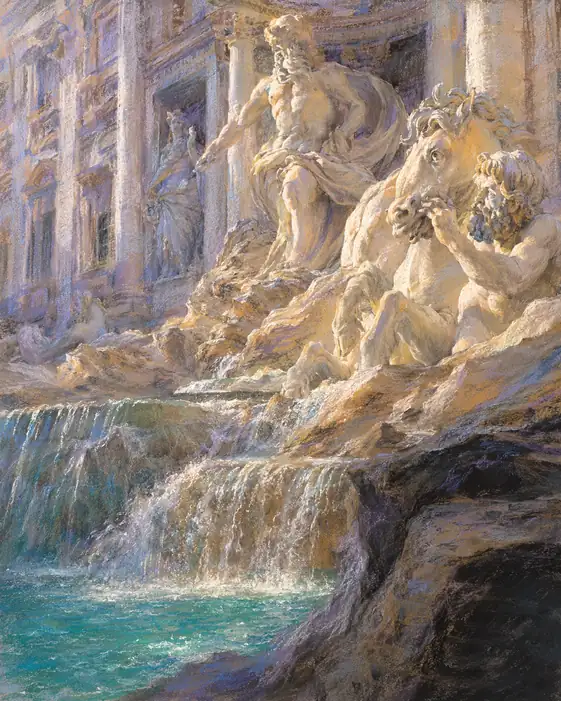 Symphony of the Turquoise Waters
Similar Artworks
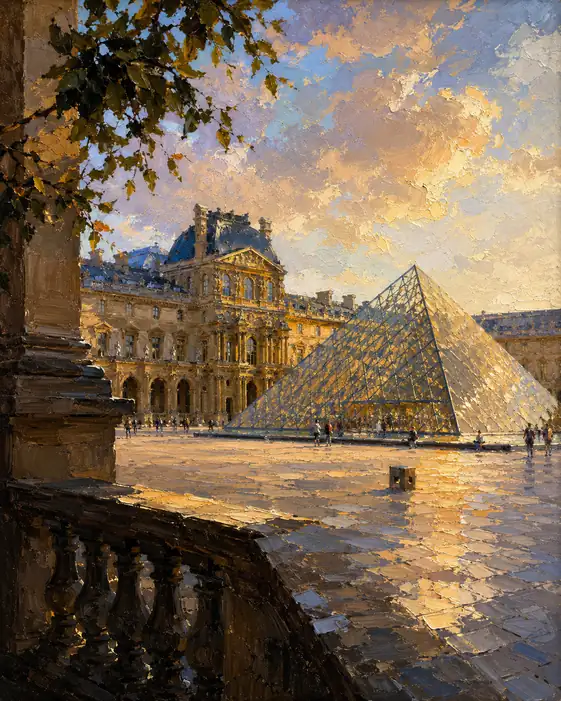 Intersection of Ages at the Golden Court
 Eternal Glow of the Gate
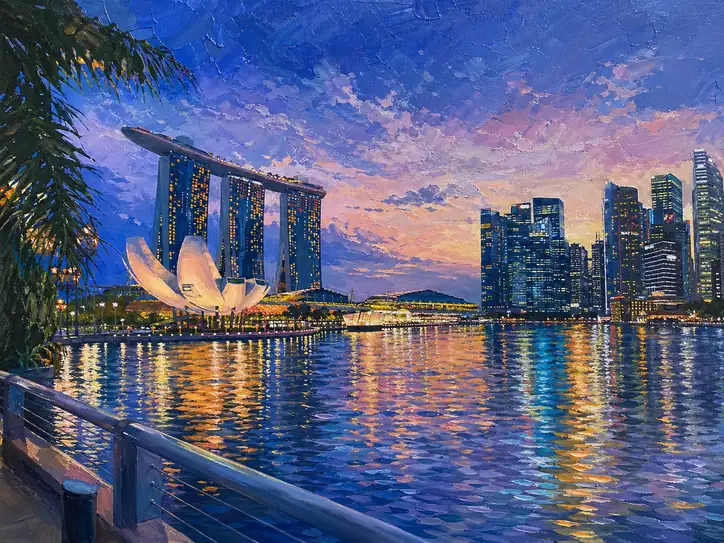 Mirrored Dreams of the Metropolis
 Evening Light Coloring the Louvre
 Where Stone Mirrors the Sky
 The Spiral Path in the Sun-Drenched Courtyard
 Echoes of the Ancients
 Whispers of Light on Wet Cobblestones
 Reaching for the Indigo Dream
 Where Dusk and Stone Converge