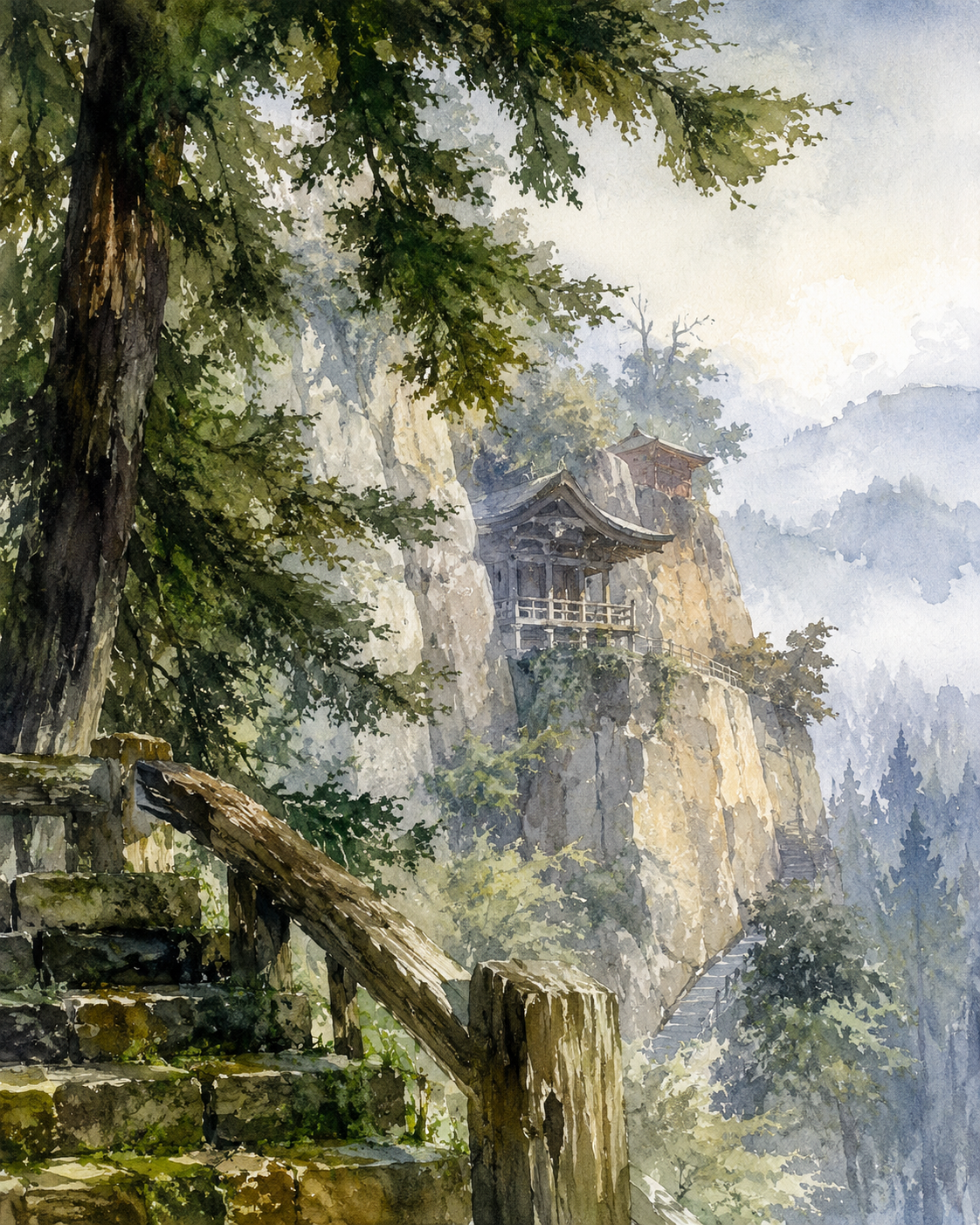
Where Prayers Melt into the Mist
Critique
1. Introduction This delicate watercolor painting depicts a historic Buddhist temple complex perched precariously on a sheer cliffside. The artwork captures the spiritual solitude and natural grandeur of a remote sanctuary integrated into the rugged landscape. The vertical orientation emphasizes the dramatic height and isolation of the sacred site. 2. Description In the foreground, moss-covered stone steps and a rustic wooden handrail lead the viewer’s eye upward. On the steep, sunlit cliff face, a traditional wooden hall clings to the rock, with another structure higher up. The right side opens into a misty valley filled with silhouetted trees fading into a hazy sky. 3. Analysis The artist employs fluid watercolor washes to render the atmospheric mist and distant mountains, creating a strong sense of aerial perspective. In contrast, dry-brush details and sharp lines define the textures of the stone steps, wooden temple, and craggy cliffs. The color palette is dominated by earthy greens, browns, and soft blues, reinforcing the natural harmony. 4. Interpretation and Evaluation The depiction of the temple clinging to the cliff symbolizes the human pursuit of spiritual elevation and resilience within the vastness of nature. The technical handling of the watercolor medium, particularly the balance between detailed rendering and soft, blurred edges, is highly successful. This contrast between structural details and atmospheric softness creates a contemplative space. 5. Conclusion In conclusion, the initial impression of a steep landscape grows into a profound appreciation for the union of architecture, nature, and spirituality. The painting captures a serene, timeless moment, offering a visual meditation on solitude and height. It stands as an exceptional landscape watercolor that successfully translates the quiet energy of the mountains.
Same Subcategory
 Prayers Carried by the Wind
Similar Artworks
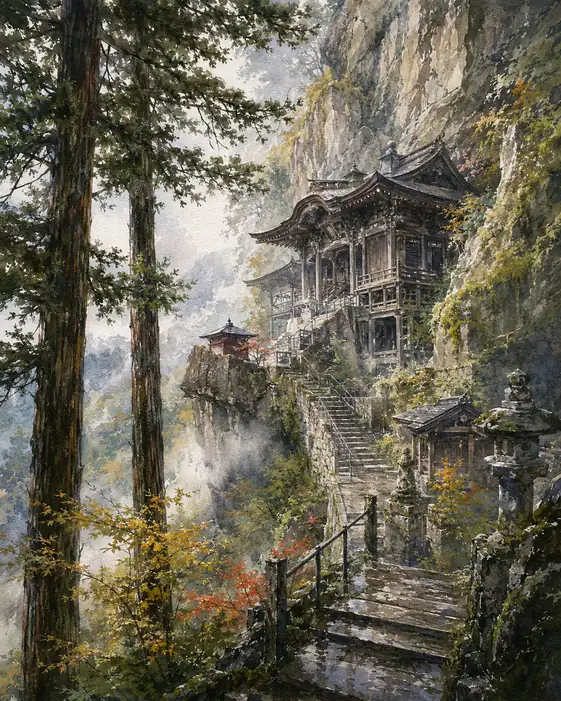 Prayer in the Mountain Mist
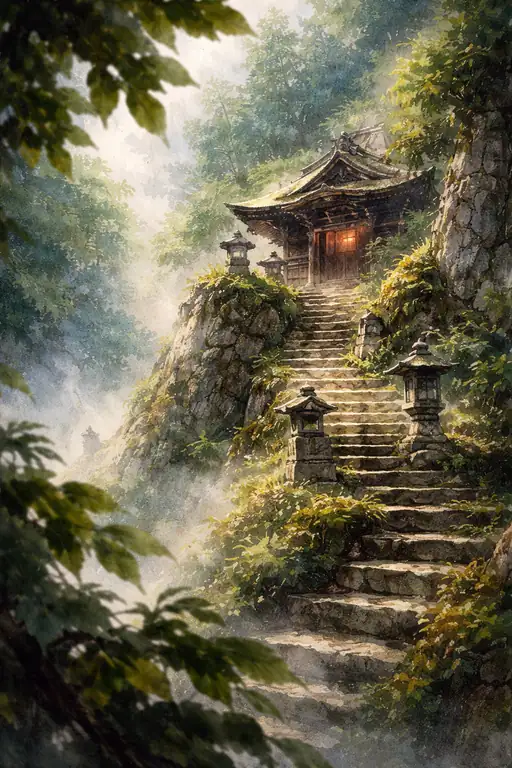 One Step Closer to the Divine
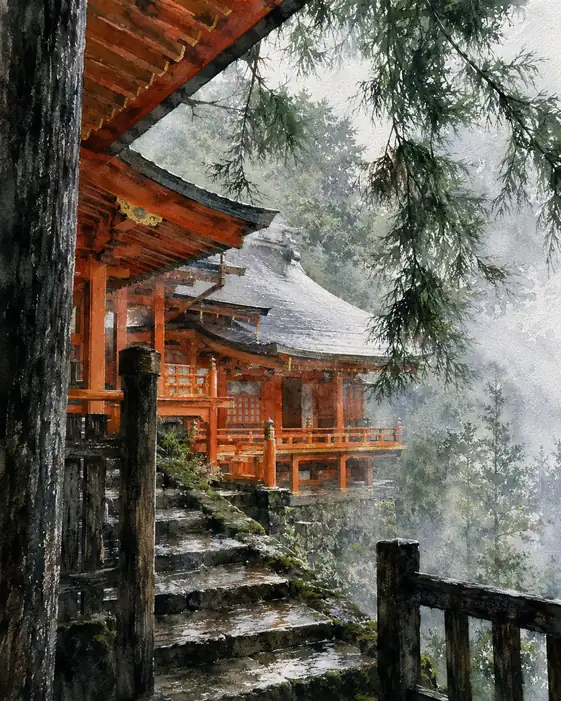 Sanctuary Veiled in Misty Rain
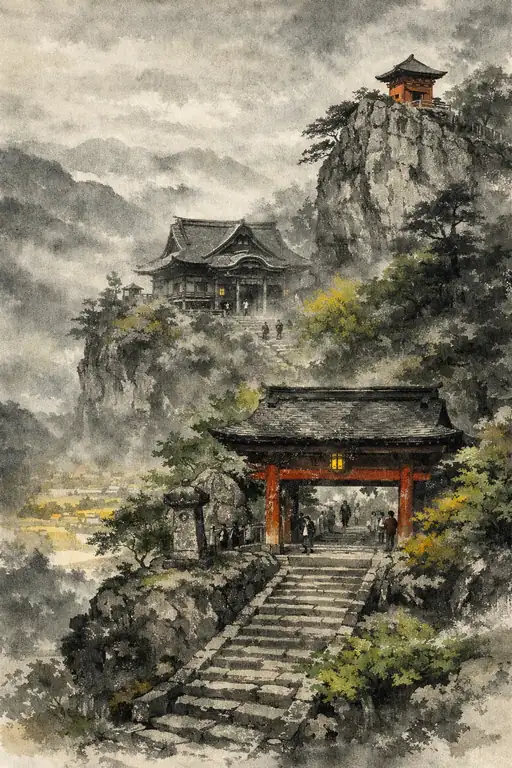 Where Earth Touches the Heavens
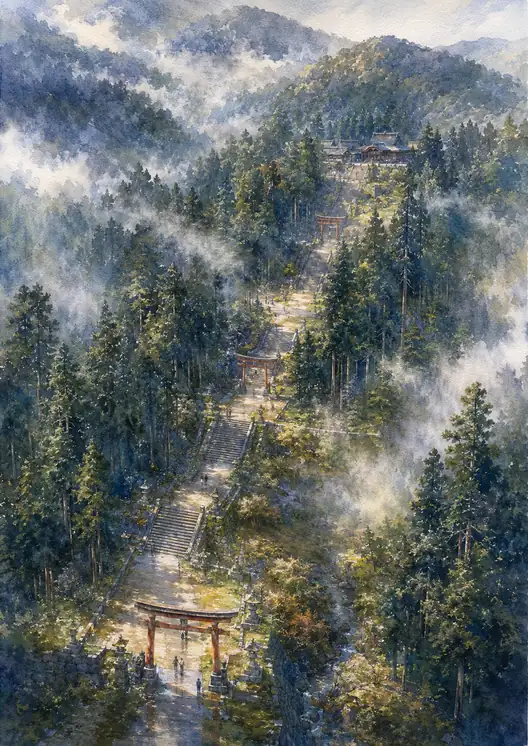 Silent Steps through the Sacred Forest
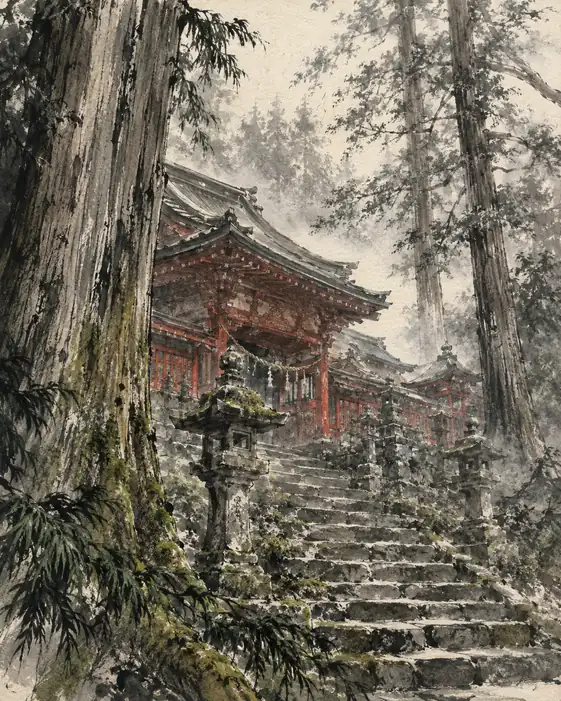 Threshold of the Ancient Silence
 Echoes from the Ancient Heights
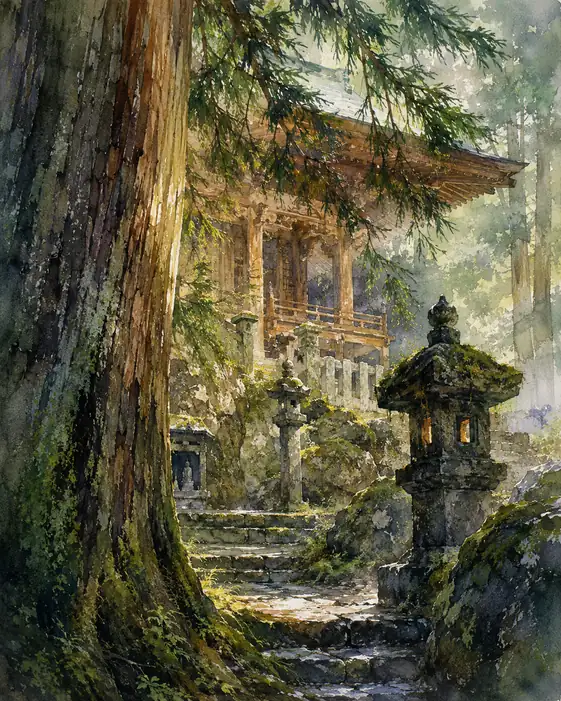 Sanctuary of the Ancient Cedars
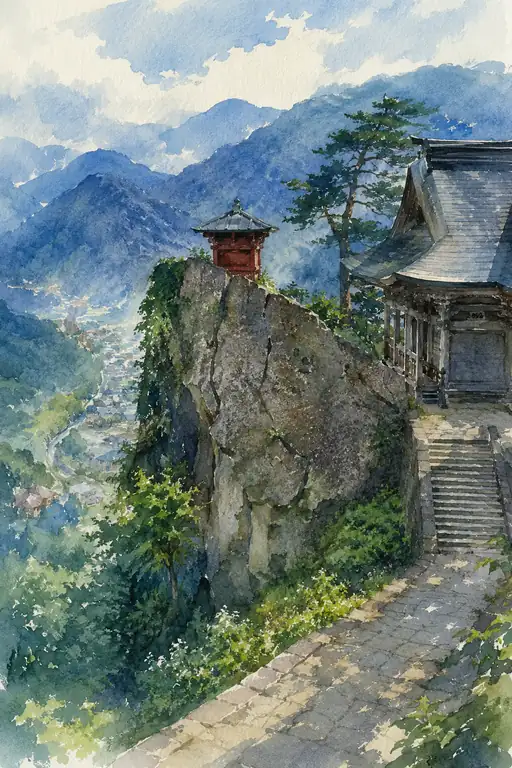 At the Edge Where Prayer Dwells
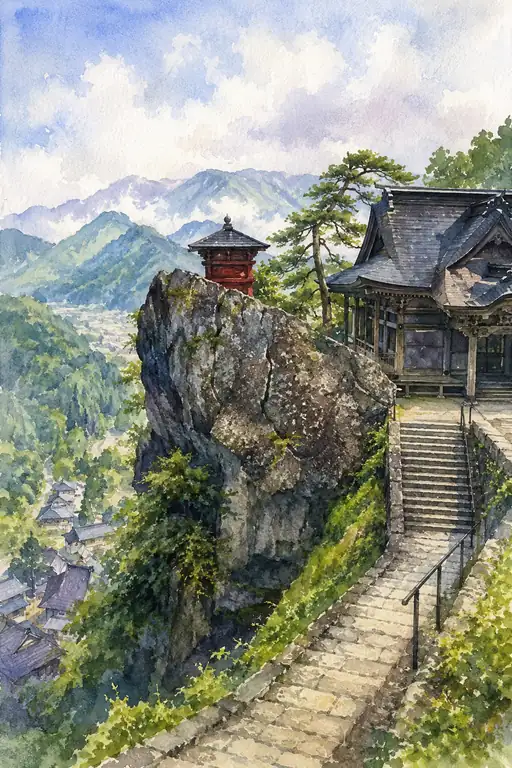 The Mountain Leaves No Easy Prayer