
Where Yesterday Breathes
Critique
1. Introduction This detailed watercolor depicts earthen walls and pottery preserved beneath a protective roof, carefully presenting the stillness of an excavated living space. The jars and bowls in the foreground, together with the red decoration on the rear wall, make the traces of daily life feel concrete and immediate. Warm earth colors and soft light allow archaeological observation and lyric feeling to overlap naturally. 2. Description In the left foreground, various aged earthenware jars and bowls are placed, showing delicate cracks and texture differences. The interior is partitioned by mud walls, with the back wall still preserving horizontal red stripes and simple geometric decorations. Above, a simple protective wooden roof shields the site, allowing bright sunlight and green trees to peek through, while soft grass sways in the right foreground. 3. Analysis The key technical feature of this piece is the masterful separation of dry textures, such as soil and pottery, using watercolor. The soft light filtering from the top and right casts gentle shadows, emphasizing the dimensional and uneven interior spaces. Placing large jars in the foreground and the outdoor scene in the background creates depth. 4. Interpretation and Evaluation Rather than a mere record of an archaeological site, this painting expresses respect for past human activities and the flow of time. The combination of the modern protective roof and the ancient ruins captures a moment where the past and present intersect. The artists' descriptive power and emotional lighting raise the work's aesthetic value. 5. Conclusion While showing a quiet view of ruins, close observation reveals meticulous attention to detail. The rough textures of the mud walls and the delicate shadow patterns enrich the spatial depth and historical weight. This masterpiece brings a peaceful tranquility to the viewer and holds a unique, lasting charm.
Same Subcategory
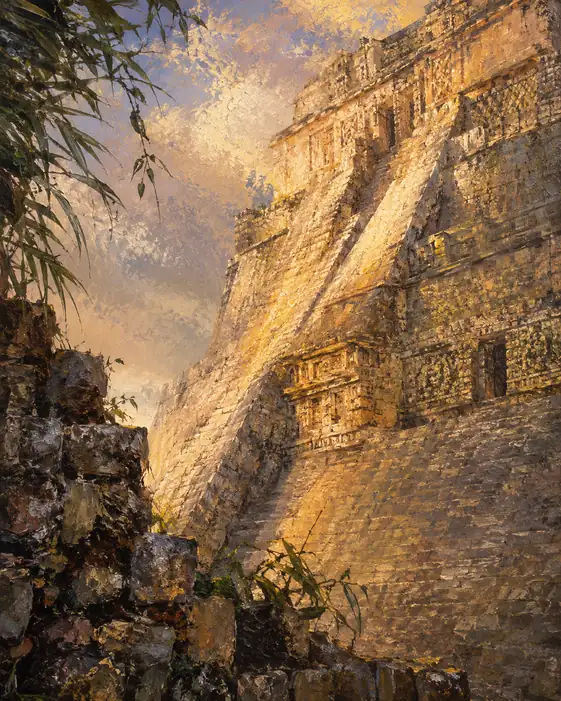 The Last Ray of a Forgotten Empire
 Whispers of Garni under the Crimson Fruit
Similar Artworks
 Where Time Rests in the Light
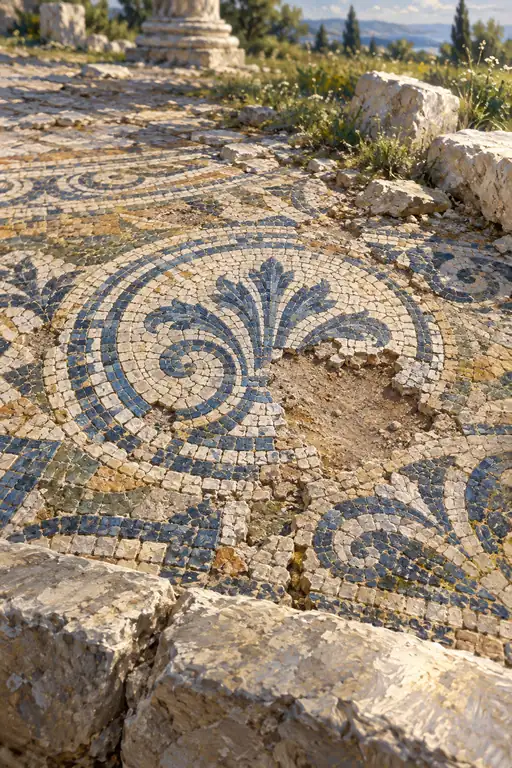 The Blue That Outlived Our Names
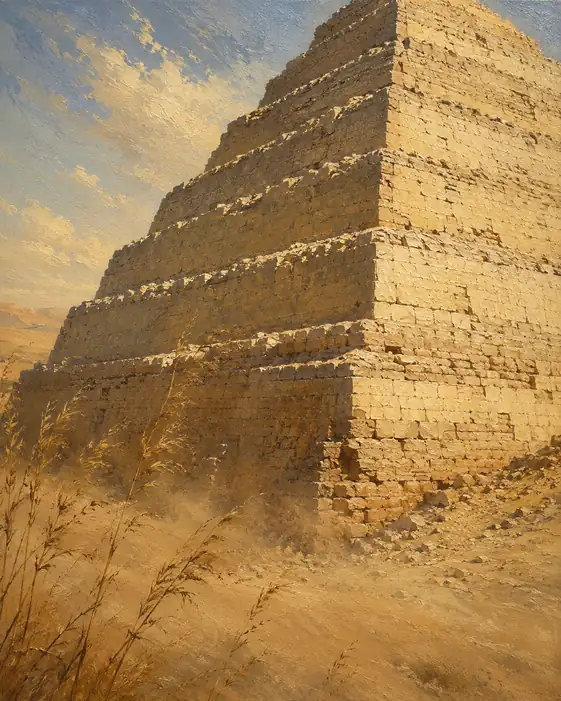 Steps in the Howling Sand
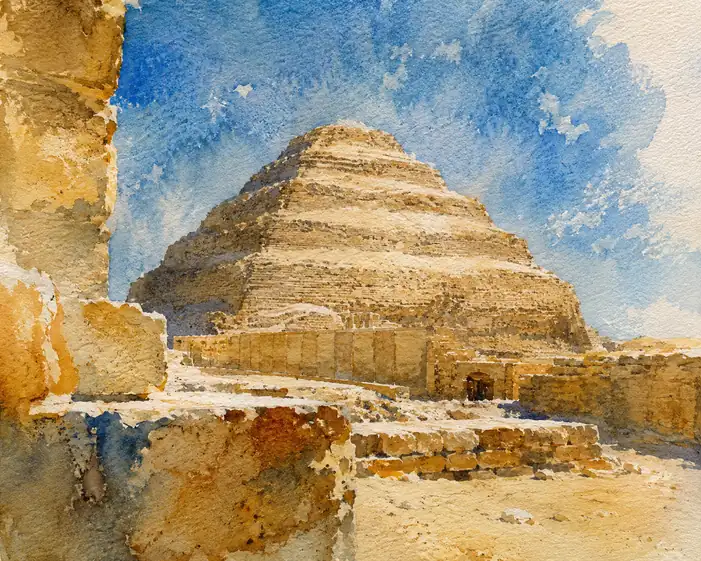 Steps to the Azure Sky
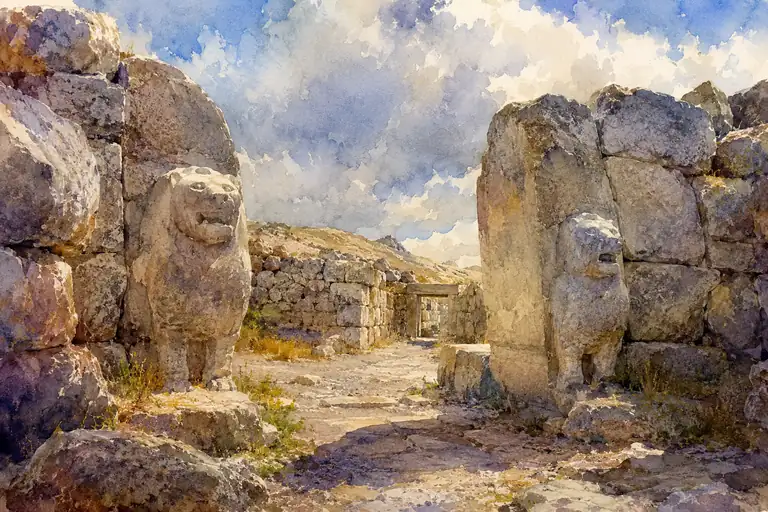 The Silent Roar of Hattusa
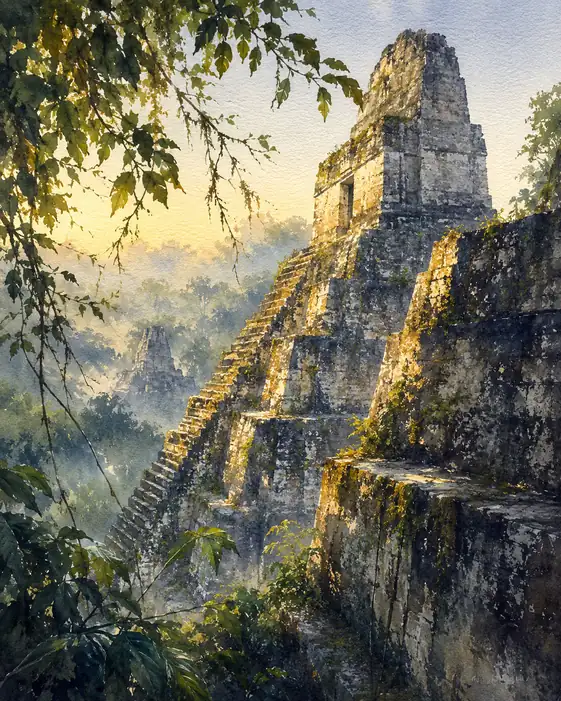 Silent Ascent to the Golden Light
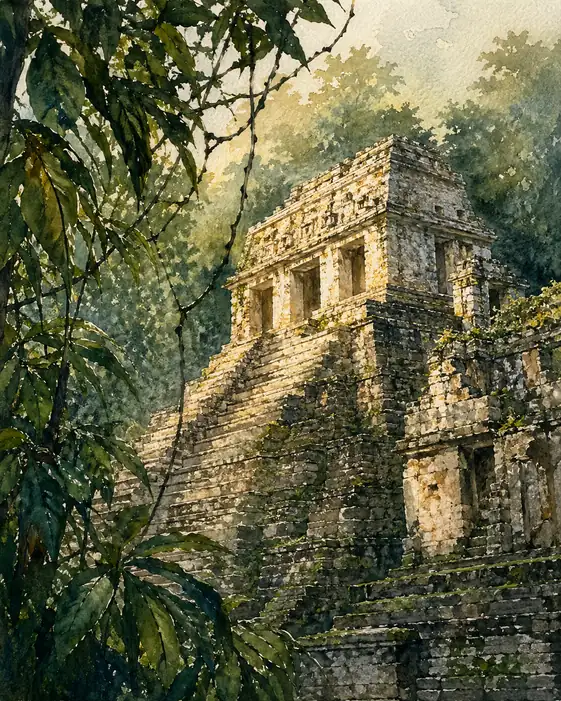 Light Piercing the Ancient Green
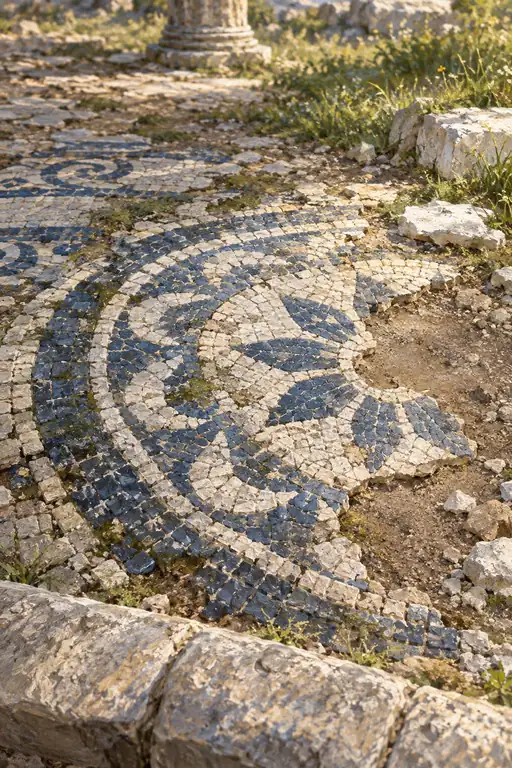 Remnants of the Azure Rosette
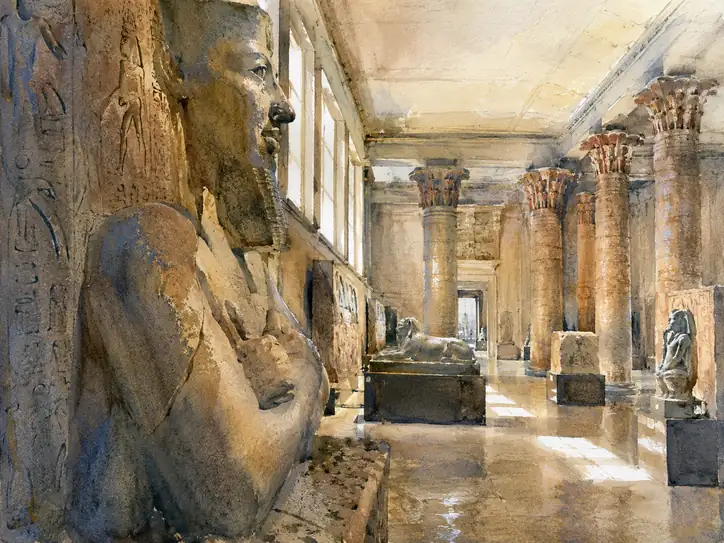 Echoes of the Pharaoh's Silence
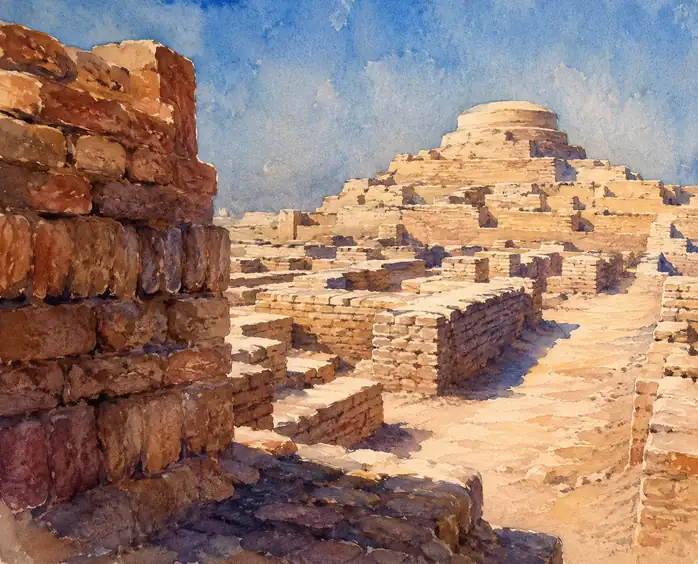 The Silent Stupa under the Azure