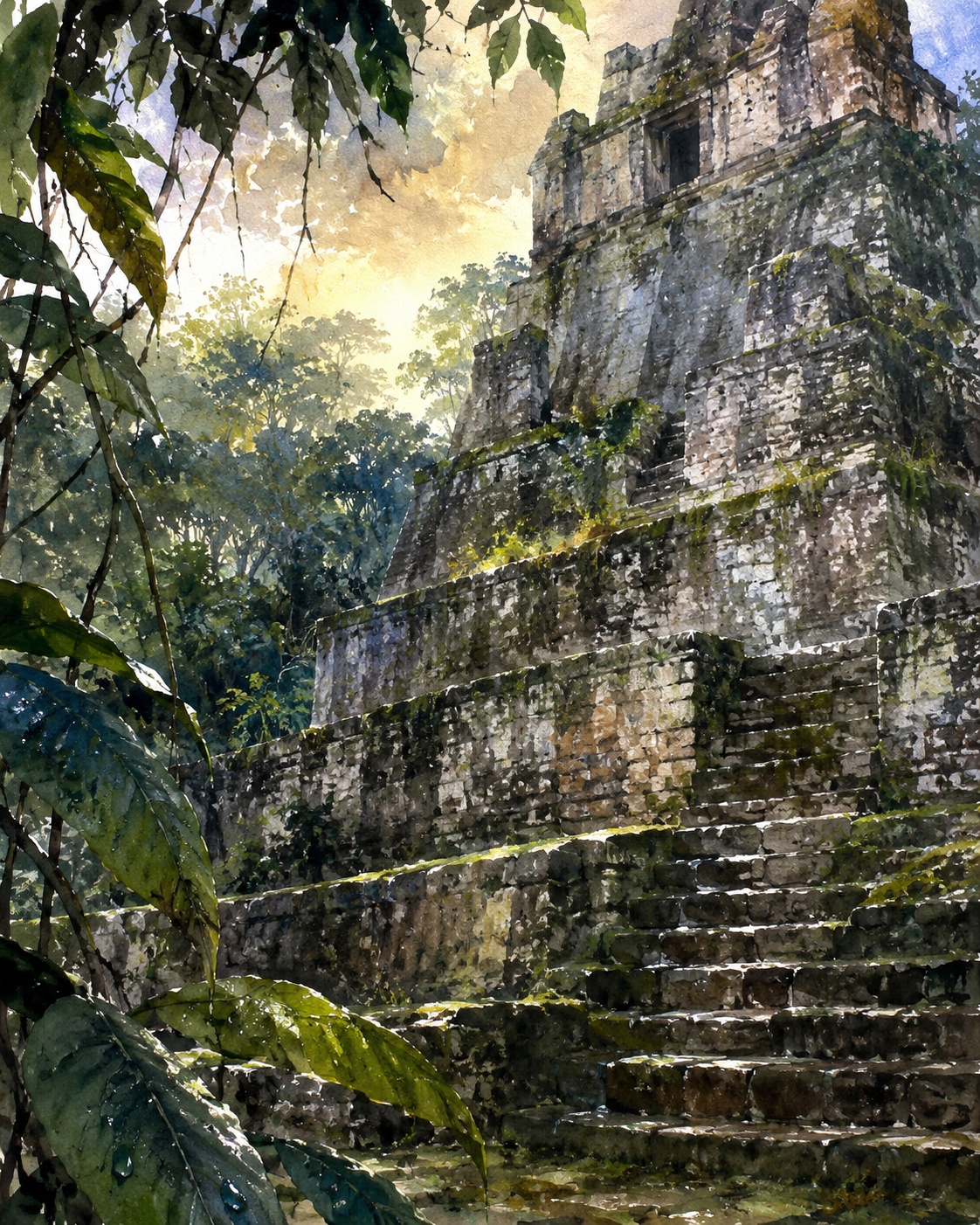
Where Time Returns to Earth
Critique
1. Introduction This watercolor painting depicts a stepped stone ruin enclosed by dense tropical vegetation and humid light. The moss-covered structure rises heavily on the right, while large leaves in the foreground add a fresh, living counterpoint to the weathered stone. Warm golden light from behind the ruin links the silence of old masonry with the breathing depth of the forest. 2. Description On the right half of the canvas, a stepped stone pyramid rises toward the top of the frame. Its moss-covered stone surfaces show a complex, mottled pattern. Large wet green leaves in the left foreground add a humid atmosphere to the scene. Behind the ruins, a dark forest spreads under a warm golden light. 3. Analysis The key technical feature of this piece is the contrast between the dry texture of the stones and the soft light rendered in watercolor. Precise brushstrokes on each mossy step emphasize the massive volume and weight of the structure. The contrast between the dark green of the foreground leaves and the bright yellow background light creates a deep sense of spatial depth. 4. Interpretation and Evaluation This painting contrasts once-flourishing human civilization with the eternal forces of nature. The way human-made structures return to nature symbolically conveys the impermanence of time and the sublime beauty within it. The coexistence of the fresh leaves and the static stone structure highlights a poetic harmony between life and stillness. 5. Conclusion A closer look at this seemingly traditional landscape painting reveals a highly calculated design of light. Natural elements and historical monuments are beautifully integrated within the warm, unifying glow of the watercolor palette. This masterpiece encourages deep contemplation about the flow of time and possesses a universal aesthetic value.
Same Subcategory
 Where Empires Fade into the Blue
Similar Artworks
 The Golden Stairway to Oblivion
 Reclaimed by the Emerald Silence
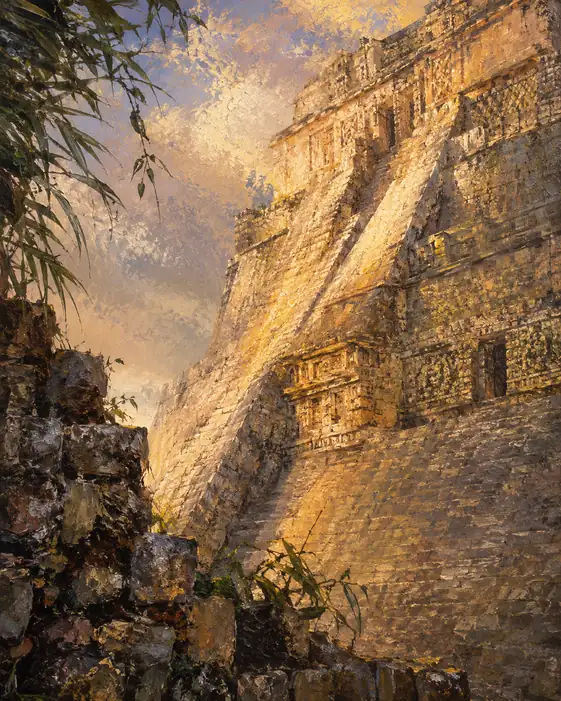 The Last Ray of a Forgotten Empire
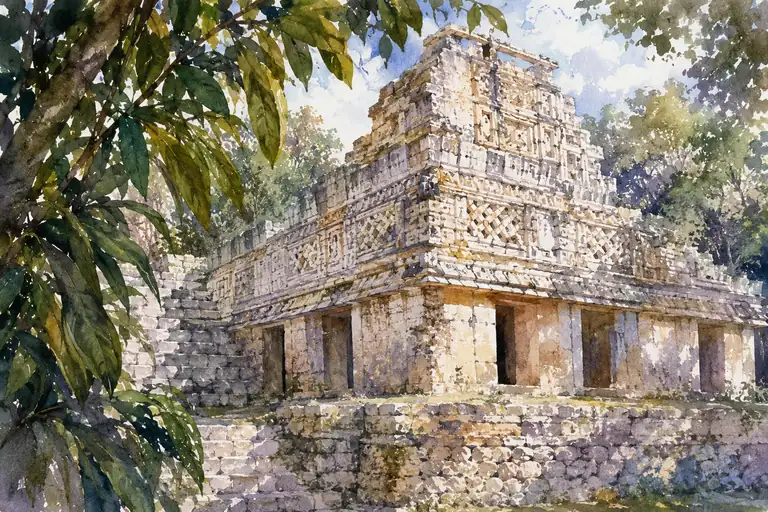 Echoes of the Green Sanctuary
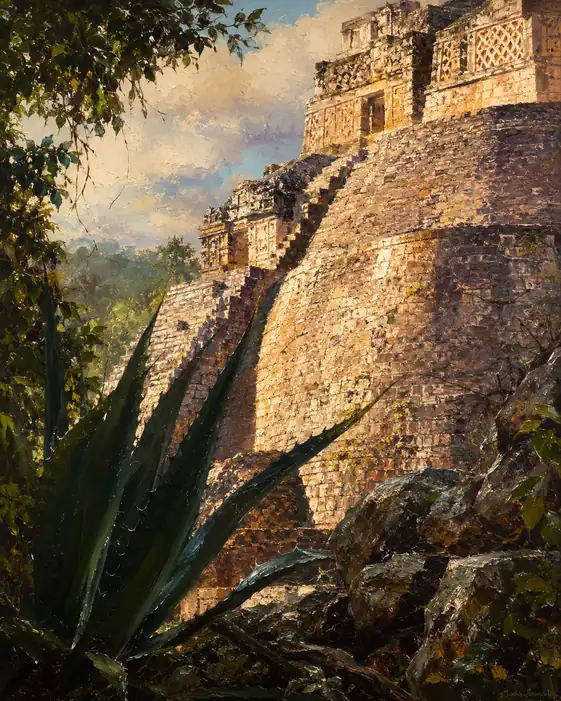 Golden Slumber of the Ancient Empire
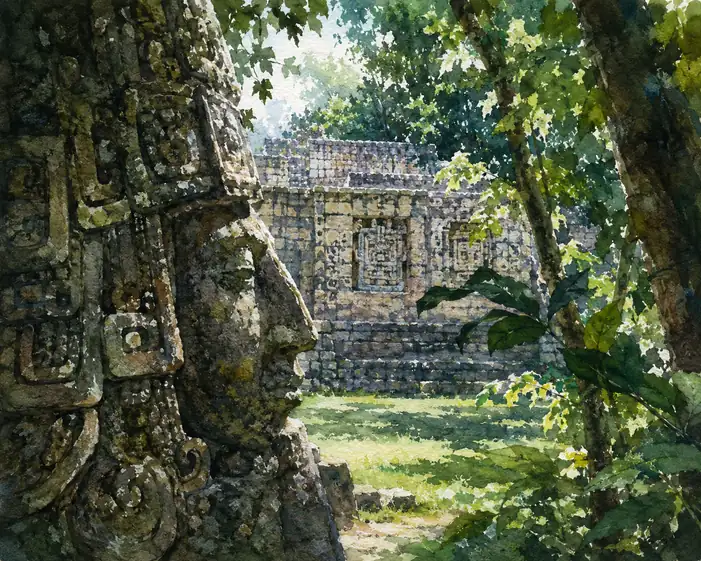 The Silent Profile Dreaming of Eternity
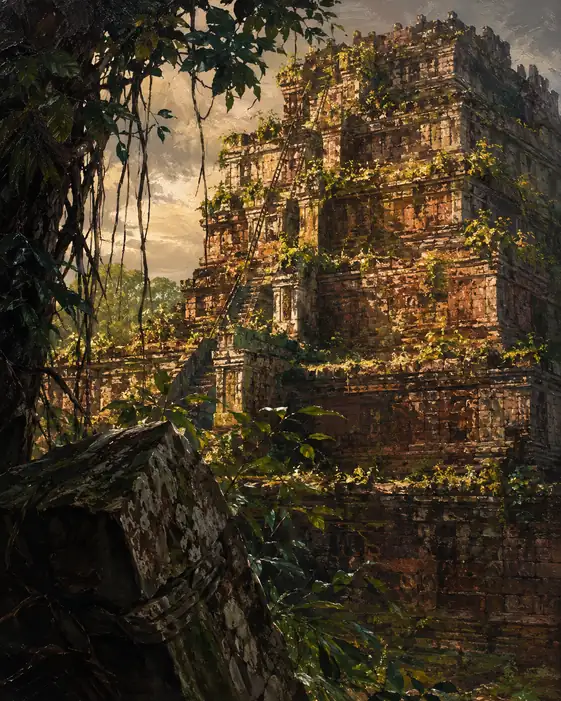 Where Empires Fade into Gold
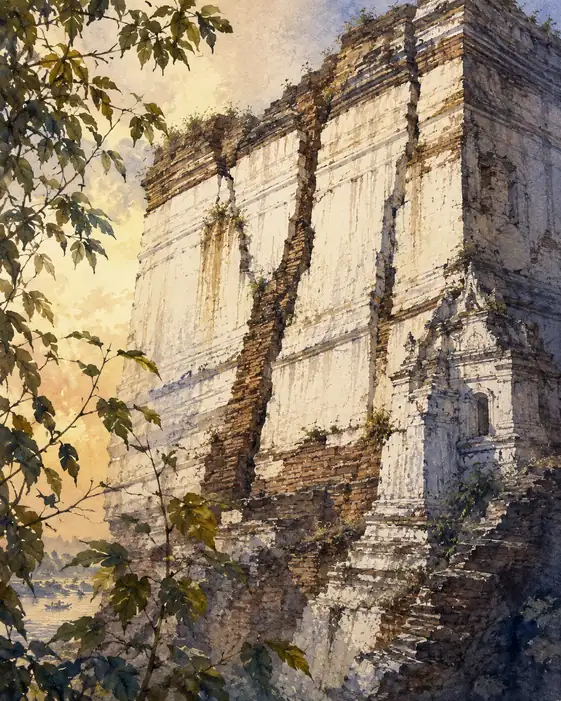 Where Time Splits the Stone
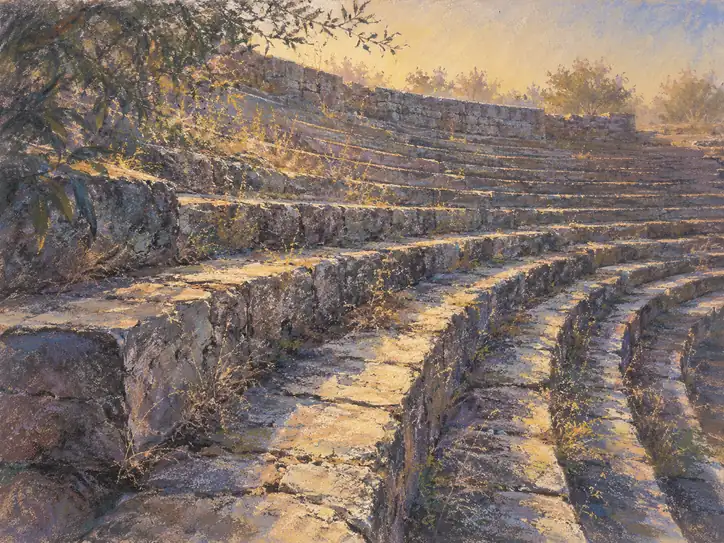 Where Time Reclaims the Stone
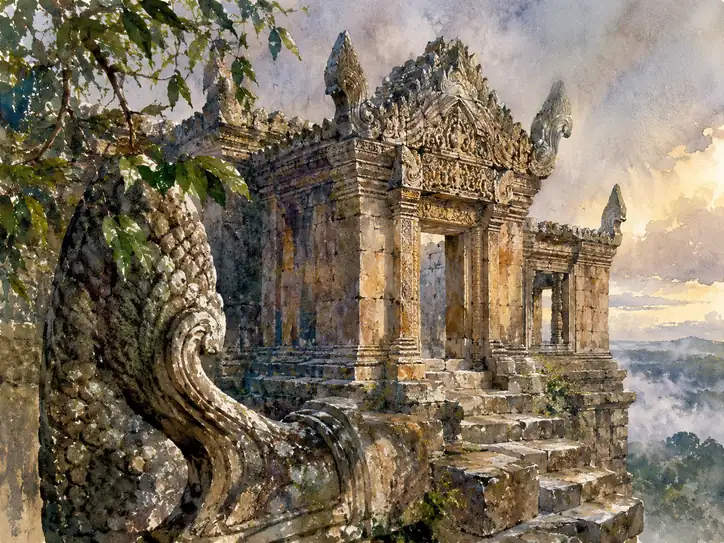 The Gate Above the Sea of Clouds