
A Turquoise Door in the Path of the Wind
Critique
1. Introduction This watercolor painting depicts a quiet traditional Middle Eastern street with delicate brushwork. The wind tower and wooden lattice at the right, together with the blue-green door at the center, create a vivid focus among sunlit earthen walls. Narrow shadows suggest a calm passage deeper into the town. Architectural detail and soft light express the everyday stillness of a historic alley. 2. Description On the right, a mud-brick house features a beautiful turquoise door with a small iron lantern above. A traditional wind tower rises above the building, with wooden beams extending outward from its structure. In the left foreground, a wooden lattice and a textured cloth block a part of the narrow alley. 3. Analysis Warm sunlight enters from the top right, creating complex shadows on the textured sandy walls. The contrast between the bright beige walls and the purple shadows in the lane increases spatial depth. The dark foreground elements act as a frame, directing the viewer's attention to the bright blue door. 4. Interpretation and Evaluation This artwork symbolizes the peaceful silence of an old town and the echo of past daily lives. The vibrant turquoise color of the door serves as a gateway connecting reality and a nostalgic past. The painter's skillful watercolor technique and balanced composition demonstrate a high level of artistic quality. 5. Conclusion Although the painting initially looks like a simple street view, closer study reveals its rich atmosphere. The beautiful combination of light and color holds a timeless aesthetic message beyond the historical context. This piece is a refined watercolor masterpiece that successfully captures the serene beauty of ancient architecture.
Same Subcategory
 Whispers of a Sunlit Memory
 Sunlit Passage of the Medina
Similar Artworks
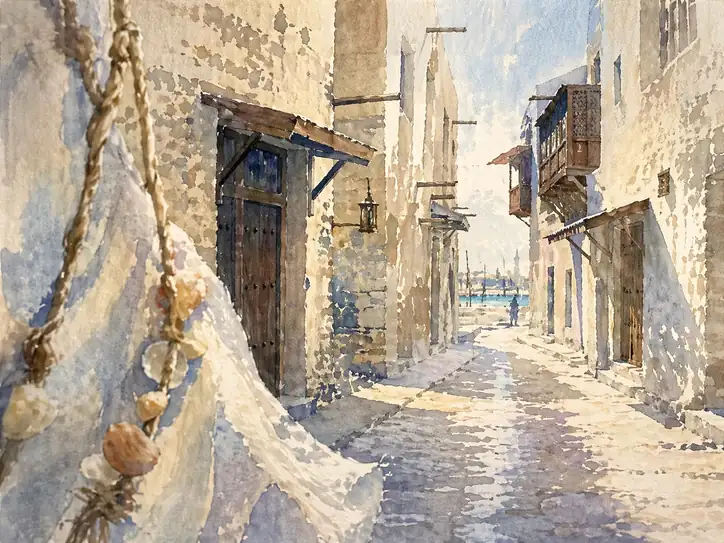 The Sunlit Passage: A Glimpse of the Harbor
 Alley of Whispering Winds
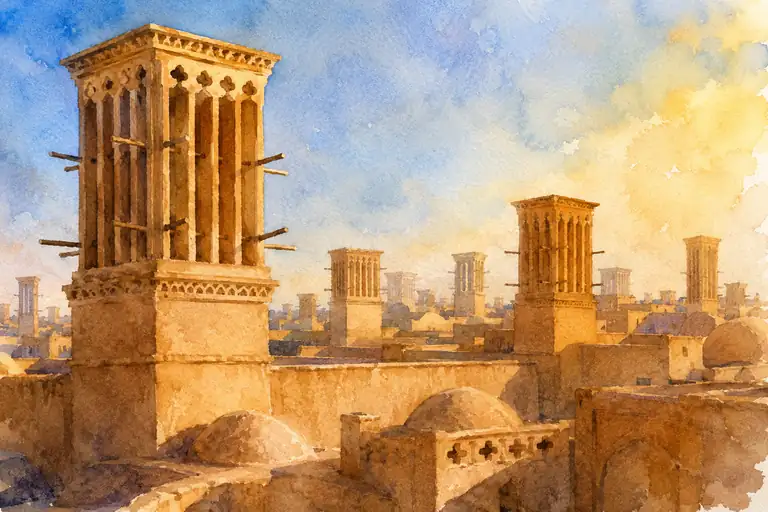 Whispers of the Golden Wind
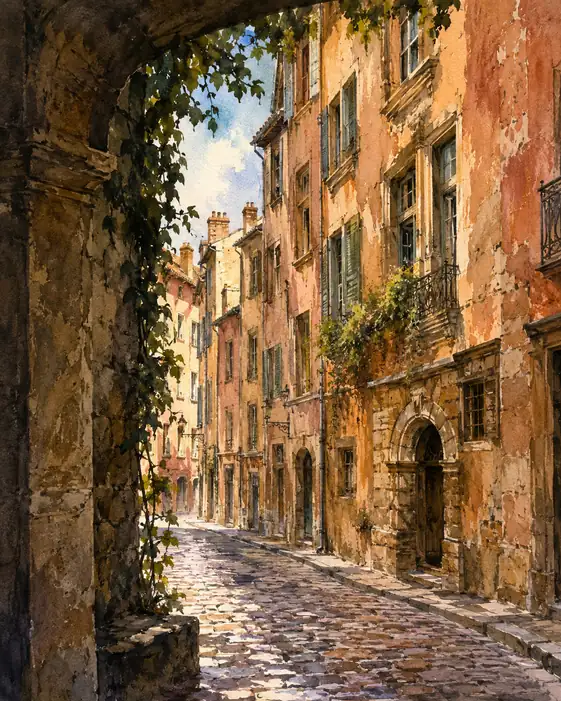 Golden Afternoon in the Mediterranean Alley
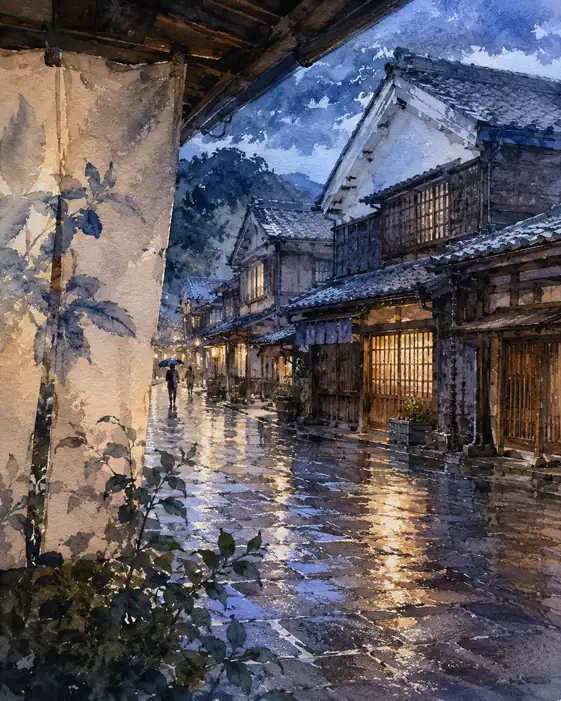 Light Dwelling in the Rain
 Whispers Along the Stone Path
 Pathway to a Sunlit Dream
 Where Time Drifts Like a Breeze
 Echoes of a Sunlit Alley
 Quiet Whispers of the Old Slope