
Where the Stone Remembers
Critique
1. Introduction This oil-style painting depicts the poignant ruins of an ancient cathedral standing in a vast, arid wilderness. The decaying, reddish-brown structure positioned on the right gives a strong sense of historical weight. The title, creation date, and artist of this artwork are unknown. A dry wind feels as if it blows through the silence. 2. Description In the lower-right, an old stone cathedral with a collapsed roof is viewed from an angle. Its walls display Romanesque architectural features, including continuous arches and narrow window slits. In the lower-left, large stone blocks and debris are scattered across the grass. In the far left background, the silhouettes of other towers are visible. 3. Analysis The composition contrasts the large mass of the ruins on the right with the flat plain stretching to the left. The heavy impasto technique replicates the weathered texture of the stone walls and scattered rocks. The color scheme pairs the warm ruins with a vibrant blue sky. Warm sunlight casts deep, dramatic shadows. 4. Interpretation and Evaluation The ruined cathedral symbolizes the passage of time and the decay of human creations. Through thick, tactile brushwork, the artist conveys the mass and weight of the historical relics. Particularly, the skill in rendering light and shadow on the foreground stone blocks creates three-dimensional depth. This fusion of nostalgia and beauty shows high originality. 5. Conclusion While it initially presents a lonely landscape, closer observation reveals the warmth of the light. This painting achieves high completeness by utilizing the physical qualities of the impasto technique. It possesses a unique artistic value that evokes a deep lyrical response to the past. The work stands as a beautiful testament to the harmony between history and nature.
Same Subcategory
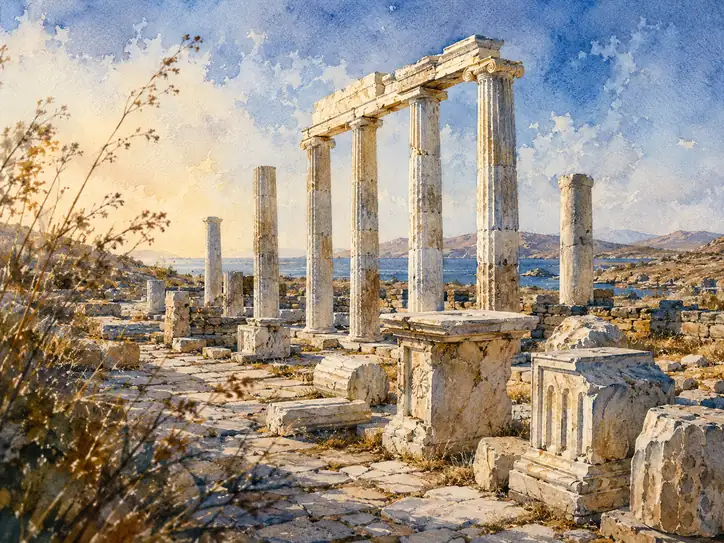 Guardians of the Eternal Sea
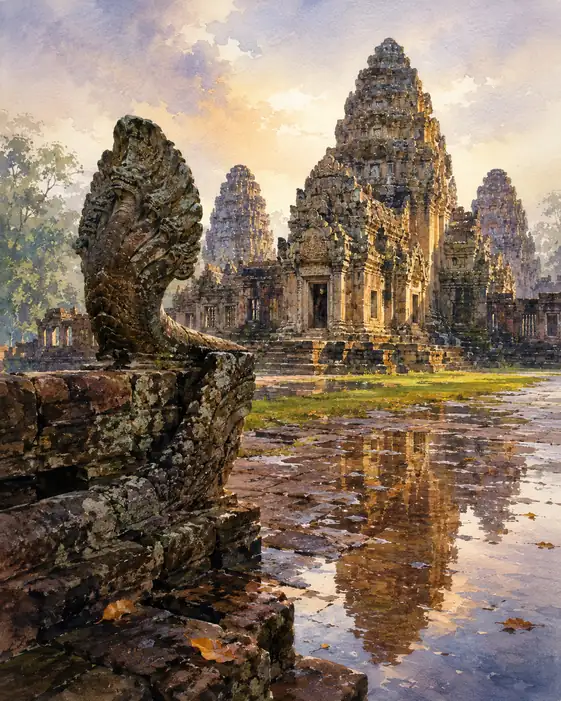 Reflections of Ancient Solitude
Similar Artworks
 Gateway to the Ancient Light
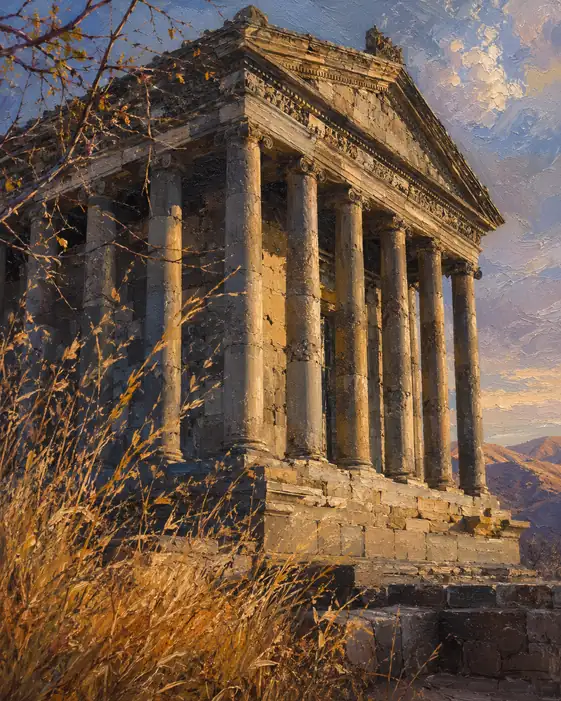 Symphony of Stone and Fading Light
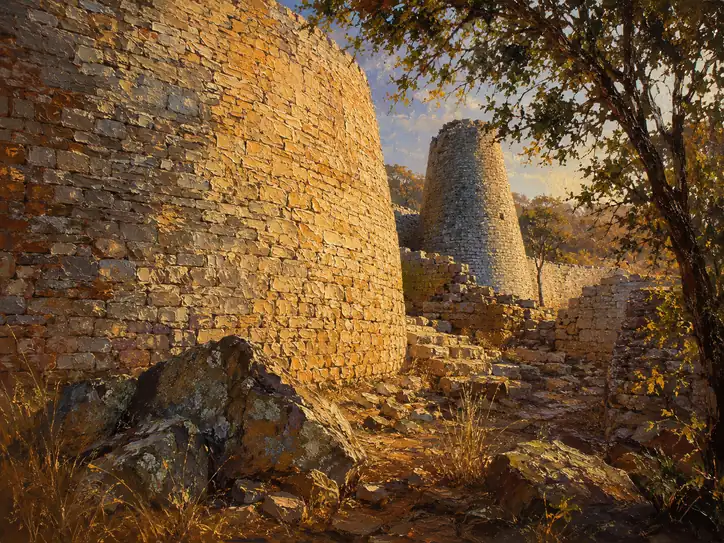 Silent Chronicles of the Stone Fortress
 The Silent Fissure of Time
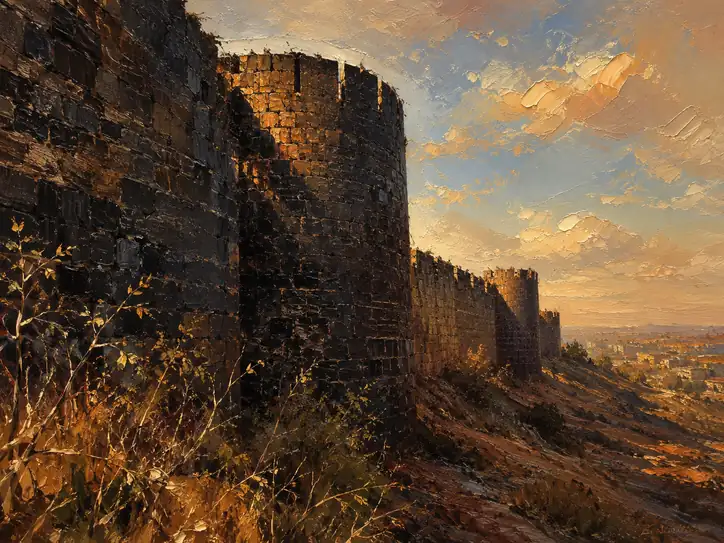 The Last Vigil at Dusk
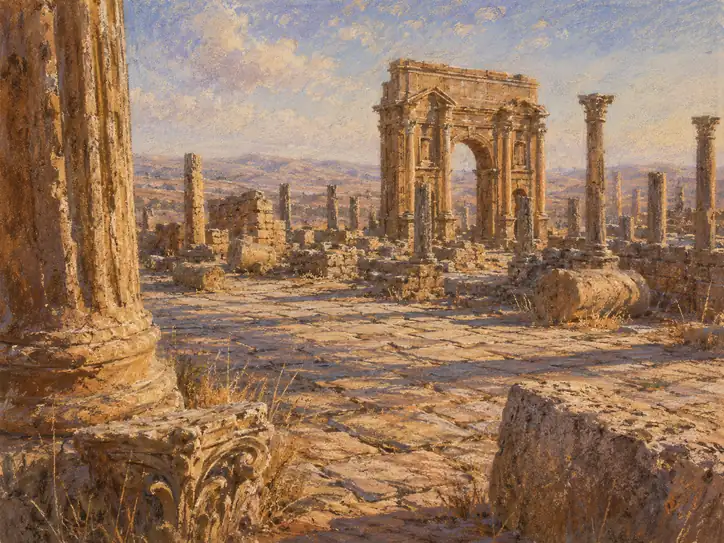 The Silent Dignity of Time
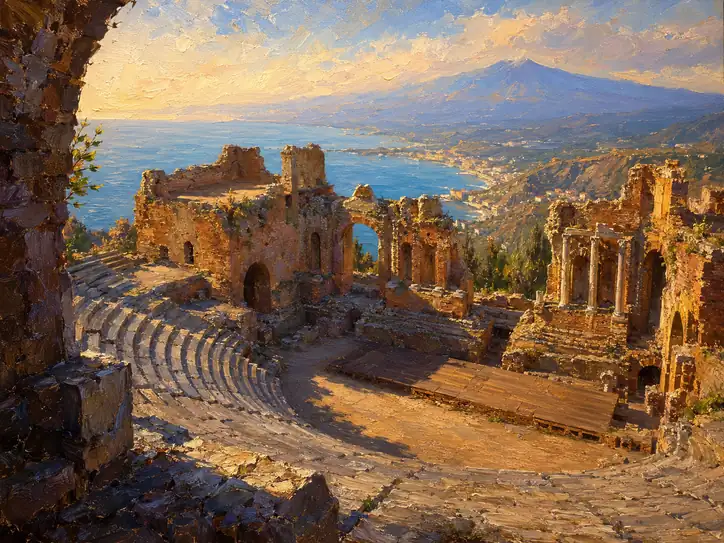 Taormina: The Golden Stage of Antiquity
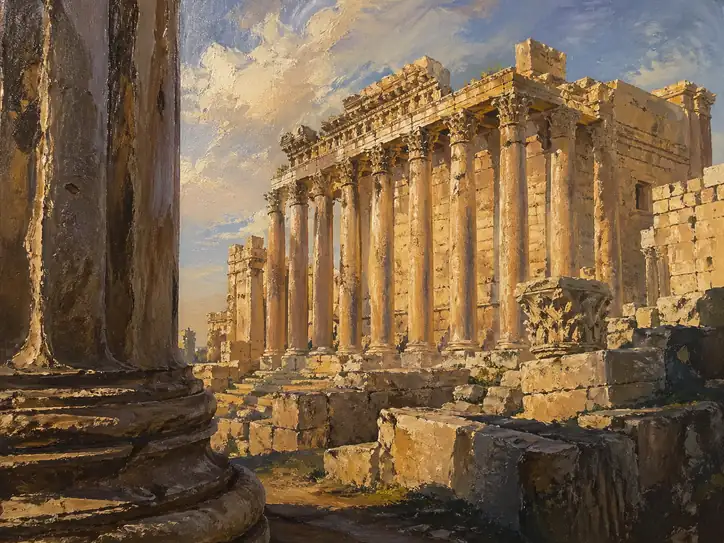 The Golden Echo of Antiquity
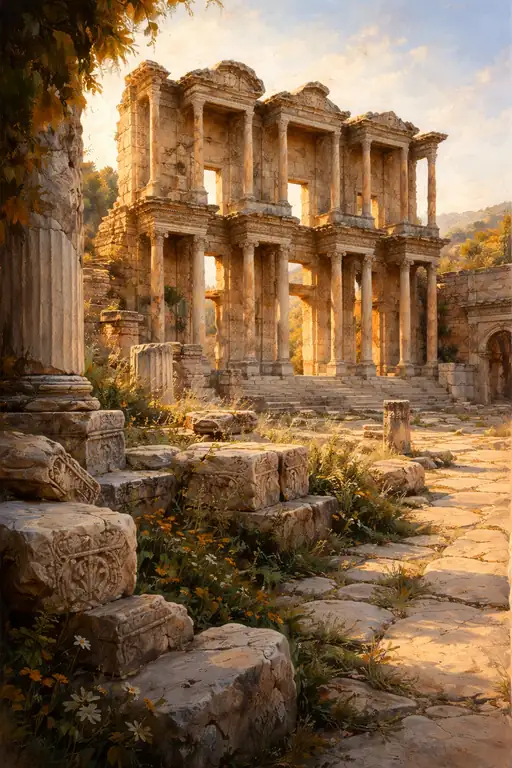 Golden Echoes of the Ages
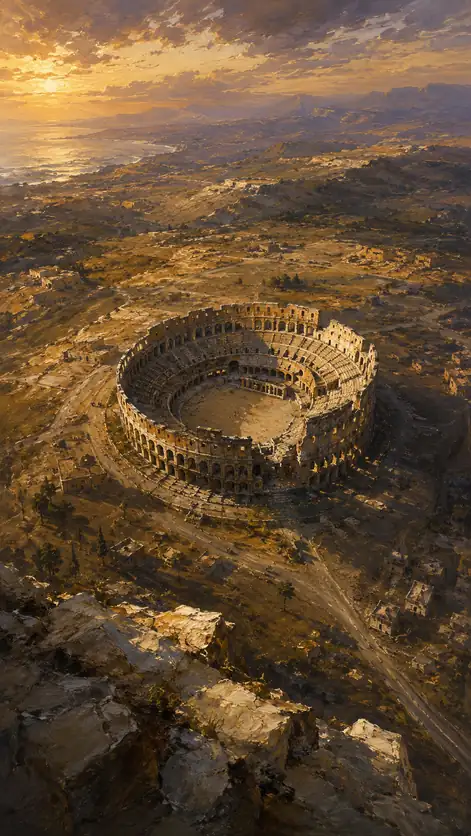 Echoes of a Forgotten Empire