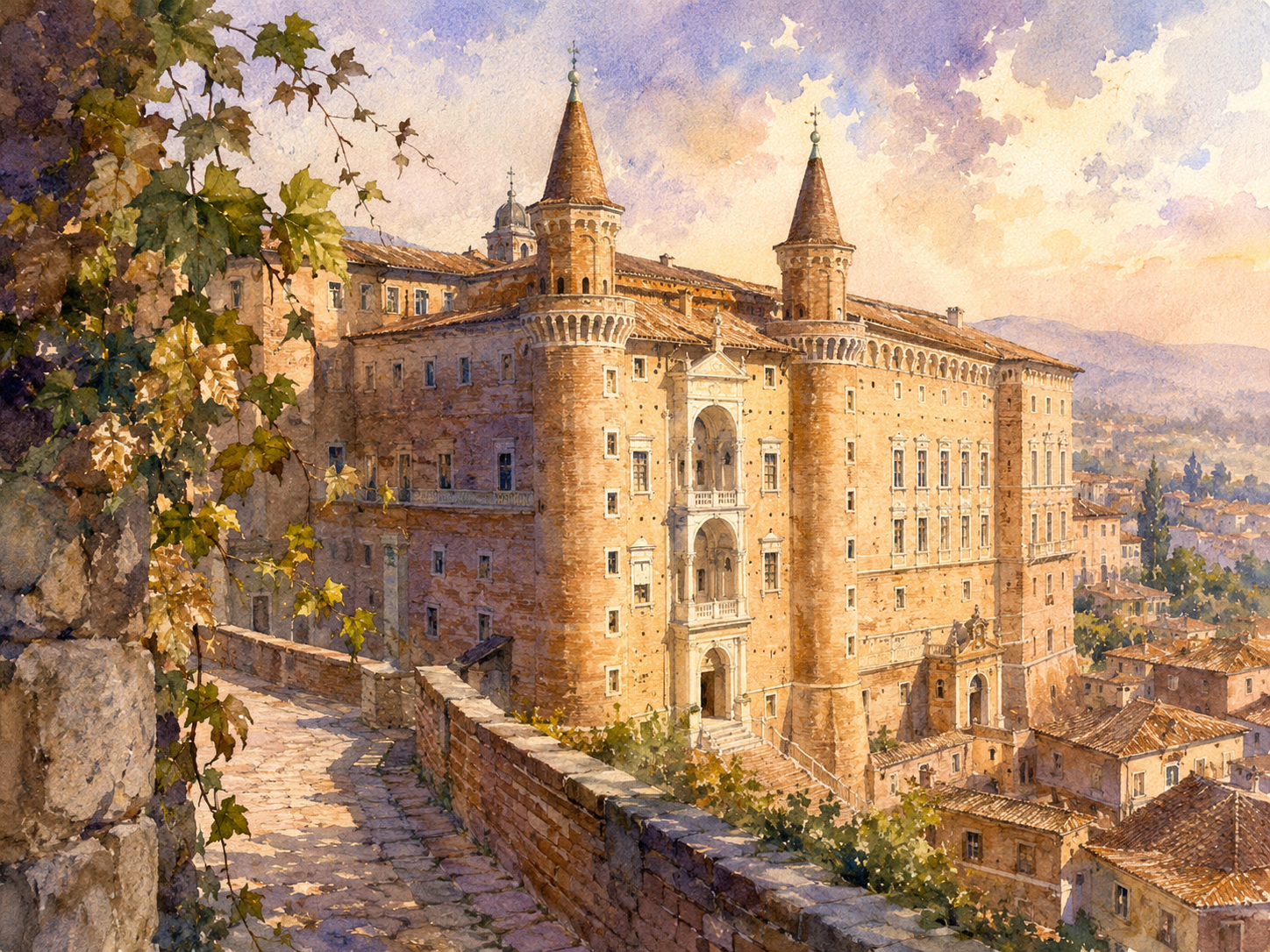
Where the Stone Road Leads to Twilight
Critique
1. Introduction This watercolor painting depicts a grand medieval palace with elegant spires. The large stone building spreads across a hill, while round towers, pointed roofs, and orderly windows create a rhythmic facade. Foreground paving and leaves guide the eye toward the palace, with distant mountains opening softly behind it. Bright outdoor light and transparent color express old architectural beauty in harmony with nature. 2. Description In the center, the large palace stands with numerous windows aligned on its brick walls. The foreground features a detailed stone wall covered with green ivy leaves on the left. A gently sloping cobblestone pathway leads toward the palace, while blue hills and a gradient sky unfold in the background. 3. Analysis Regarding color, the warm honey and orange tones of the stone walls harmonize with the cooler colors of the sky. The deep green ivy on the left stabilizes the composition, acting as a crucial color anchor. Light cast from the right creates long shadows, emphasizing the architecture's three-dimensional texture. 4. Interpretation and Evaluation This artwork expresses the durability of architecture and the timeless value of historical structures. Meticulous details on the windows and cobblestones demonstrate the artist's high drawing skills and mastery of watercolor. The poetic rendering of light and shadow exhibits originality, elevating a simple landscape into a spiritual view. 5. Conclusion While the painting initially seems to be a realistic architectural study, closer inspection reveals rich emotions. The composition integrating the natural background and the palace presents a harmonious aesthetic order. Ultimately, this work offers a simulated travel experience, leaving a peaceful impression on the viewer.
Same Subcategory
Similar Artworks
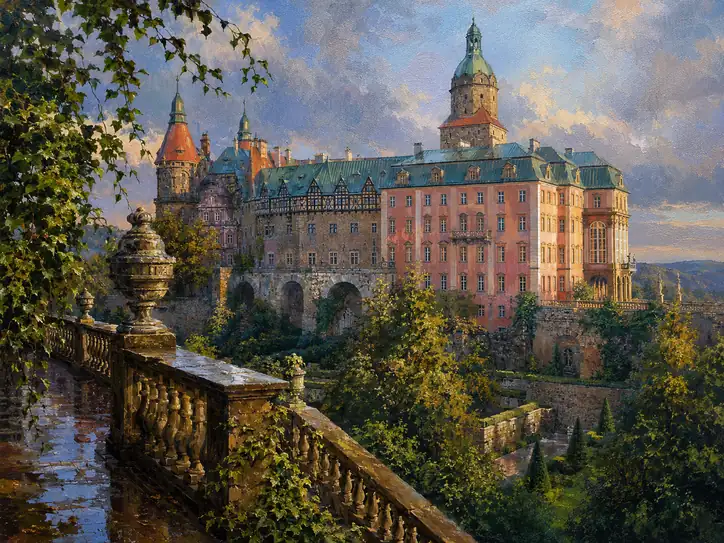 Whispers of the Ivy-Clad Terrace
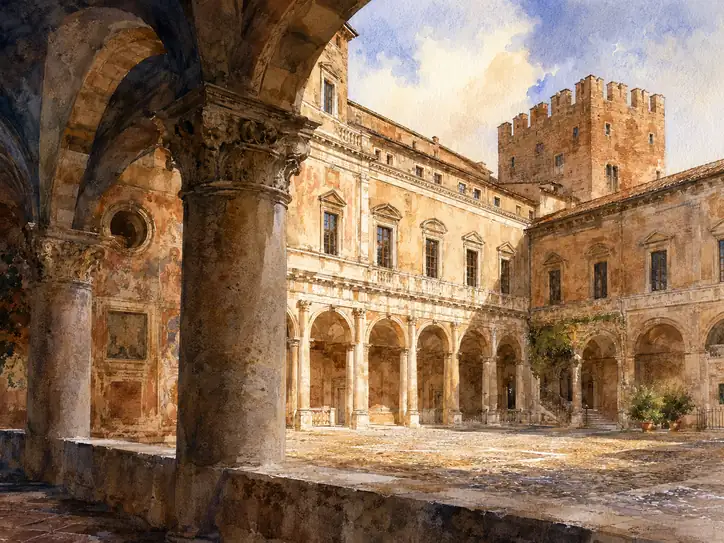 Sunlight on Faded Memories
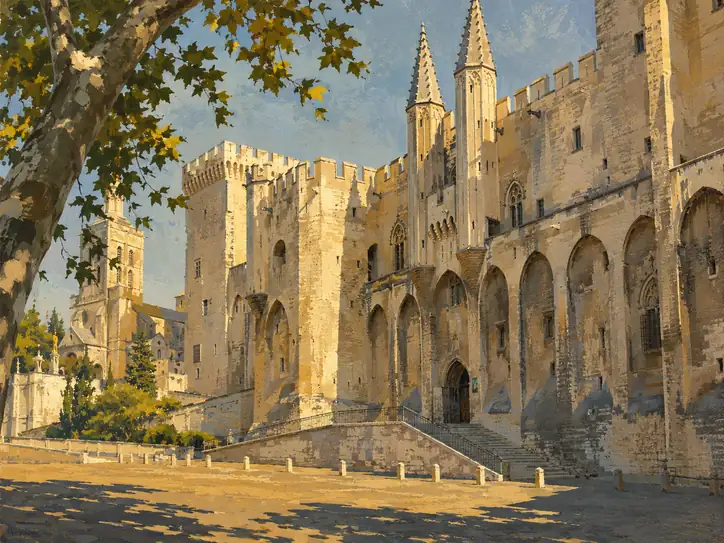 Golden Echoes of the Papal Stone
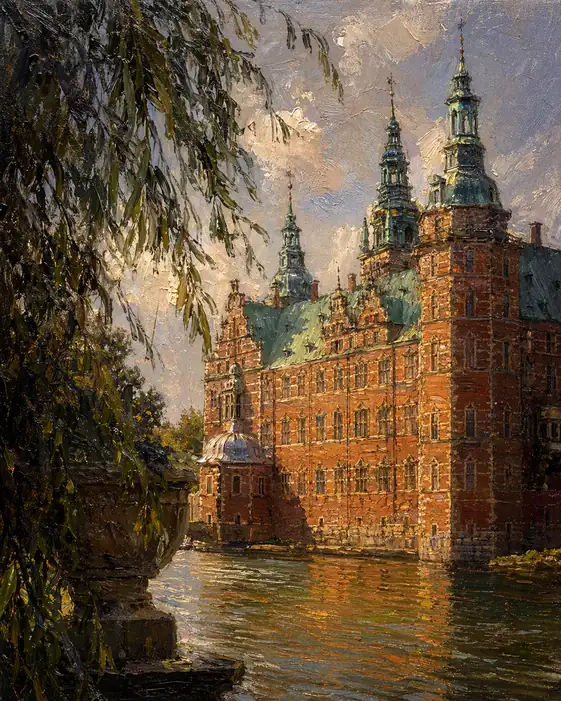 Echoes of the Fiery Palace
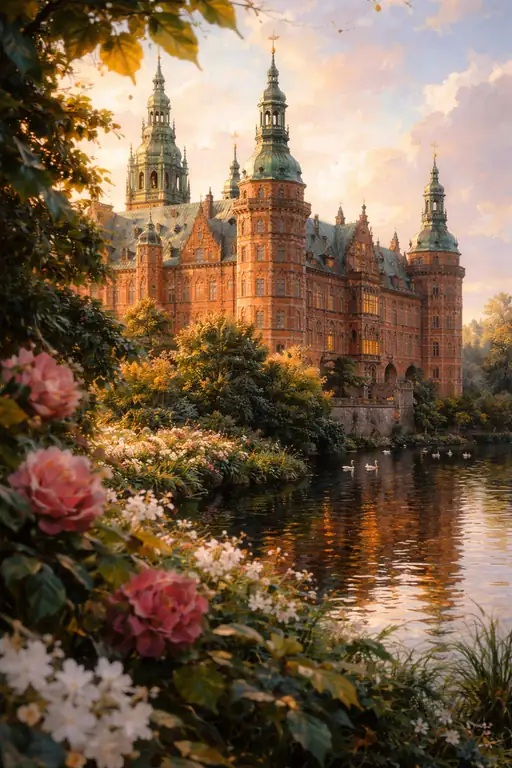 Serenade of the Dawn Lake
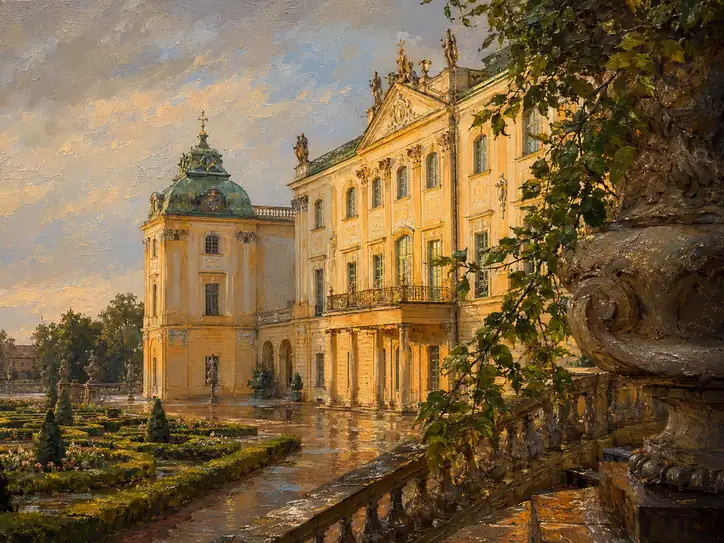 Afterglow of a Golden Era
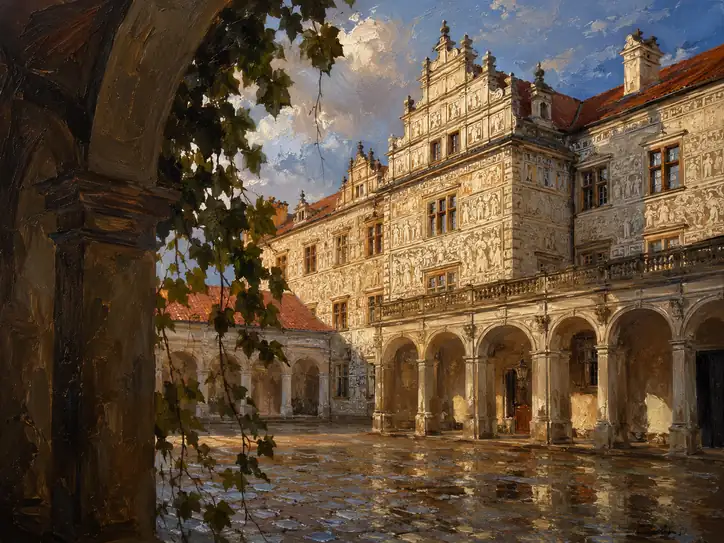 Where Stone Mirrors the Sky
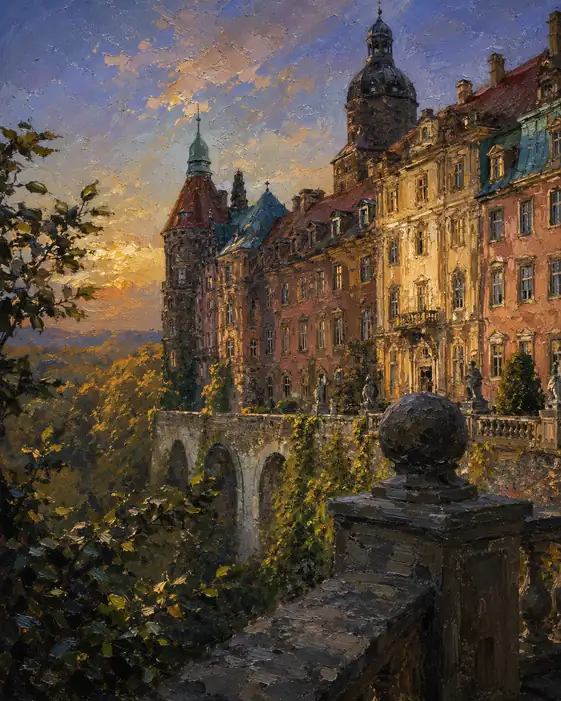 Palace at the Edge of Twilight
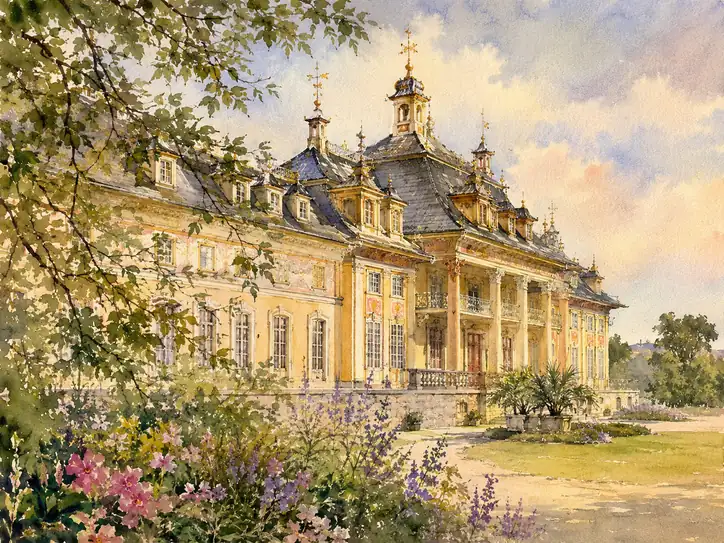 The Palace Dressed in Summer Light
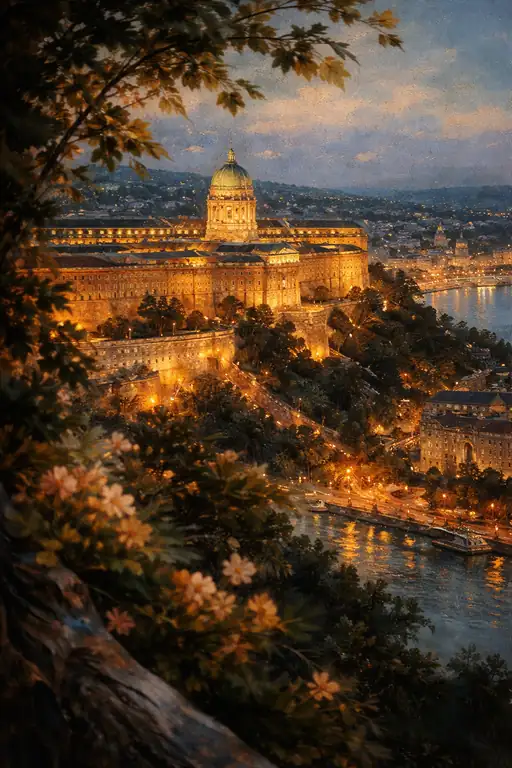 A Nocturnal Dialogue Between Palace and City