
Whispers of the Eternal Arch
Critique
1. Introduction This painting depicts a grand ancient aqueduct standing majestically within a natural landscape. Rows of stone arches cross the riverside and create a powerful rhythm into the distance. Reflections on the water and contrasts across the dry stone convey both mass and atmosphere. In warm sunlight, the historic structure evokes scale, endurance, and nostalgic wonder. 2. Description Dominating the frame, the aqueduct is portrayed from an angle, emphasizing a dramatic depth that recedes into the distance. Bright sunlight hits the stone surfaces, while cool shades of violet and blue mingle in the shadowed arches. The foreground features grassy reeds and calm water reflecting the golden structure. 3. Analysis Regarding color, the yellow and orange hues of the stone contrast beautifully with the lavender and blue of the shadows. This impressionistic approach softens the massive architecture and intensifies the daylight. The heavy impasto technique with a palette knife is highly distinctive. The physical paint texture palpably conveys the rough stone and fluid water. 4. Interpretation and Evaluation This artwork explores the harmony between human creation and the enduring natural environment. The surviving aqueduct symbolizes human ingenuity and the concept of timelessness. The exceptional handling of light and form deserves high praise, infusing the cold stone with life. The diagonal composition provides both a massive scale and balanced stability. 5. Conclusion At first glance, the artwork presents itself as a classical, realistic landscape. However, closer inspection reveals a modern mosaic of bold knife strokes and vibrant colors. It serves as a quiet monument celebrating historical human heritage. This successful piece beautifully balances powerful execution with lyrical sentiment, resulting in a high-quality masterpiece.
 Breath of the Ancient Wind
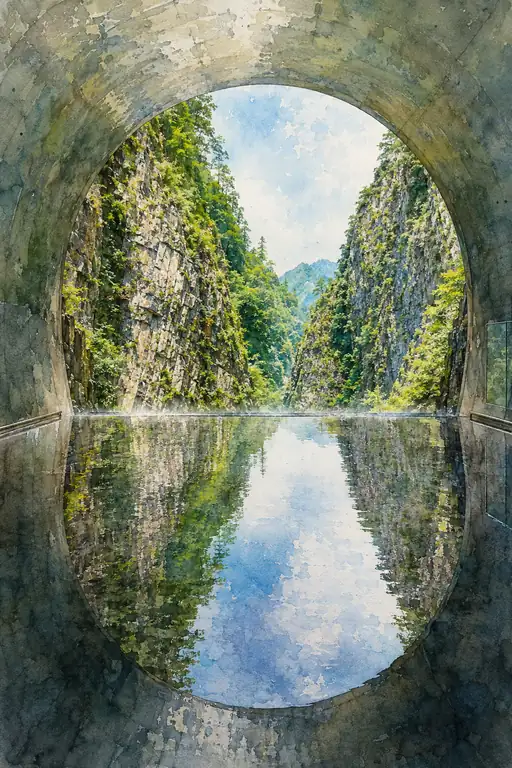 Mirror of the Forest Sanctuary
 Reflections of Eternity
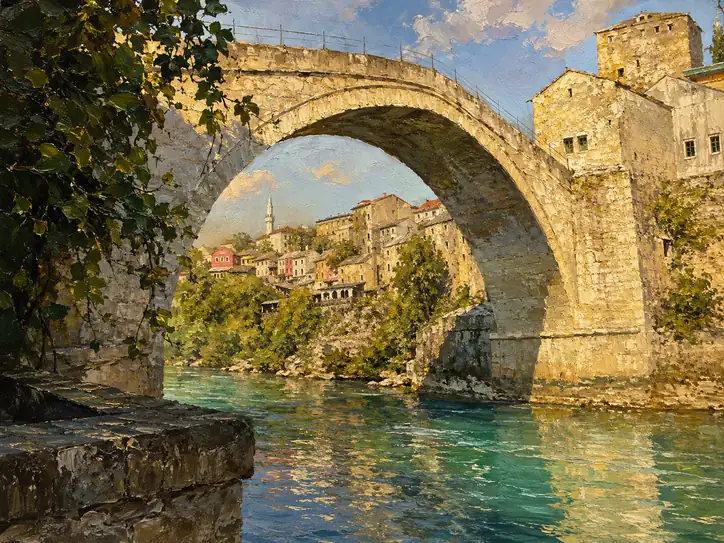 Arc of the Ancient Flow
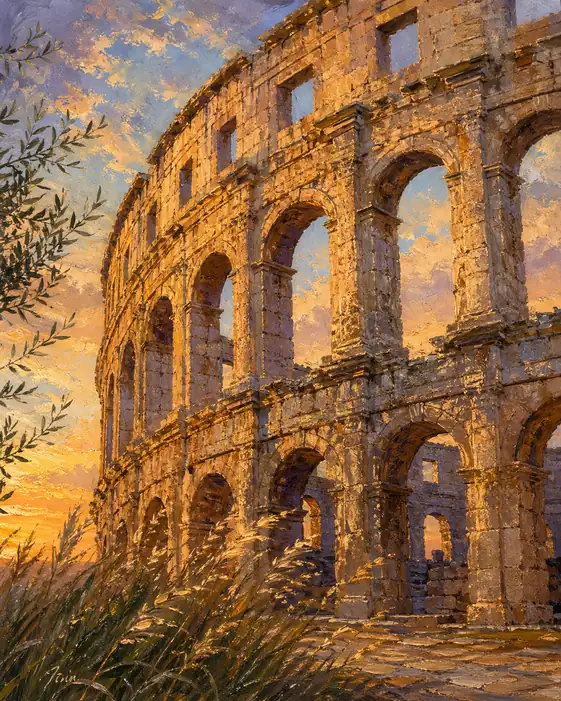 Echoes of Empire in the Golden Hour
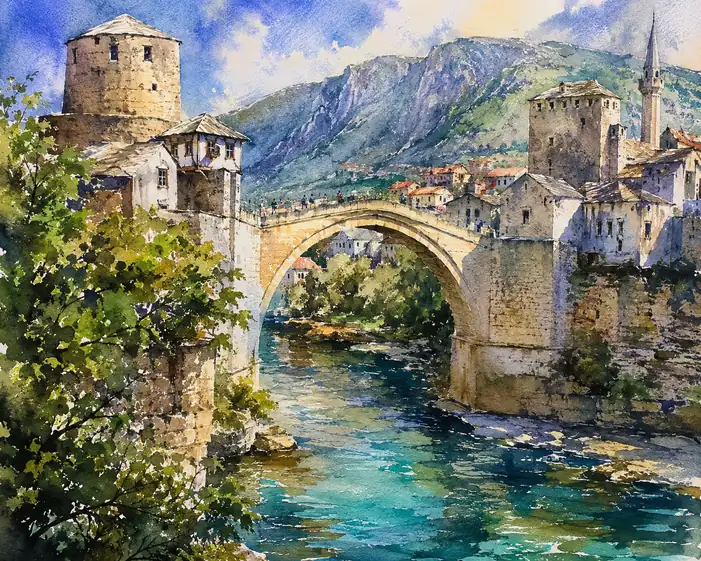 Gentle Ripples Under Stari Most
 Eternity in Flowing Gold
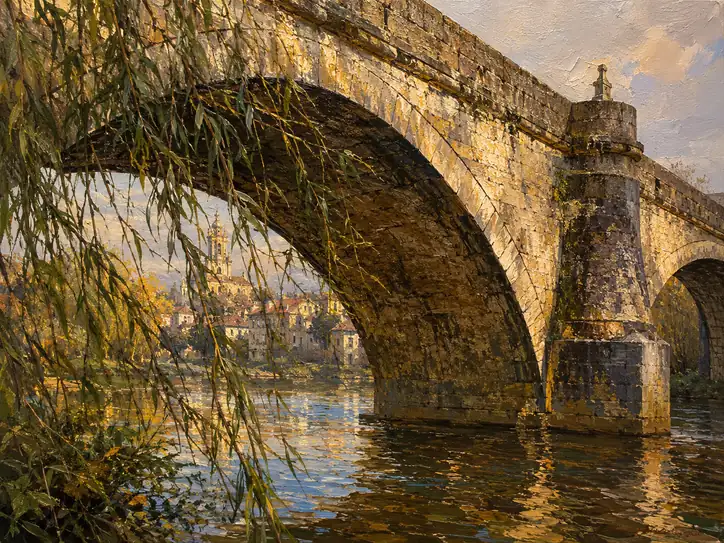 Beyond the Golden Arch
 Echoes of the Ancient Path
 The Arc of Eternal Sunset
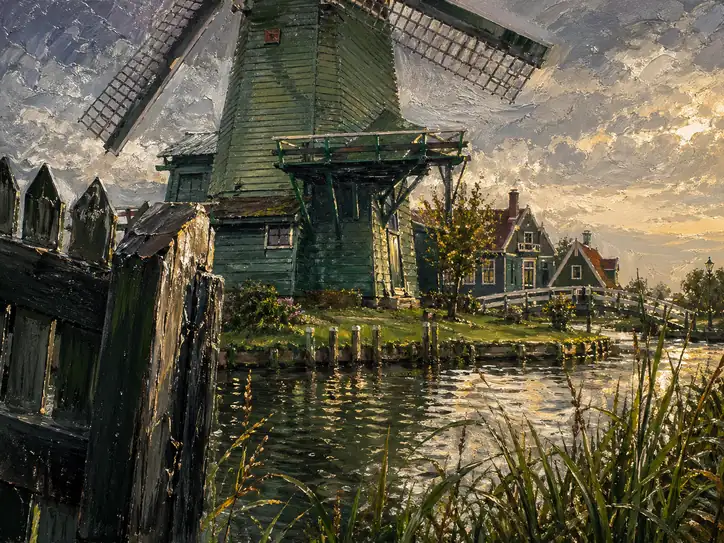 Resonance of the Golden Hour