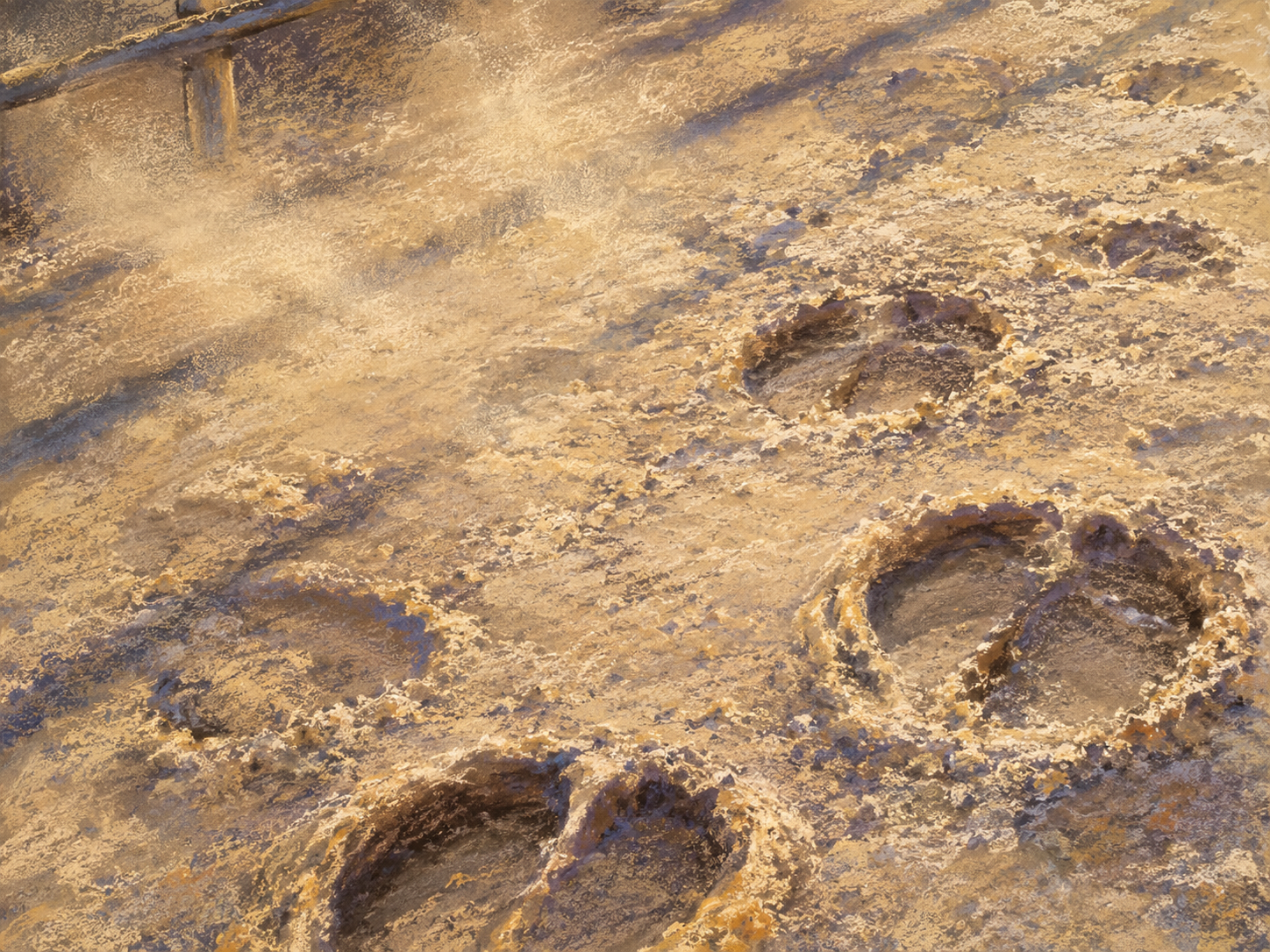
The Earth's Quiet Memory
Critique
1. Introduction This painting captures a quiet, compelling scene focusing on animal tracks left in a barren, arid landscape. The coarse texture of the dry soil and the deep imprints draw the viewer's attention immediately. Through a careful contrast of light and shadow, the artwork beautifully evokes a sense of passing time and silent life. 2. Description Several large, cloven hoofprints, likely from an artiodactyl, are arranged diagonally across the center of the frame. In the upper-left corner, a portion of a rustic wooden fence suggests a faint trace of human presence. A strong light shines from the upper right, illuminating fine dust rising in the air with a golden glow, while the ground is cracked and composed of yellow, brown, and deep violet hues. 3. Analysis The artist effectively employs a complementary color palette, juxtaposing warm ochre tones with cool violet shadows. This contrast emphasizes the intense heat of the sun and the coldness of the earth, enhancing the three-dimensional depth. Furthermore, heavy impasto techniques realistically recreate the gritty texture of weathered soil, while the diagonal beams of light direct the viewer’s eye along the path of the tracks. 4. Interpretation and Evaluation The artwork beautifully represents the transience of life and the endurance of nature through the silent footprints. The combination of the desolate land and the deep tracks serves as a powerful metaphor for survival in harsh conditions. The exceptional rendering of light combined with tactile brushwork elevates the piece beyond simple realism, infusing it with deep narrative value. 5. Conclusion While seemingly a simple depiction of earth, the painting reveals a profound poetic quality upon closer inspection. The contrast between the sunlit dust and the shadowed prints invites viewers to reflect on the journey of life. Ultimately, this piece masterfully condenses a quiet drama of nature and time within its limited canvas.
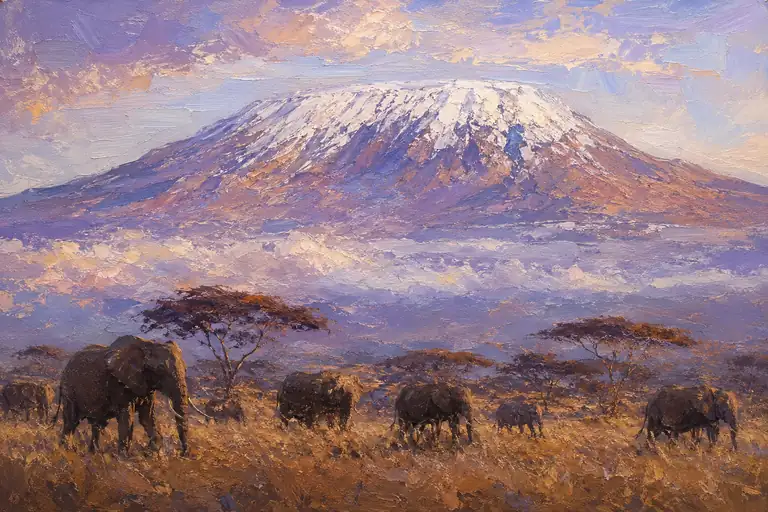 Silent Journey Under the Golden Peak
 The Silent Journey of the Antlers
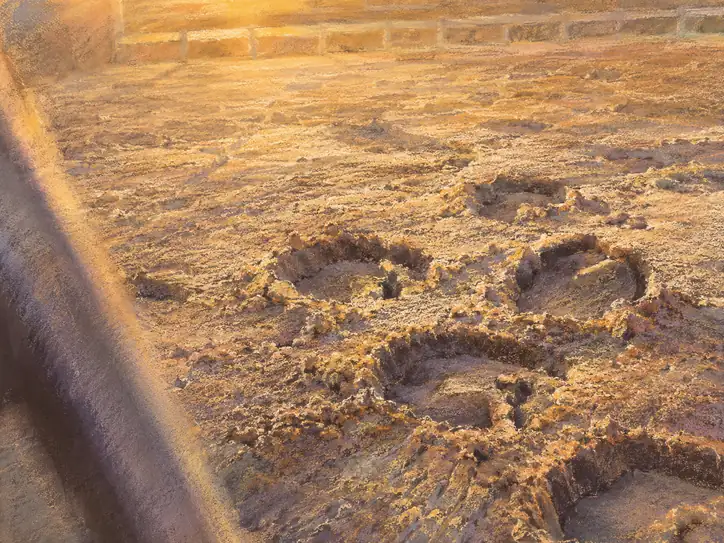 Echoes of Life
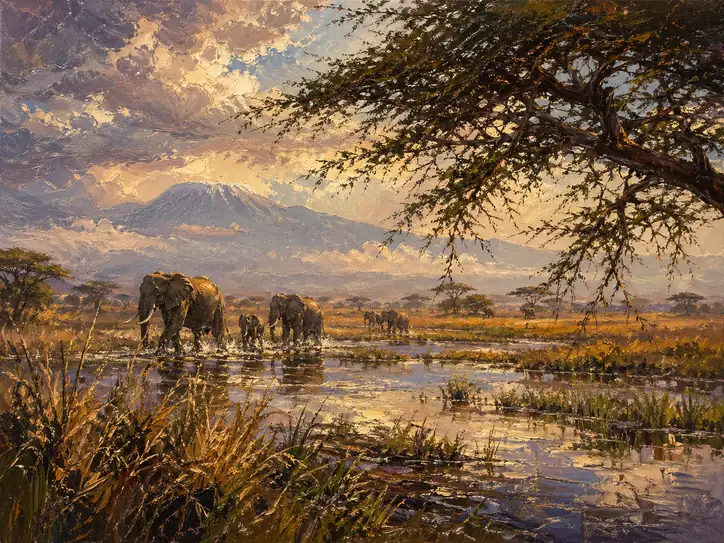 Echoes of the Savannah's Soul
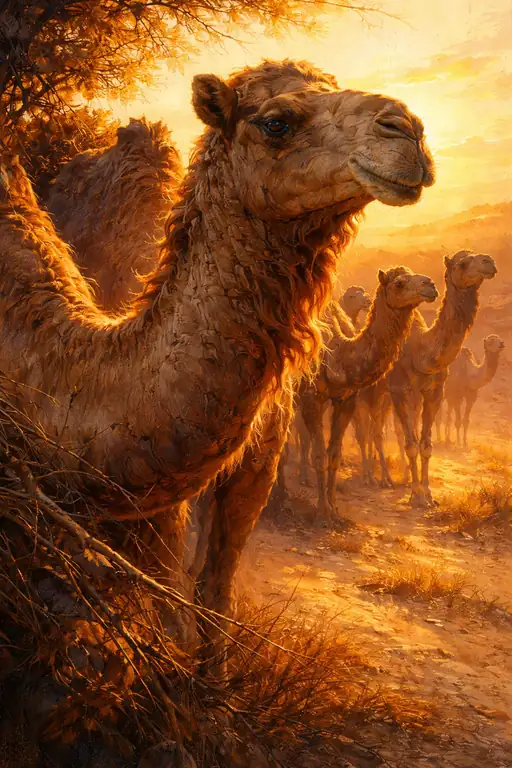 Dancing Shadows in the Morning Light
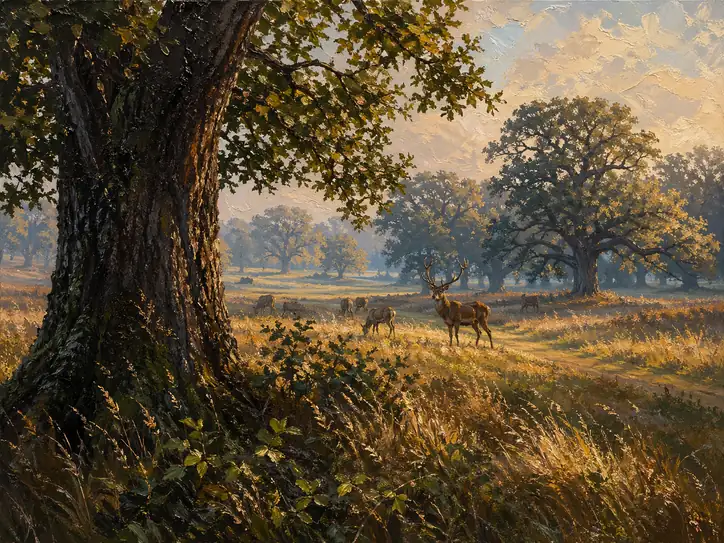 Golden Silence of the Meadow
 Gentle Eyes in a Golden Kingdom
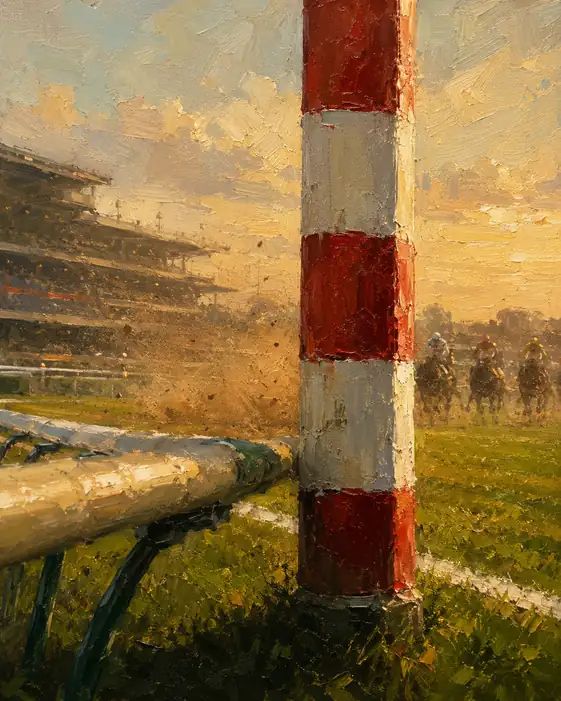 The Threshold of Glory
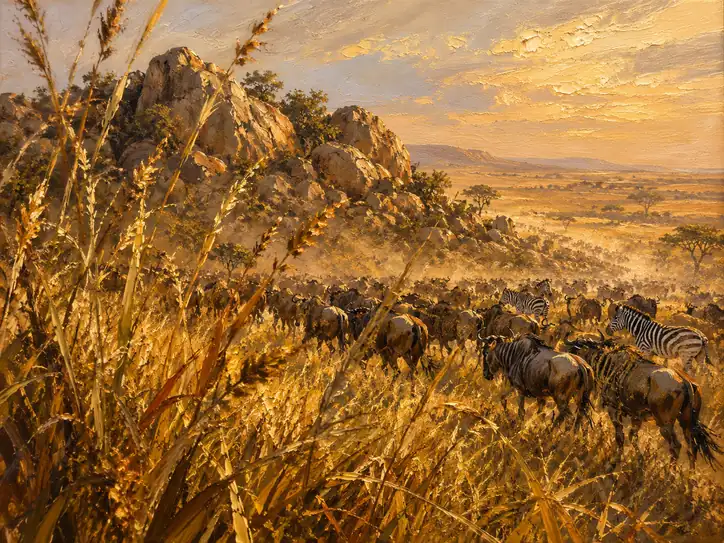 Marching Through the Golden Dust
 The Golden Pulse of the Savanna
 Sovereign of the Golden Forest