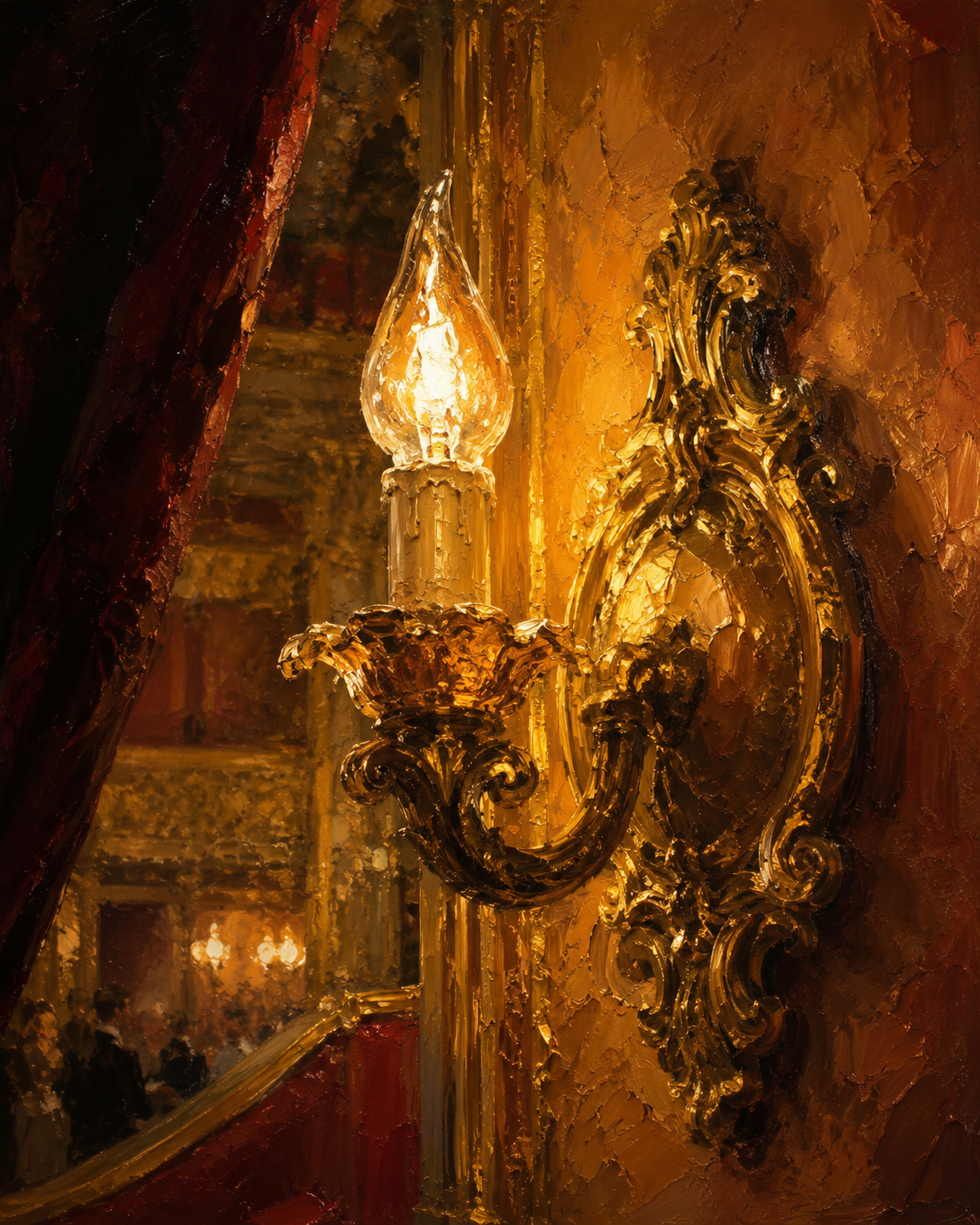
The Silent Witness of Dreams
Critique
1. Introduction This oil painting focuses on a grand wall sconce inside a classic opera house, creating a powerful study of light and texture. The brilliance of the glowing lamp contrast beautifully with the majestic, historic theater interior. This composition captures a sense of hushed anticipation just before a performance begins. 2. Description On the right, an ornate gold sconce features elaborate carvings catching the warm illumination of the flame-shaped bulb. A heavy crimson curtain drapes down the left, framing a glimpse of the distant, dimly lit auditorium with spectating figures. The background wall is rendered in deep amber tones with a prominent palette-knife texture. 3. Analysis The painting is characterized by its heavy impasto technique, giving physical weight to the decorative carvings and plastered wall. By applying thick layers of paint, the artist makes the warm light appear almost tactile. The bold contrast between the amber glow and deep red fabric successfully creates a luxurious atmosphere. 4. Interpretation and Evaluation The illuminated sconce serves as a silent guardian of the theater’s artistic history. The thick, structured brushstrokes and warm tones evoke a sense of nostalgia and enduring grandeur. Technically, the artist achieves a superb balance between coarse material textures and the delicate, transparent glow of the glass bulb. This skillful handling elevates a simple architectural detail into an emotionally resonant subject. 5. Conclusion This piece beautifully harmonizes the warmth of artificial light with the timeless dignity of a historic cultural space. What initially attracts the eye as a vivid decorative study reveals a deeper layer of temporal thickness through its physical paint layers. Ultimately, the vibrant golden glow remains a powerful symbol of the dreamlike excitement found only within the theater.
 The Crimson Echo of Valor
 Silent Sentinel of the Opera
 A Symphony of Petals and Gold
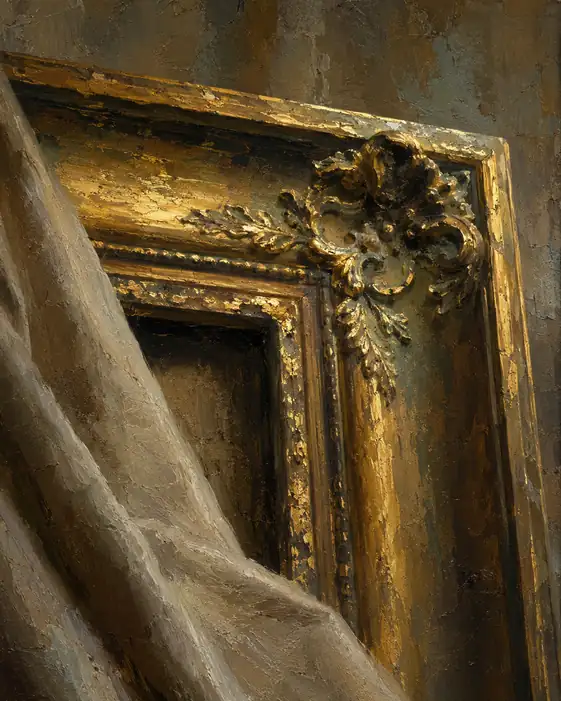 Behind the Golden Veil
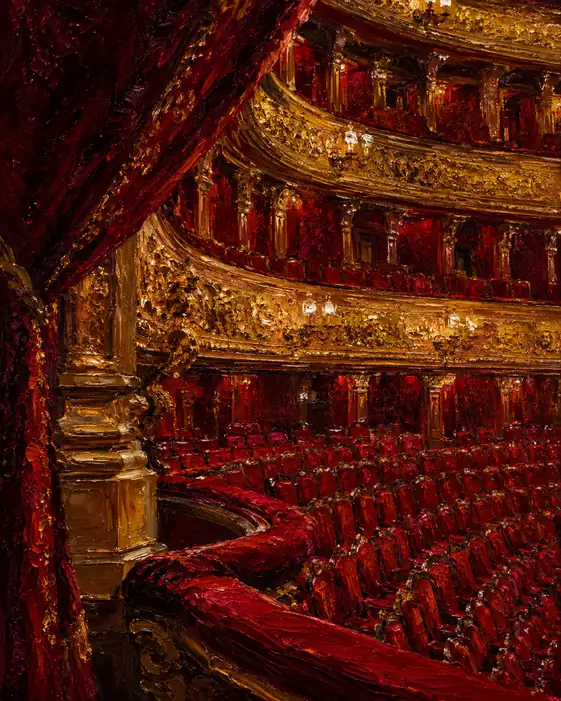 The Breath Before the Song
 Silent Primadonna
 Behind the Gilded Fan
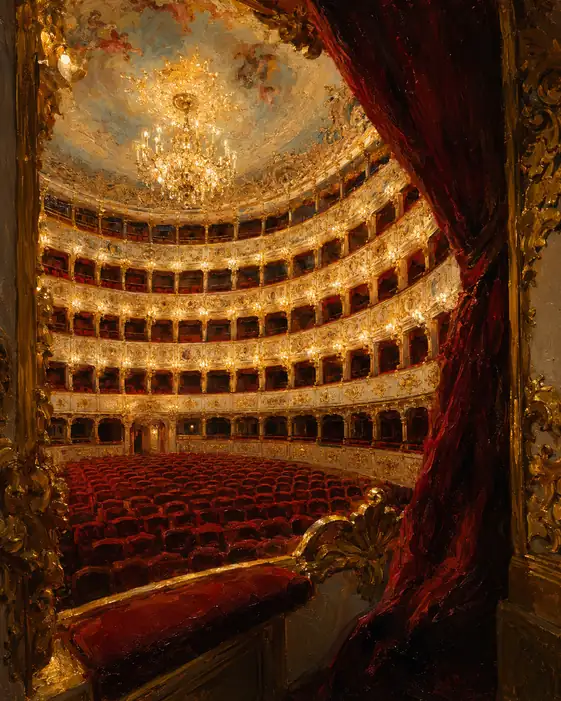 Overture in Crimson and Gold
 Steps of Silent Splendor
 Gilded Whispers
 Before the Applause