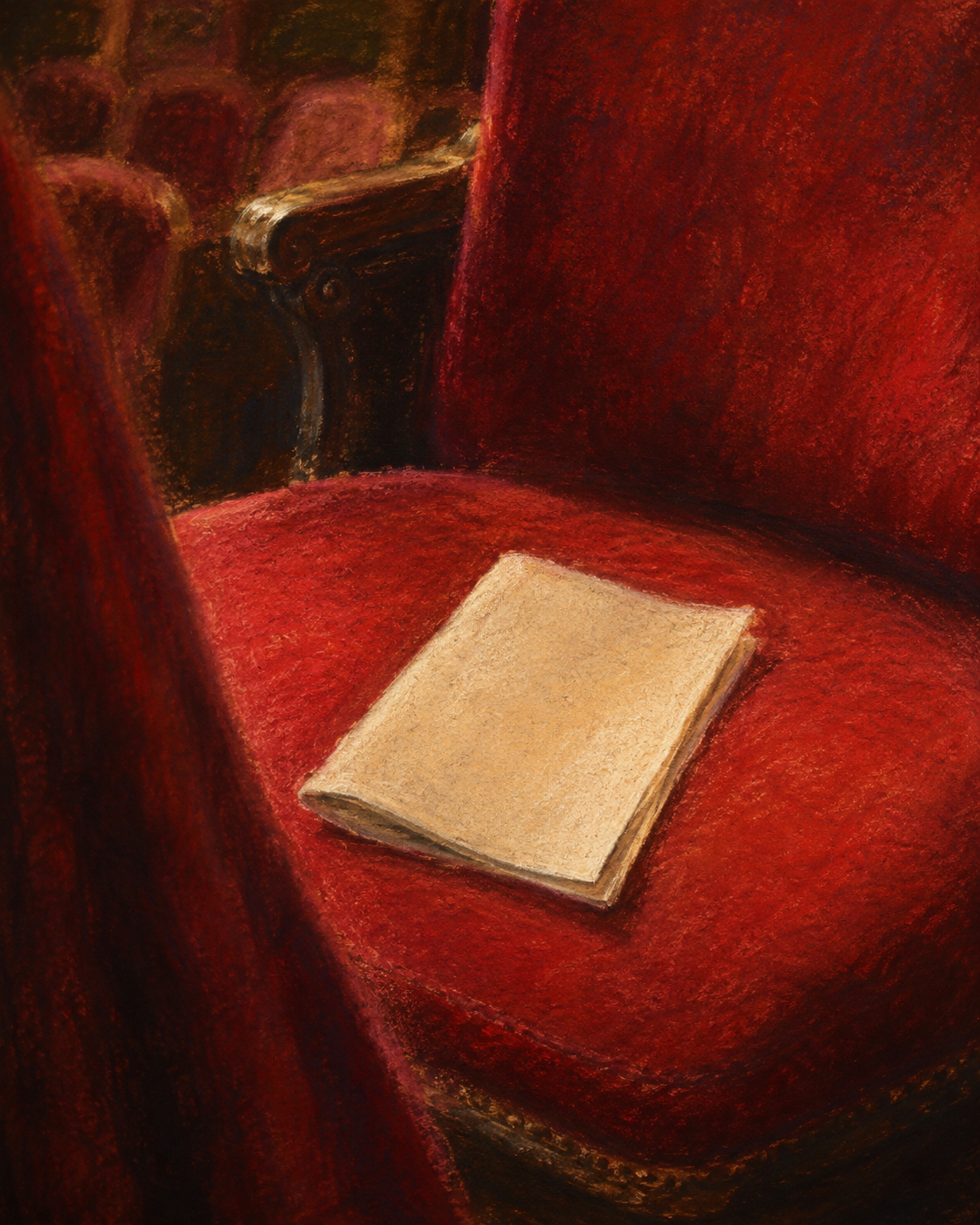
After the Curtain Falls
Critique
1. Introduction This still life painting presents a single pamphlet left on an empty velvet theater chair. The quiet, empty seat and the abandoned booklet evoke the dramatic silence after a performance. It stimulates the viewer's imagination by symbolizing human presence through absence. This analysis explores its composition and unique artistic techniques. 2. Description In the center, a close-up view of a theater seat covered in rich red velvet dominates the frame. A light cream-colored pamphlet is placed diagonally on the cushion. A dark red curtain hangs down on the left, partially obscuring the view, while other empty seats are dimly arranged in the background. 3. Analysis The color palette establishes a bold contrast between the vibrant red velvet and the light cream of the paper. A unique pastel or chalk medium creates a soft, granular texture. The heavy shadows of the curtain and the warm light on the seat construct a strong three-dimensional space. 4. Interpretation and Evaluation By excluding human figures, the work suggests the spectator's presence with poetic lyricism. The draftsmanship is outstanding, rendering the tactile softness of velvet and the dry quality of paper. The composition is highly original, focusing on theatrical silence rather than luxury and showcasing a high level of artistic mastery. 5. Conclusion In conclusion, the painting is an evocative still life celebrating the dramatic power of empty spaces. The harmonious combination of textures and lighting captures a quiet sense of nostalgia. Ultimately, the work invites us to imagine the crowd's echo, transforming the initial emptiness into a deep reflection on memory and art.
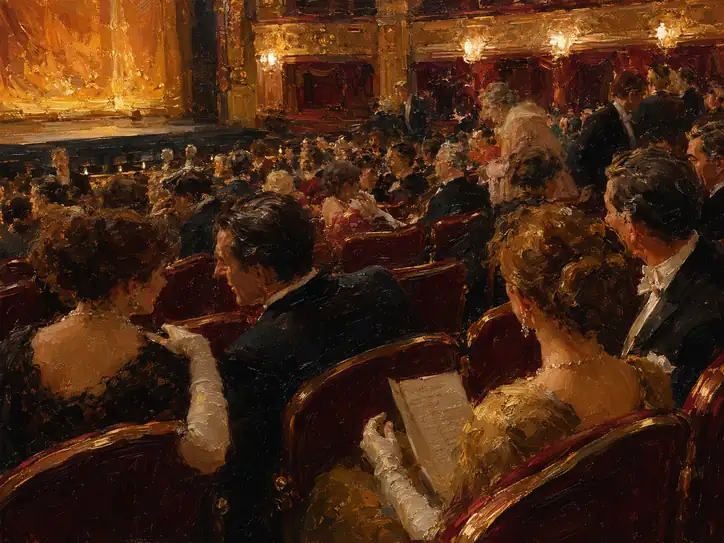 Prelude to the Gala
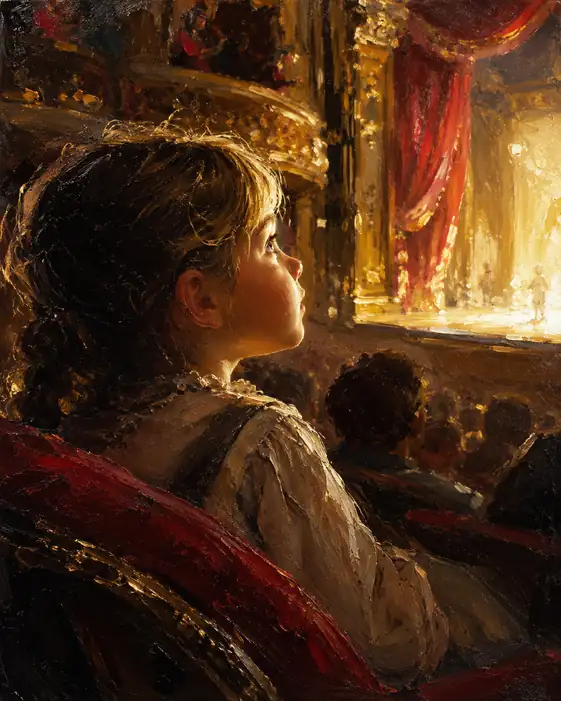 Her First Aria
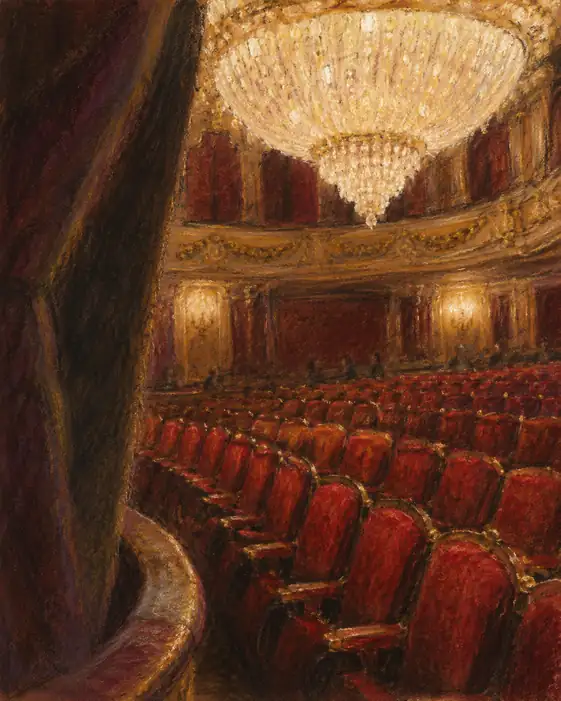 Where Time Stands Still
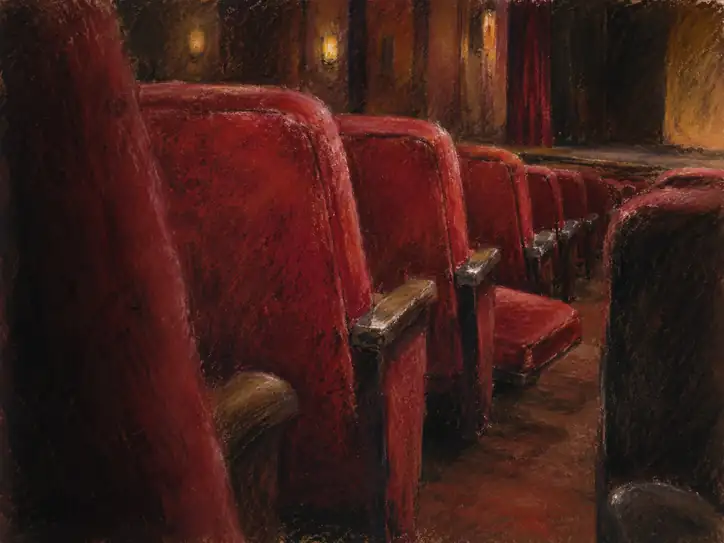 The Unheard Symphony
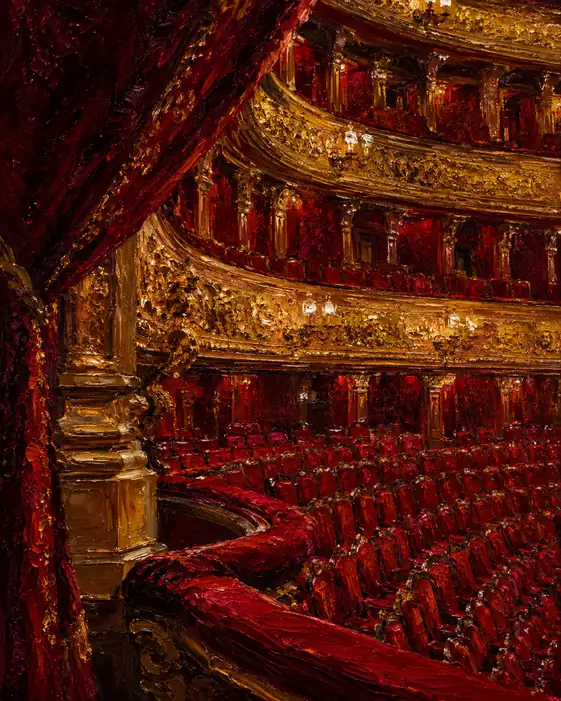 The Breath Before the Song
 Before the Applause
 The Velvet Air
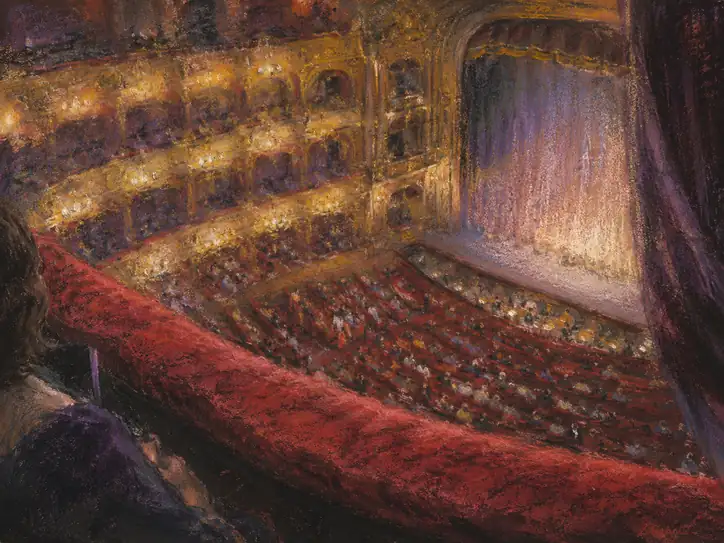 Crimson Heights of Inspiration
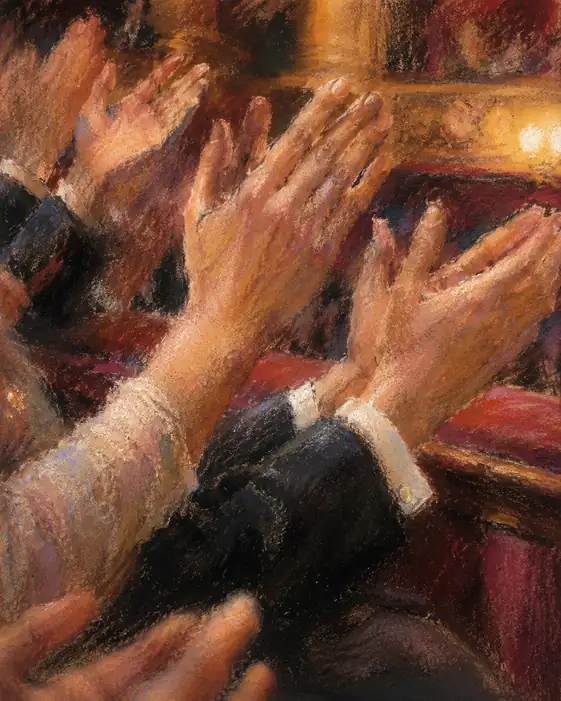 Unspoken Resonance
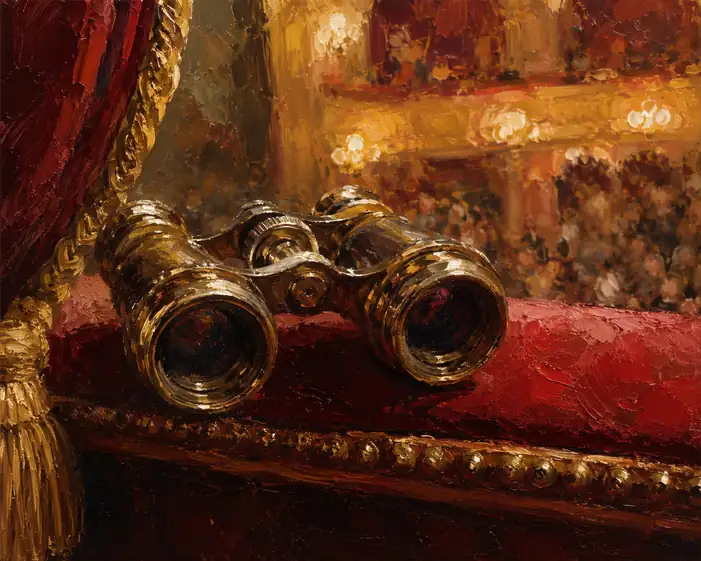 Silent Spectator
 Gilded Whispers
 Echoes of Applause