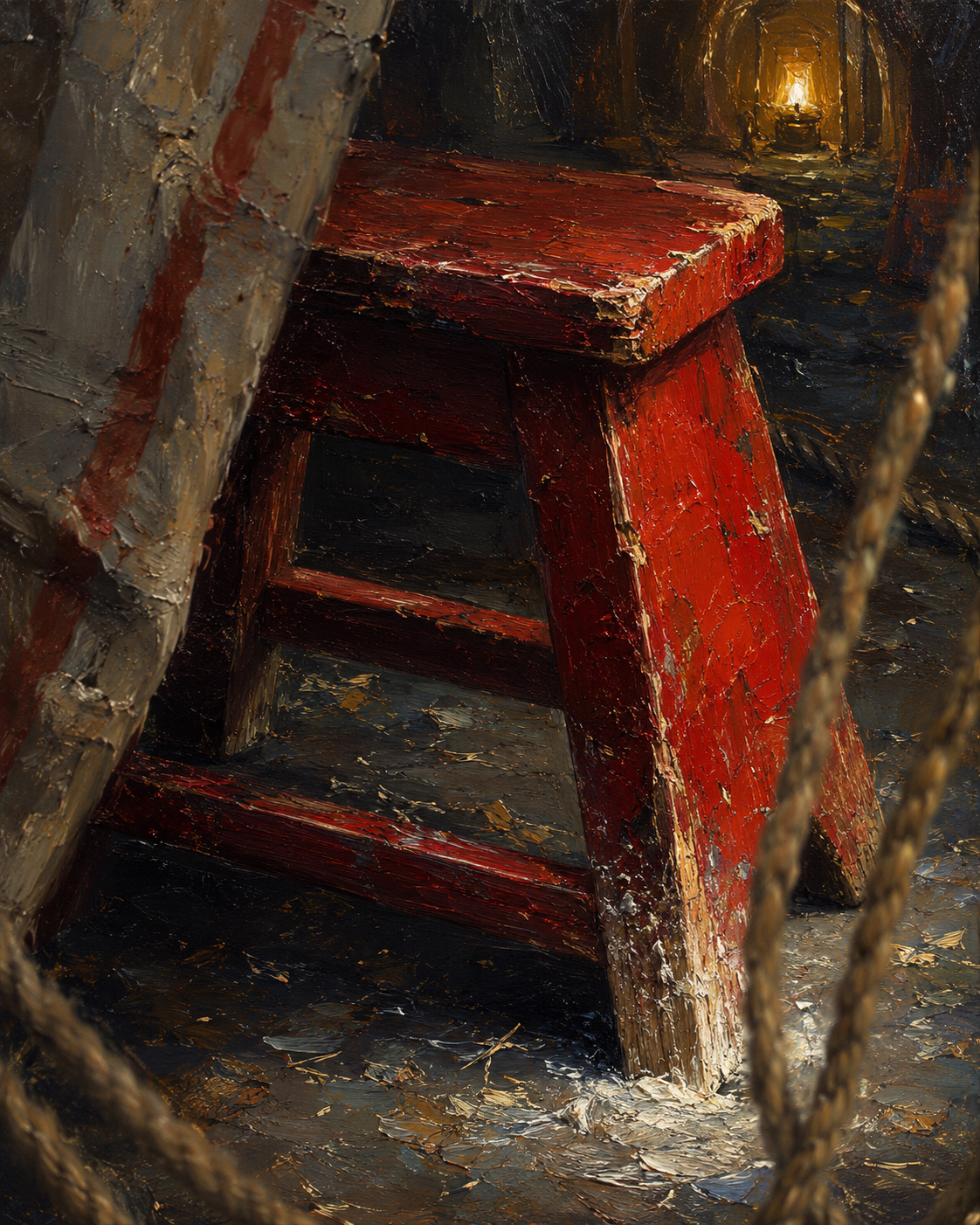
Resting in the Warm Silence
Critique
1. Introduction This oil painting showcases a weathered, red wooden stool set within a dark, quiet interior resembling a ship's hold or cave. This worn object's presence and the powerful texture of thick paint layers make a striking impact. This essay examines the visual effects and formal techniques of this rustic yet dramatic still life. 2. Description Slightly to the right of the center, a sturdy wooden stool with peeling red paint is positioned at an angle. The left side is pressed by a structure resembling old canvas or a wooden frame, while a blurred hemp rope crosses the foreground. The ground is roughly painted with white dust around the legs, and a distant lantern glows in the darkness. 3. Analysis The work extensively utilizes the impasto technique, bringing out the rugged wood texture and cracked paint through physical paint thickness. The blurred rope in the foreground acts as a visual frame, guiding the eye to the central stool and the distant light. The stark chiaroscuro contrast between the dark background, vibrant red, and warm lantern creates dramatic tension. 4. Interpretation and Evaluation The composition conveys human absence while evoking past labor and life, showcasing originality. The weathered red paint symbolizes the passage of time in a harsh environment, while the distant lantern serves as a symbol of hope and quiet comfort. Through masterful texture and a calculated layout, a simple tool is elevated into a monumental piece. 5. Conclusion A first glance is drawn to the vibrant red and heavy brushwork, but closer inspection reveals the profound silence and delicate light gradations. Bringing such powerful materiality and narrative into a classic still life demonstrates exceptional compositional skill. This rare work perfectly blends poetic expression with superb draftsmanship, leaving a lasting impression.
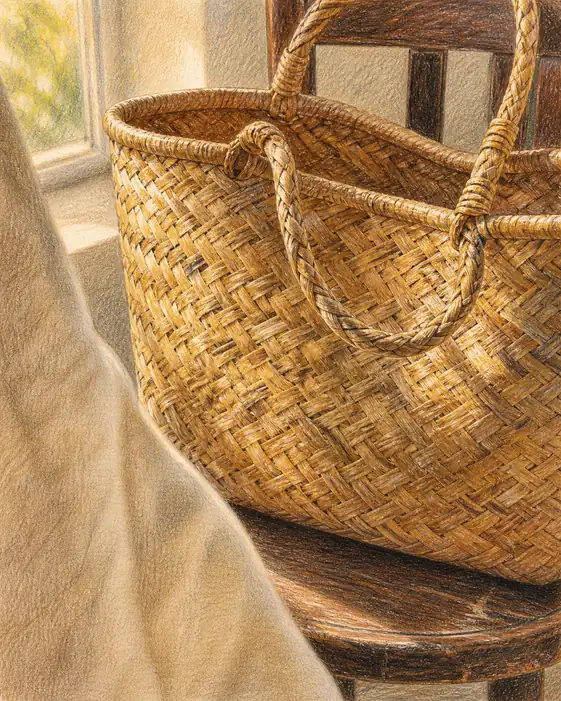 Sun-Drenched Silence
 Echoes of Time
 Echoes of a Forgotten Journey
 Threshold of Forgotten Dreams
 Silent Witness of the Stage
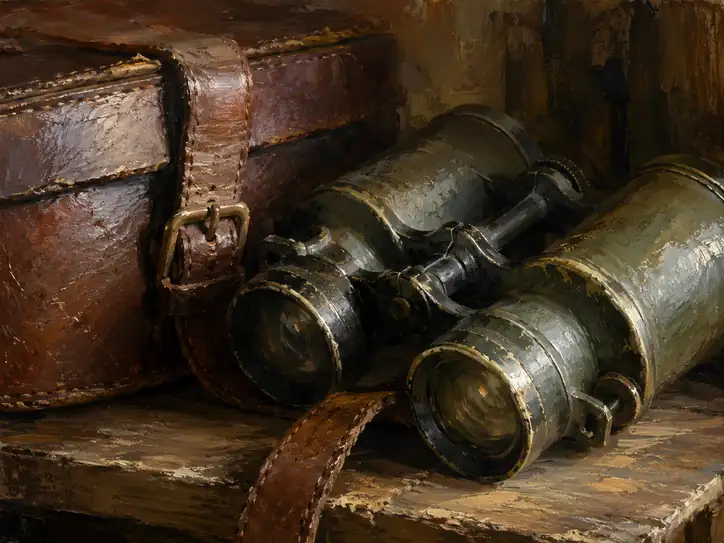 What the Eyes Once Saw
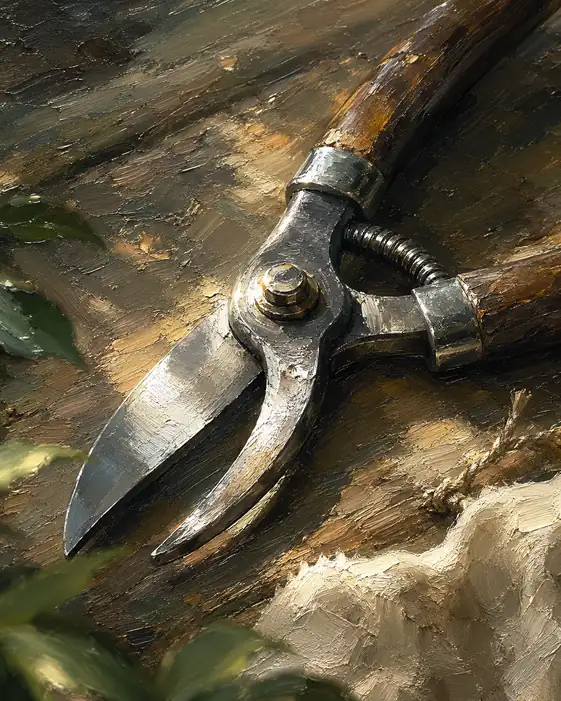 Legacy of the Soil
 Echoes of the Diamond
 After the Ovation
 A Message for Someone
 Sentinel of the Golden Sea
 The Golden Resonance of Yesterday