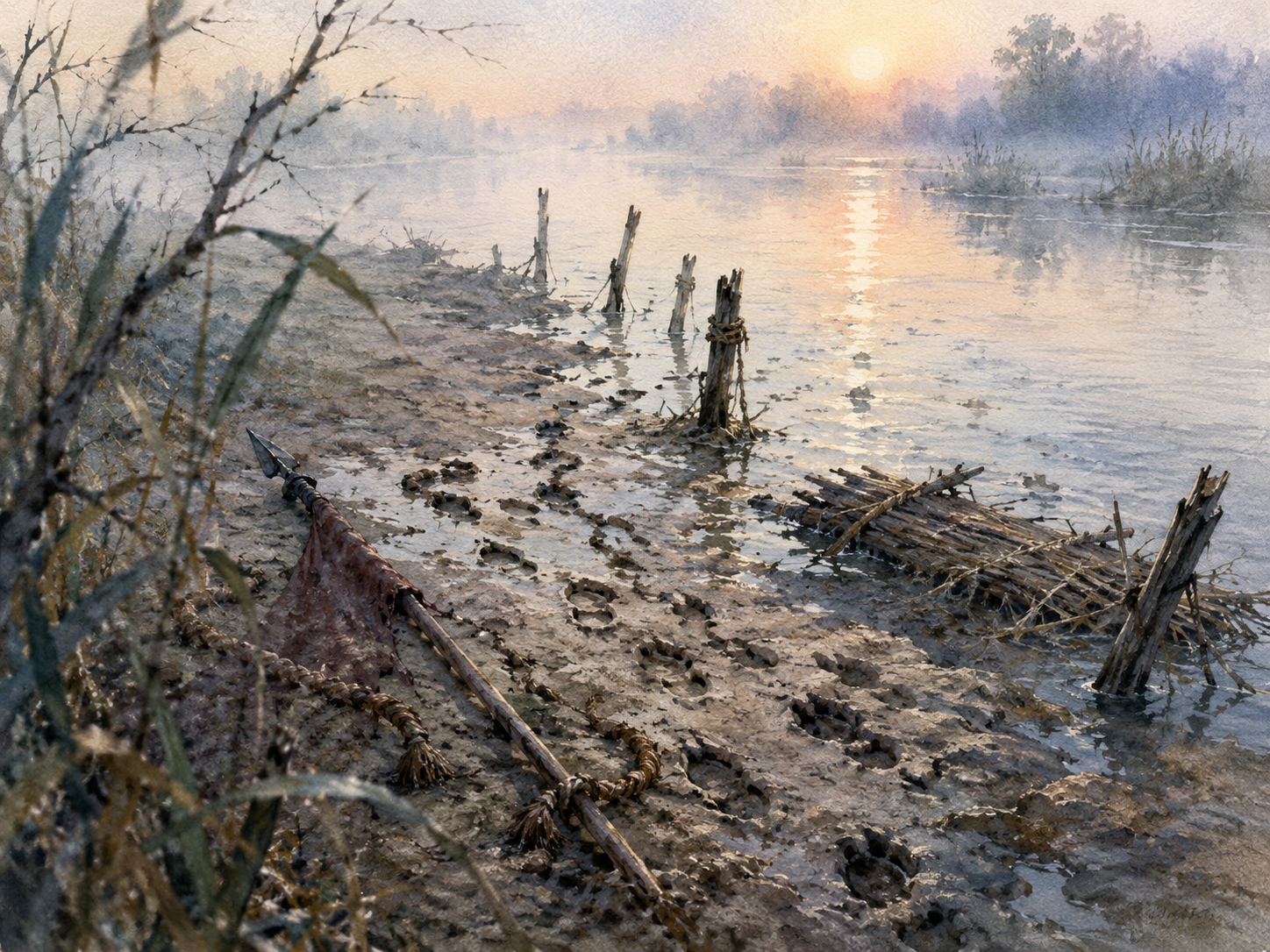
Where the Journey Ended
Critique
1. Introduction This lyrical landscape painting depicts a quiet, misty water's edge and numerous animal tracks printed on the muddy ground. The scene captures a profound sense of historical presence and natural solitude at dawn. This evocative work beautifully illustrates the passage of time and the quiet intersection of human and animal life. 2. Description In the foreground on the left, a spear wrapped with a red cloth lies silently on the damp earth. The middle ground features a muddy bank filled with footprints leading toward the calm water. Weathered wooden posts stand in the lake, next to a ruined wooden raft, while the rising sun reflects on the horizon. 3. Analysis The composition utilizes atmospheric perspective to guide the eye from the textured mud in the foreground to the hazy trees. The color palette combines earth tones of brown and grey with the warm, radiant gold of the sunrise. Delicate, watercolor-like brushstrokes masterfully capture the wet sheen of mud and the soft light. 4. Interpretation and Evaluation This artwork symbolizes the fleeting nature of human endeavor contrasted with the eternal presence of the wilderness. The abandoned spear hints at a past narrative, inviting viewers to contemplate lost histories. The artist demonstrates extraordinary skill in rendering light reflections on uneven mud, elevating the landscape into a poetic meditation. 5. Conclusion While appearing to be a simple sunrise scene at first, closer observation reveals a narrative rich with silent details. The artist successfully controls the delicate elements of water, light, and mud to create an eloquently silent environment. Ultimately, this masterpiece serves as a powerful reminder of nature's quiet dignity and enduring peace.
Same Subcategory
 Where the Wind Forgets the Battle
Similar Artworks
 Dawn on the Ruined Rampart
 Anchor of the Silent Mist
 Traces of the Fading Dawn
 The Silent Requiem of a Broken Dream
 The Garden of Reconciliation
 Ephemeral Ripples, Eternal Stone
 The Lantern's Promise in the Mist
 Traces of a Silent Journey
 Morning Glow over the Steel Path
 The Golden Pulse of the River