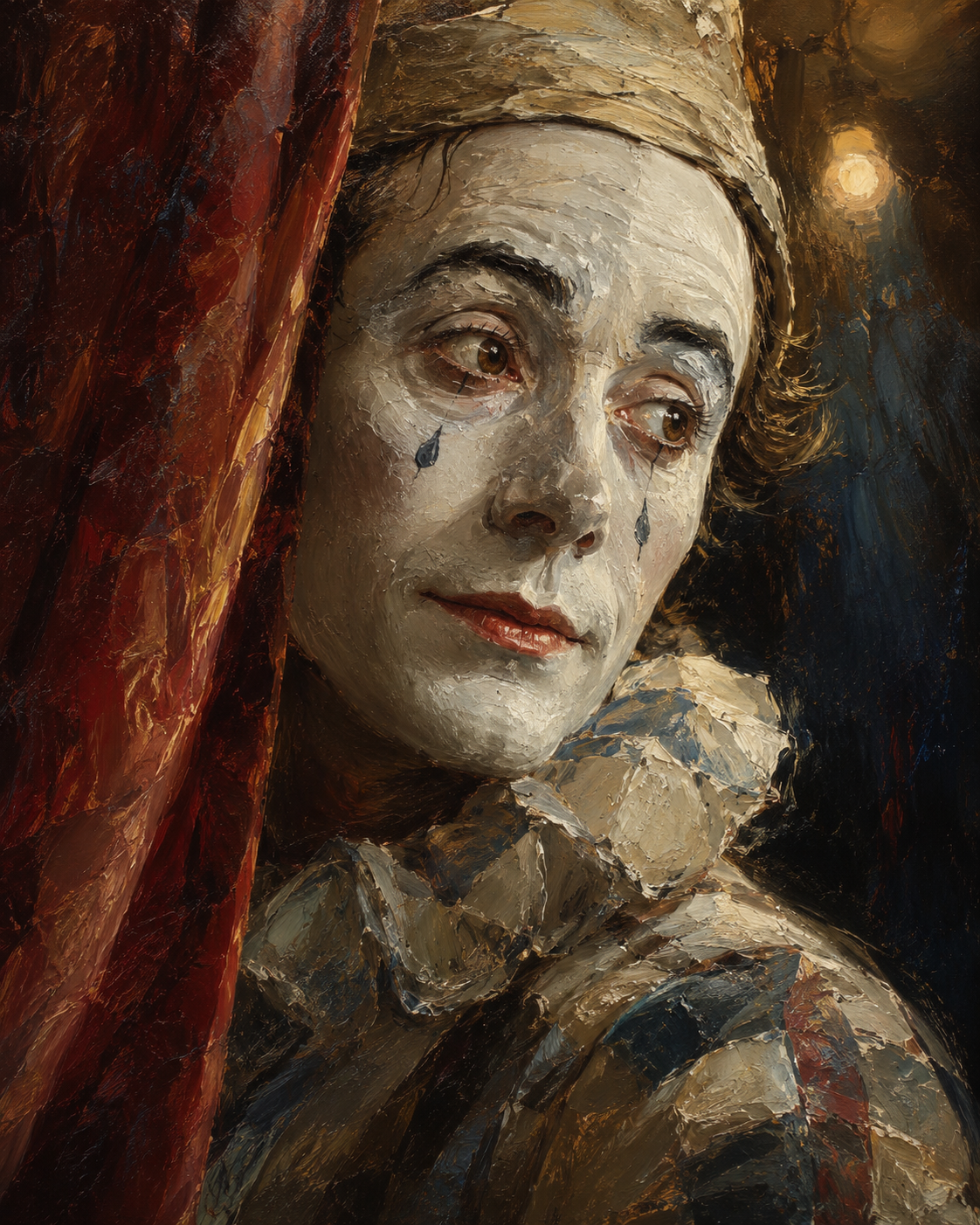
The Tear Behind the Painted Smile
Critique
1. Introduction This painting presents a close-up portrait of a sad clown, evoking a deep sense of melancholy. In the dim light suggestive of a backstage setting, the subject's introspective emotions are brought to the forefront. This essay examines the formal techniques and visual details hidden within this poignant work. 2. Description A clown with white makeup and a pointed hat dominates the center of the composition. A tear-shaped paint mark is visible beneath his sorrowful eyes, which gaze toward the right. A rich red curtain hangs vertically on the left, while a faint circular light glows in the dark background. 3. Analysis The color palette creates a strong contrast among the white face, the red curtain, and the dark surroundings. Rich impasto textures successfully render the rough tactile quality of the heavy stage makeup. The subtle light source from the upper right emphasizes the three-dimensional form and emotional depth of his face. 4. Interpretation and Evaluation This work captures the profound loneliness and human vulnerability hidden behind the clown's festive facade. The painted tear serves as a powerful symbol of the quiet grief concealed beneath a public smile. The artist's masterful portrayal of psychological states and dramatic composition deserves high praise. 5. Conclusion While the striking appearance of the clown first captures the attention, closer viewing reveals the complex emotional layers within his expression. The unified interplay of light, shadow, and quiet gesture leaves a lasting impact on the mind. This painting remains an outstanding example of capturing the essence of human duality.
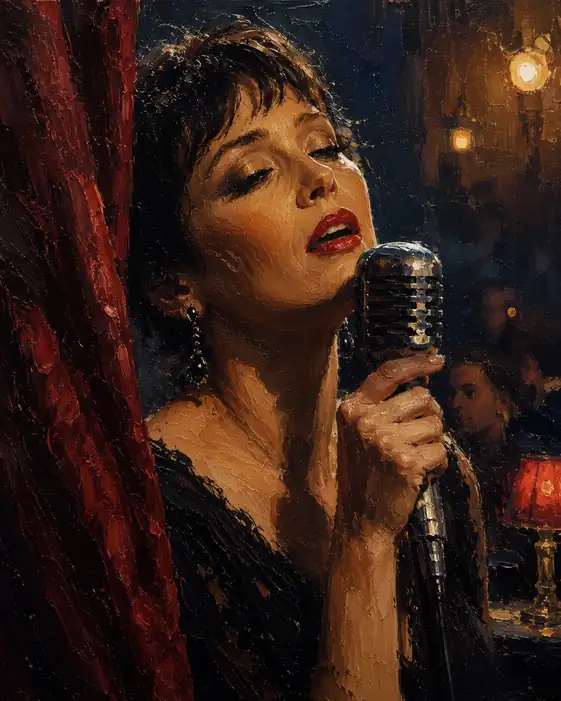 Blues in the Shadow of Velvet
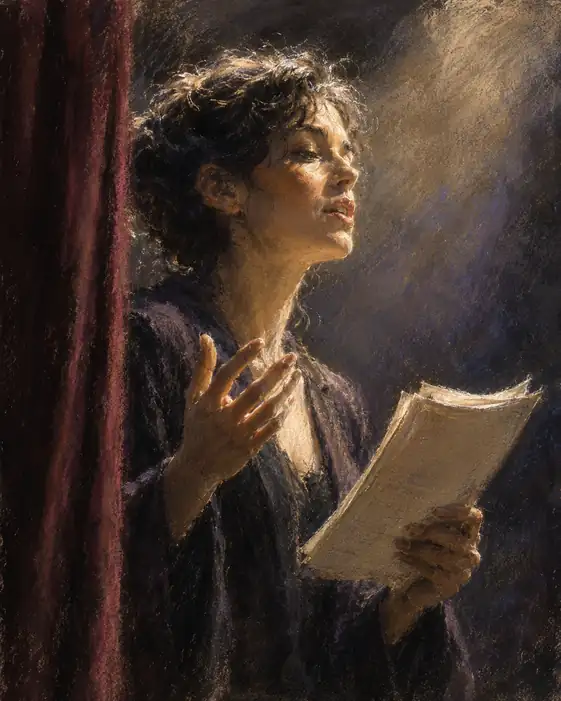 The Luminous Aria
 The Mirror of the Mask
 Behind the Crimson Veil
 Aria to the Light
 The Silent Applause of Yesterday
 The Silent Soul of the Crimson Crown
 Between Reality and Illusion
 My Soul's Aria
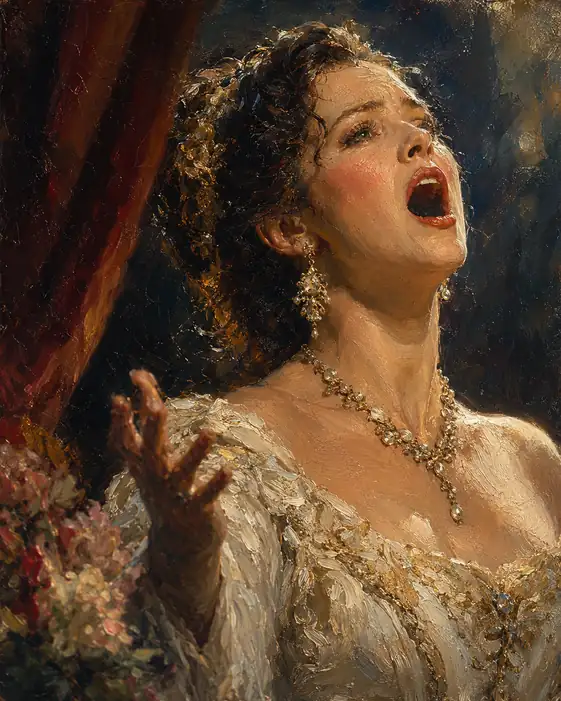 Echo of the Silent Aria
 Eternity of a Fleeting Moment
 Whispers in the Midnight Smoke