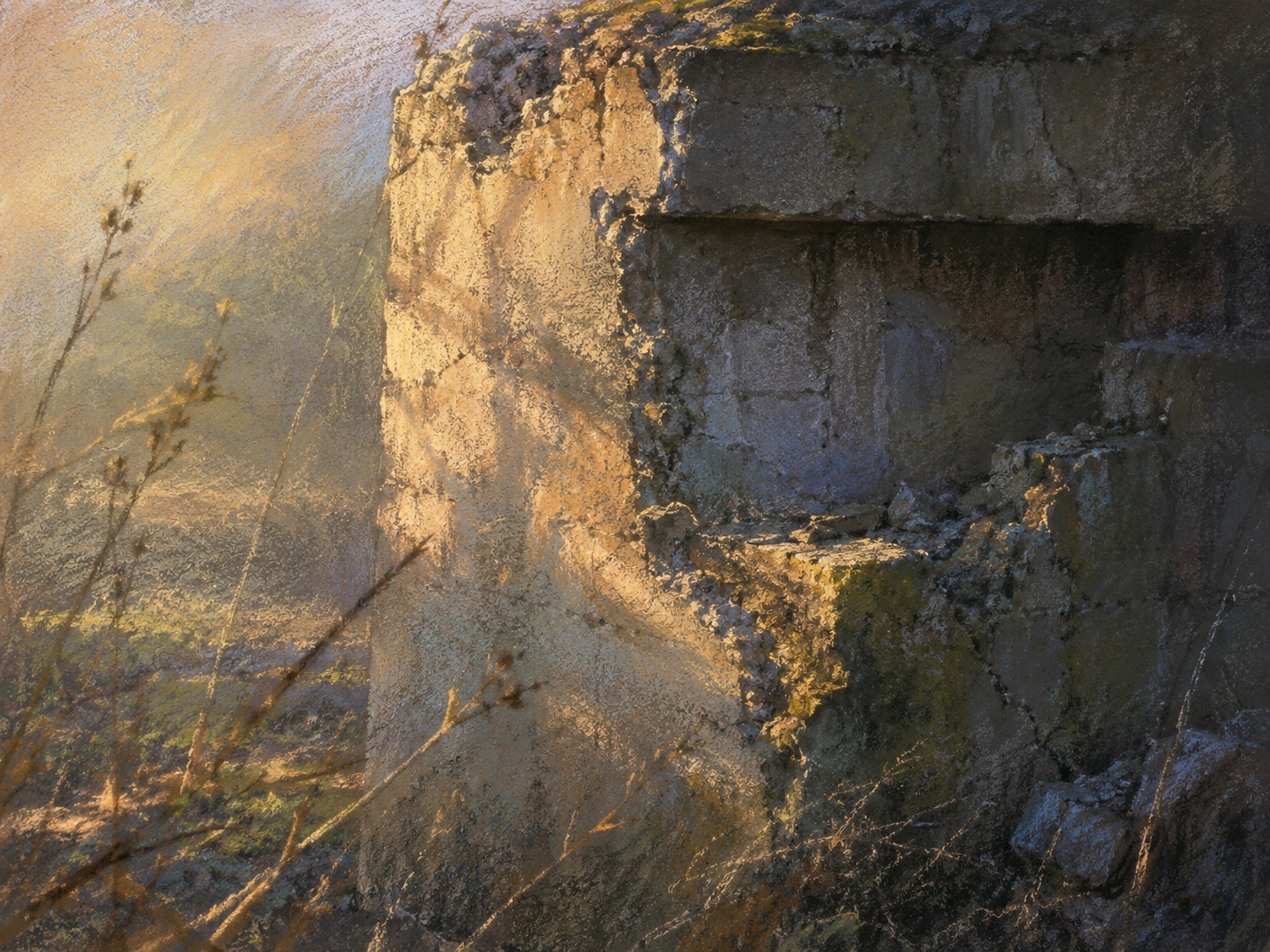
Dissolving into the Light of Time
Critique
1. Introduction This painting depicts an old concrete structure struck by evening light, built around a strong contrast of brightness and shadow. The thick wall and opening occupying the right half press forward with heavy silence. Thin grasses and a pale sky at the left soften the structure's weight while conveying the loneliness of rough ground. Slanting light and deep shadow reveal tension and traces of time in an empty space. 2. Description A rugged concrete structure, cracked and weathered over time, dominates the right portion of the composition. Its rough surface is covered with green moss and dried plants, depicting the passage of many years. From the upper left, a warm, brilliant golden light shines diagonally, illuminating the left side of the ruined structure. 3. Analysis In terms of color, the bright yellow and orange of the sunlit areas contrast sharply with the cool grays and browns in the shadows. This dramatic chiaroscuro highlights the tactile texture and three-dimensional form of the decaying concrete. The composition balances the heavy structure on the right with the open, light-filled space on the left. 4. Interpretation and Evaluation The work expresses how a once-mighty man-made object slowly dissolves into natural light and time. The theme of transience and natural harmony is beautifully realized through the contrast between the decay and the light. The artist’s exceptional draftsmanship and sophisticated painting technique deserve high praise for giving poetic value to this desolate subject. 5. Conclusion At first glance, the painting seems to be a simple depiction of a desolate, artificial ruin. However, focusing on the delicate play of light reveals a quiet flow of time and the warm embrace of nature. It is a highly accomplished masterpiece that successfully captures a quiet drama between human architecture and natural elements.
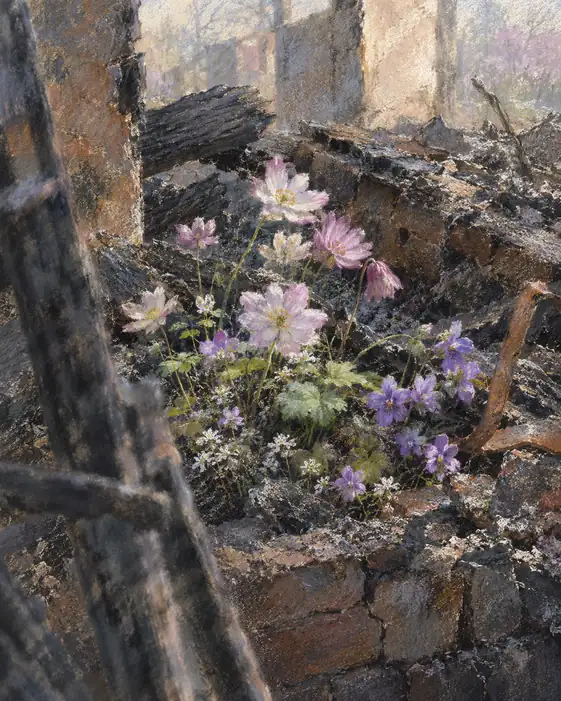 Beauty Born of Ashes
 Fading Splendor in Eternal Silence
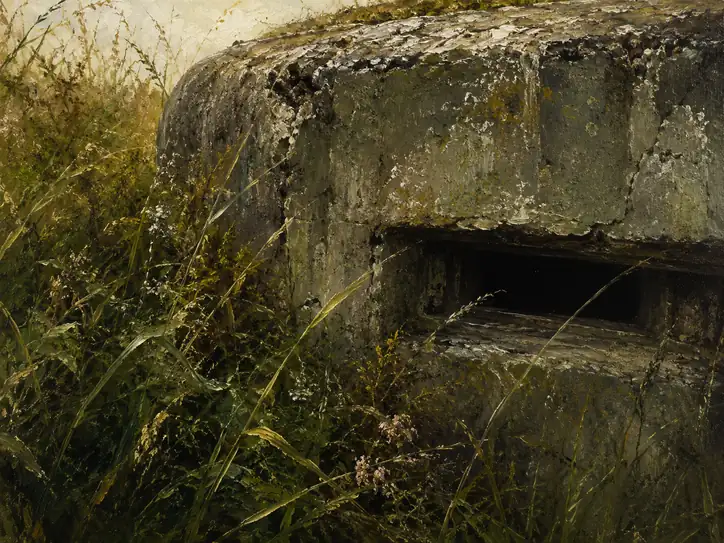 Where the Battle Ends in Moss
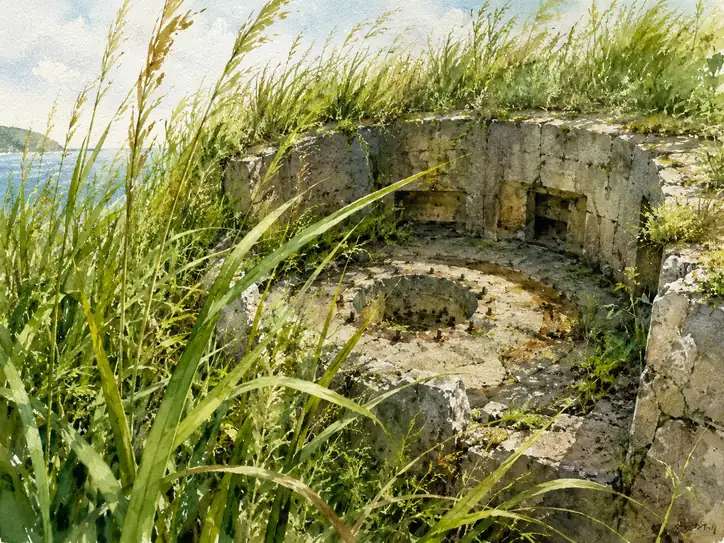 Where History Melts into Green
 Reclaimed by the Forest
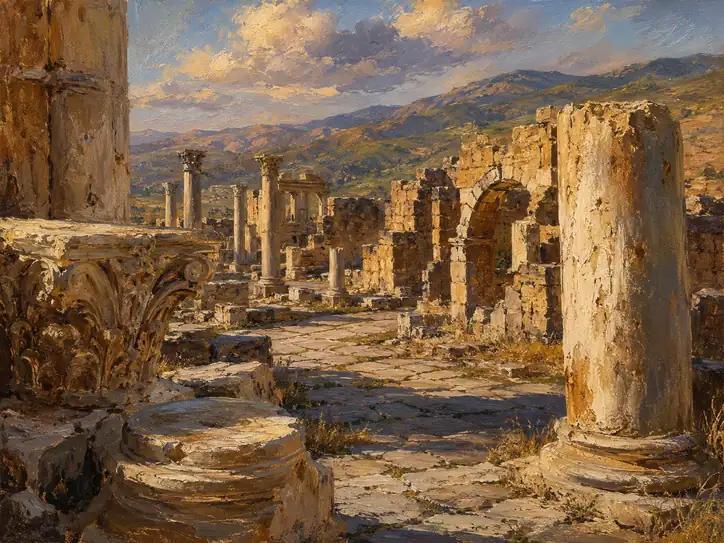 Where Glory Rests in Gold
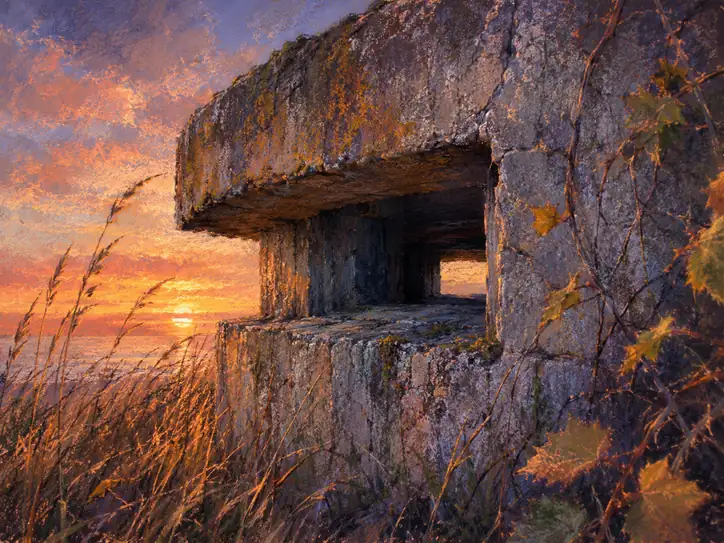 A Monolith's Golden Solitude
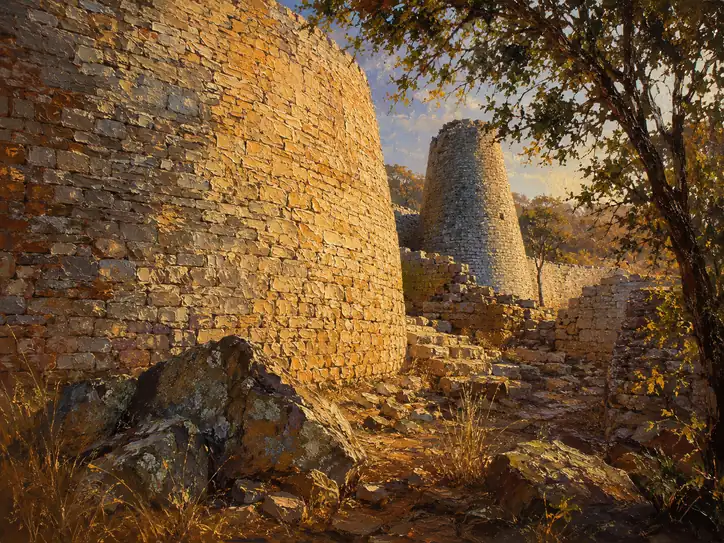 Silent Chronicles of the Stone Fortress
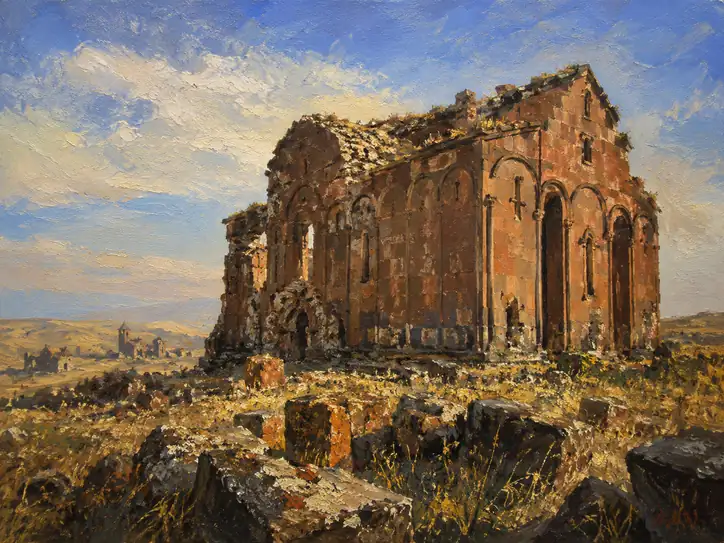 Where the Stone Remembers
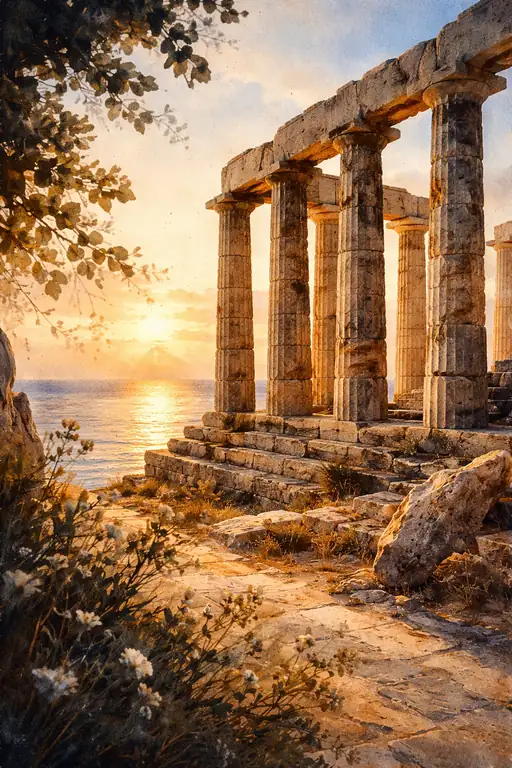 Golden Sun on Ancient Pillars
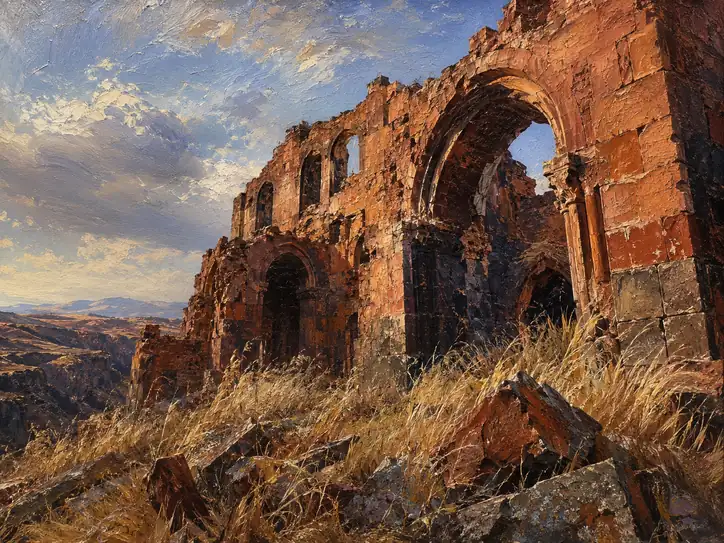 Echoes of a Forgotten Age
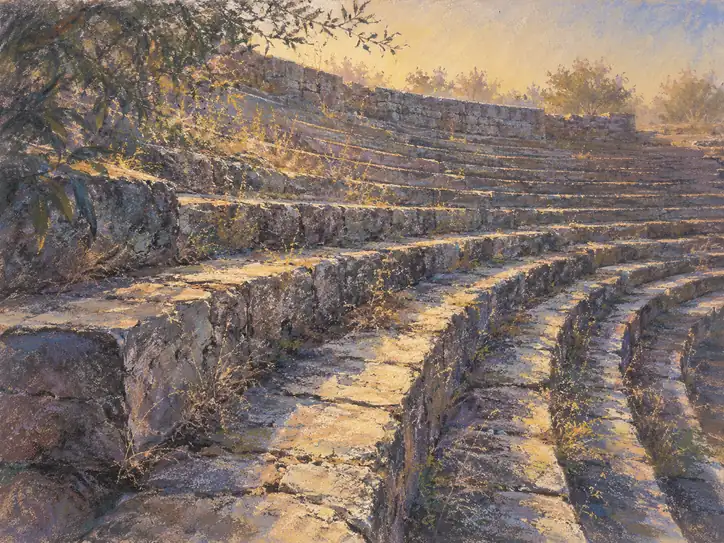 Where Time Reclaims the Stone