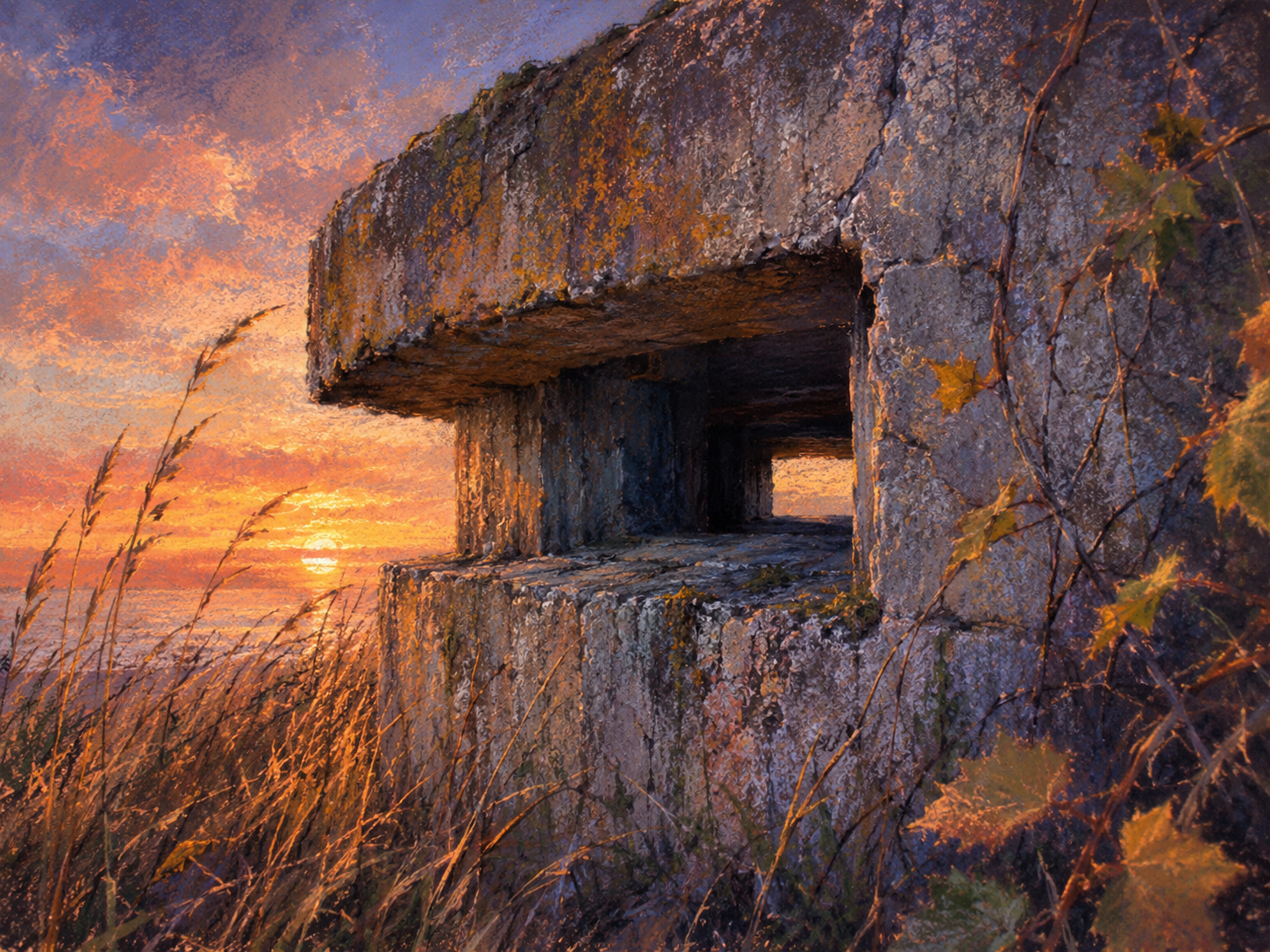
A Monolith's Golden Solitude
Critique
1. Introduction This evocative landscape painting captures a concrete bunker remaining on a coastal rise at sunset. Its thick wall and narrow opening stand heavily at the right, while orange light from the sinking sun illuminates the rough surface. Grasses and rock in the foreground heighten the exposed, wind-worn feeling, and the sea glimpsed through the aperture adds a quiet contrast. By joining a remnant of conflict with natural light, the work creates a solemn mood of reflection. 2. Description On the right, a weathered concrete bunker with an observation slit dominates the frame, covered in climbing ivy. To the left, a brilliant sun sinks towards the ocean, illuminating the sky with rich orange and purple clouds. In the foreground, tall wild grasses sway in the evening breeze. 3. Analysis The composition is defined by the heavy diagonal mass of the concrete structure, creating a powerful sense of stability and tension. The artist masterfully utilizes the low-angle sunlight to highlight the rough concrete texture, casting deep shadows inside the slit. The palette combines intense oranges with cool purples and earthy grays. 4. Interpretation and Evaluation This piece beautifully illustrates the theme of peace as nature gradually reclaims a concrete symbol of war. The outstanding descriptive skill is evident in the tangible texture of the weathered walls and the delicate leaves. Furthermore, the brilliant control of light elevates the painting, transforming a grim structure into a poetic monument. 5. Conclusion Initially viewed as a stark depiction of a military ruin, the painting reveals a warm, hopeful message of nature's healing power. In conclusion, the artwork stands as a finely balanced landscape that successfully merges historical themes with visual elegance. It leaves a lasting impression of quiet contemplation and enduring hope.
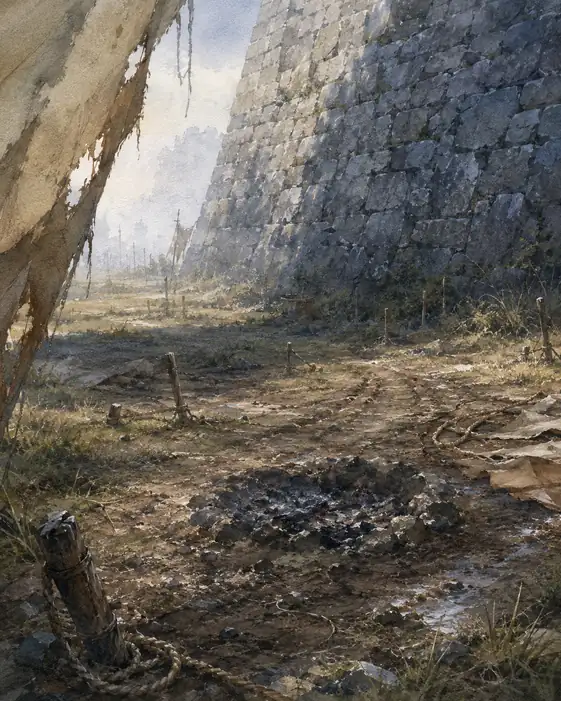 Echoes of a Forgotten Dream
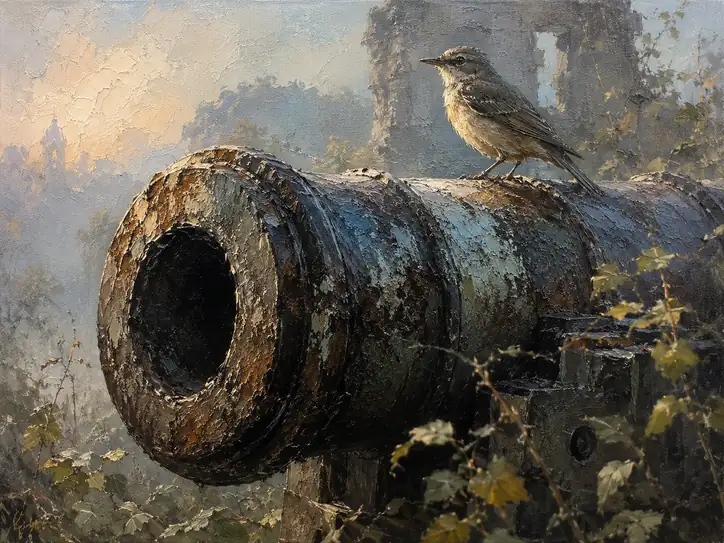 Where Peace Finds Its Perch
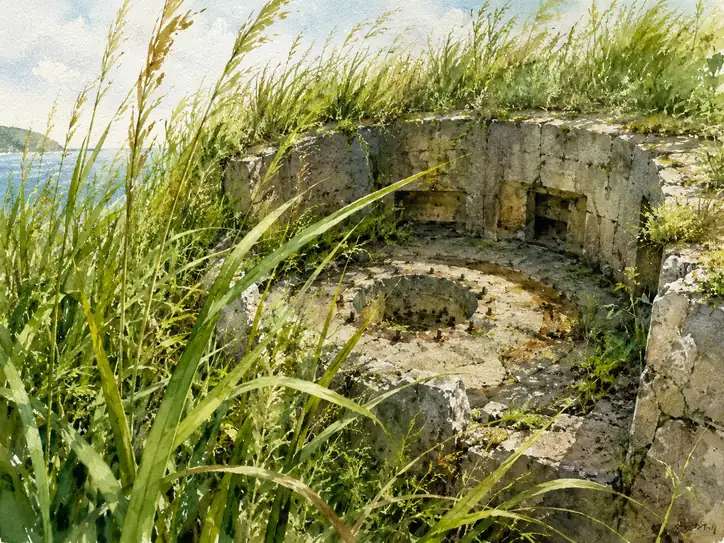 Where History Melts into Green
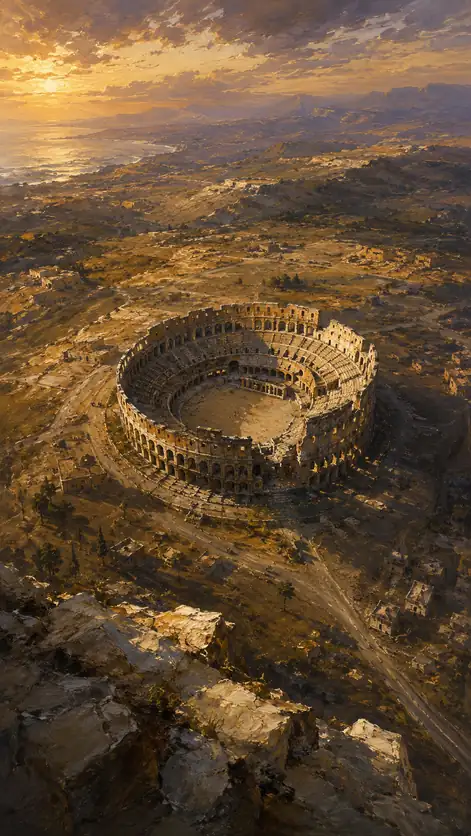 Echoes of a Forgotten Empire
 Sentinel of the Golden Sea
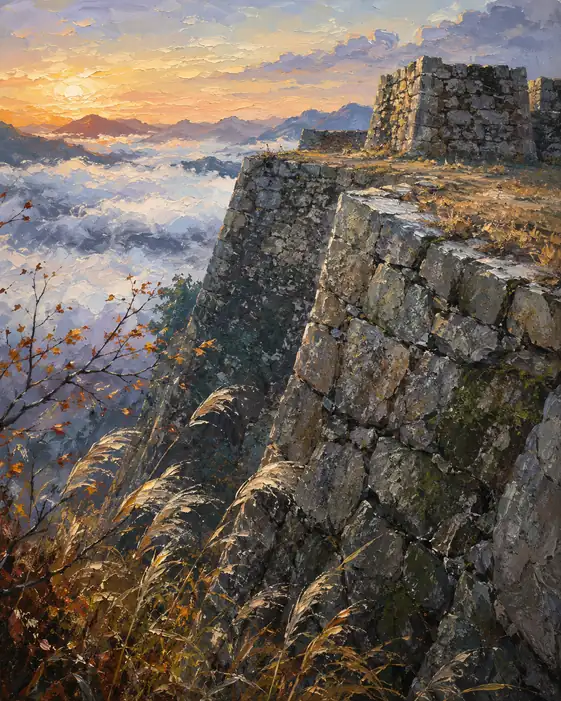 Bastion Floating in the Morning Mist
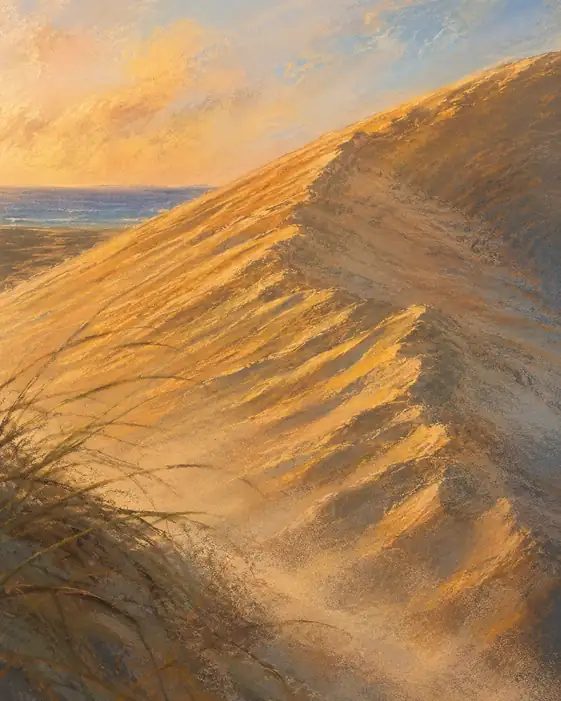 Where the Golden Wind Sleeps
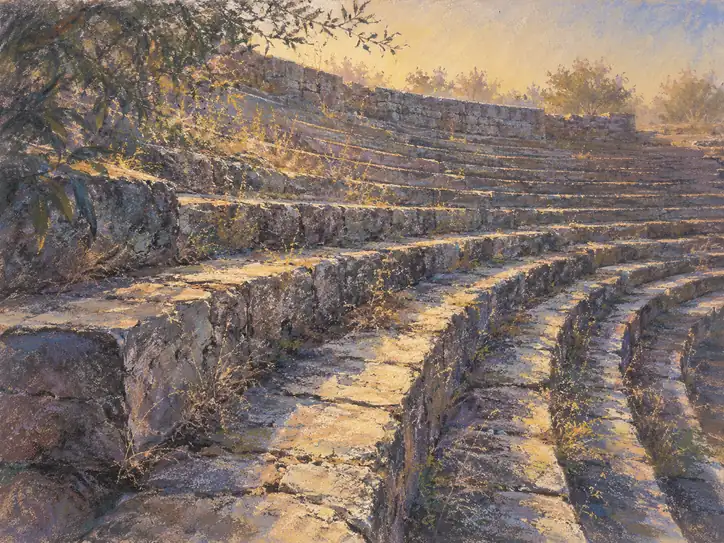 Where Time Reclaims the Stone
 Time Sheltered in Stone
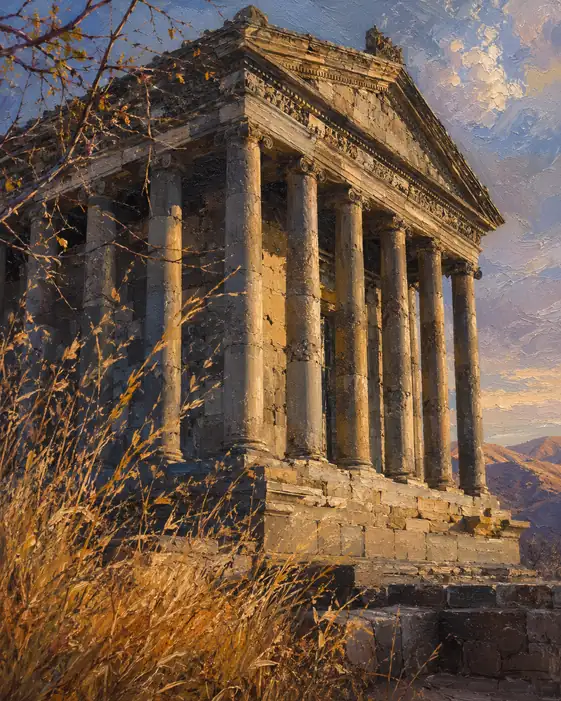 Symphony of Stone and Fading Light
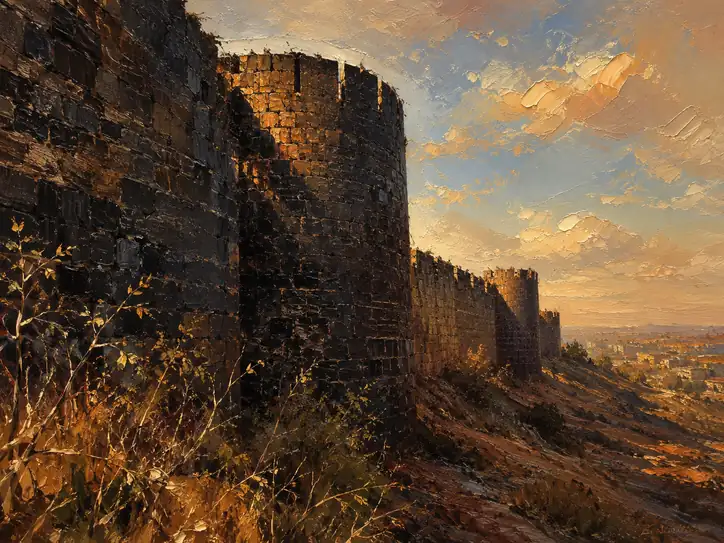 The Last Vigil at Dusk
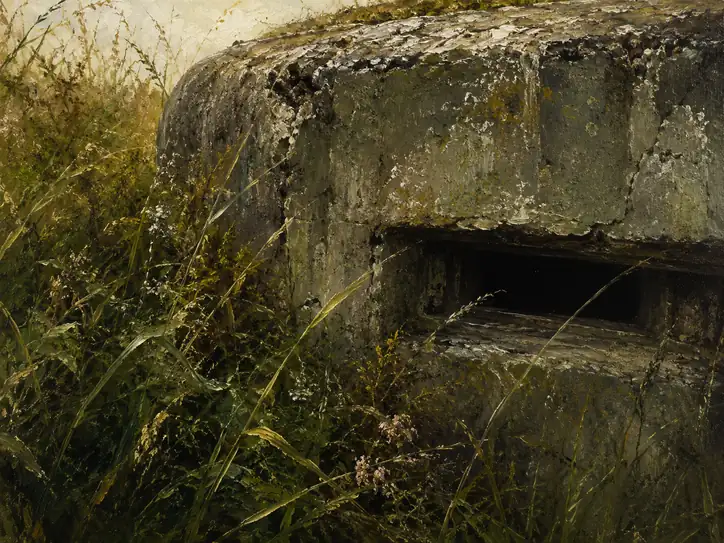 Where the Battle Ends in Moss