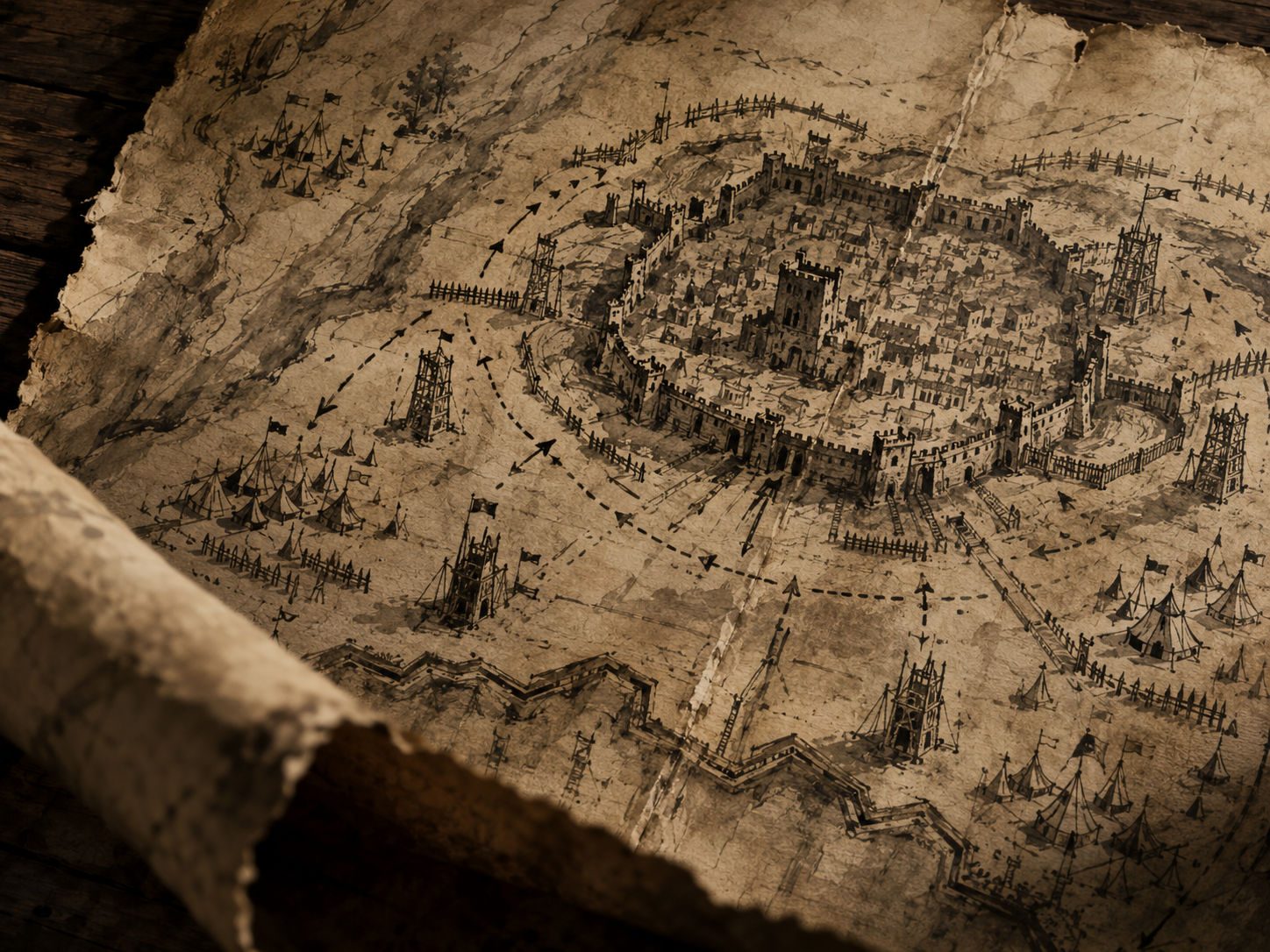
Before the First Arrow Falls
Critique
1. Introduction This unique watercolor painting meticulously replicates an antique military map outlining a medieval siege plan. In the center, a circular fortress city surrounded by strong stone walls and watchtowers is depicted. The surrounding areas feature besieging military tents, wooden fences, and dashed arrows indicating movement. This artwork evokes a sense of historical intellect. 2. Description Fine ink lines depict individual buildings inside the fortress and the central castle. In the margins, several military camps are arranged, showcasing structured tents and watchtowers. The map’s surface shows aged stains, brown discoloration, and frayed edges of the parchment. In the left foreground, the blurred scroll end creates a three-dimensional depth. 3. Analysis The color palette is dominated by a monochrome gradation of sepia, amber, and dark brown. This unified tone evokes the dignified presence of a centuries-old historical document. Structurally, the high-angle perspective from above gives this flat map a spatial dimension. The dark, blurred scroll in the foreground acts as a visual frame, highlighting the central details. 4. Interpretation and Evaluation This piece transcends simple map reproduction, capturing the aesthetic of war strategy and the passage of time. The combination of delicate lines and watercolor washes perfectly visualizes the dry, wrinkled texture of parchment. The elaborate rendering of stains and burns shows high technical control. The romantic essence of history is beautifully condensed into this work. 5. Conclusion Viewers are initially drawn to the heavy, blurred scroll, then guided into the tactical drama of the ancient siege. The integration of antique colors and fine lines offers an immersive experience. This work represents a high-quality watercolor that showcases the creative potential of the medium. The beauty of the antique map is captured in sublime harmony.
Same Subcategory
Similar Artworks
 The Blueprint of Conquest
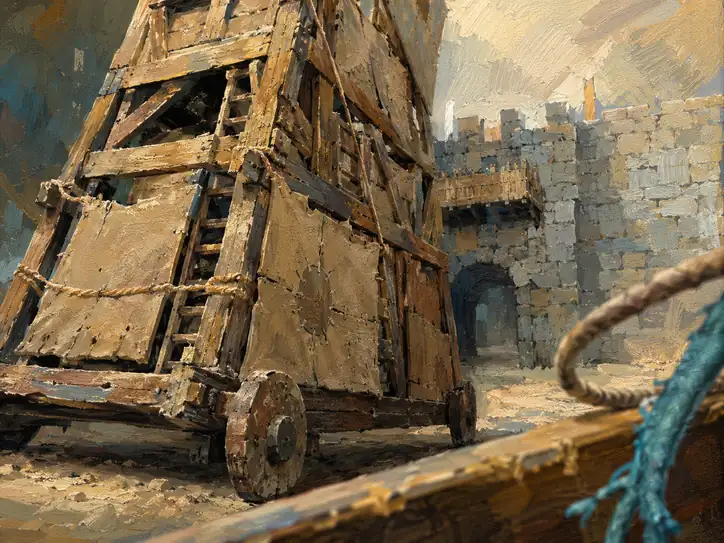 The Silence of Stone, the Cry of Timber
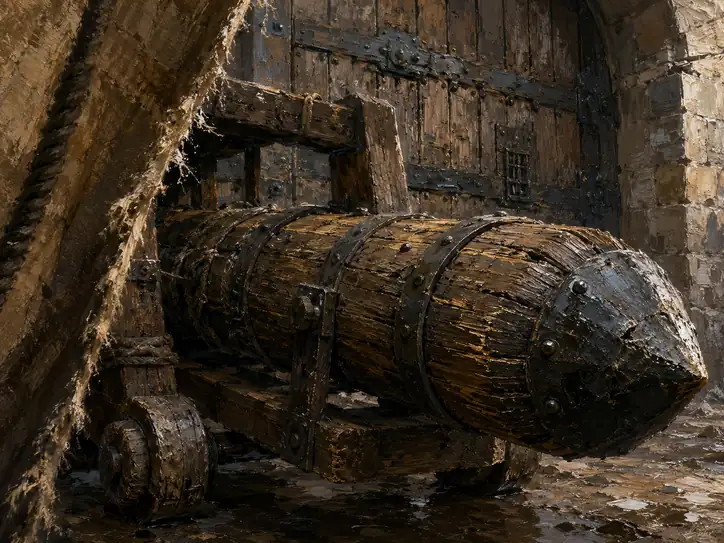 The Breath Before the Impact
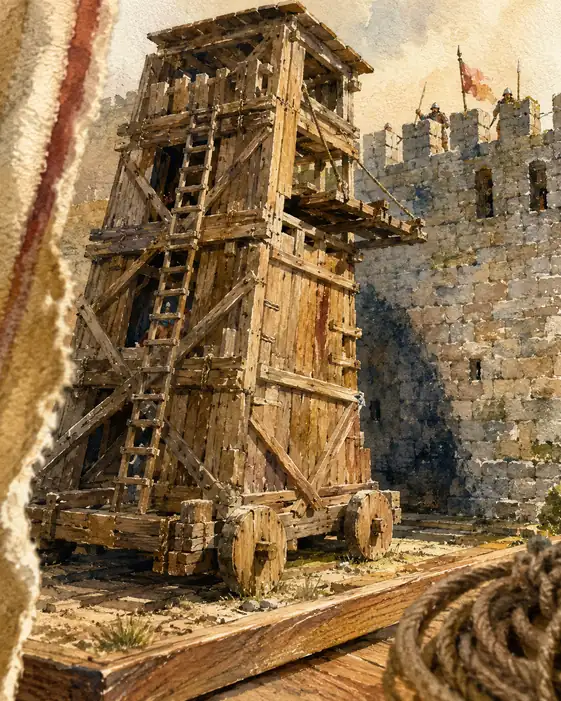 The Wooden Giant's Challenge
 The Sentinel of Crimson and Sky
 Embers of Resilience
 Solitude Before the Storm
 Ascent into the Amber Smoke
 The Silent Cannon and the Quiet Sea
 Eve of the Battle: A Warrior's Solitude