The Silent Rhythm on the Sand
Critique
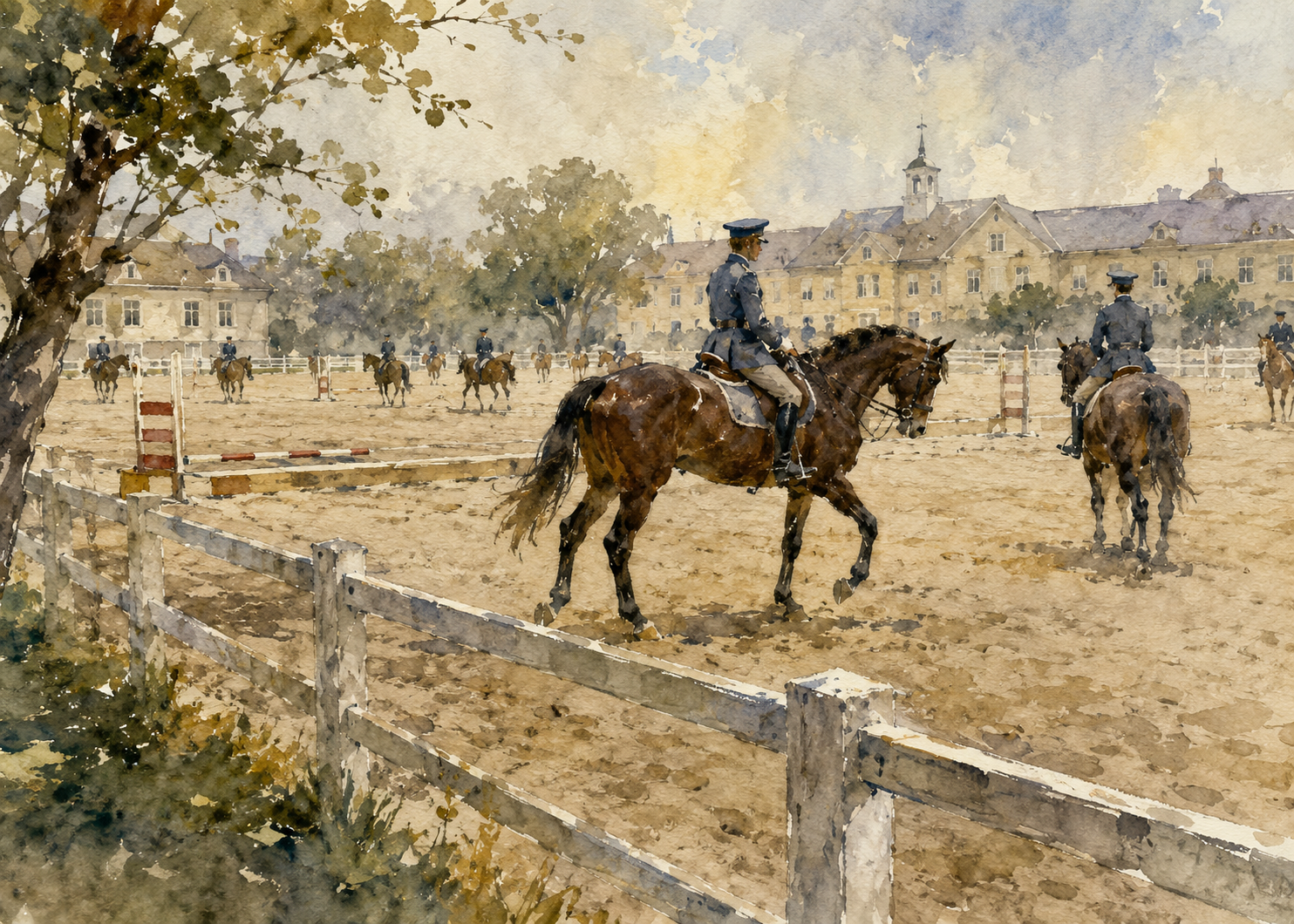
1. Introduction This exceptionally delicate watercolor painting depicts cavalry soldiers practicing horsemanship in a spacious riding arena. The central equestrian figure serves as the emotional anchor, establishing a sense of order and quiet discipline. This essay analyzes the transparency of the medium and the harmony within the composition. 2. Description In the center, a soldier in a blue uniform rides a brown horse, moving forward with an upright posture. To his right, another rider follows, while a sturdy white wooden fence borders the left foreground. In the background, a large European-style stone building stands behind lush green trees. 3. Analysis The white fence in the foreground forms a diagonal line, guiding the viewer's eye towards the main rider. The sandy brown ground and the blue uniform create a pleasing complementary contrast that structures the space. Delicate watercolor washes replicate the light air and the vast feeling of the open arena. 4. Interpretation and Evaluation This piece transcends ordinary military documentation by capturing the elegant union between rider and horse. The vivid blue uniform against the soft, muted background symbolizes the coexistence of human order and natural tranquility. The superb control of the washes demonstrates an exceptional level of technical skill and aesthetic judgment. 5. Conclusion While the peaceful atmosphere initially calms the mind, a deeper view reveals the strong anatomy of the horses. This balance of softness and precision enhances the narrative conviction of the entire scene. Ultimately, this masterpiece remains highly valuable, showcasing the rich expressive potential of the watercolor medium.
 The Charge of Honor
 Silent Honor in Steel
 Splash of Triumph
 Awakening in the Mist
 Trust in Motion
 Moment of Unyielding Focus
 Two Hearts, One Rhythm
 The Silence We Share
 Two Hearts, One Leap
 The Threshold of Quiet Prayer
 Before the Dust Rises
 Choreography of Trust