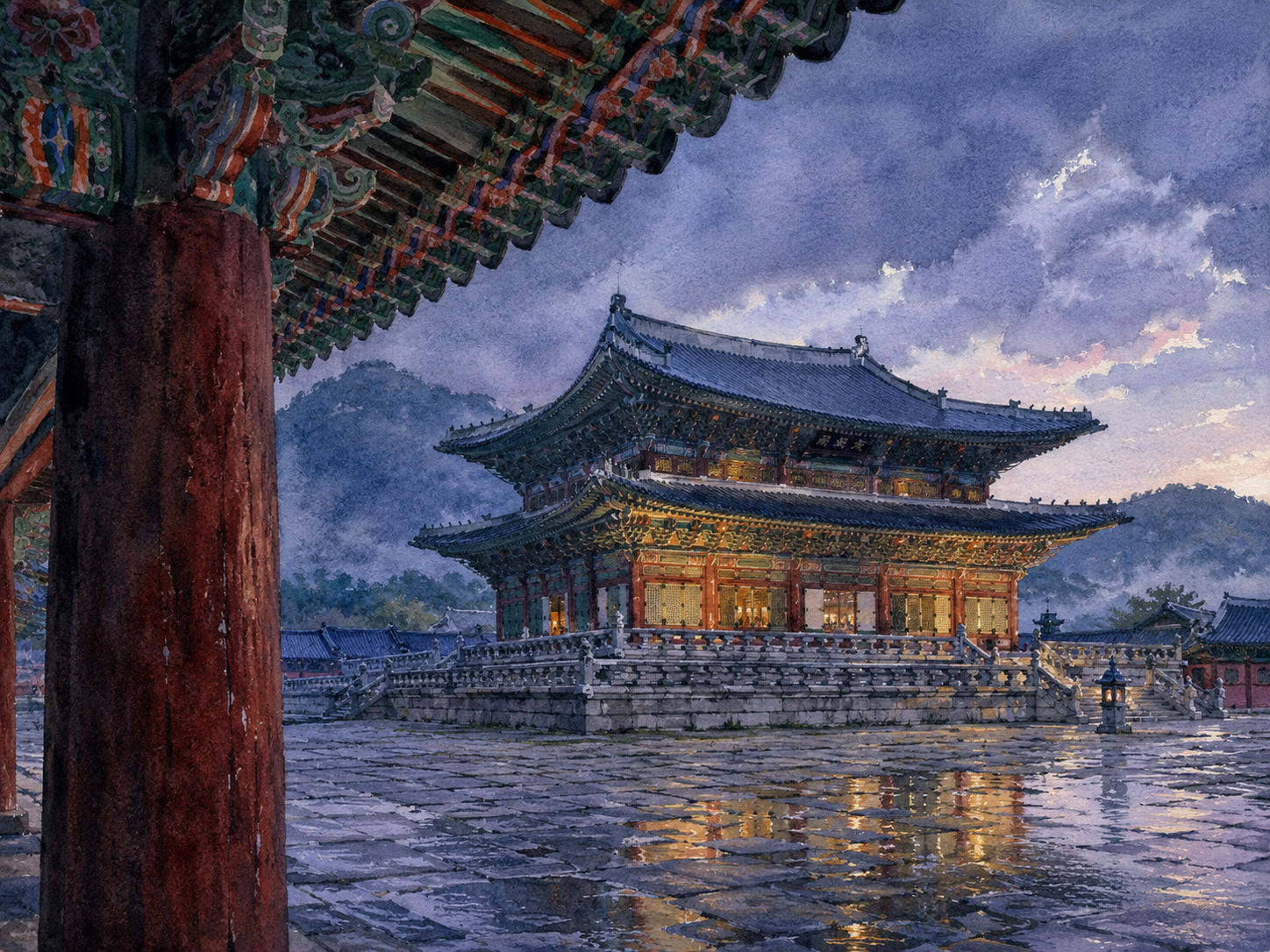
Whispers of a Thousand Years in the Rain
Critique
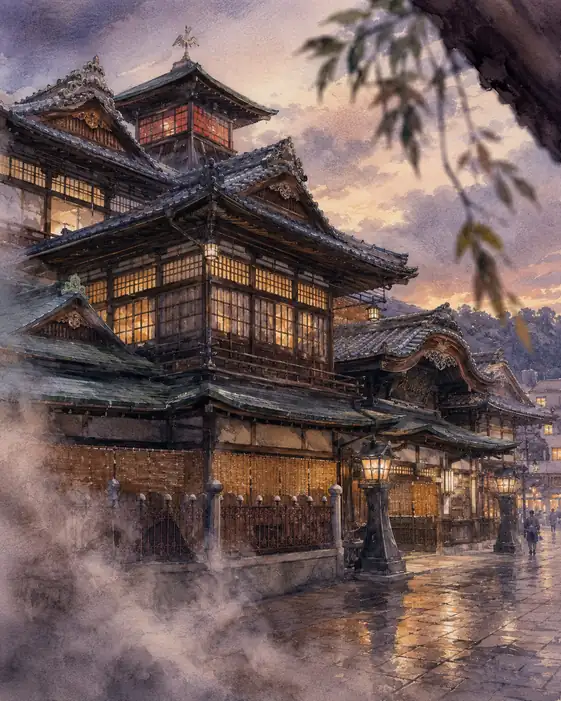
1. Introduction This watercolor painting exquisitely depicts a traditional East Asian palace architecture with a refined touch. The damp air after a fresh rainfall and a solemn silence enhance the spatial depth of the entire scene. A gentle twilight light beautifully accentuates the majestic structure, inviting viewers into a peaceful historical journey. 2. Description In the center of the canvas, a grand wooden palace stands elegantly with elaborate double-tiered roofs. On the front left, a thick vermilion pillar and colorful painted eaves are boldly positioned to frame the view. Warm orange lights glow from the windows, casting beautiful reflections onto the wet stone courtyard below. 3. Analysis The prominent foreground elements serve as a natural frame that effectively guides the viewer’s eye toward the main building. The vast horizontal expanse of the wet courtyard perfectly balances the strong vertical lines of the architectural columns. A stark color contrast between the deep blue surroundings and the warm interior light creates a captivating focal point. 4. Interpretation and Evaluation The artwork successfully captures a harmonious moment where cultural heritage and natural elements peacefully coexist. The delicate reflections on the wet cobblestones evoke a sense of quiet solitude and accumulated history. The artist's precise execution and superb light control demonstrate an exceptional level of aesthetic accomplishment. 5. Conclusion Although initially overwhelmed by the grand palace, one is gradually drawn to the profound tranquility of the surrounding nature. This lyrical interplay of light, water, and shadow leaves a deeply comforting impression. The silent wooden structure stands as a powerful symbol of timeless beauty transcending the relentless flow of time.
Same Subcategory
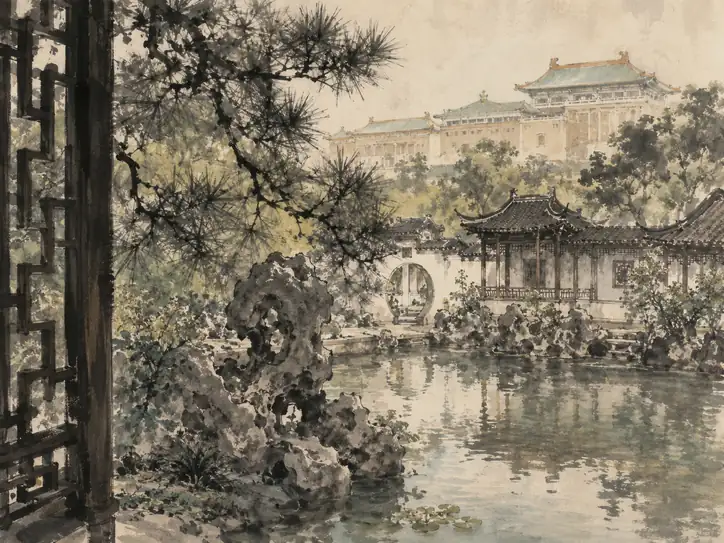 A Window into Serenity
Similar Artworks
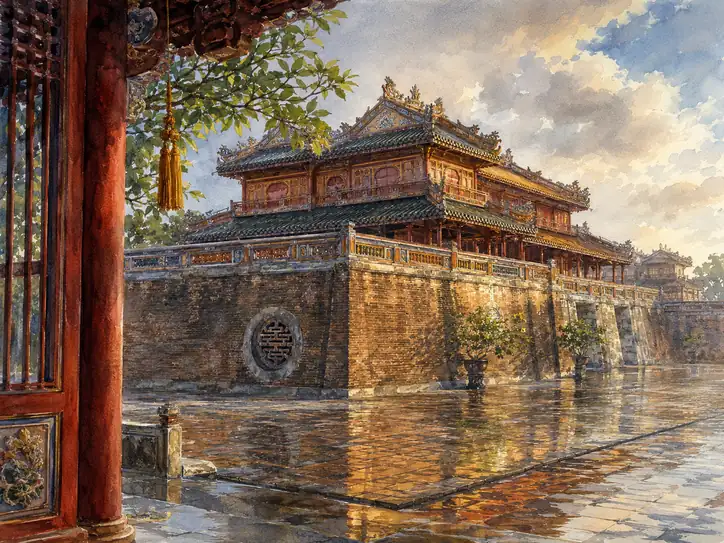 Reflections of an Imperial Dream
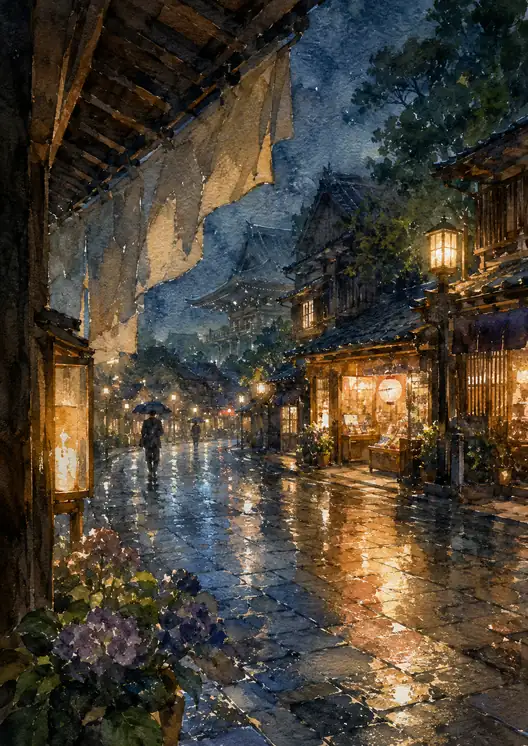 The Quiet Road Home under the Rain
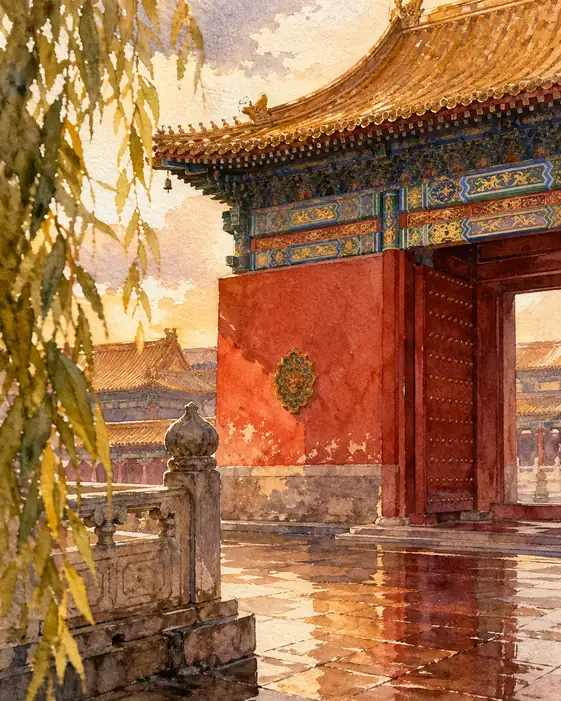 Echoes of Crimson After the Rain
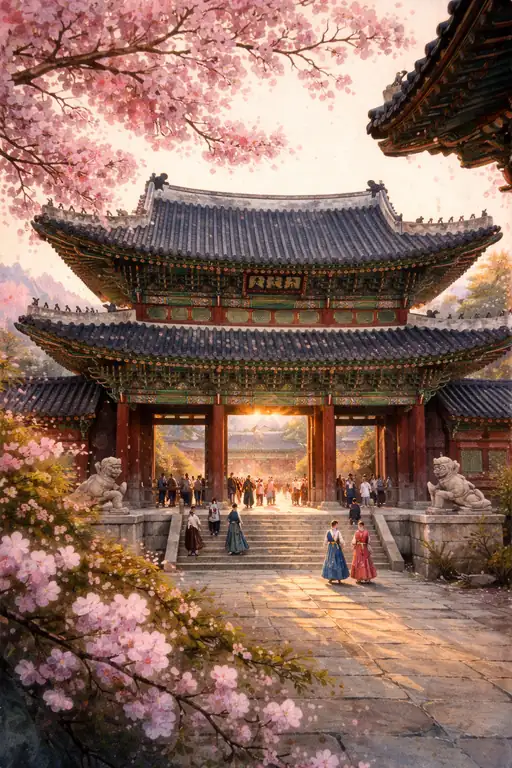 Spring Steps at the Ancient Gate
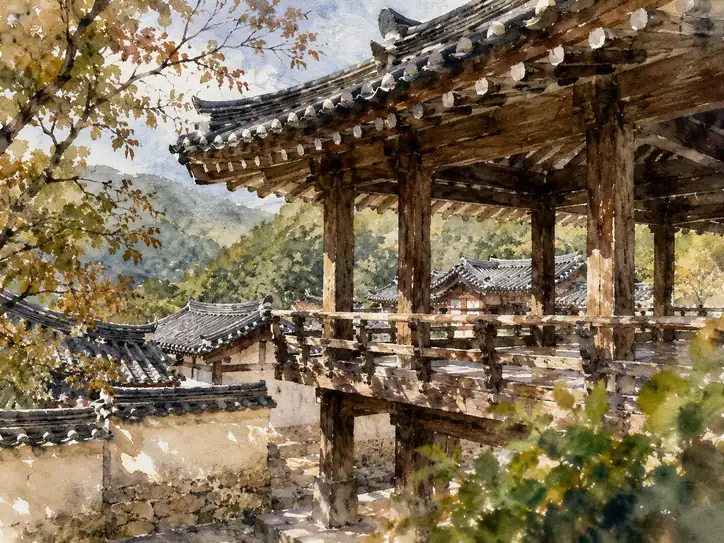 Serene Sanctuary of Autumn
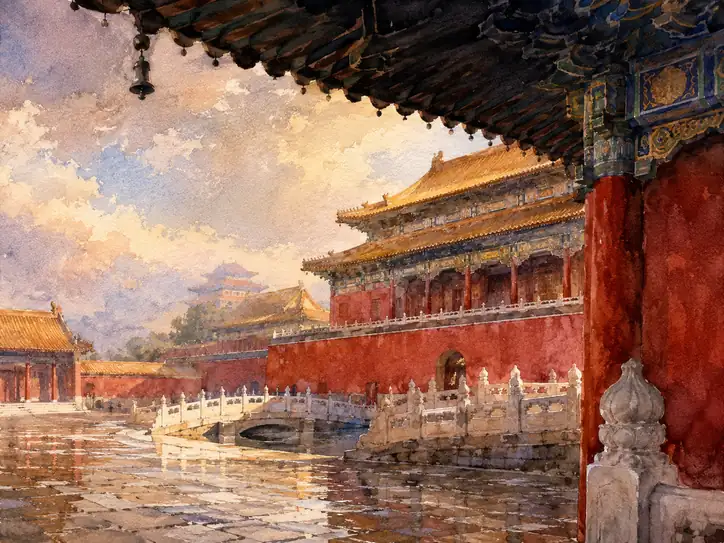 Where the Rain Whispered Gold
 Whispers of the Twilight Spring
 Sun-Drenched Memories of the Old Street
 Where Memories Walk at Sunset
 Timeless Serenity of the Floating Pavilion