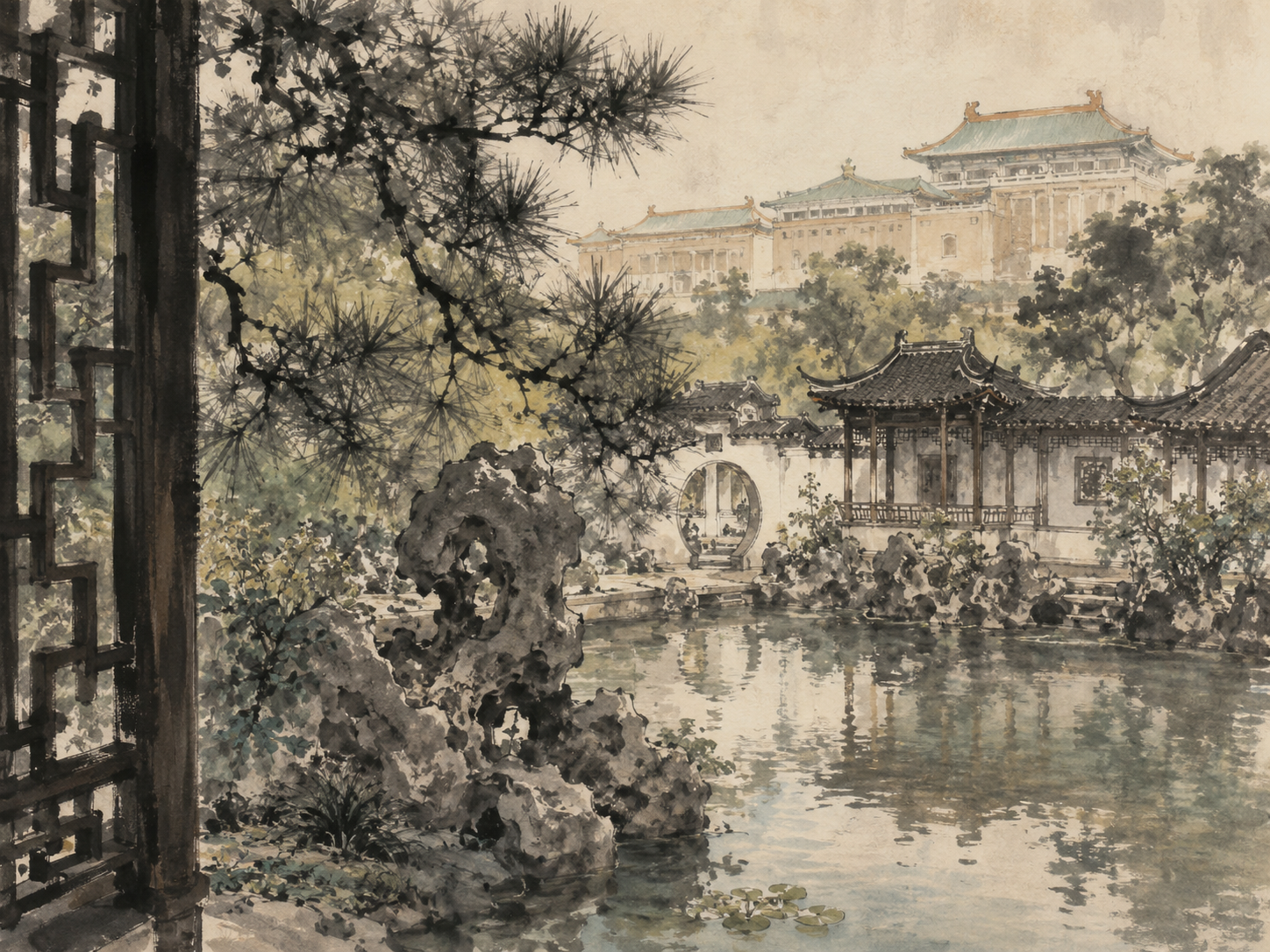
A Window into Serenity
Critique
1. Introduction This watercolor painting depicts a waterside garden with palace-like architecture receding into mist. A lattice window and pine branches quietly frame the foreground, while a pavilion and ornamental rocks shape the pond into a layered garden space. Pale ink-like tones and soft greens make the distant buildings appear to float beyond the haze. Through the harmony of nature and architecture, the work expresses the poetic stillness of a classical garden. 2. Description On the far left, a dark wooden screen with a lattice pattern serves as a frame. Beside it, a textured rock stands by the pond, while pine branches stretch from the top left. Across the water, a white-walled corridor with a circular gate is reflected in the pond. On the hill, a grand palace rises. 3. Analysis The composition is structured in three layers: the foreground frame, the middle pond, and the distant palace. This spatial layering generates a profound sense of depth and order. The precise ink lines of the pine needles contrast with the soft washes of the sky. The earthy color scheme unifies the entire scene. 4. Interpretation and Evaluation The painting beautifully embodies the concept of "borrowed scenery" through calculated perspective. The meticulous detail in the line drawing and the watercolor reflections show outstanding technical command. The serene atmosphere invites the viewer into a meditative experience. This creative fusion of Eastern subject and Western light is highly praised. 5. Conclusion At first glance, this work seems like a historic landscape, but it gradually reveals an intricate harmony of forms. The fusion of natural elements and human architecture evokes a universal peace. The delicate balance of sharp ink lines and soft washes offers lasting visual enjoyment. It is an exceptional masterpiece of serenity.
Same Subcategory
 Reflections of an Imperial Dream
 Whispers of a Thousand Years in the Rain
Similar Artworks
 Echoes of the Golden Sanctuary
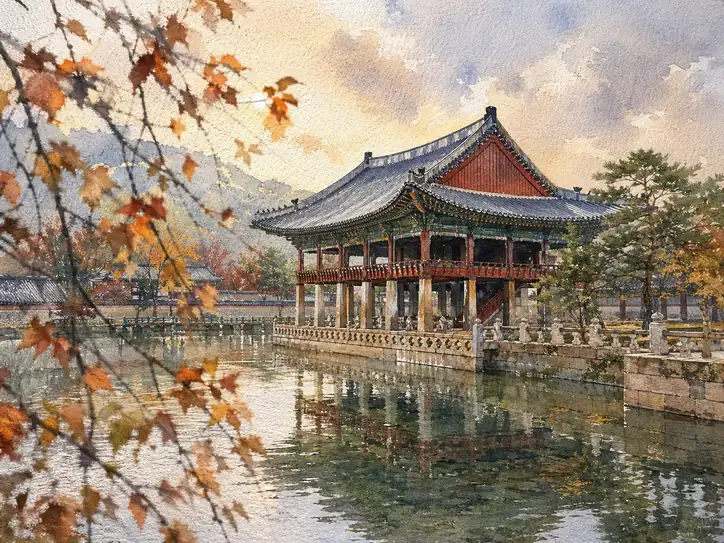 Golden Leaves, Timeless Waters
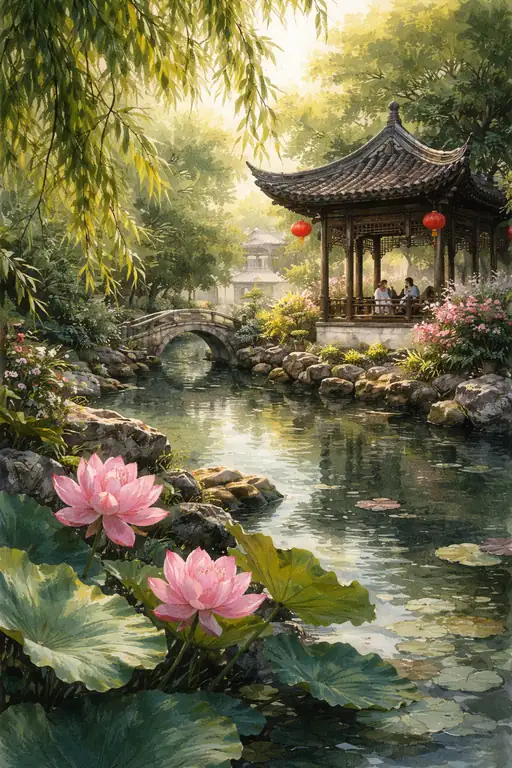 Tranquility in Bloom: The Lotus Pavilion
 Eternity in the Golden Silence
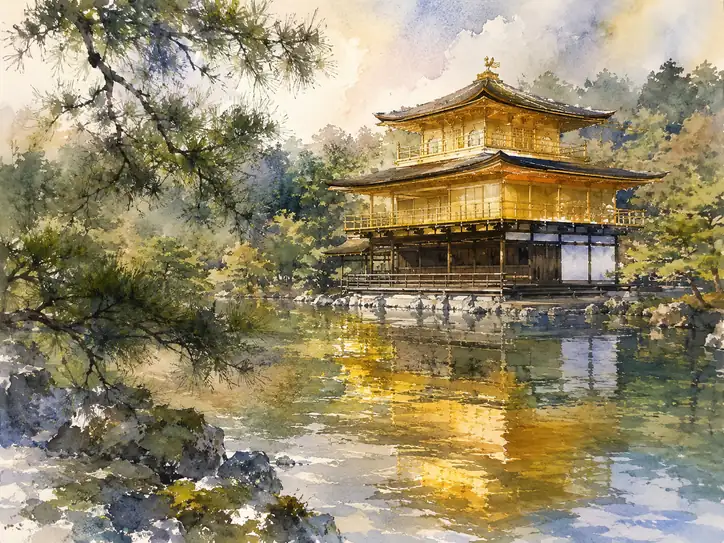 Ripples of Eternal Gold
 Whispers of the Water Court
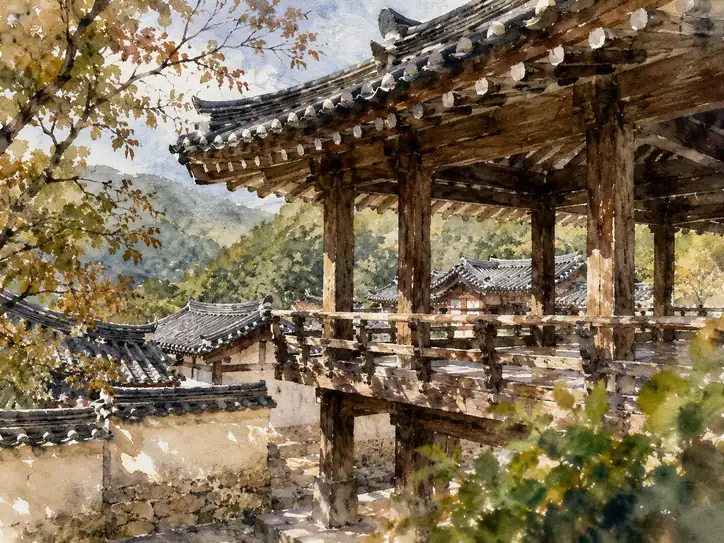 Serene Sanctuary of Autumn
 Where Autumn Stands Still
 The Waltz of Sakura and Stone
 Echoes of Crimson After the Rain