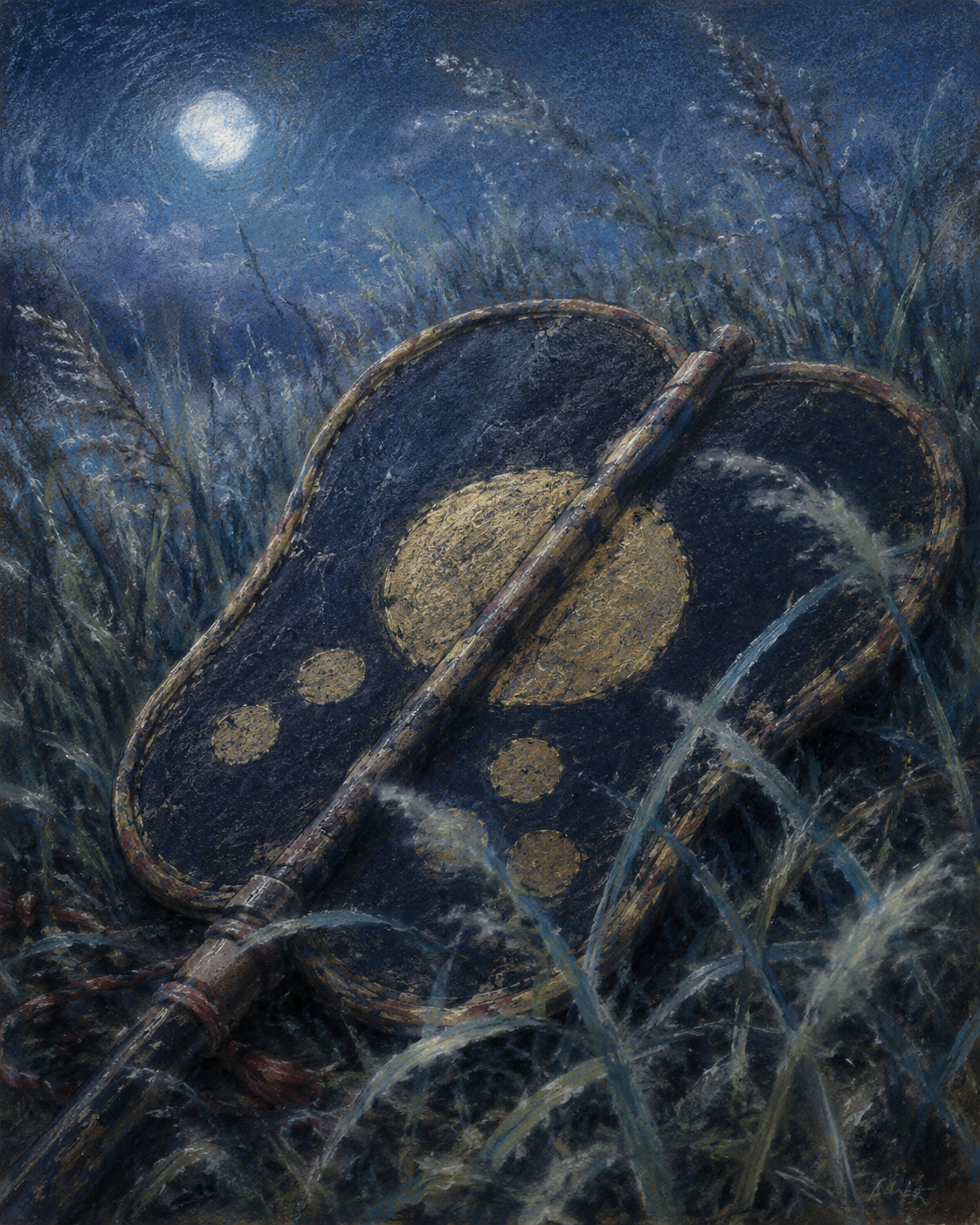
Rust of Forgotten Glory
Critique
1. Introduction This symbolic painting depicts a war fan lying in a moonlit field. Tilted among the grasses, the fan is illuminated by the full moon and blue night air, giving it the quiet presence of an object left behind. Its dotted pattern and curved outline glow faintly against the dark vegetation. Without showing battle directly, the work uses the abandoned implement and night sky to express melancholy over passing time. 2. Description The foreground features a black lacquered wooden fan decorated with golden sun and moon patterns, lying diagonally among wild grasses. Tall, delicate autumn weeds sway gently, partially obscuring the object. In the upper left background, a bright full moon shines softly through scattered clouds, casting a cool light over the entire landscape. 3. Analysis The color palette combines deep midnight blues with the fan's black surface and bright golden emblems. Cool moonlight diffuses across the scene, creating delicate highlights along the edges of the wild grasses. The diagonal handle of the fan establishes a strong compositional line, while the coarse, sand-like texture adds a stony, ancient feel to the canvas. 4. Interpretation and Evaluation By placing a symbol of military command in a neglected natural setting, this artwork poetically expresses the vanity of human endeavors. The sophisticated paint texture and subdued color choices elevate the composition from a simple object study to a deeply spiritual reflection. The contrast between permanent gold emblems and fragile weeds demonstrates excellent technical mastery and creative depth. 5. Conclusion Although initially appearing as a realistic depiction of an artifact, closer observation invites the viewer into a vast, meditative nocturnal space. The layers of textured paint silently narrate the hidden stories of the past. Ultimately, this masterpiece leaves the viewer with a deep sense of peaceful contemplation and quiet emotional resonance.
Same Subcategory
 The Vestige of Valor
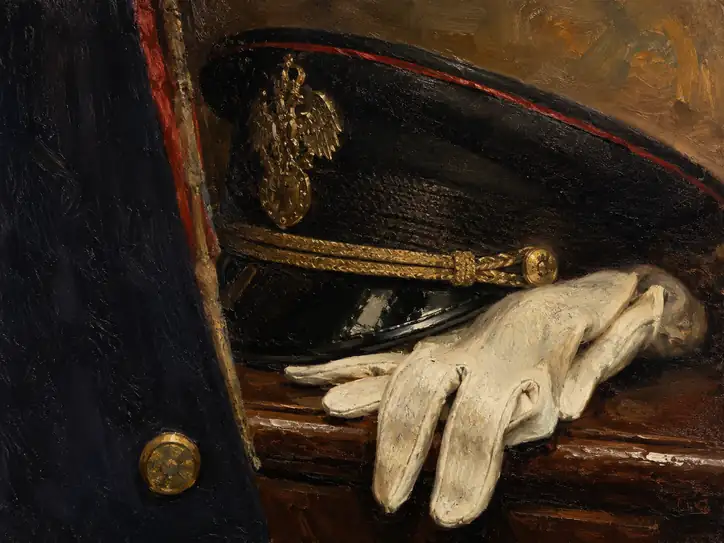 The Silent Rest of Duty
Similar Artworks
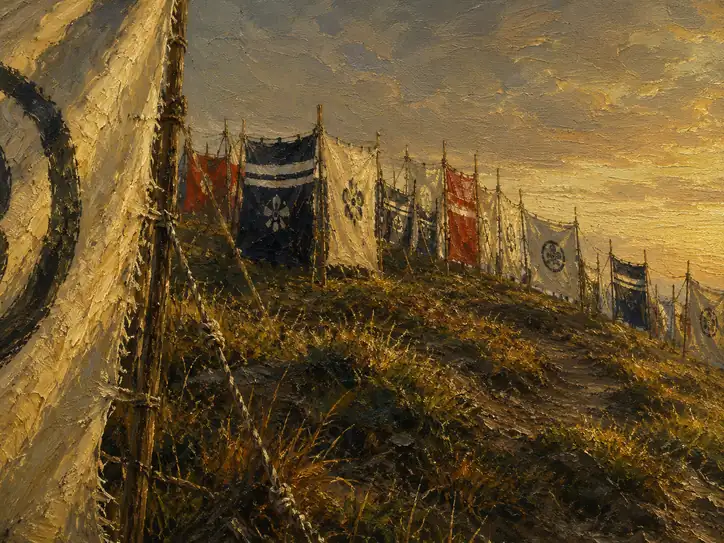 Echoes of Silent Vows
 Fluttering Shadows of a Fleeting Dream
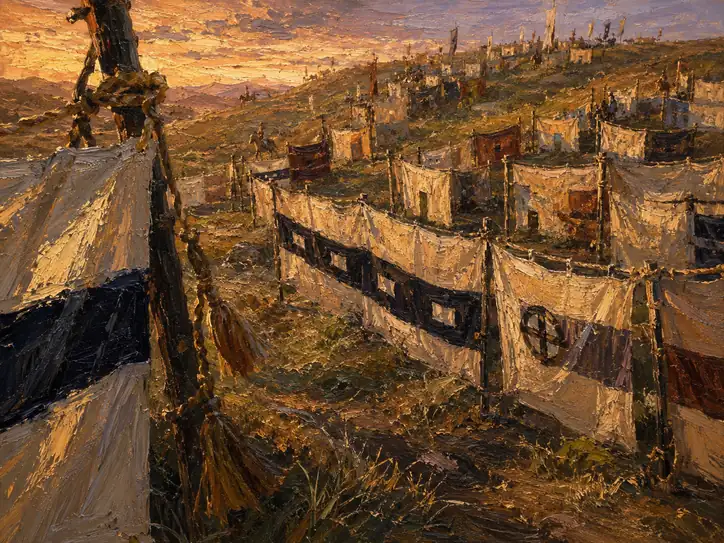 Pride of the Crest in the Golden Dusk
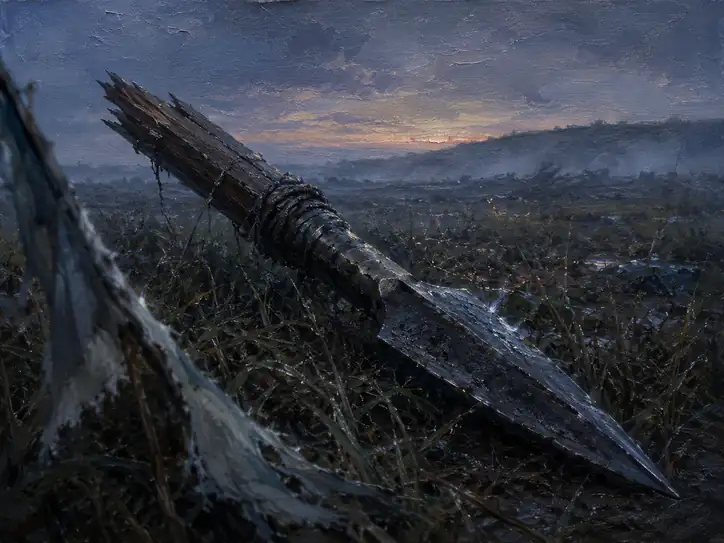 The Silent Requiem of a Broken Dream
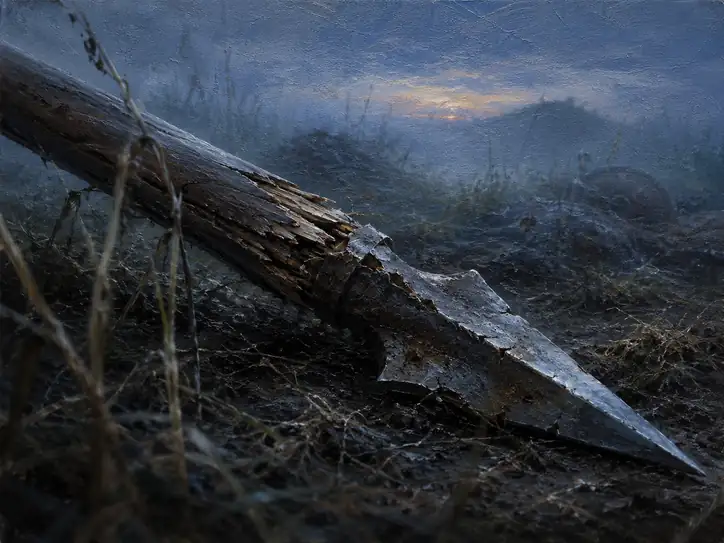 Where Glory Whispers to the Dust
 The Song of the Valiant Banner
 The Silent Cannon and the Quiet Sea
 The Sentinel of Crimson and Sky
 Sentinel of the Golden Sea
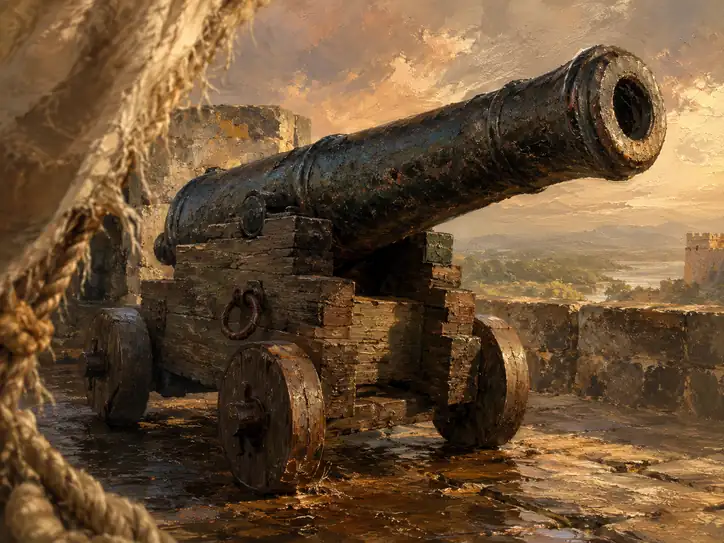 The Silent Sentinel