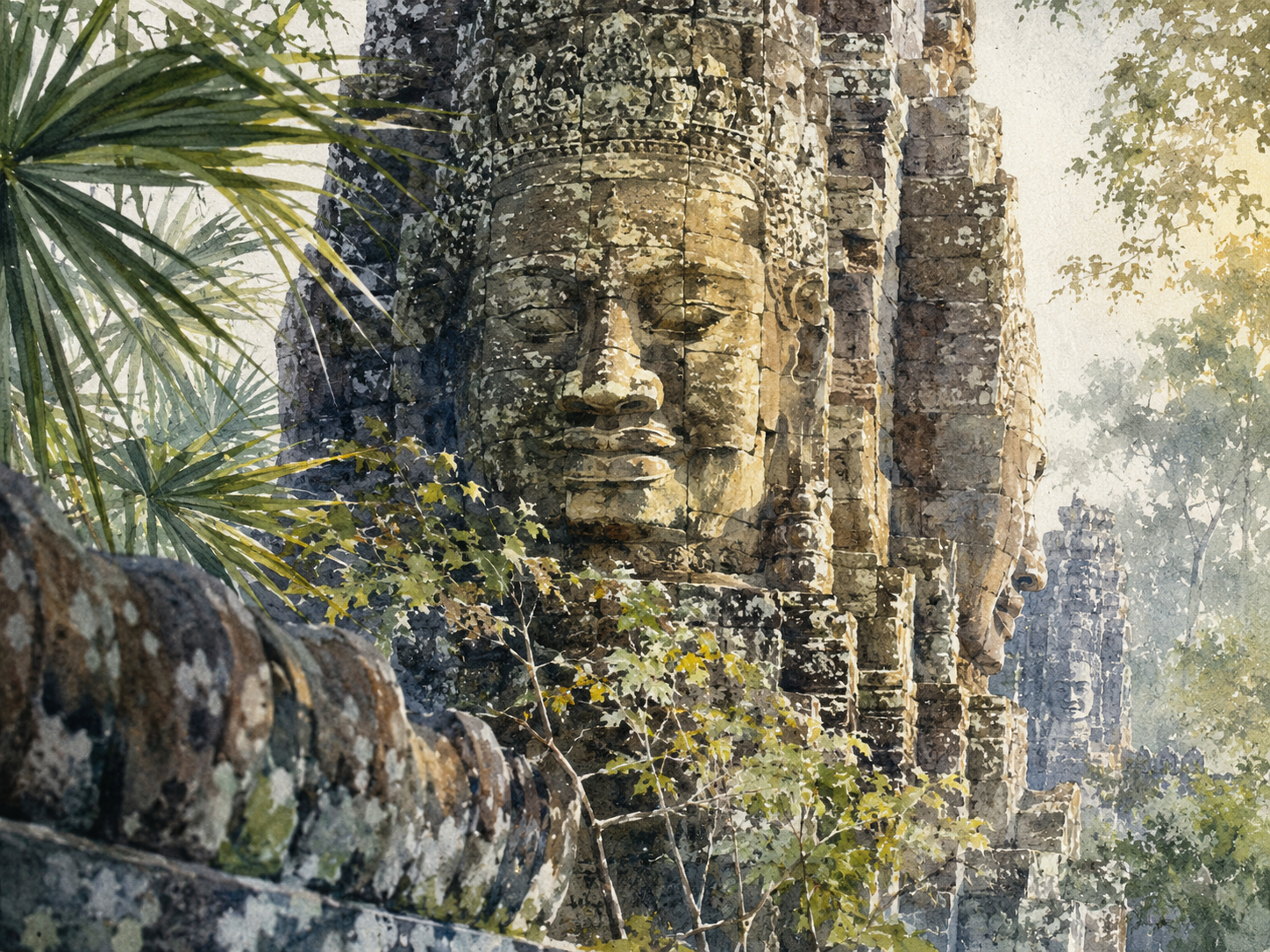
The Smile that Outlived Time
Critique
1. Introduction This watercolor-style painting depicts a monumental stone Buddha face emerging from dense greenery. Mossy stone surfaces and surrounding leaves catch soft light, giving the calm central expression a profound stillness. The remaining masonry and plant shadows around the face suggest a long overlap of sacred structure and natural growth. Moist air and pale color draw out the quiet mystery of a place of prayer. 2. Description The left foreground displays sharp palm leaves framing a weathered stone wall structure. In the center, the prominent, mossy stone face features deep cracks and signs of erosion from centuries of exposure. The right background reveals soft sunlight filtering through dense tree leaves, with another distant stone face fading into the mist. 3. Analysis The color palette relies on natural tones, contrasting the warm beige and gray stones with vibrant green foliage. Gentle light from the top right casts soft shadows on the left side of the face, enhancing its three-dimensional quality. The diagonal layout of the monuments creates depth, while delicate watercolor washes beautifully mimic the weathered rock textures. 4. Interpretation and Evaluation This artwork successfully captures the quiet dignity of ancient faith harmonizing with nature over centuries. Through its fine textures and soft lighting, the painting visualizes the spiritual weight and compassionate expression of the iconic sculpture. The serene smile evokes a profound peace, showcasing the artist's high technical skill and thoughtful composition. 5. Conclusion Initially appearing as a simple representation of ruins, closer view reveals a silent dialogue between the stone face and the living forest. The contrast between permanent stone and fleeting light symbolizes the eternity of time. Ultimately, this masterpiece offers the viewer a deeply meditative space and an immersive historical experience.
Same Subcategory
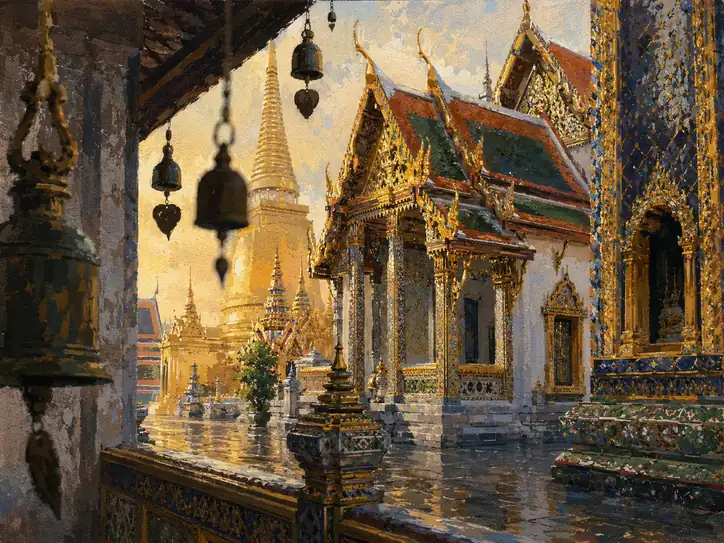 Echoes in the Rain-Washed Sanctuary
Similar Artworks
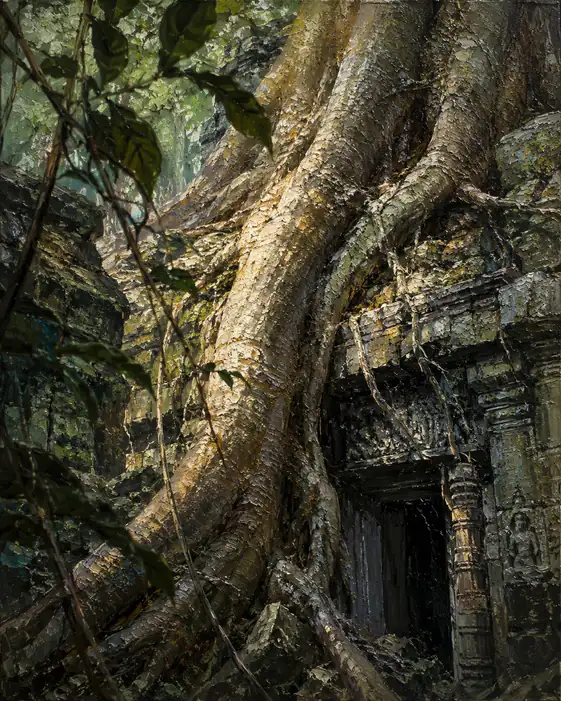 Conquest of Silent Time
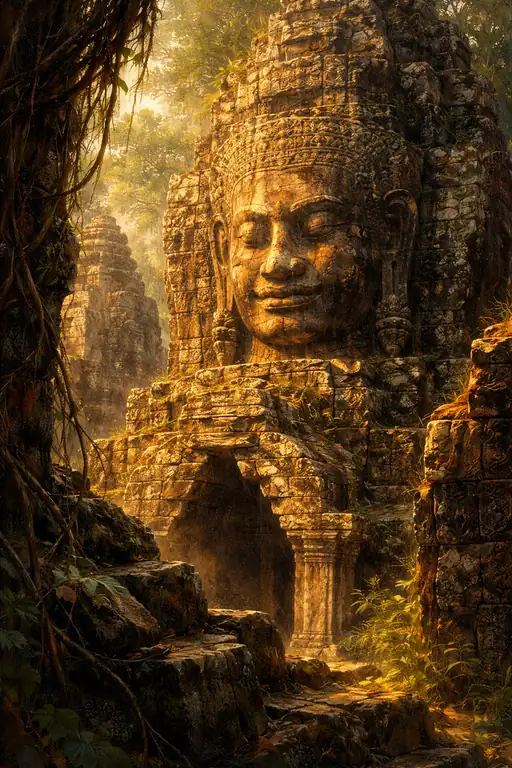 The Silent Smile of Ancient Stone
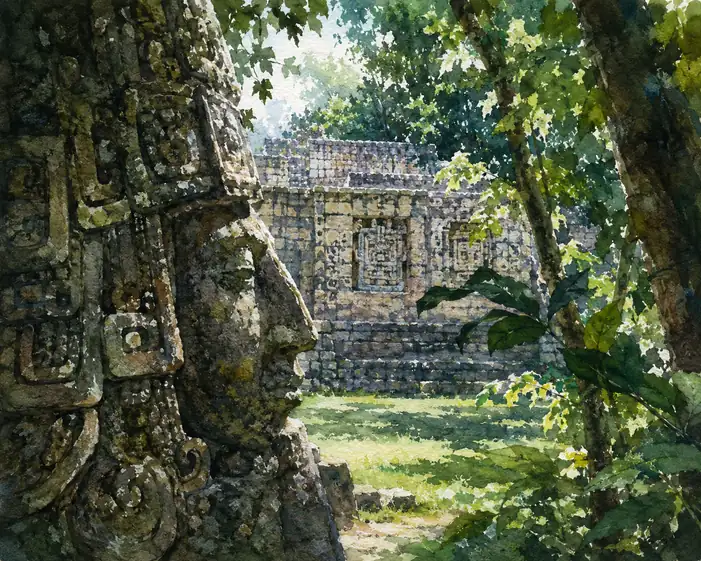 The Silent Profile Dreaming of Eternity
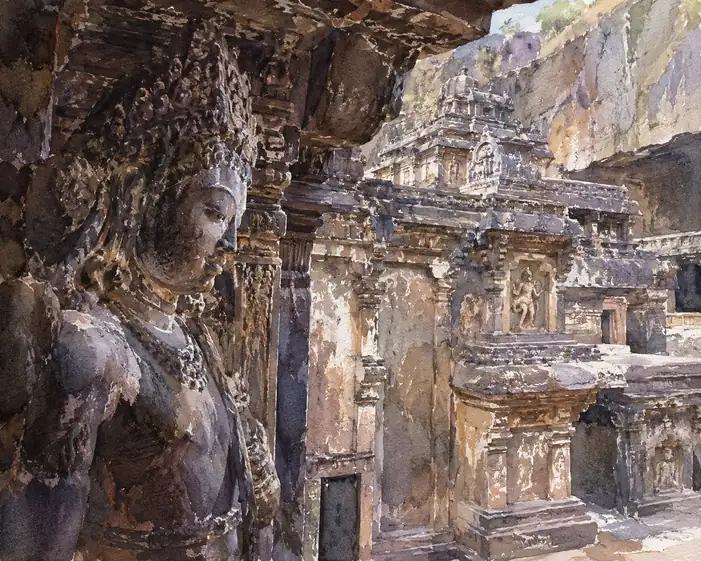 Dialogues in Shadow and Light
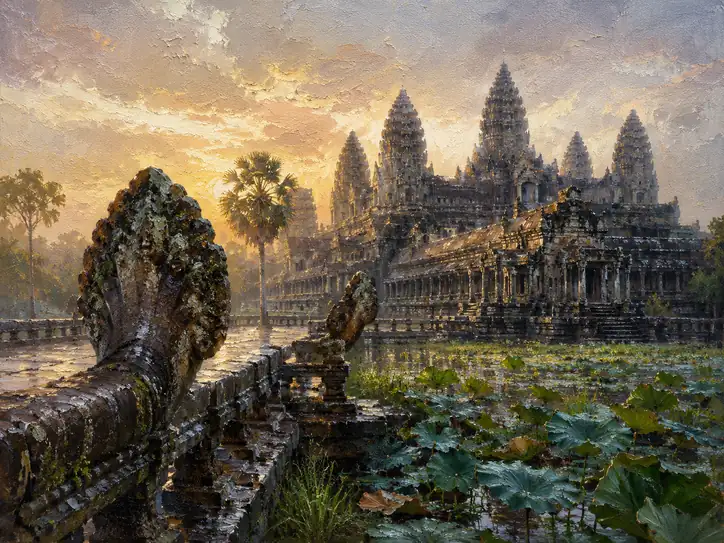 Whispers of the Golden Ruin
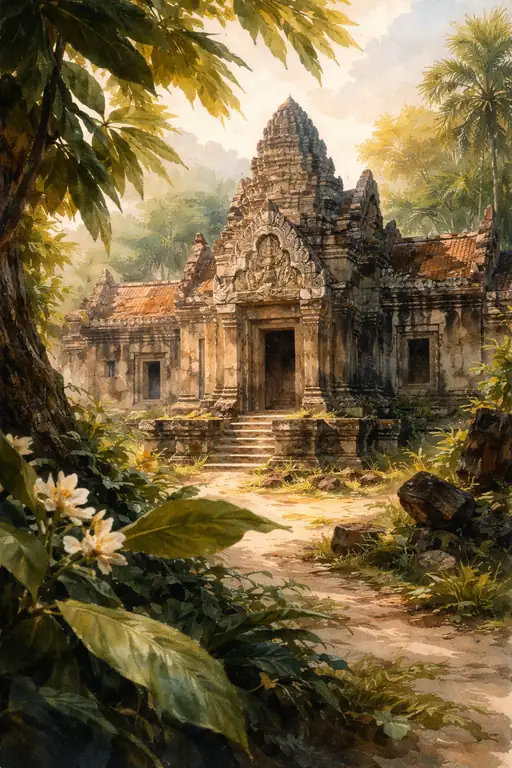 Echoes of the Khmer in the Emerald Jungle
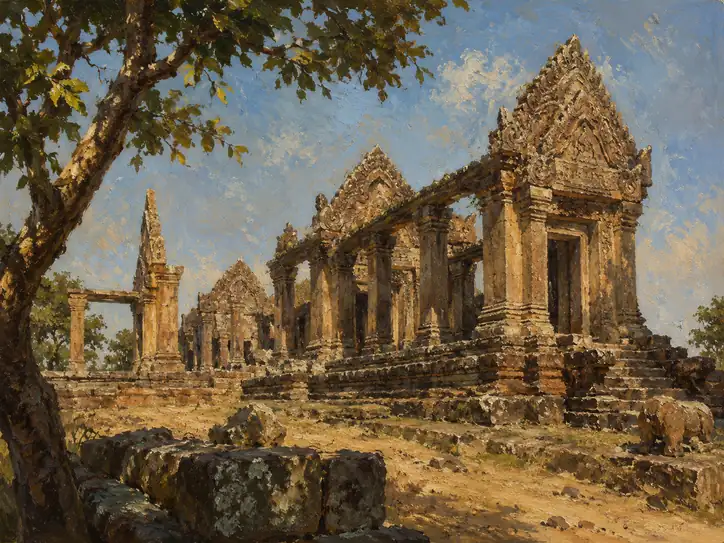 Eternity Under the Blue Vault
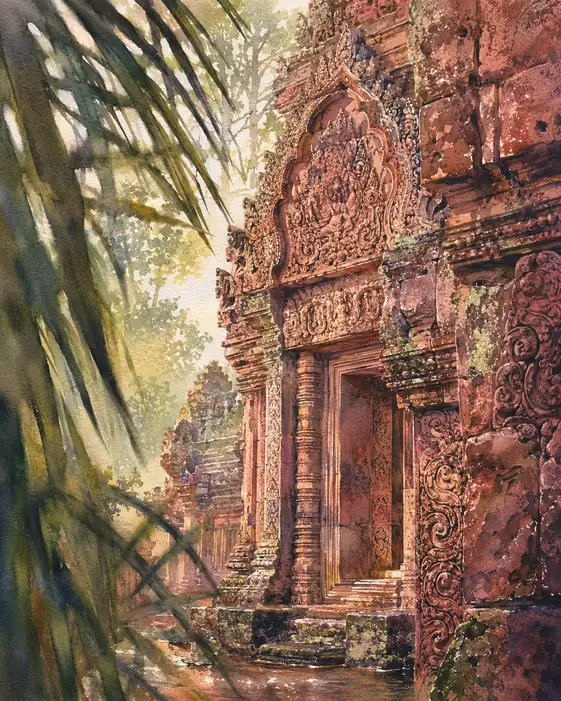 The Red Portal of the Jungle Depth
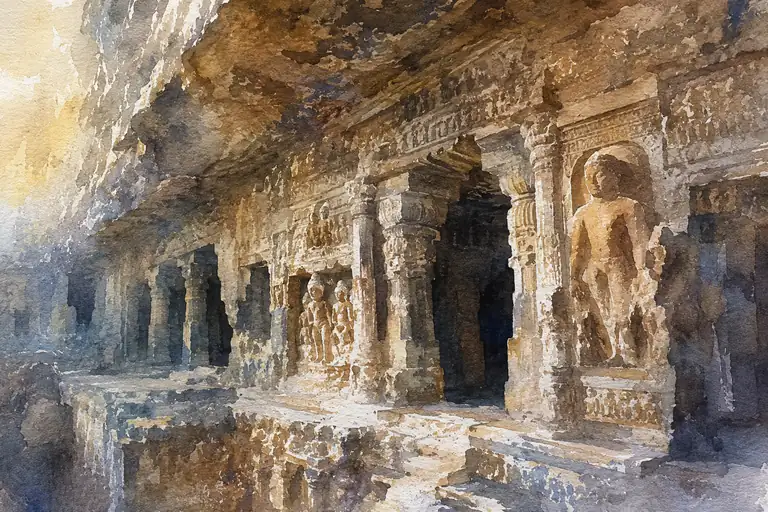 Whispers from the Sacred Cave
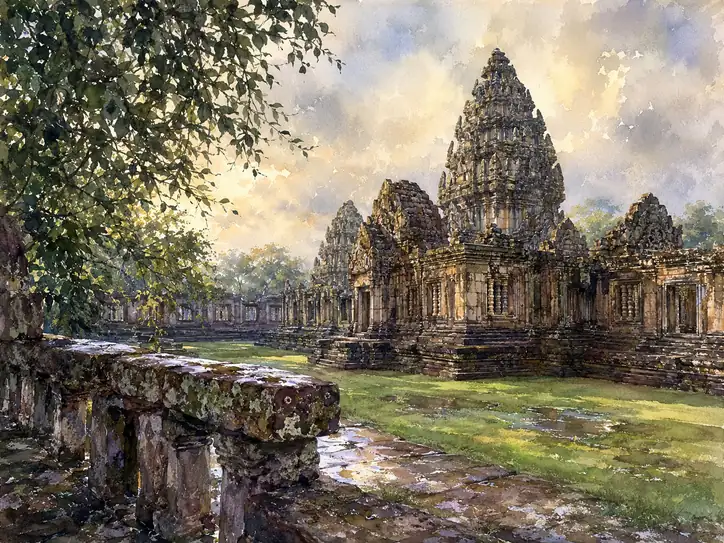 Where History Sleeps in Green