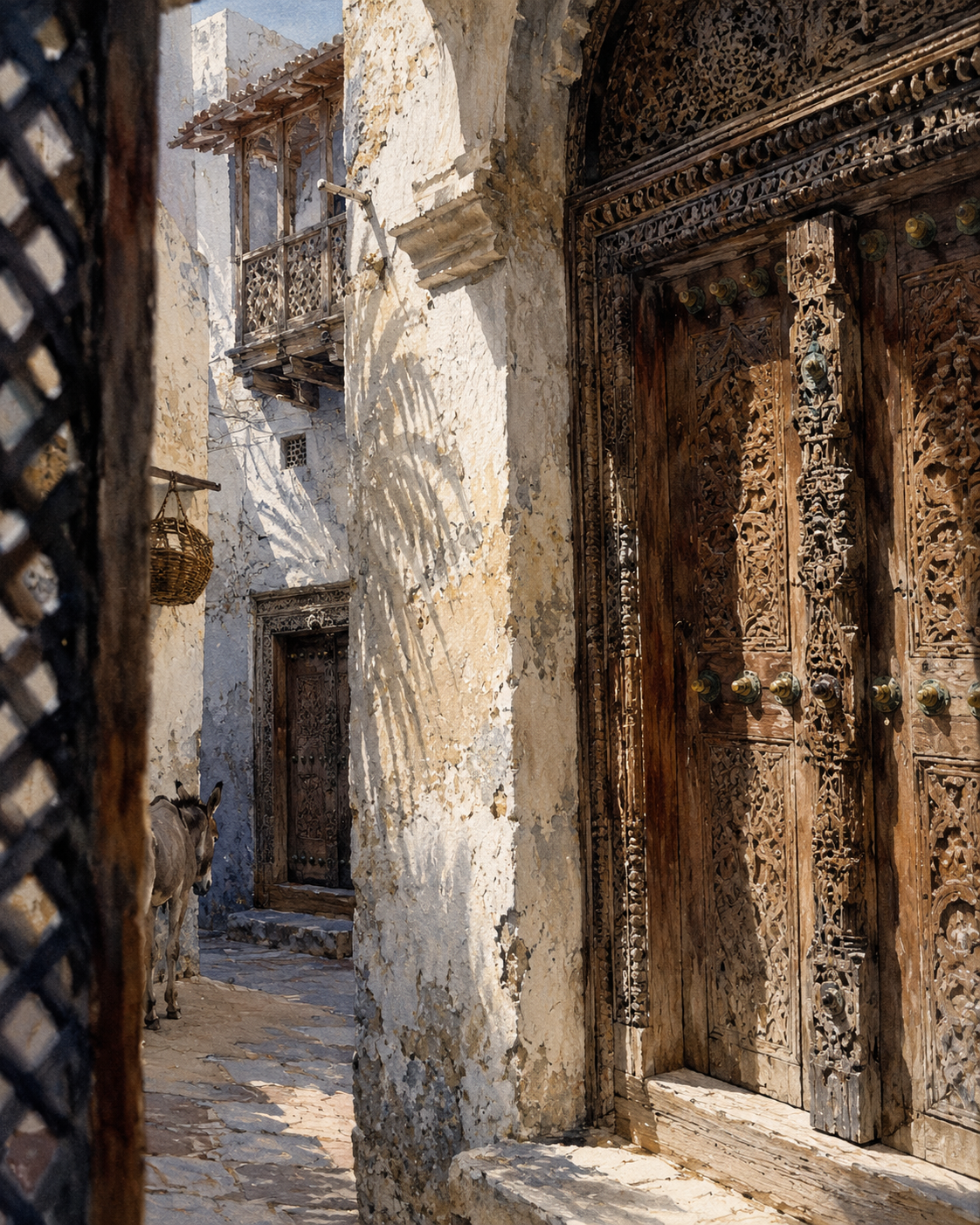
Quiet Passage of Time
Critique
1. Introduction This watercolor-style painting captures a quiet corner of an ancient street reminiscent of the Middle East. The dramatic contrast between strong sunlight and deep shadows lends a theatrical quality to the serene environment. Viewers are invited into a sensory experience of historical space. This artwork successfully highlights a poetic moment hidden within everyday life. 2. Description In the right foreground, a massive wooden door features intricate geometric carvings that command attention. On the central plaster wall, the delicate shadow of a palm tree is softly projected. Further down the alleyway on the left, a solitary donkey stands quietly, looking toward an unseen space. In the background, a finely crafted wooden balcony is subtly rendered. 3. Analysis The defining formal characteristics of this piece are its precise line work and masterful light control. The microscopic carvings on the door are depicted with exceptional draftsmanship, avoiding flatness through subtle tonal transitions. The color palette relies on harmonious earth tones like beige and brown. Strong light accentuates the peeling textures of the plaster walls. 4. Interpretation and Evaluation Beyond recording historical architecture, this painting prompts viewers to contemplate the passage of time. The coexistence of grand traditional details and a humble animal underscores daily dignity. The extreme juxtaposition of light and shadow symbolizes transience against permanence. The technical execution shows remarkable skill in both composition and detail. 5. Conclusion While the scene initially appears simple, closer observation reveals a multi-layered history. Meticulous texture rendering and balanced colors solidify its evocative merit. The interplay of brilliant light and shadow leaves a profound, lasting impression. It is a superb masterpiece that visualizes the beauty of a tranquil urban corner.
Same Subcategory
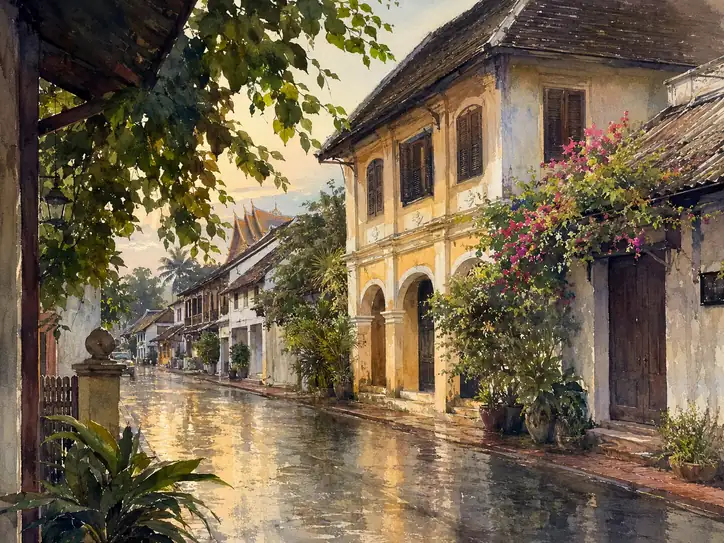 Reflections of a Silent Pulse
Similar Artworks
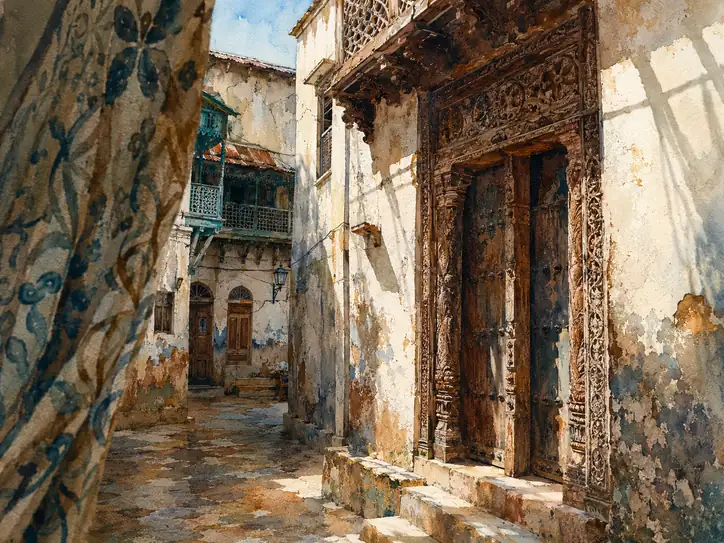 Memories Carved in Time
 Where Time Drifts Like a Breeze
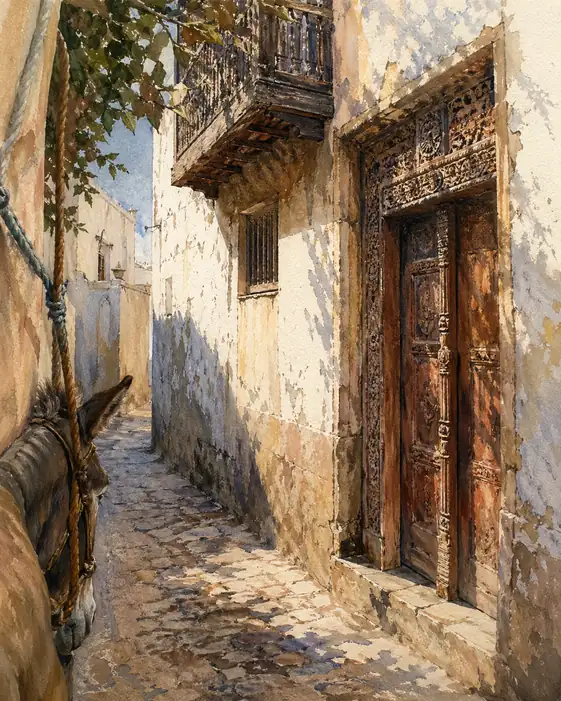 The Sunlit Silence of Yesterday
 Reflection of the Rainwashed Memories
 A Turquoise Door in the Path of the Wind
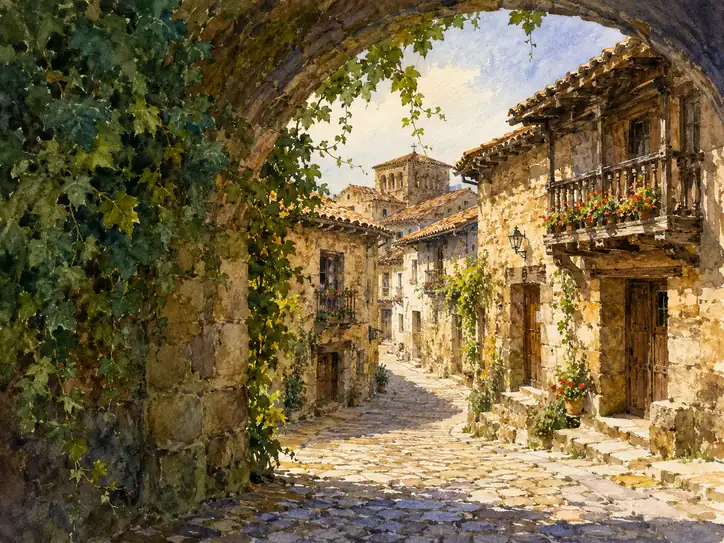 Invitation of Light: Stepping through the Ivy Arch
 Whispers of a Sunlit Memory
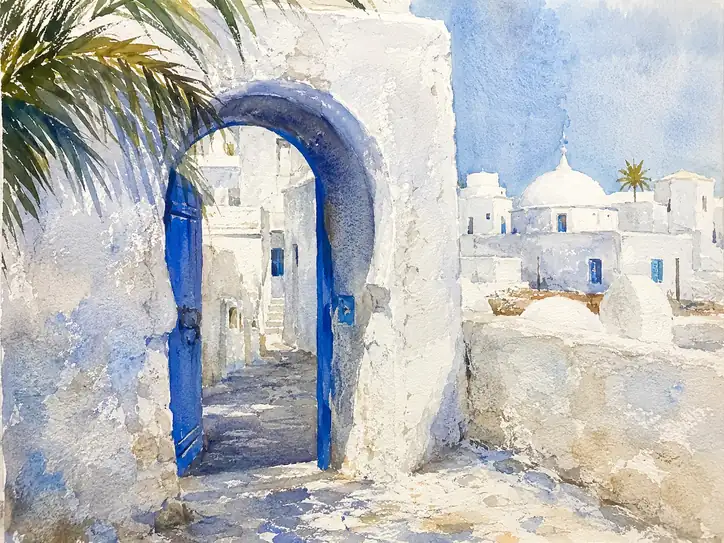 Beyond the Blue Arch
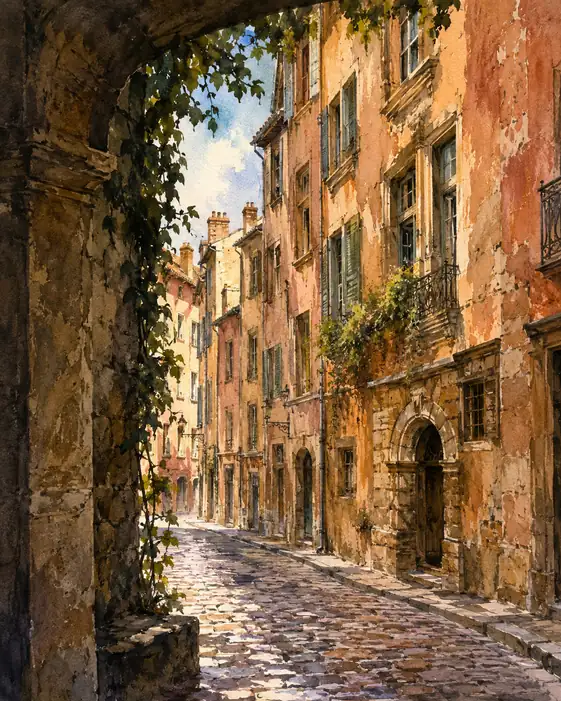 Golden Afternoon in the Mediterranean Alley
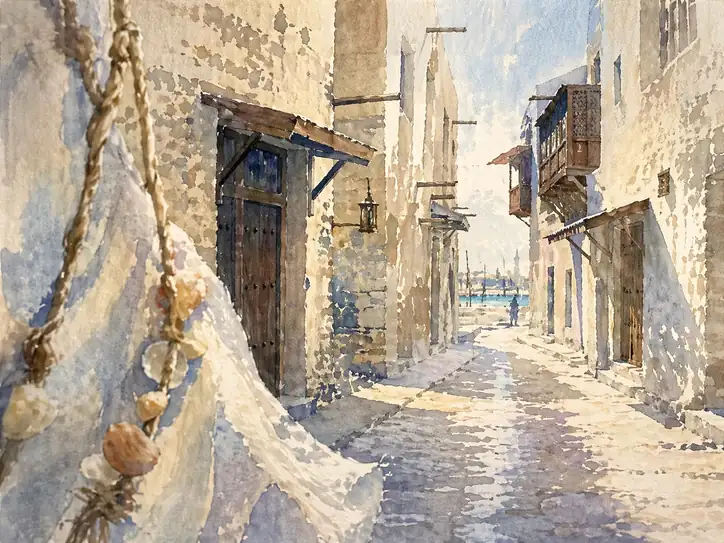 The Sunlit Passage: A Glimpse of the Harbor