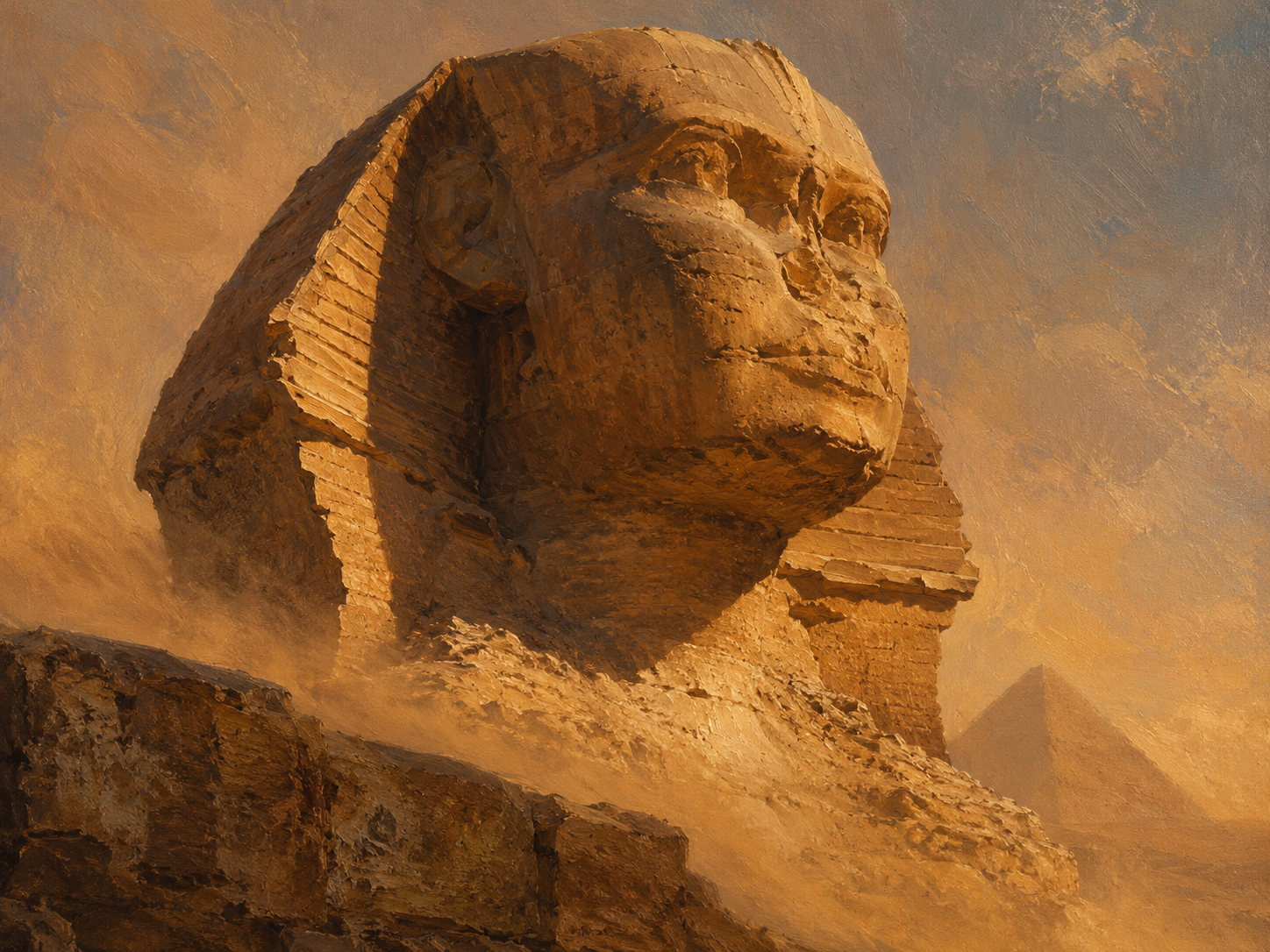
Gaze of the Silent Stone
Critique
1. Introduction This oil painting presents a dramatic depiction of the Great Sphinx of Giza standing majestically in a sandy desert under a golden sky. The artwork captures a sense of timelessness and historical grandeur through a classical painting style. It invites viewers to contemplate the enduring legacy of ancient Egypt through a warm, monochromatic color palette. 2. Description The composition is dominated by the colossal stone head of the Sphinx, viewed from a low angle to emphasize its scale. In the foreground, rough-textured stone blocks create a solid base. The background features a distant pyramid partially obscured by atmospheric haze, while swirling sand whipped by the wind creates a dynamic environment. 3. Analysis The artist uses strong, impasto brushstrokes to convey the weathered texture of the sandstone. A powerful light source comes from the left, casting deep shadows across the Sphinx’s face and creating a strong three-dimensional effect. The color scheme relies on varying shades of ochre and warm yellow, creating a harmonious and unified visual tone. 4. Interpretation and Evaluation This piece successfully evokes a feeling of mystery, highlighting the quietness of the monument against the motion of the blowing sand. The detailed rendering of the stone surfaces showcases the artist's superb handling of oil paint and texture. However, the heavy atmospheric haze slightly reduces the clarity of the background pyramid, which is a minor drawback. 5. Conclusion In conclusion, the painting beautifully captures both the physical presence and the spiritual weight of this iconic historical monument. The initial impression of a simple desert landscape transforms into a profound reflection on time and erosion. The work stands as a powerful tribute to architectural endurance against nature's elements.
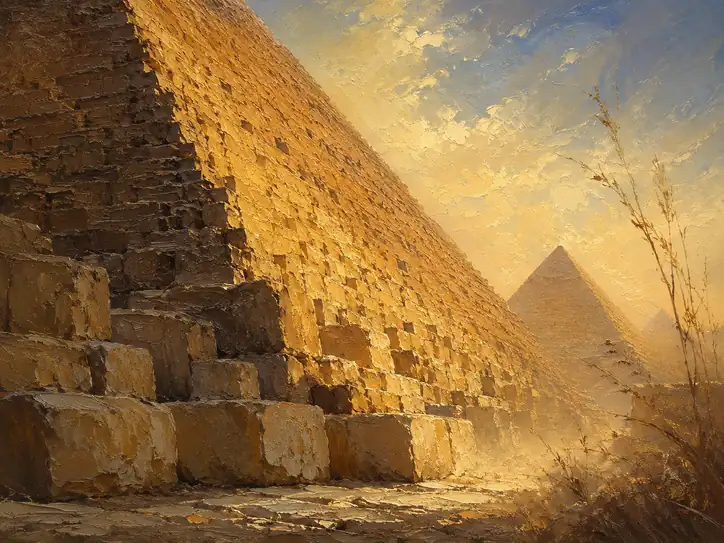 Eternity in Golden Dust
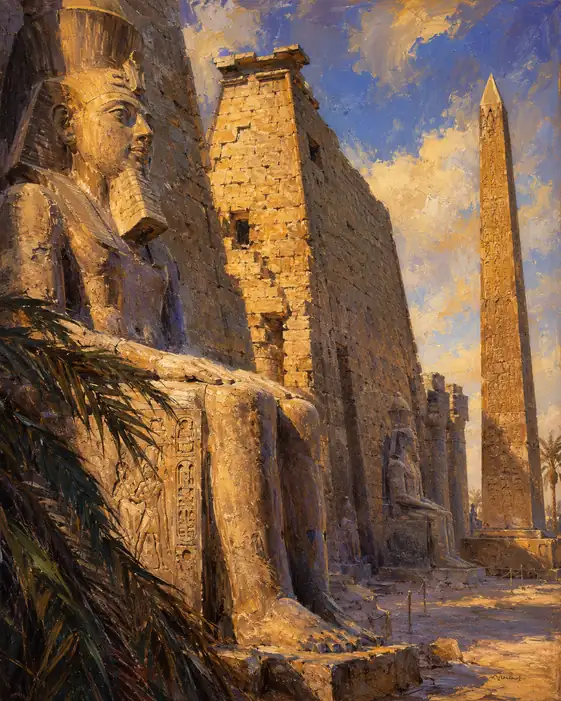 Under the Eternal Sky
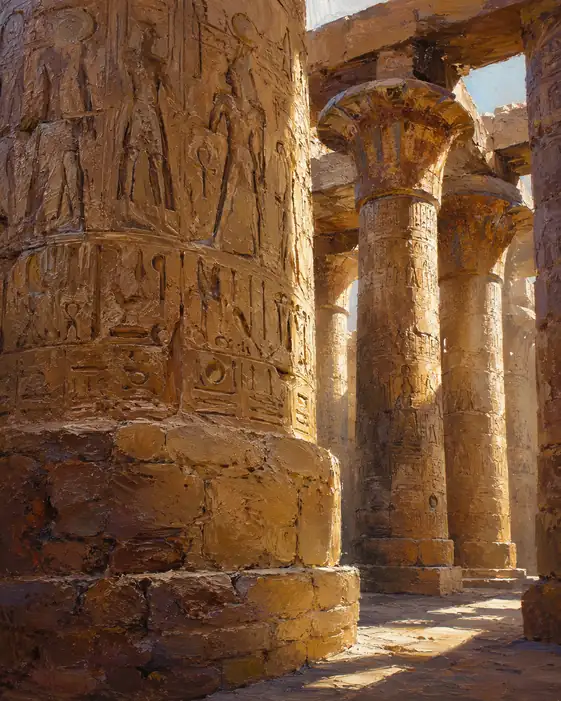 Sunlight Spun in Stone
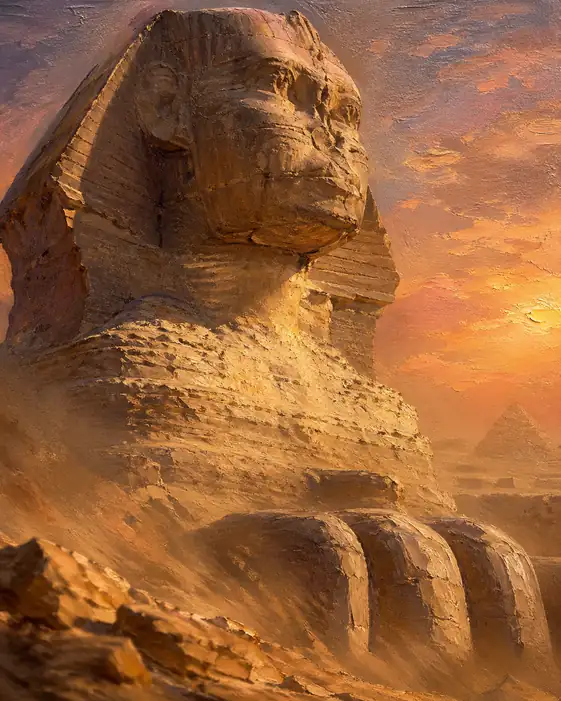 The Sun-Kissed Gaze of Infinity
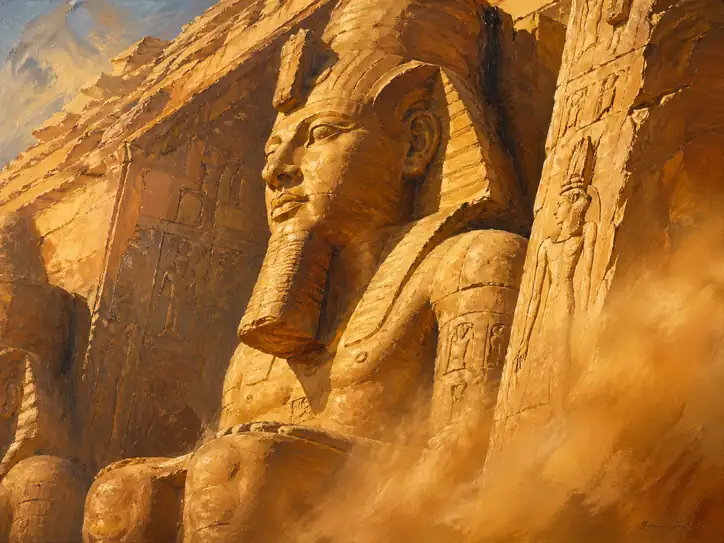 The Pharaoh's Eternal Vigil in the Storm
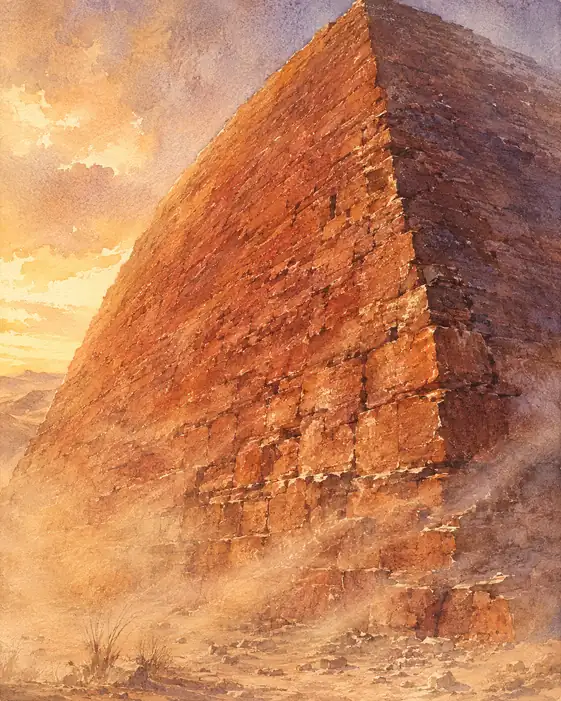 The Crimson Pillar of Sunsets
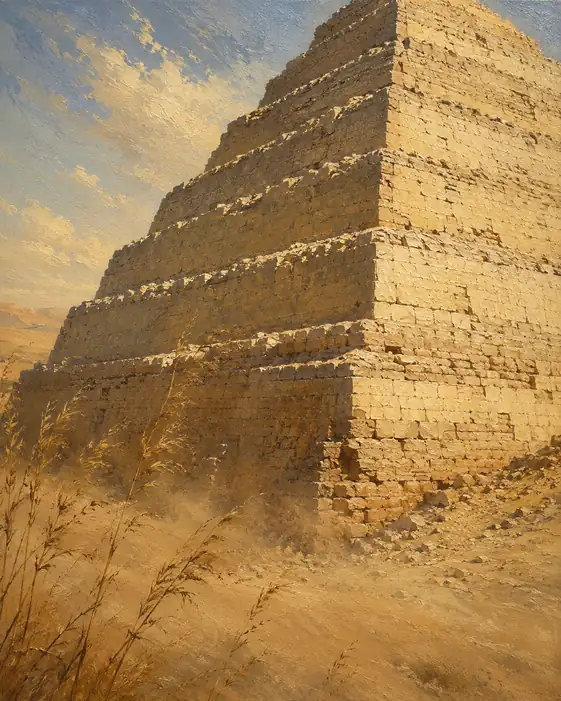 Steps in the Howling Sand
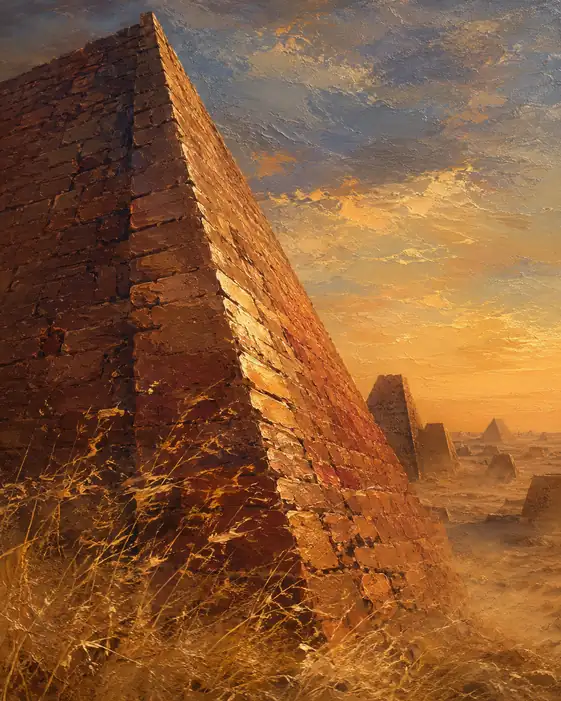 Eternity in Golden Silence
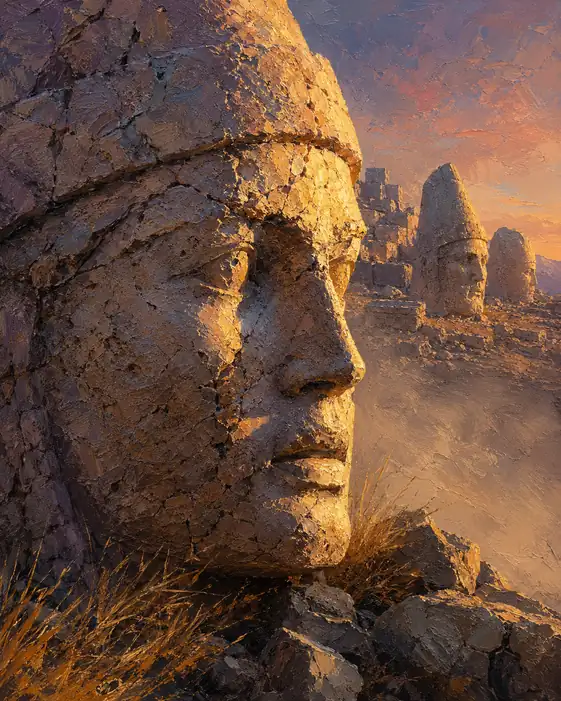 Gaze into the Golden Horizon
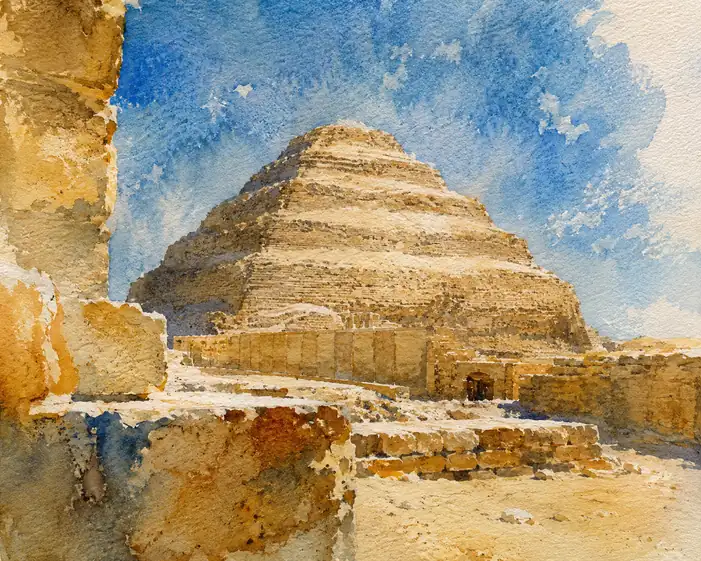 Steps to the Azure Sky