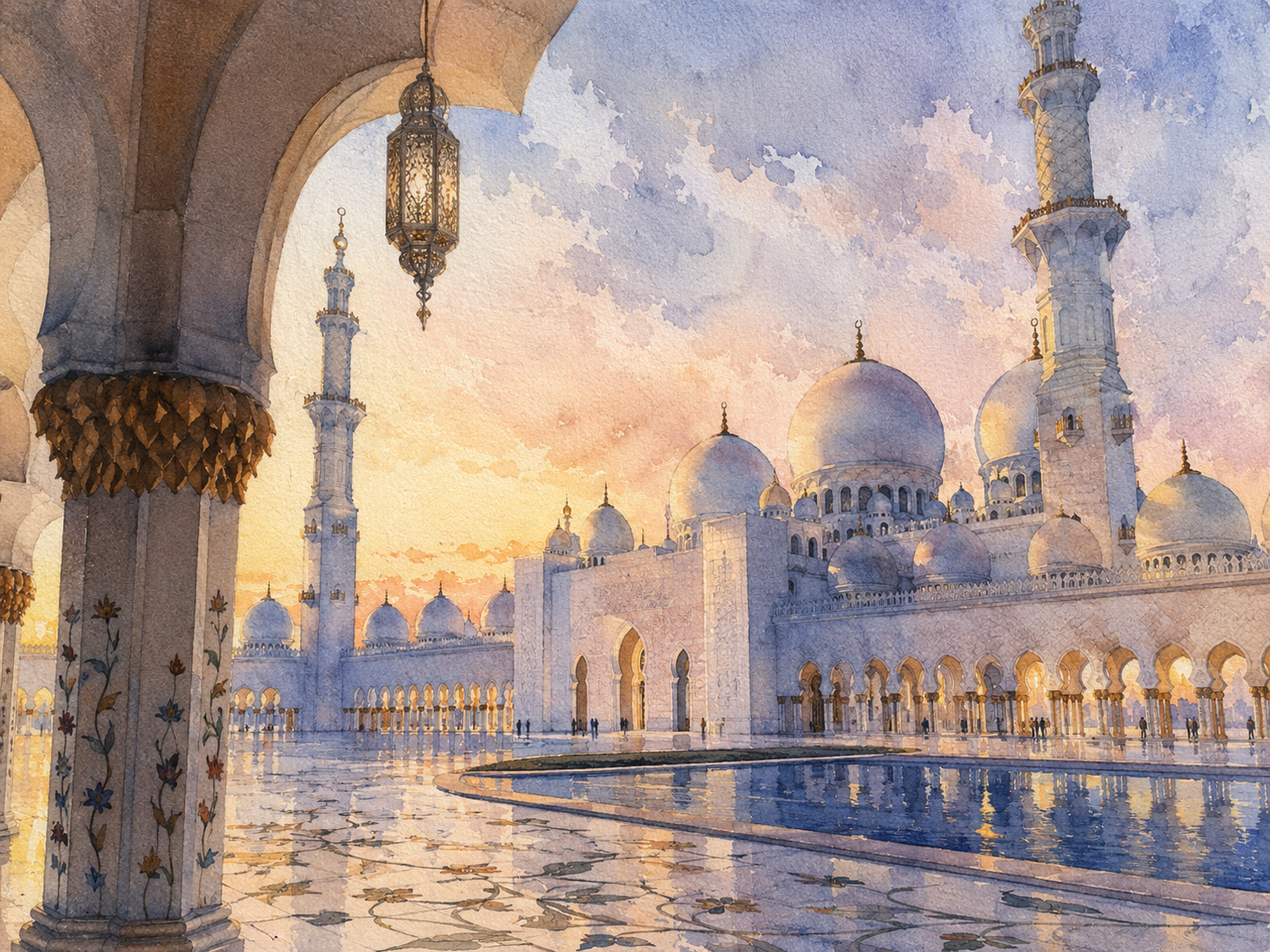
Tranquility in the Golden Dusk
Critique
1. Introduction This work is a detailed macro photograph capturing the front design elements of a classic silver automobile, focusing on the interplay of light and mechanical form. The composition centers on a tight framing of the circular headlight and the intricate radiator grille, highlighting the precision and aesthetic refinement of mid-century industrial design. It provides an intimate visual examination of the materials and craftsmanship that characterize a prestigious era of automotive history. The piece stands as a formal study of texture, reflection, and engineered beauty within a controlled studio environment. 2. Description The primary subject is a large, round glass headlight encased in a polished chrome bezel. To its side, the vertical and horizontal metallic slats of the radiator grille are visible, showcasing their orderly and complex arrangement. Above these elements, the smooth, silver surface of the fender curves gently, reflecting the soft studio lighting and creating a sense of fluid movement. A robust chrome bumper is partially shown at the bottom of the frame, providing a strong horizontal foundation. The entire subject is set against a deep, uniform black background, which isolates and enhances the metallic details. 3. Analysis The photographer utilizes a shallow depth of field to draw sharp focus to the texture of the headlight glass and the surrounding chrome rim. The interplay between the cool silver paint and the brilliant metallic reflections creates a sophisticated tonal range across the surface. Rhythmic patterns are established by the repeated lines of the grille, which contrast with the large, simple circle of the headlight. Lighting is meticulously controlled to accentuate the three-dimensional volume of the car's bodywork while avoiding harsh glares on the reflective surfaces. 4. Interpretation and Evaluation The decision to focus on a specific segment of the vehicle suggests a profound appreciation for the individual components that comprise a complex design. This approach successfully elevates functional automotive parts to the status of sculptural art through deliberate framing and lighting. The technical execution is exceptional, demonstrating a mastery of managing complex reflections on high-quality silver paint and polished metallic surfaces. The work is a highly original documentation of industrial aesthetics that respects the original designer's intent while providing a modern perspective. 5. Conclusion In summary, this photograph offers a refined and detailed perspective on the craftsmanship of classic automotive engineering. While depicting only a fragment of the vehicle, the image effectively communicates a sense of overall luxury, innovation, and mechanical integrity. The piece demonstrates how detailed visual observation can reveal the inherent beauty in functional industrial objects. It remains a striking tribute to the enduring appeal of silver-era automotive design and its meticulous attention to material excellence and aesthetic deliberation.
Same Subcategory
Similar Artworks
 Reflections of Heavenly Silence
 The Mirror of Silent Devotion
 Whispers of the Golden Dome
 Where the Sun Kneels in Prayer
 Twilight Prayer: When the Sacred Sky Whispers
 Autumn twilight, the Pagoda’s Silent Prayer
 Monolith of Faith and the Resolute Sea
 Mirrored Devotion
 Where the Light Prays
 Mirror of the Golden Soul