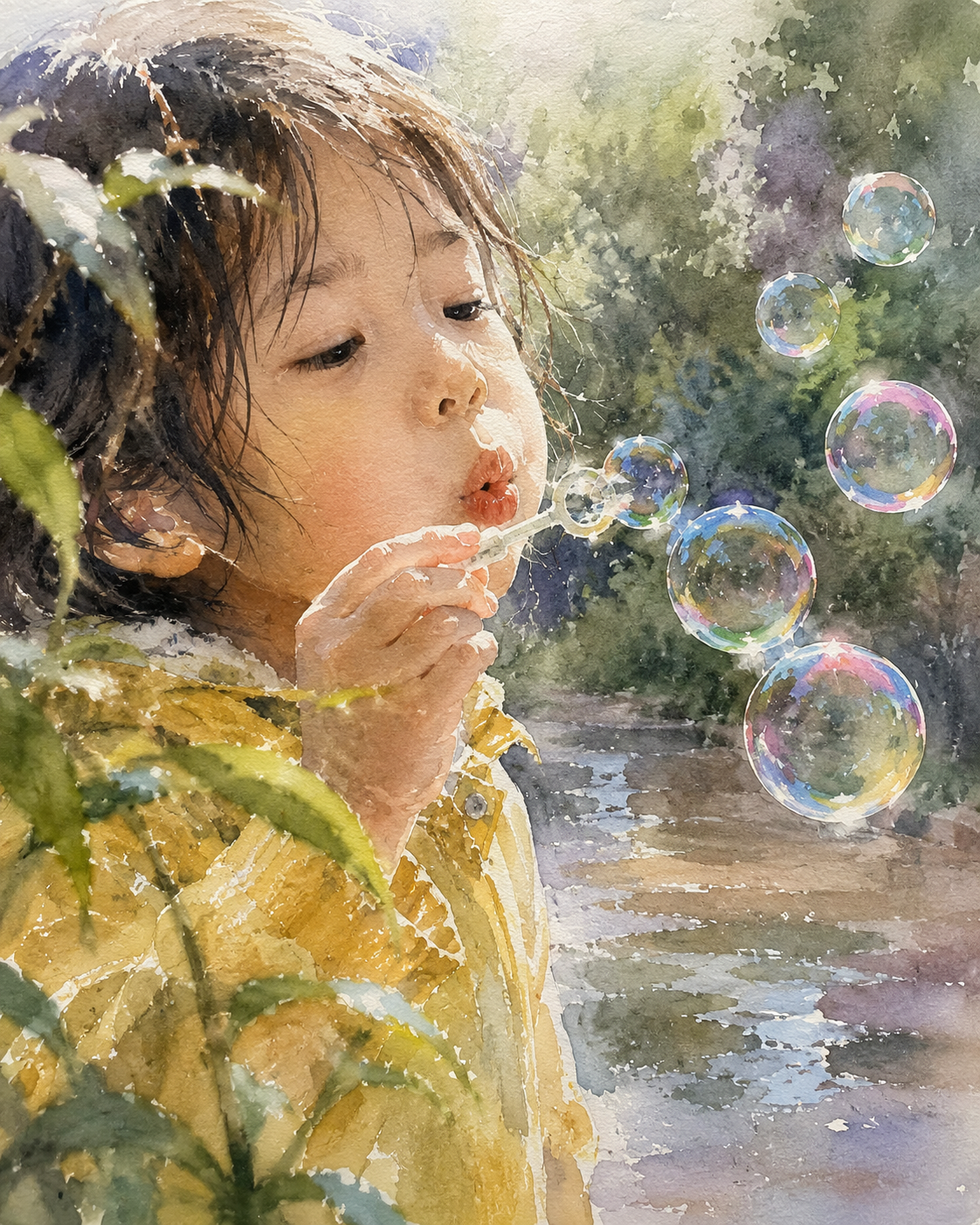
Whispers of a Fleeting Summer
Critique
1. Introduction This watercolor painting depicts a young child blowing bubbles in a lush, natural outdoor setting. The work is characterized by its vibrant color palette and soft light, creating a warm atmosphere. The profile of the child on the left guides the viewer's eyes toward the right. 2. Description In the foreground, a child wearing a yellow jacket is carefully blowing small bubbles. The background features a deep forest with green foliage and a shimmering stream reflecting sunlight. The bubbles float through the air, glowing with iridescent colors as they drift along the water. 3. Analysis The color composition relies on the contrast between the bright yellow jacket and the dark greens of the forest. Watercolor techniques like washing and blending are used to soften the background, adding depth. Soft light from the upper left illuminates the child's cheek and the delicate bubbles. 4. Interpretation and Evaluation This piece captures the innocence of childhood and the fleeting beauty of a transient moment. Through excellent composition and colors, a simple daily activity is elevated to a poetic art. The fine details convey a sense of life, evoking a feeling of nostalgia for the viewer. 5. Conclusion At first, the painting appears to be a simple scene of a child, but closer observation reveals a sophisticated representation of light. This artwork beautifully captures a moment of play, transforming it into a lasting image. The harmony of light and color leaves a deep impression on the audience.
Same Subcategory
 In the Cradle of Summer Light
 Breeze in the Golden Twilight
Similar Artworks
 May It Reach the Sea
 Laughter in the Sparkling Stream
 Whispers of the Sunlit Gateway
 The Secret of the Summer Grass
 A Twig Boat's First Voyage
 The Emerald Cradle of Autumn
 Dancing on the Mirror of the Sky
 Whispers of the Sun-Kissed Creek
 The Turquoise Rhythm of the Hidden Valley
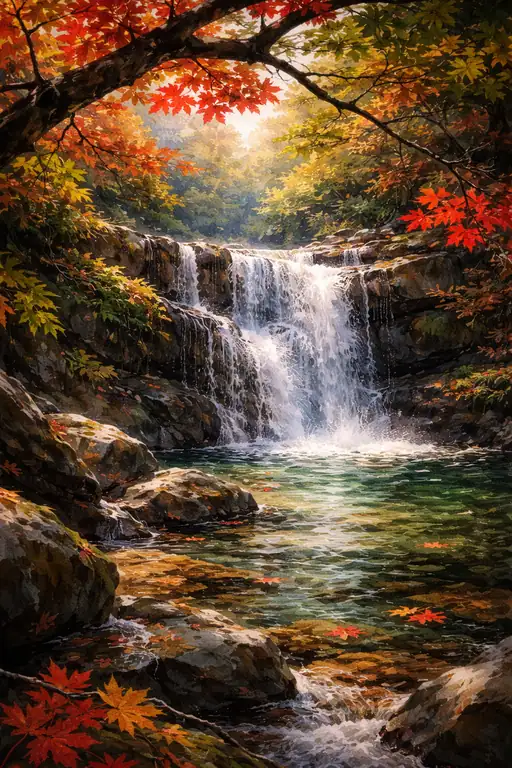 Autumn's Golden Cascade