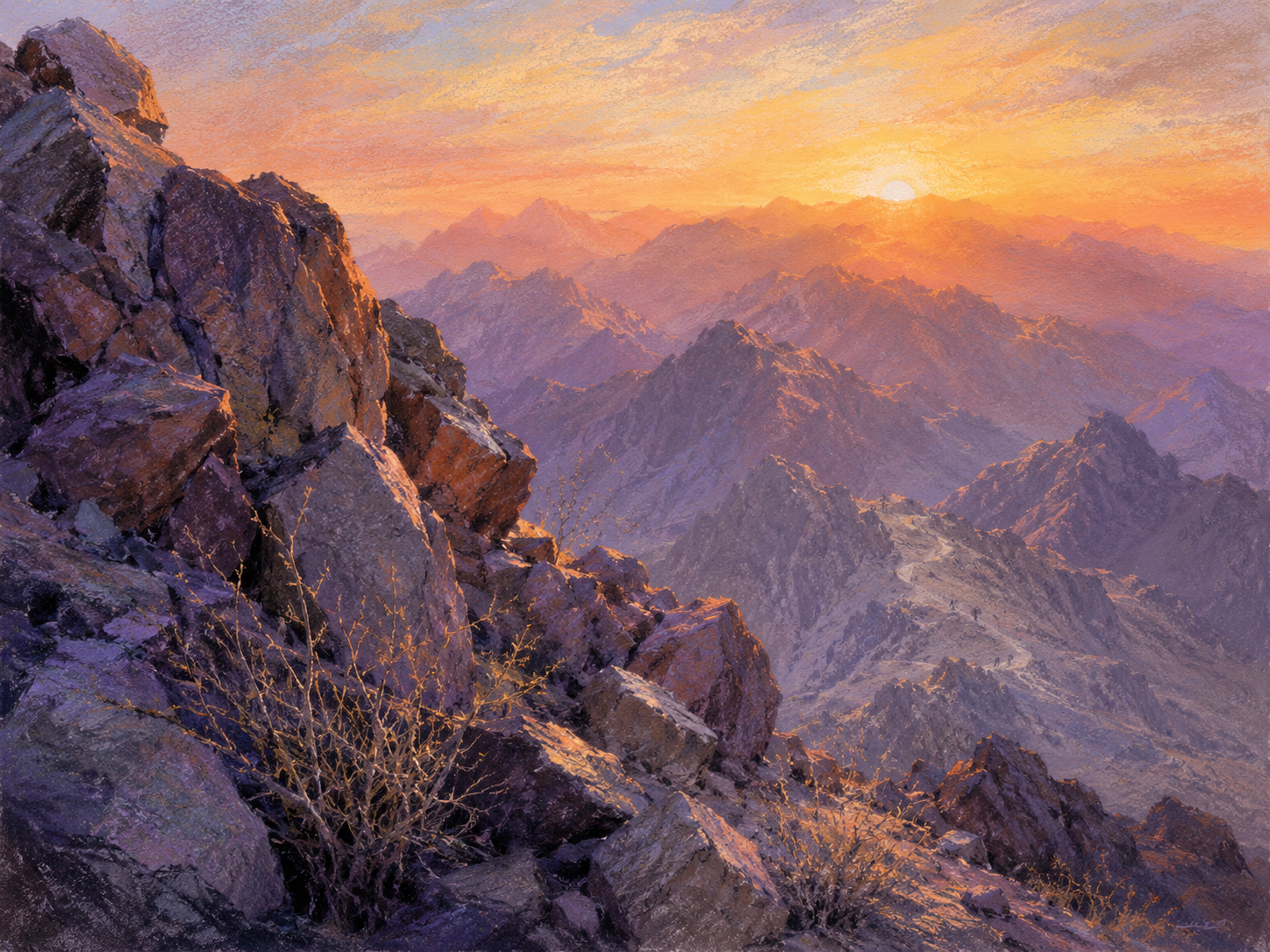
Breath of the Primordial Light
Critique
1. Introduction This evocative landscape painting captures the sublime beauty of a mountain range at the break of dawn. The work focuses on the dramatic interplay between the rising sun and the rugged terrain, creating a scene of immense scale and atmospheric depth. Through a sophisticated use of color and texture, the artist conveys the serene yet powerful essence of the high-altitude wilderness. 2. Description The composition is anchored by dark, jagged rock formations in the immediate foreground, their edges catching the first warm rays of light. A thin, winding path carves its way through the valley in the middle ground, leading the viewer's eye toward the source of illumination. In the background, layers of mountain peaks recede into a soft, hazy distance, transitioning from vibrant orange to deep purple and blue. 3. Analysis The artist utilizes a brilliant warm-to-cool color gradient that defines the spatial relationship between the foreground and the horizon. The sun, rendered as a bright focal point, radiates a glow that permeates the entire sky with streaks of orange and yellow. Thickly applied paint in the foreground creates a tactile sense of the rocky surface, while the distant mountains are rendered with softer, more blended strokes to simulate atmospheric perspective. 4. Interpretation and Evaluation This piece successfully illustrates the concept of the sublime, where the vastness of nature inspires both awe and tranquility. The technical execution of the light is particularly noteworthy, as it seems to vibrate across the canvas, effectively capturing a fleeting moment in time. The balance between the heavy, grounded rocks and the ethereal, light-filled sky demonstrates a high level of compositional mastery and emotional resonance. 5. Conclusion By skillfully balancing detail and atmosphere, the work offers a profound meditation on the natural world's cyclical beauty. What begins as a simple depiction of a sunrise slowly reveals a complex layered study of light, shadow, and geological form. It remains a compelling example of landscape painting that bridges the gap between realistic observation and poetic expression.
Same Subcategory
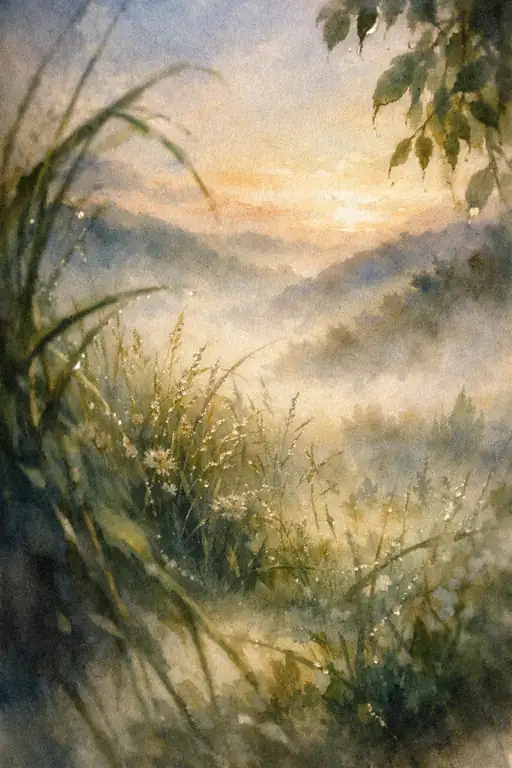 Glimmering Resurgence of the Morning Mist
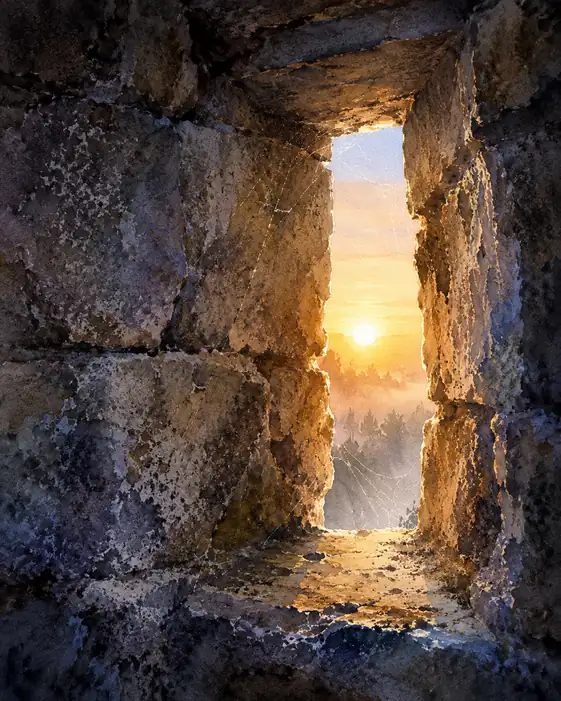 Dawn from the Forgotten Keep
Similar Artworks
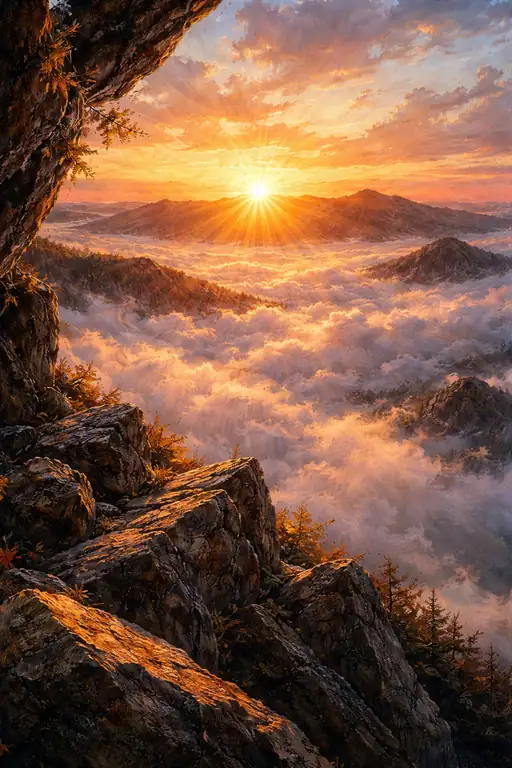 Golden Ascent over the Misty Ridges
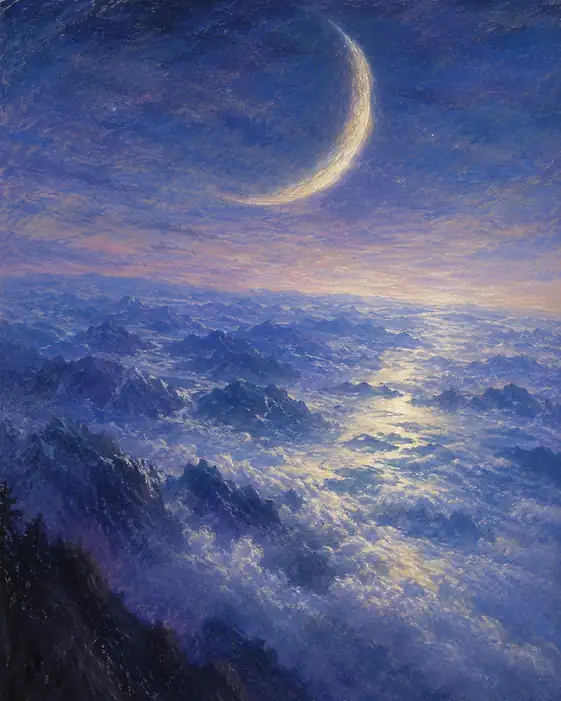 The Cradle of the Twilight Moon
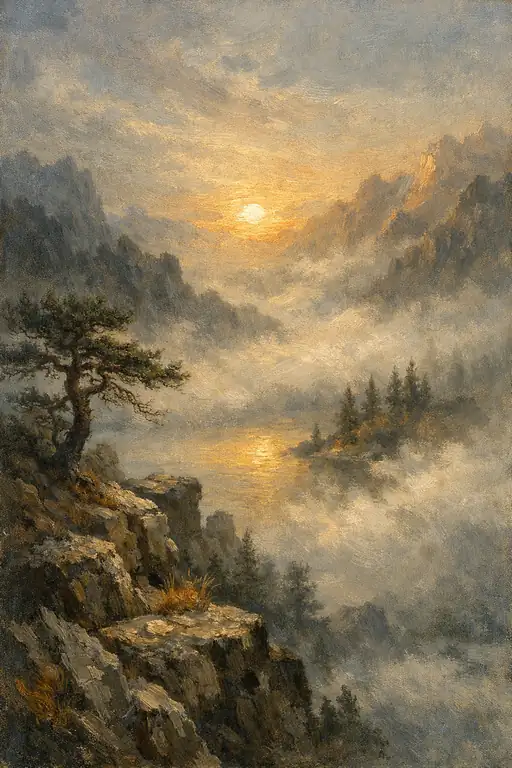 Golden Awakening Beyond the Misty Veil
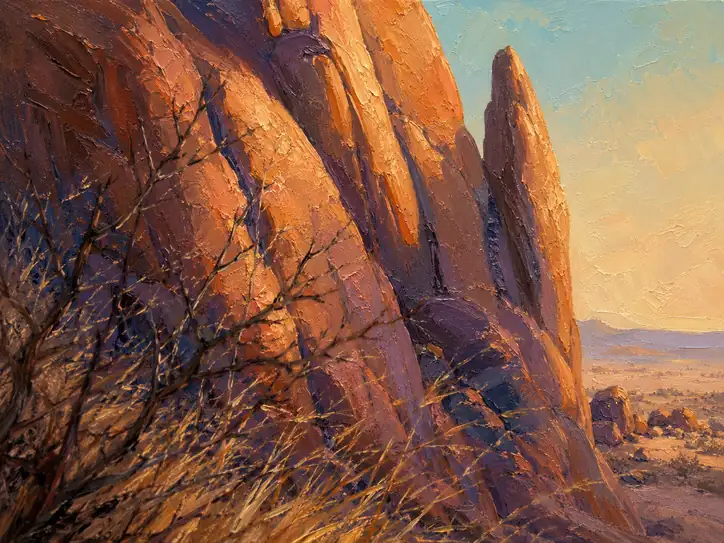 Monolith of the Crimson Waste
 Where Gold Meets the Sky
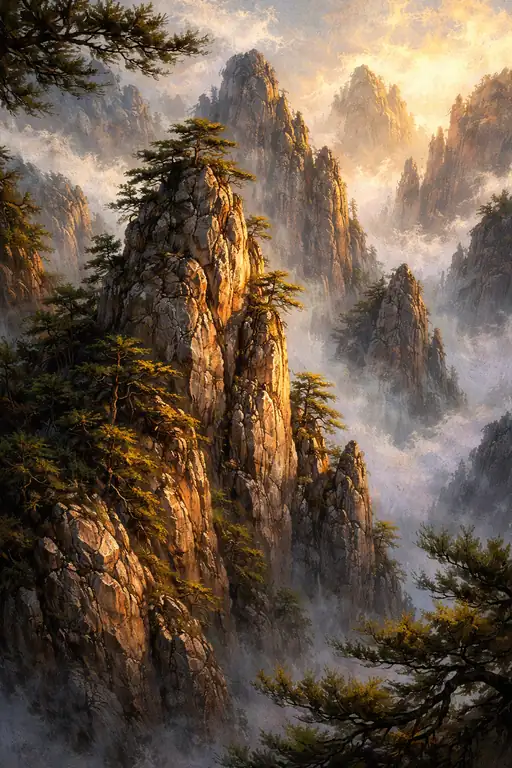 Pines Anchored in Golden Mist
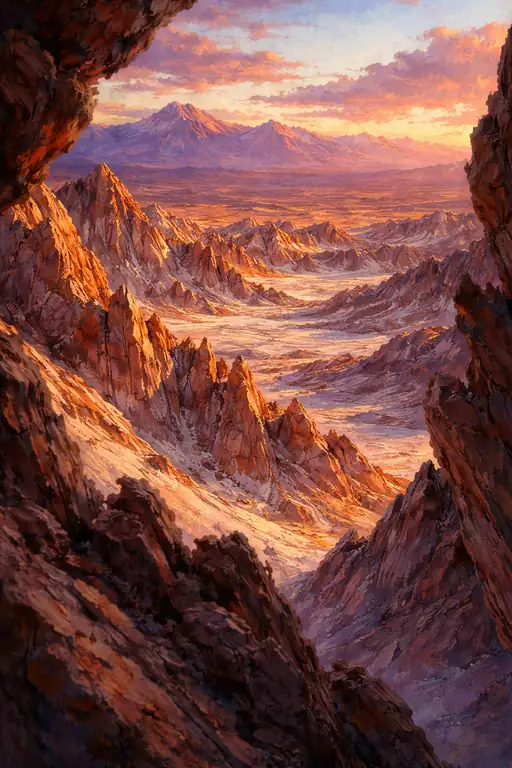 Golden Threshold, Amethyst Shadows
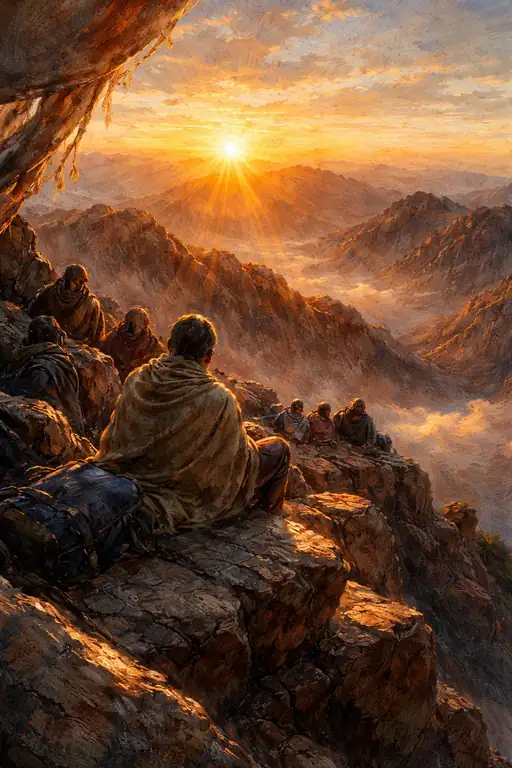 A Moment of Awe Before the Dawn
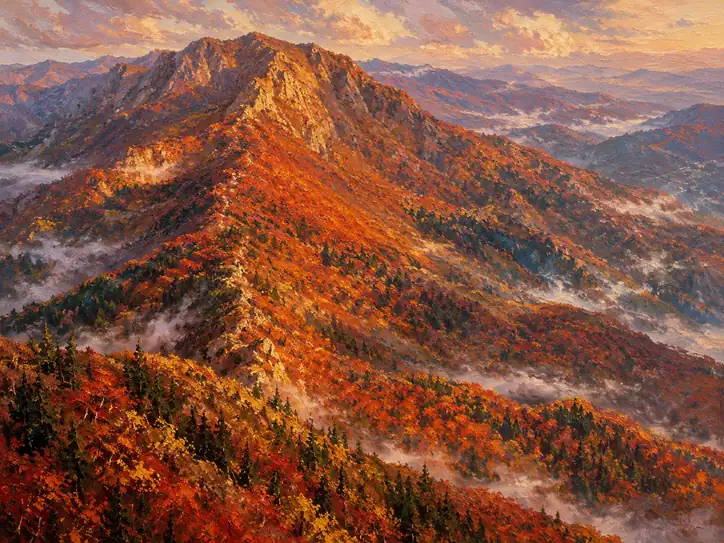 When the Mountain Dreams in Gold
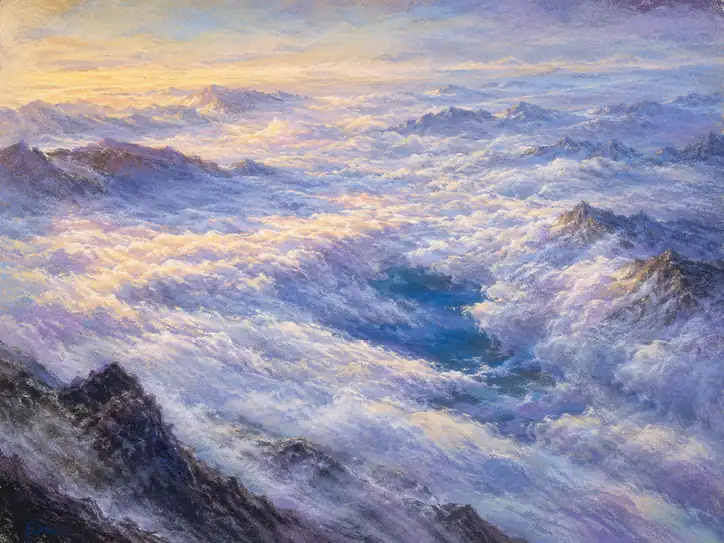 Serenade of the Violet Mist