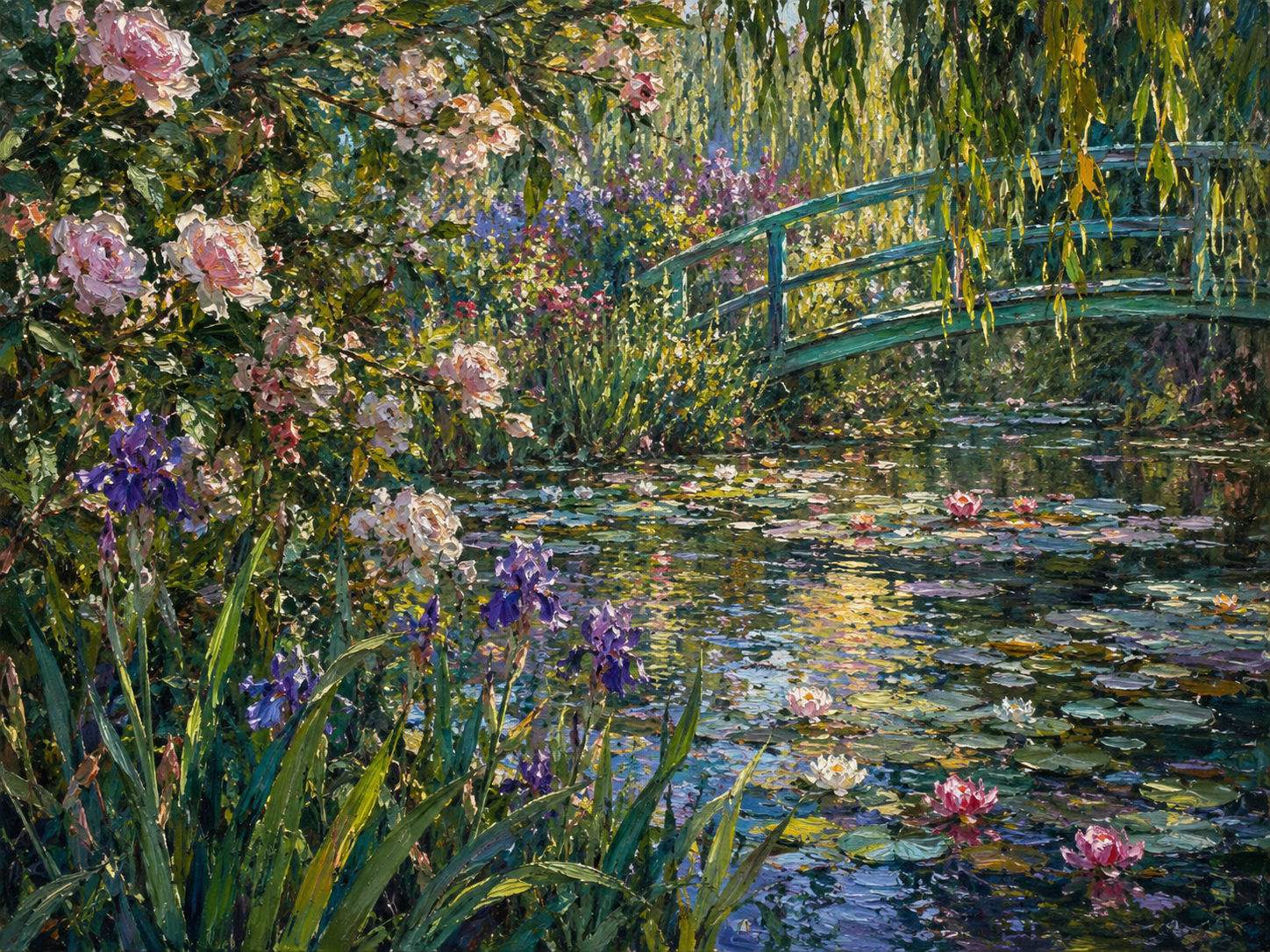
Symphony of the Sunlit Pond
Critique
1. Introduction This landscape painting depicts a serene water garden featuring a Japanese-style arched bridge, a subject clearly inspired by the iconic gardens of the Impressionist era. The canvas is a riot of vibrant color and light, capturing a moment of natural abundance and tranquility. Through a bold application of the impasto technique, the artist infuses the scene with a tactile energy that transcends mere representation. The work demonstrates a profound engagement with the legacy of plein-air painting while asserting a unique contemporary voice. 2. Description An arched bridge painted in a soft turquoise hue curves gracefully across the upper right of the frame, partially veiled by weeping willow branches. The pond below is dotted with clusters of pink and white water lilies, reflecting the shimmering light filtering through the overhead canopy. In the immediate foreground, deep purple irises and pale pink climbing roses are rendered with thick, expressive strokes. The water’s surface acts as a kaleidoscopic mirror, blending the greens of the foliage with the kaleidoscopic reflections of the sky and flowers. 3. Analysis The composition is masterfully framed by the lush floral growth on the left and the cascading willow on the right, centering the bridge as a focal point. The sharp, vertical lines of the iris leaves provide a strong counterpoint to the horizontal expanse of the pond and the gentle arc of the bridge. Color-wise, the interplay of complementary greens and reds creates a high-contrast visual excitement. The heavy texture of the paint adds a sculptural quality, allowing physical shadows to interact with the pigment. 4. Interpretation and Evaluation The artist displays a remarkable ability to capture the essence of light and atmosphere without relying on literal detail. By treating plants and water as masses of color and texture, the painting successfully conveys the immersive experience of being within the garden. The compositional balance is impeccable, drawing the viewer into a deep, three-dimensional space. Technically, the mastery of the palette knife and brush is evident in the varied mark-making, which effectively distinguishes between the translucency of water and the opacity of petals. 5. Conclusion This work is a triumphant celebration of nature’s ephemeral beauty, frozen in time through a masterful command of oil media. While the subject matter is familiar, the intensity of the execution and the sophistication of the color relationships offer a fresh and invigorating perspective. It stands as a powerful reminder of the enduring capacity of landscape painting to evoke wonder and provide a sanctuary for the modern eye.
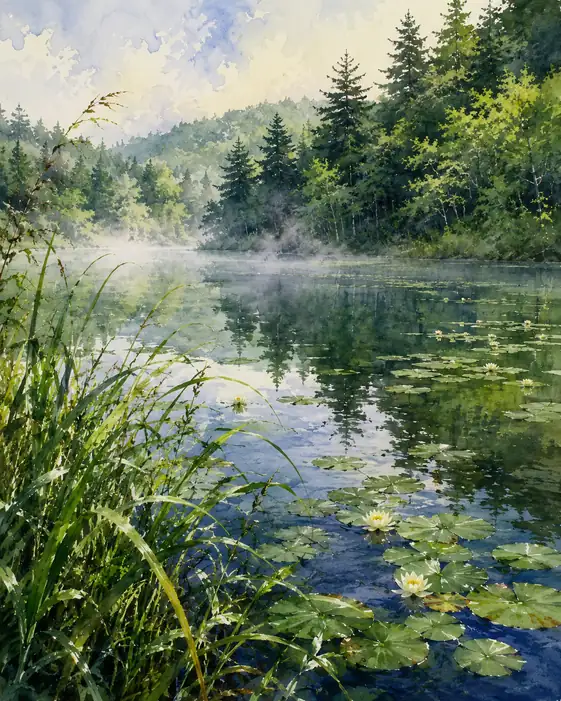 The Breath of a Silent Morning
 Where Eternity Sleeps
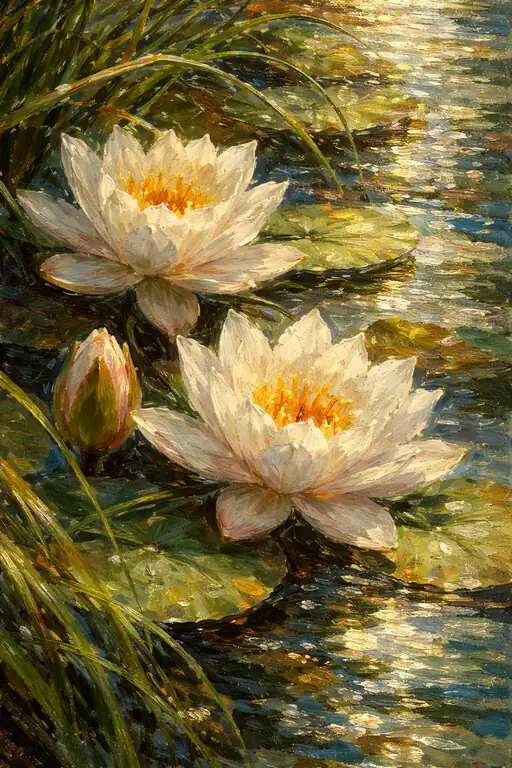 Whispers from the Shimmering Pond
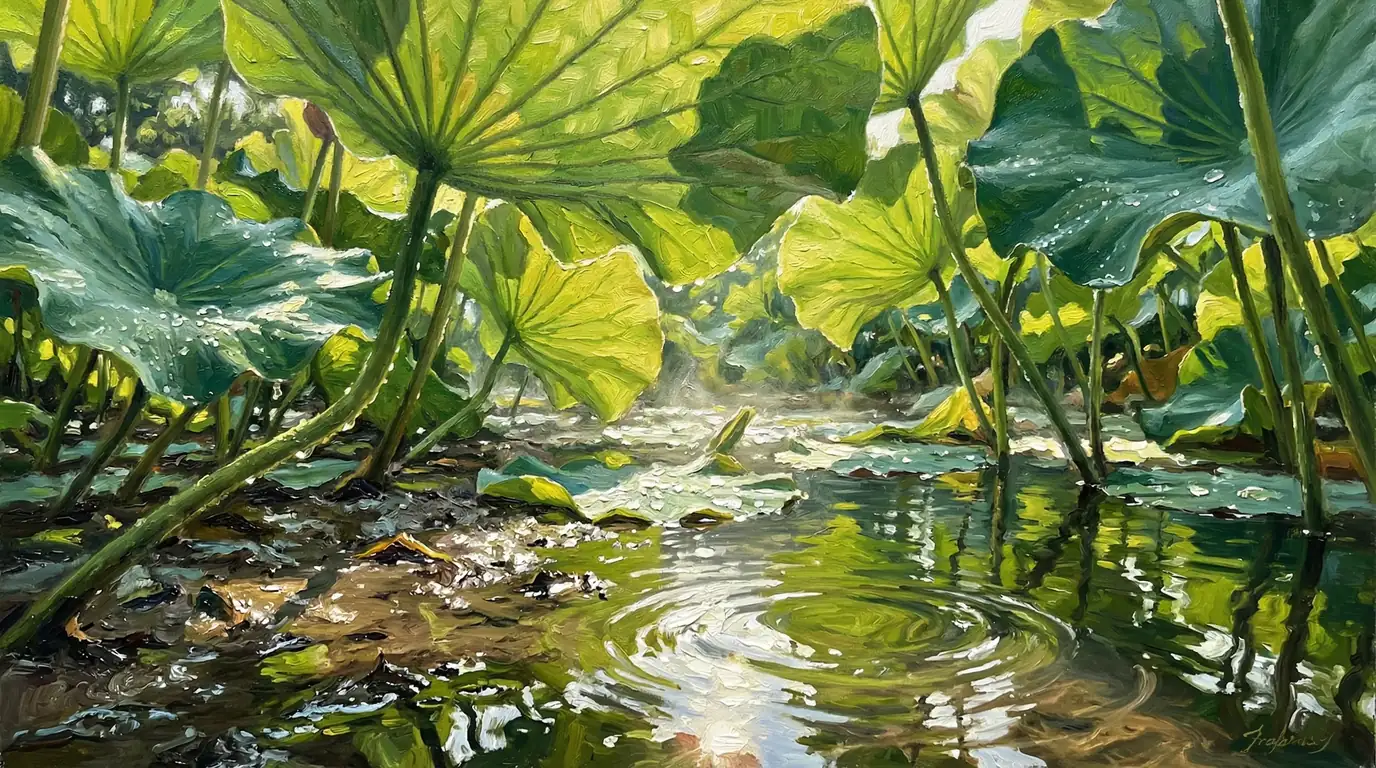 Sun-Kissed Copper Locks
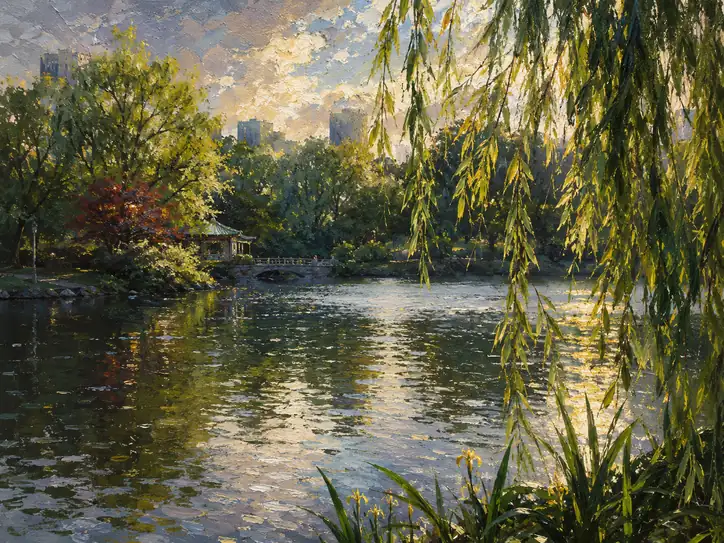 Beyond the Willow's Veil
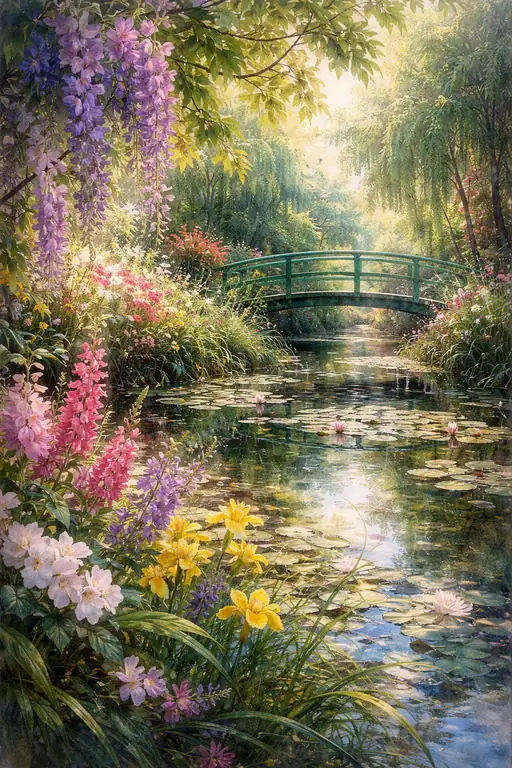 Water Lilies in the Summer Garden
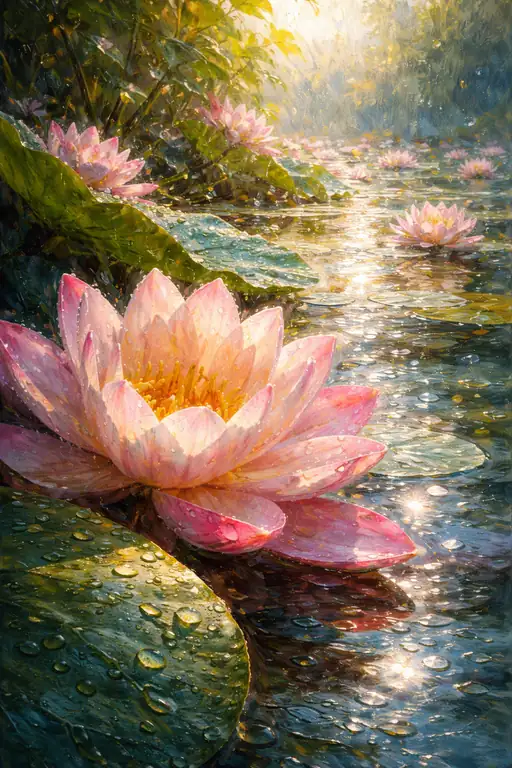 Slumber of the Rose Petals
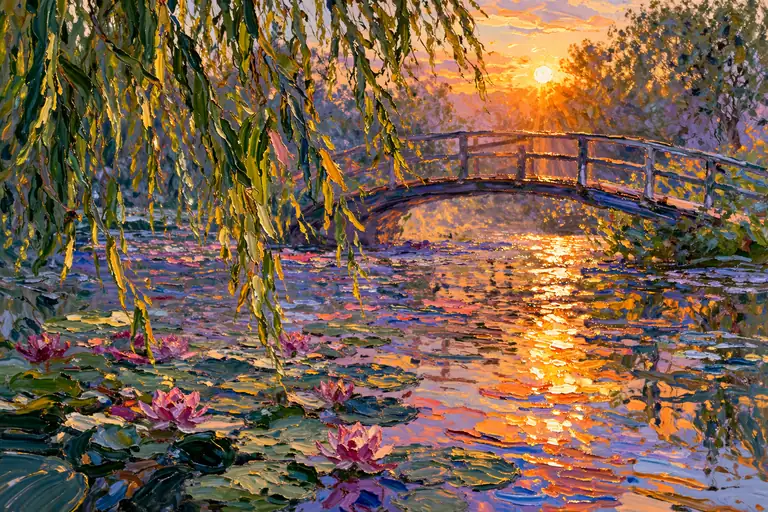 Golden Reflection of the Serene Pond
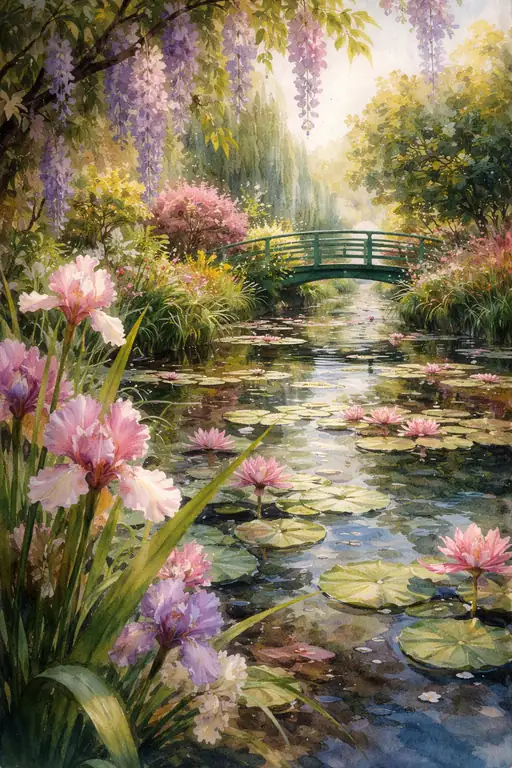 Serenity at the Lily Pond
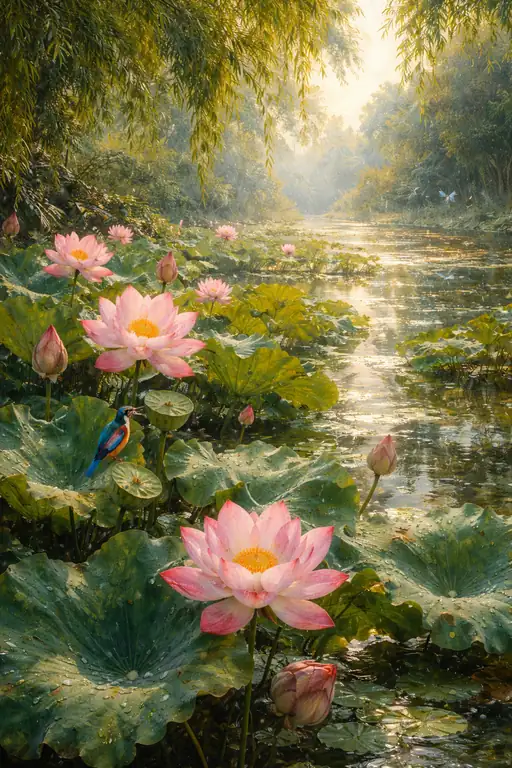 The Awakening of the Pink Lotus
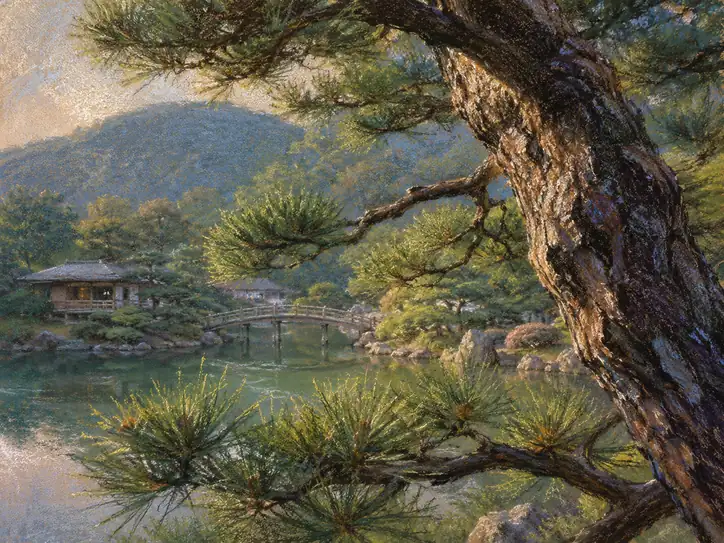 Golden Peace in the Pine-Framed Garden
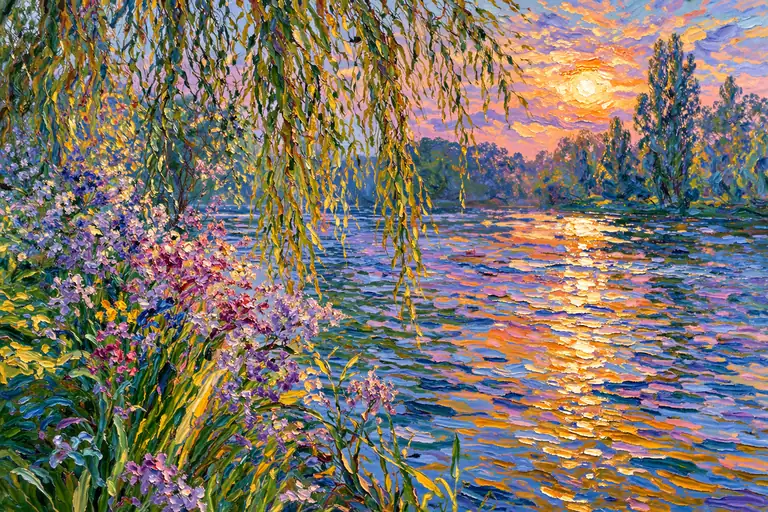 River's Song at Dusk