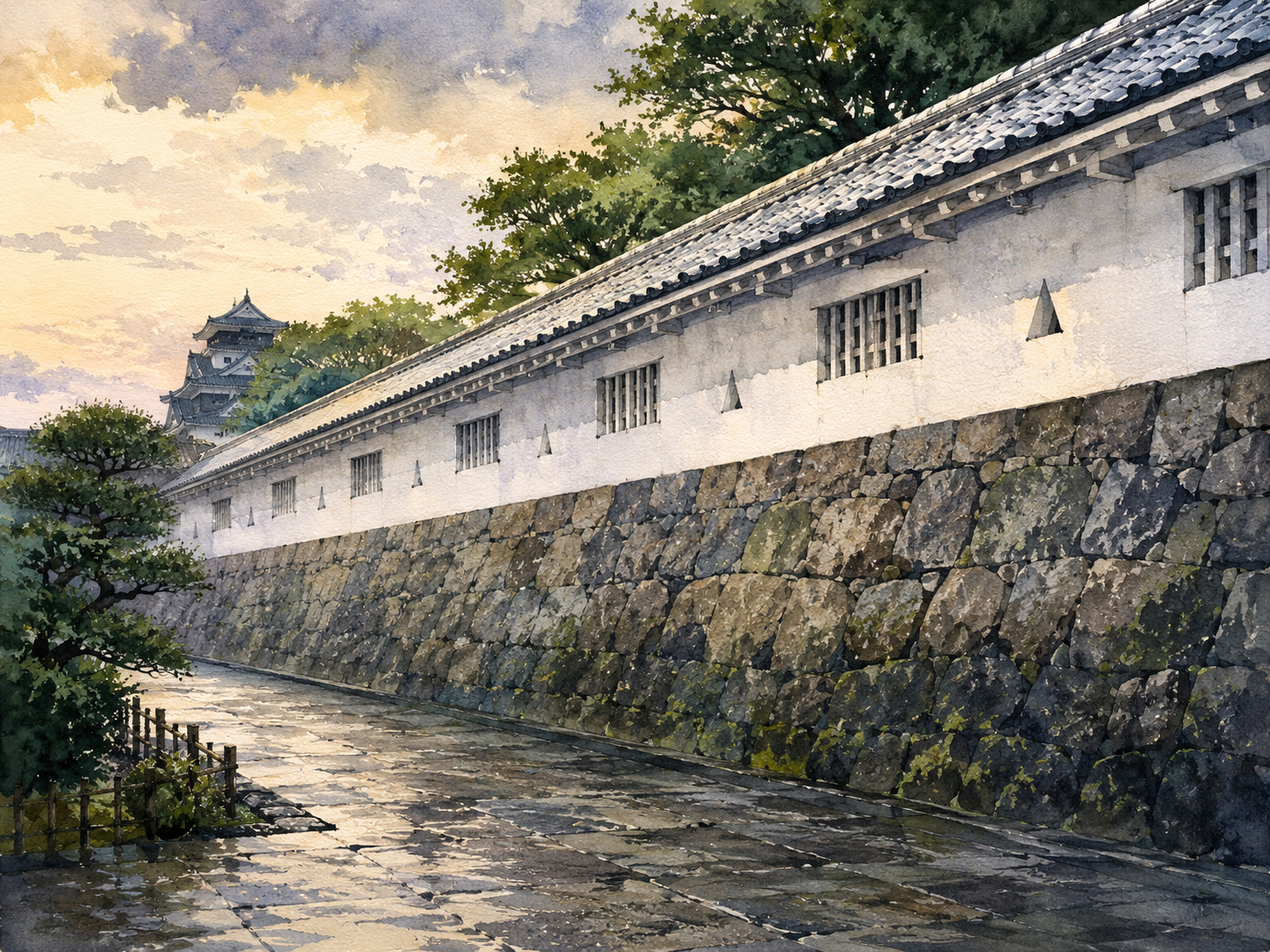
The Citadel's Quiet Breath
Critique
1. Introduction This watercolor painting captures the imposing presence of a traditional Japanese castle’s defensive wall during the soft light of dawn or dusk. The work focuses on the dramatic perspective of the long, whitewashed wall as it recedes into the distance, leading the eye toward the majestic main keep. Through its delicate washes and precise details, the painting explores the intersection of military fortitude and aesthetic elegance. The serene atmosphere suggests a quiet moment of reflection on the historical legacy and enduring strength of such fortifications. 2. Description The composition is dominated by a massive stone foundation, known as ishigaki, upon which sits a long, white plastered wall with various loopholes for defense. A stone-paved path, reflecting the subtle colors of the sky, runs parallel to the structure, appearing damp as if after a light rain. In the background, the multi-tiered main keep of the castle rises above the trees, partially obscured by the soft, glowing clouds of the horizon. A meticulously pruned pine tree in the foreground adds a touch of organic life to the predominantly architectural scene. 3. Analysis The artist utilizes the unique qualities of watercolor to create a compelling contrast between the heavy, textured stones and the smooth, luminous surface of the wall. The use of perspective is particularly effective, with the diagonal lines of the wall and path creating a strong sense of depth and scale. The sky is rendered with soft, blended washes of peach, lavender, and gold, providing a warm counterpoint to the cool greys and browns of the stone. Reflections on the wet path are handled with great subtlety, enhancing the overall realism and atmosphere. 4. Interpretation and Evaluation The painting successfully conveys the dual nature of Japanese castle architecture: its functional strength as a fortress and its refined beauty as a cultural monument. The soft lighting emphasizes the weathered textures of the stone and wood, suggesting the passage of time and the weight of history. Technical execution is highly accomplished, especially in the rendering of the complex patterns of the stonework and the delicate shadows cast by the wall’s eaves. The work evaluates the enduring presence of these structures as silent witnesses to a bygone era. 5. Conclusion Through its masterful composition and evocative use of color, the painting offers a poignant vision of historical grandeur. The initial focus on the wall’s defensive features eventually gives way to an appreciation of its harmonious integration with the surrounding environment. This balance highlights the sophisticated design principles that underly traditional Japanese architecture. The artist has created a tribute that is both historically grounded and artistically inspiring, capturing the soul of the castle in a single, quiet moment.
Same Subcategory
 Gilded Walls of the Forgotten King
Similar Artworks
 Echoes of the Rain on Castle Stones
 Golden Pathway to the Keep
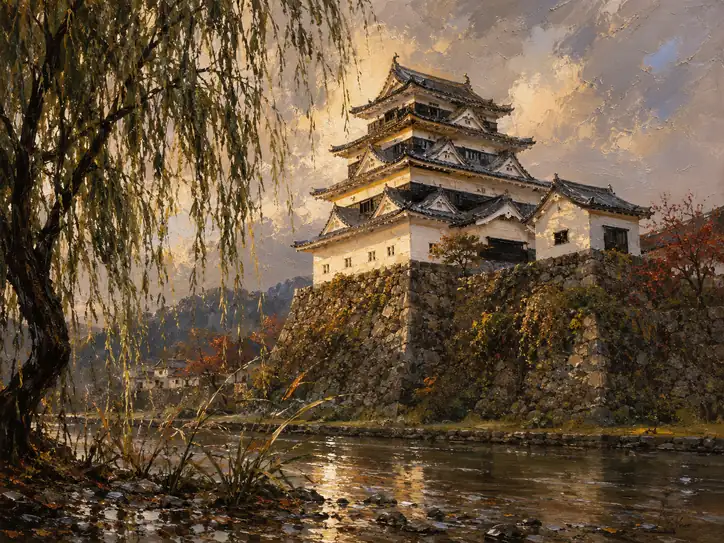 Eternal Echoes of the Golden Keep
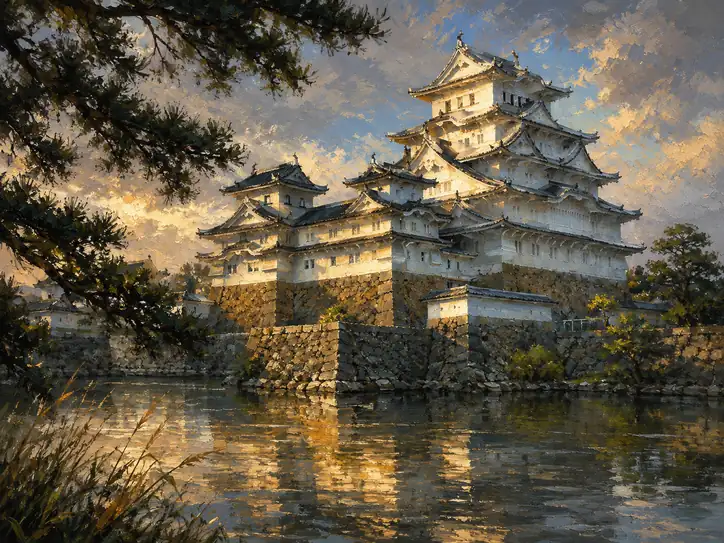 Eternal Gaze in the Amber Sunset
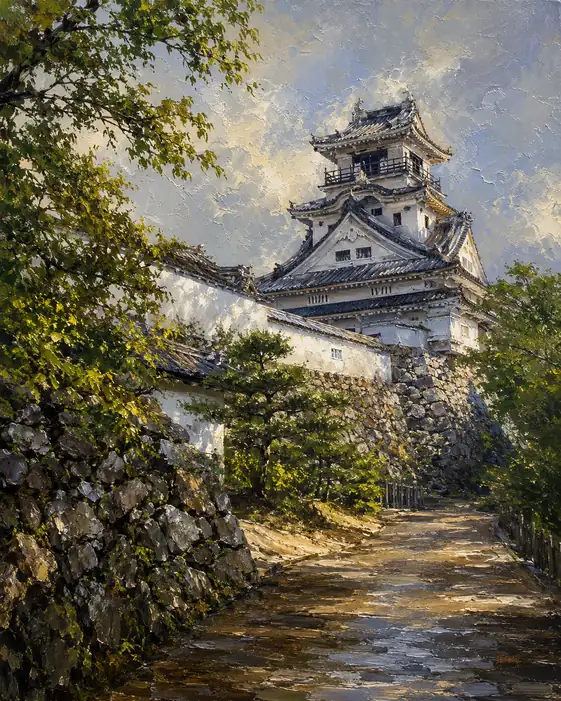 Eternal Fortress of the White Tower
 Whispers through the Crimson Veil
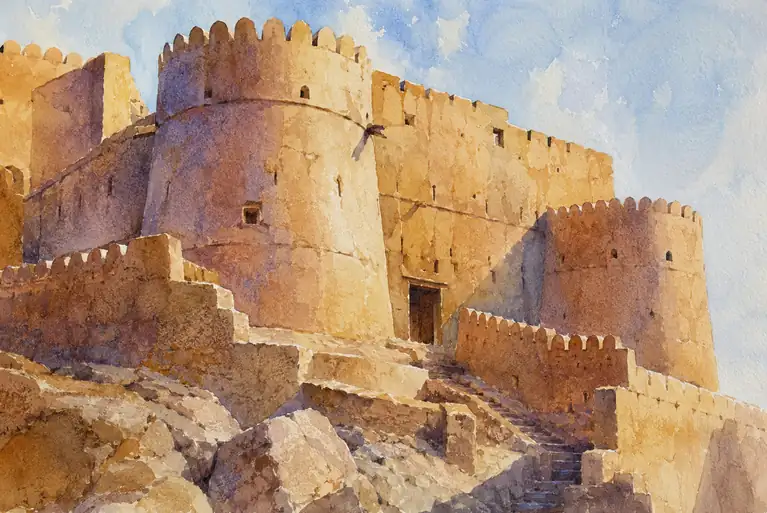 Fortress of Whispering Lights
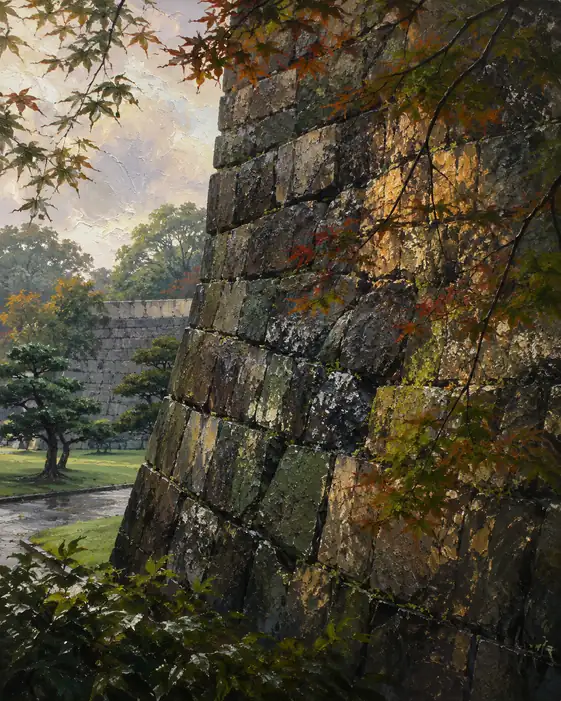 Fortress of Time and Crimson Leaves
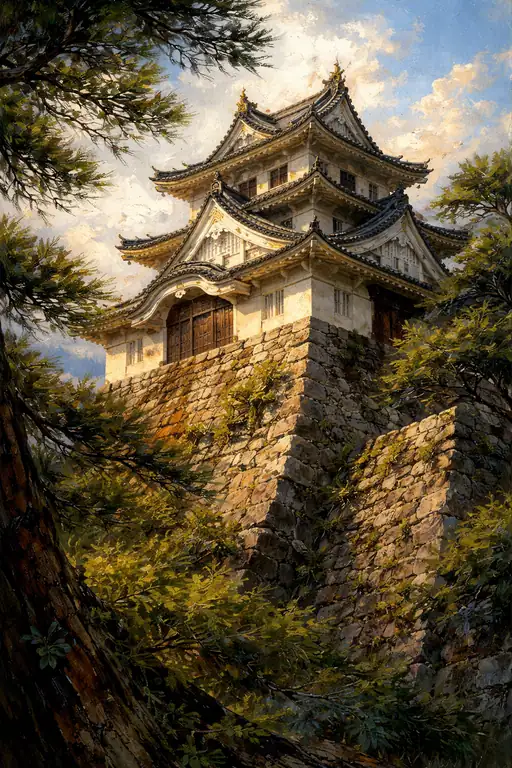 The Silent Sentinel of the Ages
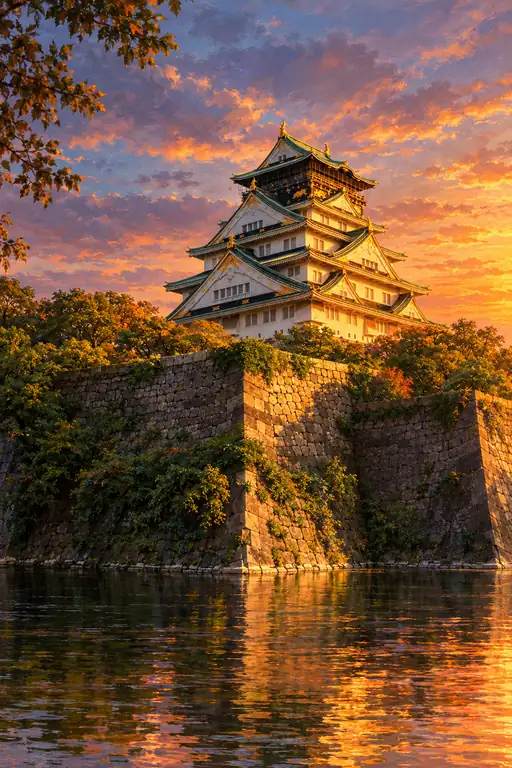 Stone Keeps the Evening Close